
My Products Have Arrived in Bulk but Need Packing Individually – What Can I Do?
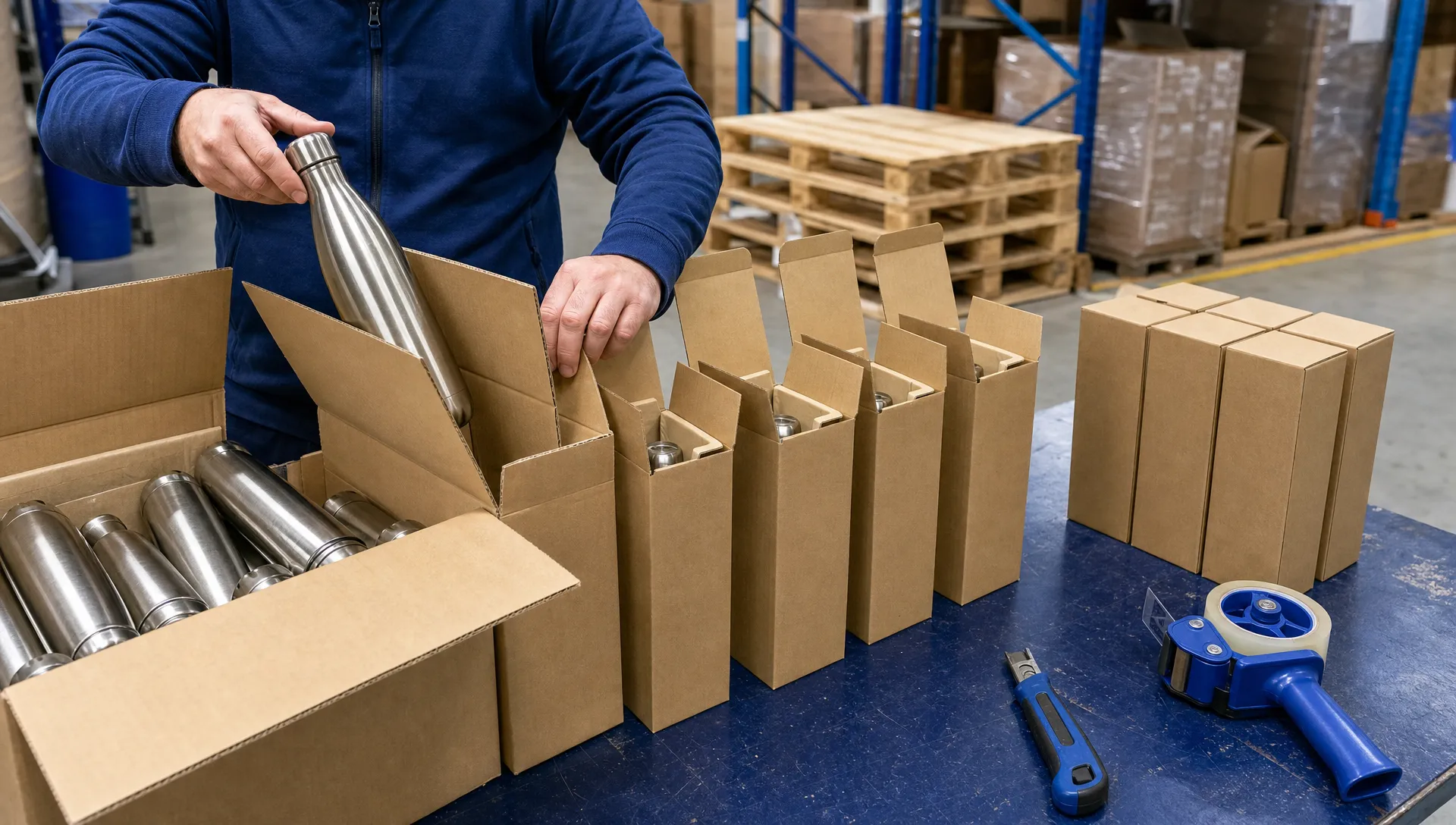
Bulk deliveries often arrive in master cartons, with dozens of loose products inside and nothing ready to sell as a single unit. Using bulk product repacking services lets you turn that stock into individually boxed, bagged or wrapped products without sending it back to the manufacturer.
The next step is to define the finished pack, approve a sample and agree where the completed units will go. Before anyone opens the cartons, establish whether you need retail packaging, delivery packaging or both. They solve different problems.
First, decide what “packed individually” means
A product ready for a shop shelf is not necessarily ready to survive a parcel network. Equally, putting every item in a delivery box before a customer orders can waste storage space and make later bundling awkward.
| What you need | What the packing job involves | What to confirm |
|---|---|---|
| Individual retail units | Placing each product in its own box, sleeve or bag | Presentation, product information and barcode position |
| Protected stock for storage | Separating or wrapping products to prevent damage | Protection needed and how units will be counted |
| Parcels ready for delivery | Adding outer packaging suitable for the delivery route | Whether orders are known and address labels are available |
Start with the buyer’s requirements. A retailer may specify individual packs and a set number per outer carton. An eCommerce brand may need retail-ready units held in stock, with delivery packaging added only when orders arrive.
When bulk product repacking services are useful
Outsourced repacking is worth considering when the stock itself is correct but its current presentation prevents you from selling or distributing it. Typical situations include loose products in export cartons, units without individual protective packaging or a wholesale delivery that needs splitting into smaller saleable quantities.
For a small, straightforward batch, packing in-house may be manageable. Check that you have enough clean working space, suitable materials and time to inspect the finished units. For a larger shipment, compare the full job against outsourcing, including unloading, counting, packing, waste removal and putting completed stock away.
If the products are damaged, incorrectly specified or missing essential information, resolve those issues first. New packaging does not make unsuitable stock saleable.
Turn the delivery into a clear packing brief
Record what has arrived and what must leave
Photograph an unopened carton, its contents and any existing labels. Record the number of cartons and the expected quantity inside each one, then establish whether those quantities have been physically checked or simply taken from the supplier’s paperwork.
A useful brief for bulk product repacking services should make the starting point and finished result unambiguous. Include:
- Product details: Item description, product code, dimensions, weight and any handling restrictions.
- Incoming stock: Number of cartons or pallets, expected units and whether different products or batches are mixed together.
- Finished pack: One product per box, bag or sleeve, plus any inserts, protective materials or accessories.
- Required checks: What counts as acceptable condition and what should be held back for your decision.
- Deadline and destination: When the first completed stock is needed and whether it will stay in storage or leave immediately.
Be precise about the unit of work. “Pack 500 boxes” could mean 500 individual products or 500 outer cartons containing several products each.
Choose packaging around the product and sales channel
Measure the actual product rather than relying solely on a supplier’s specification. Allow for protruding parts, accessories and the protective material needed inside the pack. A box that fits tightly around an item may leave no room to protect it.
Decide who supplies the packaging and who approves it. If you are providing boxes or bags, agree how many spare materials should be available for damaged packaging, sample production and rework. If the packing provider is sourcing them, approve the specification before ordering.
Also check the finished dimensions. Individually boxing loose products can increase the space they occupy, changing how many units fit in a carton, on a pallet or in a storage location.
Check labels, traceability and product suitability
Before booking bulk product repacking services, establish whether the work changes only the outer packaging or exposes the product itself. Putting a sealed item into a retail carton is different from opening primary packaging or handling loose food, cosmetics or chemicals.
Confirm that the provider can handle your particular product and any relevant hygiene, temperature or safety requirements. Do not assume that a general packing service covers every regulated product.
Supply approved label artwork and written instructions covering barcode placement, warnings and any batch or date information that must remain visible. Where traceability matters, specify whether batches must stay separate and what records you need when the job is complete.
Approve a finished sample before the full run
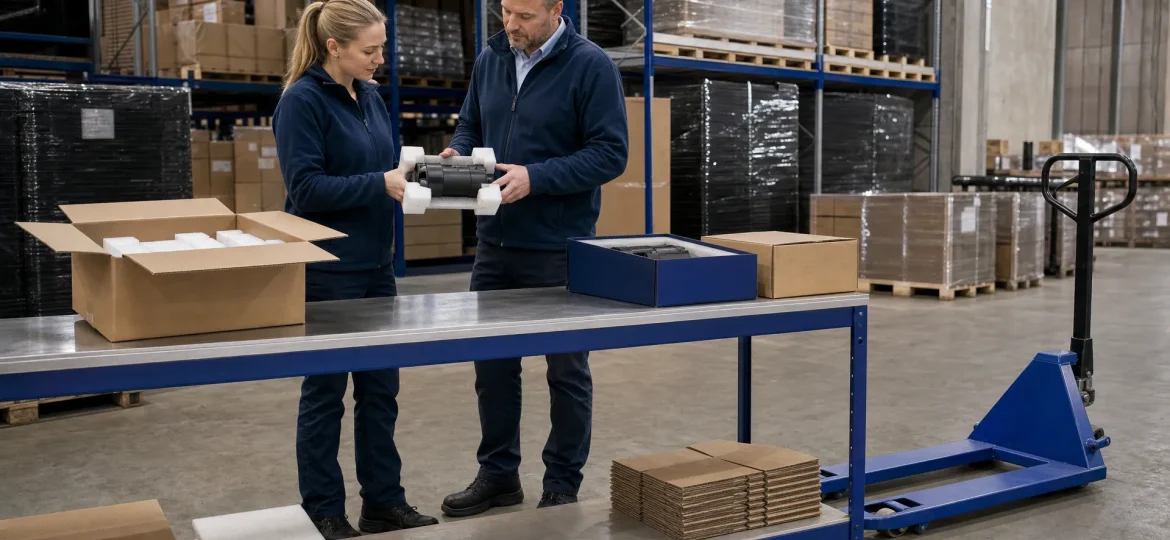
Ask for a completed sample using the actual product and proposed materials. For several sizes or variants, approve a sample of each relevant pack rather than assuming one will represent the whole shipment.
Check that the product sits securely, the packaging closes properly and labels do not cover essential information. Look at how someone will open the pack, not just how it looks when sealed. If it must withstand delivery handling, agree suitable packaging checks for that route.
Keep an approved reference sample or a clear photographic record, supported by written instructions. Record who can authorise changes if the team encounters an unexpected product size, missing component or packaging shortage.
Agree how stock will be reconciled at the end. The incoming quantity should be accounted for as completed good units, held or rejected stock, recorded losses and any remaining unpacked products. Count underlying product units consistently, rather than mixing units, packs and cartons.
Decide where the individually packed stock goes next
Repacking is only one stage. Before work starts, decide whether completed units will return to you, move to a retailer or remain with a logistics provider for future orders.
If stock will stay in a warehouse, ask how the newly packed units will be identified and recorded. The finished product may need a different stock code from the incoming loose item. Suitable warehouse storage also needs to allow for the space occupied by the finished packaging, not just the original delivery.
For an urgent launch, ask whether an approved first batch can be released while the rest is completed. This needs a clear allocation of quantities and destinations so partially completed work does not create stock confusion.
When comparing bulk product repacking services, include this onward handling in the brief. If the goods are going to a wholesale customer, confirm their delivery and receiving requirements before choosing outer cartons and pallet arrangements.
Keep personal information out of general packing files
Standard product repacking usually needs product information, not customer details. If personalised packs require names, gift messages or mailing lists, agree secure sharing, access and deletion arrangements separately. Do not put customer lists into a general packing instruction sheet.
For businesses whose projects involve Jamaican operations, Privacy & Legal Management Consultants Ltd. provides data protection and governance support in that jurisdiction. UK data protection requirements should be assessed separately.
Get a quote for the whole job, not just the packing action
Quotes for bulk product repacking services are easier to compare when every provider works from the same specification. Send photographs, quantities, product measurements, the proposed packaging and the required completion date.
Ask how the following elements will be charged and which are included in the quoted rate:
| Cost element | Question to ask |
|---|---|
| Receipt and checking | Does the price include unloading, counting and reporting discrepancies? |
| Preparation | Is there a separate charge for setup, samples or label preparation? |
| Packing labour | Is the rate per product, finished pack, carton or hour? |
| Materials | Who supplies them, and are protective inserts and outer cartons included? |
| Storage and dispatch | What happens before packing starts and after it finishes? |
| Exceptions | How are damaged stock, extra sorting and changes to instructions charged? |
A low packing rate may not represent the lowest total cost if it excludes several necessary steps. Ask for assumptions to be written down, especially where carton quantities, product condition or the time needed per unit have not yet been verified.
Completion time also needs a clear starting point. Confirm whether the schedule begins when stock arrives or only once materials, artwork and sample approval are all in place.
How Gus Logistics can help with bulk stock
Gus Logistics provides contract packing and co-packing in Cheshire, including re-packing, POS assembly and container de-stuffing. Its services also cover warehousing, order fulfilment and transport, allowing you to discuss what happens before and after the packing work rather than treating it as an isolated task.
If you need bulk product repacking services in Cheshire, the North West or elsewhere in the UK, explain the product and finished-pack requirements first. Gus Logistics can assess the proposed work against your stock, handling needs and timescale.
There are no minimum volume requirements. For a useful initial discussion, have photographs, approximate quantities, packaging details and your required completion date ready. Product suitability and the exact scope still need to be agreed before work begins.
Frequently asked questions
Do I need to send the products back to the manufacturer? Not necessarily. If the products are correct and suitable for sale, a contract packer may be able to change their presentation locally. Check supplier responsibilities before altering packaging if there is a dispute about the delivery.
Can I provide my own boxes, bags and labels? Ask the provider to confirm this before sending materials. They should be checked against the actual product and approved sample, with responsibility agreed for shortages or unsuitable packaging.
Can stock be packed as orders arrive instead of all at once? Potentially, but distinguish product packaging from order fulfilment. Preparing every retail unit in advance may suit a launch, while adding delivery packaging later can avoid committing stock to individual parcels too early.
What if some products are damaged inside the bulk cartons? Agree a hold-and-report process. Damaged units should be separated from good stock, recorded and referred to you rather than packed into saleable units without approval.
Category: Logistics
Discuss your bulk packing requirements
If your stock has arrived in bulk and needs packing individually, call Gus Logistics on 01270 335014. Share what has arrived, how each finished unit should look and when you need it ready, so the team can discuss a practical packing and onward logistics plan.
Looking for a Logistics Partner You Can Trust?
From warehousing and order fulfilment to transport and FSDU design - Gus Logistics handles it all from our base in Nantwich, Cheshire. Over 10 years experience, no minimum volumes, no long contracts.
