
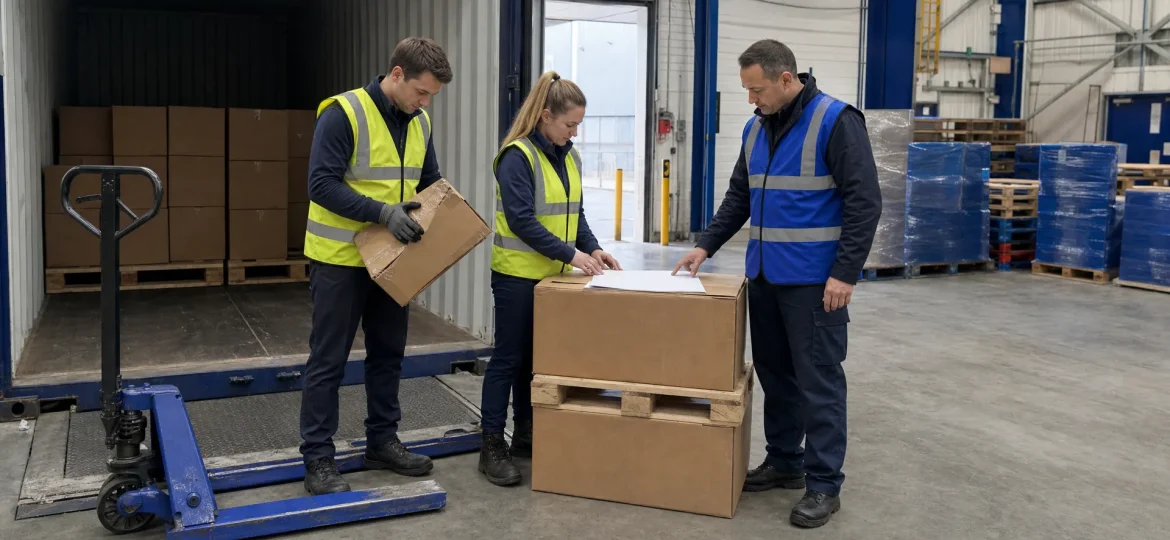
How Do I Get Products From a Shipping Container Into Storage and Ready for Sale?
Getting products out of a shipping container is only the first step. With container unloading and warehousing, the real job is turning an incoming shipment into stock you can find, sell and dispatch accurately. A container can be empty while its contents are still waiting for counting, labelling or a decision about damaged cartons.
The simplest route is to arrange one receiving plan covering delivery, unloading, stock checks, storage and any preparation needed before orders leave. That might mean working with a warehouse that can handle the whole process, rather than coordinating separate unloading, storage and packing teams yourself.
Before you book, define what “ready for sale” means for your products. Agreeing that detail early helps prevent stock sitting in a warehouse but remaining unavailable to customers.
How container unloading and warehousing connect to sale-ready stock
Container unloading, also called de-stuffing, means removing the cargo. Warehousing adds the receiving checks, stock records and storage locations needed to manage it afterwards.
These stages should have separate acceptance points:
| Stock status | What it should mean |
|---|---|
| Received | Goods have arrived and an initial receipt has been recorded |
| Checked | Quantities and agreed condition checks have been completed |
| Stored | Stock has an assigned location and can be found |
| Released | Required checks and preparation are complete, so orders can use the stock |
A receipt is not necessarily an approval to sell. Damaged goods, unidentified cartons or products awaiting labels may need to remain on hold.
Good container unloading and warehousing should therefore finish with an agreed stock status, not simply an empty container and a delivery signature.
What to send the warehouse before arrival
Send the packing list as early as possible, with a breakdown by SKU, your unique product code. A total carton count alone may not tell the receiving team how many individual units should be available for sale.
Your booking information should cover:
- Shipment details: Container size, expected arrival, delivery reference and haulier contact.
- Load format: Whether goods are palletised or loose-loaded, plus carton dimensions, weights and any unloading photographs available.
- Stock breakdown: SKUs, cartons per SKU, units per carton and any mixed cartons.
- Handling requirements: Fragile items, heavy products, stacking limits and any regulated or hazardous goods.
- Receiving instructions: Counting method, inspection scope, labelling requirements and how discrepancies should be reported.
- Release requirements: Required stock availability date, customs restrictions or other holds and who can authorise release.
Confirm customs status and any release restrictions with your freight forwarder. Do not assume that physical arrival at a warehouse means goods are cleared for unrestricted onward movement.
Planning container unloading and warehousing around this information gives the receiving team a workable brief and helps expose missing details before the vehicle arrives.
Choose an unloading arrangement that suits the site
Ask how the container will be presented and how goods will move into the building. The answer affects labour, equipment and vehicle waiting time.
| Arrangement | When it may suit | What to confirm |
|---|---|---|
| Live unloading | The warehouse can unload during a booked vehicle visit | Free waiting allowance, staffing and charges if unloading overruns |
| Drop-and-return | The haulier can leave an agreed container or trailer arrangement for later collection | Yard space, equipment, permissions, collection timing and additional charges |
| Dock-based unloading | Compatible loading facilities provide access between the vehicle and warehouse | Dock compatibility, safe vehicle restraint and suitable handling equipment |
A dock is an access setup, not a booking type. It can support live unloading or a dropped trailer where the equipment and arrangements are compatible.
Loose-loaded cartons often need more individual handling than palletised goods. Mixed products can also need sorting space before palletising and put-away. A tightly packed container of small cartons is a different job from a container holding a few clearly identified pallets.
For container unloading and warehousing, choose the method around the actual cargo and site rather than the lowest unloading price alone.
Make safety part of the booking
The warehouse should assess the unloading task and provide trained staff, suitable equipment and separation between pedestrians and moving vehicles. The Health and Safety Executive’s workplace transport guidance is a useful UK reference for managing vehicle movements and loading activities.
Load condition matters too. Cargo can shift in transit, placing pressure against container doors. Safe opening and inspection should be handled by people trained for the task, not improvised by an arriving driver or an unprepared team.
Unexpected odours, leaks, damaged chemical packaging or signs of an unstable load need a stop-and-assess response. Specialist advice may be needed before work continues.
Forklifts and pallet trucks suit some loads, while loose cartons may require conveyor equipment or a planned manual-handling approach. Gloves, footwear and other protective equipment should follow the risk assessment rather than replace safe working methods.
Agree who can stop container unloading and warehousing activities if the cargo differs from its description or cannot be handled safely.
Check stock before it disappears into storage
Decide what the receiving check includes. Counting sealed cartons is not the same as verifying every unit inside them, and a visual packaging inspection is not a product function test.
For a first shipment from a supplier, you may want more detailed checks than for a repeat delivery with consistent packing. Set the scope in advance and agree how additional work will be authorised.
Record shortages, excess stock, wrong products and visible damage against the relevant SKU. Photographs should connect the issue to identifiable cartons or goods rather than show an unexplained pile of damaged packaging.
Keep disputed or suspect items separate from available stock, with a named person responsible for deciding their next step. Ask for prompt discrepancy reporting so you can raise issues with the supplier or freight provider while the evidence is available.
Store goods so they can be picked accurately
Put-away means moving checked stock into recorded storage locations. Simply finding an empty corner is not enough if nobody can reliably retrieve the right product later.
Confirm whether products need racked pallet storage, floor storage or accessible picking locations. Goods with stacking restrictions, batch requirements or best-before dates need those details reflected in the storage plan.
Ask how reserve stock will reach the picking area and how partial pallets will be recorded. Otherwise, your total stock figure may look correct while individual orders remain difficult to pick.
When comparing managed warehousing and storage, look beyond the space available. Check how receipts, locations, stock holds and movements will be recorded and made visible to you.
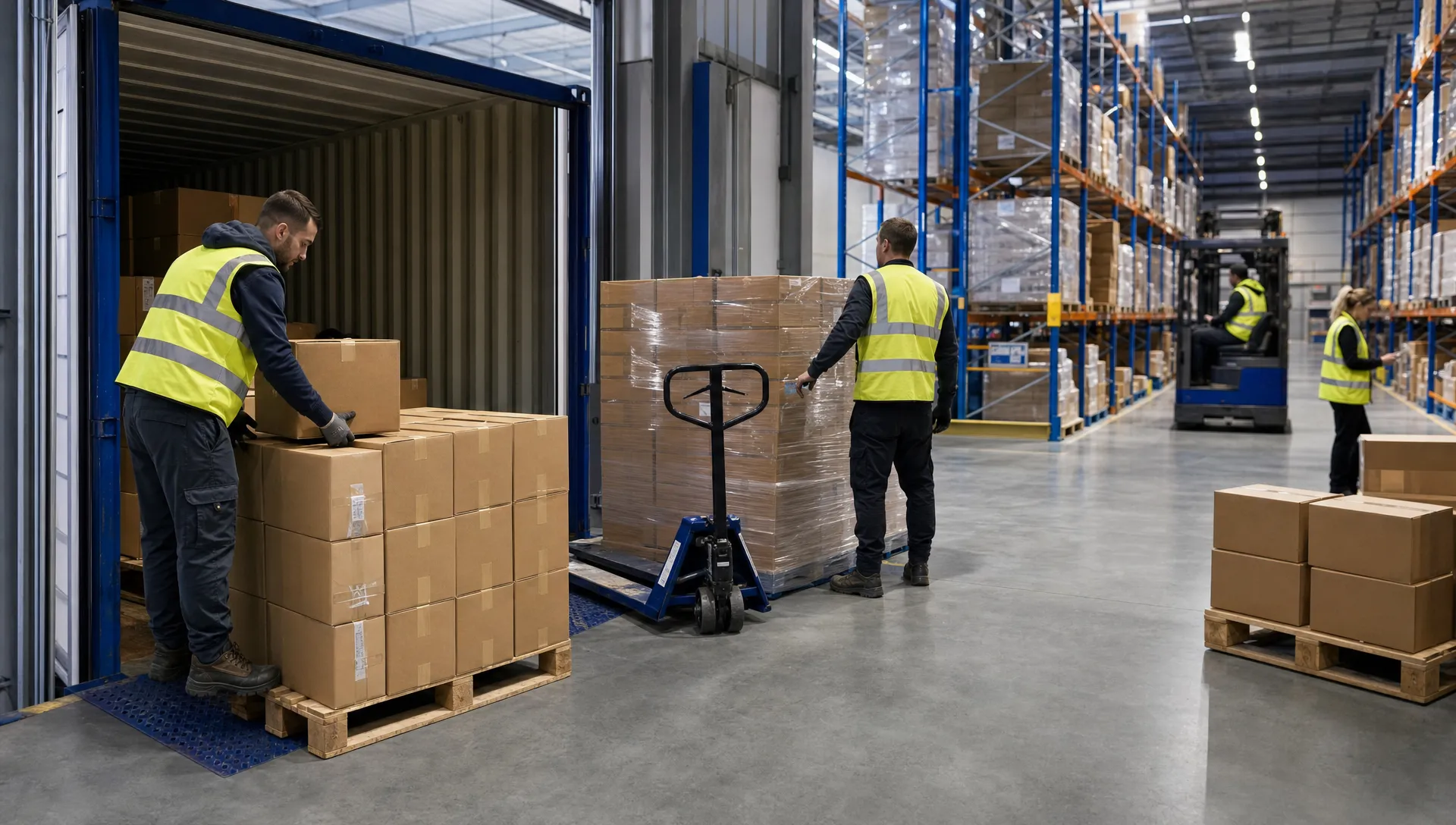
Complete the preparation needed before orders leave
Agree what each saleable unit should look like
Imported stock may arrive in bulk packaging but need individual packing, labels, inserts or bundles before dispatch. Give the warehouse a clear specification and, where appropriate, approve a sample before the full batch is processed.
If products need separating into retail units, this guide to getting bulk-delivered products packed individually explains the packing decisions to make first.
Container unloading and warehousing do not establish product compliance. The responsible business must separately confirm applicable UK product safety, labelling and documentation requirements.
For appliance sellers, resources such as the Phoenix-based appliance repair and troubleshooting guides can help identify after-sales questions to address in customer support materials. Use product-specific UK warranty and safety information for your own customers, rather than treating US repair guidance or prices as a UK reference.
Release stock for the right sales channel
A product ready for a direct-to-consumer parcel may not be ready for a retailer’s distribution centre. Wholesale customers may specify outer packaging, pallet labels, delivery bookings or presentation requirements.
Keep those instructions separate from your basic goods-in checks. For larger retail orders, planning the delivery of a wholesale order should begin before stock is picked.
Only make inventory available to sales channels once the agreed checks and preparation are complete. Confirm whether that release happens automatically or needs your approval.
What affects the total cost?
A useful quote separates the work involved rather than offering an unexplained figure per container. Ask which assumptions would change the price.
| Cost driver | What to ask |
|---|---|
| Unloading labour | Is the price based on pallets, cartons, time or an agreed load description? |
| Equipment | Are handling equipment and any specialist arrangements included? |
| Sorting and checks | Does the quote cover mixed-SKU sorting, carton counts or unit-level checks? |
| Pallets and materials | Are pallets, wrapping, labels and packing materials included? |
| Vehicle and container time | What waiting, additional collection or equipment detention charges could apply? |
| Storage | What charging unit is used and when does charging begin? |
| Sale preparation | Are repacking, labelling, bundling and inspections charged separately? |
| Outbound handling | What does picking, packing and dispatch cost once orders start? |
Compare container unloading and warehousing quotes using the same shipment details and inspection scope. Otherwise, a lower price may simply cover less work.
Separate warehouse charges from shipping-line or haulier charges. Waiting time, port storage and container detention can arise under different agreements, so confirm the relevant allowances with each provider.
Avoid relying on a fixed unloading duration without the warehouse reviewing the load. Carton weights, mixed products, damaged packaging and restricted access can all change the job.
Agree one handover plan, even if several businesses are involved
You can use separate providers for unloading, storage, packing and dispatch. The trade-off is that each transfer needs a clear handover, stock record and responsibility for discrepancies.
Before booking, ask for written confirmation of what will happen from arrival to release. Your brief should identify the expected quantities, receiving checks, storage method, preparation work and target availability date.
Name the person who can approve extra work or decide what happens to damaged stock. Also agree how you will be told that receiving is complete and which quantities remain on hold.
A single provider may reduce transfers, but the same questions still apply. “We handle everything” is less useful than a clear explanation of what is included and when your products will become available.
Frequently asked questions
Can a warehouse unload a container that is not palletised? Yes, if it accepts loose-loaded cargo and has suitable staff, space and handling methods. Tell the provider about carton quantities, weights, mixed SKUs and any awkward items before booking container unloading and warehousing.
How quickly can products be ready to sell? That depends on unloading, checking and any preparation required. Ask for a stock-availability commitment based on your actual shipment, not just an unloading appointment. Confirm whether the timing includes resolving discrepancies and updating stock records.
Should I arrange storage before the container reaches the UK? Ideally, yes. Early booking gives the warehouse time to review the load and reserve receiving capacity. Waiting until arrival can leave fewer options and increase the risk of avoidable transport or container-related charges.
Will the warehouse check every product? Only if that inspection has been agreed. A standard receipt might cover pallet or carton counts and visible condition rather than opening every box. Specify any unit counts, sampling or specialist checks you need.
Category: Warehouse Storage
Arrange unloading, storage and the next step with Gus Logistics
Gus Logistics is a family-run 3PL provider based in Nantwich, Cheshire. Its services include container de-stuffing, pallet and bulk storage, co-packing, order fulfilment and transport, allowing you to discuss the receiving work alongside what happens afterwards.
Racked and floor storage are supported by real-time WMS tracking through a client portal, with batch, serial number and best-before date tracking available. There are no minimum volume requirements.
To discuss container unloading and warehousing, have your packing list, load format, expected arrival and sale-preparation requirements ready. Those details help establish the right scope before a quote is agreed.
Call Gus Logistics on 01270 335014 to discuss getting your container stock into storage and ready for sale.
Looking for a Logistics Partner You Can Trust?
From warehousing and order fulfilment to transport and FSDU design - Gus Logistics handles it all from our base in Nantwich, Cheshire. Over 10 years experience, no minimum volumes, no long contracts.
