
Why Small eCommerce Brands Are Ditching In-House Fulfilment in 2026 and What Happens Next
The shift is already well underway. Here’s what’s driving it, what the data shows, and why outsourcing to a trusted 3PL could be the smartest move your business makes this year.
Running a small eCommerce brand in 2026 is more exciting – and more demanding – than ever. Platforms like Shopify, Amazon, TikTok Shop, and WooCommerce have made it easier than at any point in history to launch an online brand, reach new audiences, and scale quickly. But as any founder who’s stacked pallets in a spare bedroom or wrestled with Royal Mail click-and-drop at midnight will tell you: getting started is the easy part. Keeping up with growth is where things get complicated.
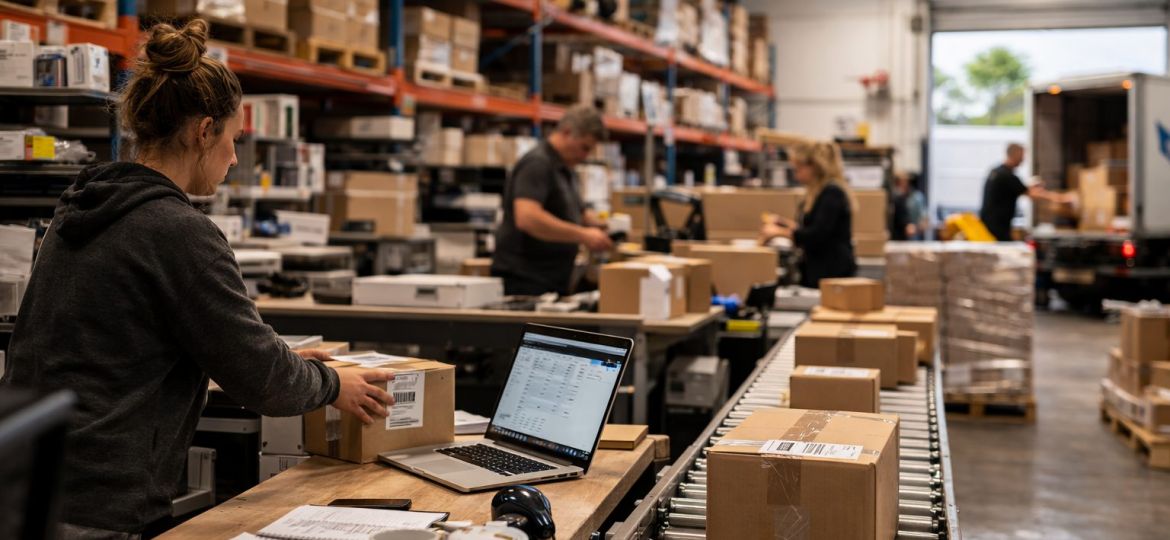
Fulfilment – the process of storing, picking, packing, and shipping your products – is quietly becoming the make-or-break factor for growing eCommerce businesses. For many, the in-house setup that once felt manageable is now a genuine constraint on growth. And in 2026, a record number of UK brands are deciding enough is enough.
The Numbers Don’t Lie: Outsourcing Is Becoming the Norm
Third-party logistics (3PL) is no longer just for the big players. The UK 3PL market is forecast to reach £22.2 billion in revenue in 2025–26, driven largely by the continued explosion of eCommerce. Globally, over 60% of eCommerce shipments are now handled by third-party providers – meaning if you’ve ordered something online recently, chances are a 3PL warehouse packed and posted it.
Perhaps more tellingly, 86% of Fortune 500 companies now rely on 3PLs for at least part of their logistics operations. The stigma once attached to outsourcing – that it’s only for businesses that can’t cope – has well and truly gone. Today, outsourcing fulfilment is a strategic decision, not an admission of defeat.
Customer Expectations Are Rising – Fast
Part of what’s accelerating the shift is the sheer pace at which consumer expectations have changed. Research suggests that over half of UK online shoppers now expect a next-day delivery option at checkout, and a significant proportion will abandon a basket entirely if delivery times look too long. For a small brand fulfilling orders from a garage or office, consistently hitting those expectations – especially during peak periods like Black Friday or the Christmas rush – is nearly impossible without dedicated infrastructure.
This is precisely where a specialist order fulfilment partner changes the game. With trained staff, established courier relationships, and cloud-based warehouse systems already in place, a 3PL can process and ship orders at a speed and scale that most growing brands simply can’t replicate alone.
What’s Actually Pushing Brands Over the Edge?
It’s rarely one single moment that prompts a brand to switch. More often, it’s the accumulation of pressure from several directions at once.
The Hidden Cost of Doing It Yourself
In-house fulfilment looks cheap on paper – until you factor in the true cost. Warehouse rent or storage fees. Packing materials. Staff time. Postage accounts and courier negotiations. Returns handling. The hours spent managing inventory rather than growing the business. When founders do a proper cost-benefit analysis, the numbers often come as a surprise.
A good 3PL partner consolidates all of those costs into a single, transparent arrangement – and because they’re shipping thousands of parcels a week across multiple clients, they can access courier rates that a small brand simply can’t negotiate independently.
The Multi-Channel Problem
Selling on a single platform is increasingly rare. Most growing eCommerce brands are simultaneously managing a Shopify store, an Amazon Seller account, an eBay presence, and potentially TikTok Shop or Etsy on top. Each platform has its own order feeds, labelling requirements, and SLAs to meet.
Coordinating all of that manually is a recipe for errors, delays, and negative reviews. Modern 3PL providers like Gus Logistics integrate with over 60 eCommerce platforms, pulling orders automatically and processing them through a single warehouse system – regardless of where the sale originated. That kind of multi-channel harmony is extraordinarily difficult to replicate in-house.
Scaling Up (and Down) Without the Headache
One of the most underappreciated benefits of outsourcing fulfilment is flexibility. In-house operations are largely fixed – you have a certain amount of space, a certain number of staff, and a certain capacity. When demand spikes, you’re scrambling. When it dips, you’re paying for space and people you don’t need.
A 3PL scales with you. Whether you’re shipping 50 orders a week or 5,000, the infrastructure is already there. For seasonal brands in particular – those with a heavy Q4 weighting, for example – this kind of flexibility is invaluable.
What Happens After the Switch?
For most brands, the experience of moving to a 3PL is transformative – but it’s worth knowing what to expect.
The Integration Process
The transition needn’t be complicated. With a provider like Gus Logistics, onboarding is straightforward: your stock is transferred to the warehouse, your eCommerce platforms are connected via the cloud-based system, and you can typically be up and running – with orders shipping – within 24 hours of going live. There’s no lengthy IT project or painful migration; it’s designed to be quick and frictionless.
Real-Time Visibility
One concern brands often raise before making the switch is loss of control. It’s understandable – when your products are sitting in someone else’s warehouse, it can feel like handing over the keys. In practice, the opposite tends to be true. A quality 3PL gives you more visibility, not less. Cloud-based warehouse management systems provide real-time tracking of your stock levels, order status, and shipping updates – often far more detail than most brands have access to when fulfilling in-house.
Better Customer Experience
Ultimately, the most important outcome is what your customers experience. Faster dispatch times, professional packing, accurate orders, and reliable delivery tracking all contribute to a better post-purchase journey – and that translates directly into repeat business, better reviews, and stronger brand loyalty.
According to research by Statista, customer satisfaction with delivery experience is one of the top three factors influencing whether a shopper returns to a retailer. Getting fulfilment right isn’t just an operational detail – it’s a commercial priority.
Is 3PL Right for Every Brand?
Honestly? Not necessarily – at least not at every stage. If you’re shipping fewer than 20–30 orders per week, the economics may not yet stack up in your favour. But for brands approaching and beyond that threshold, particularly those with ambitions to scale, the case for outsourcing is increasingly compelling.
The brands that tend to benefit most are those selling across multiple channels, those with seasonal demand peaks, those importing goods and needing container de-stuffing and storage solutions, and those whose founders would rather spend their time on product, marketing, and customer relationships than on logistics admin.
The Bottom Line
The trend is clear: in-house fulfilment is becoming the exception rather than the rule for growing UK eCommerce brands. The combination of rising customer expectations, multi-channel complexity, and the genuine cost and flexibility advantages of outsourcing is making the decision easier every year.
The question for most brands is no longer whether to make the switch – it’s when, and who to trust with it.
If you’re based in the North West and want to explore what a 3PL partnership could look like for your business, get in touch with the Gus Logistics team today. With over 10 years of experience supporting eCommerce brands of all sizes, we’d love to help you take fulfilment off your plate – so you can focus on what you do best.
