
Container De-Stuffing and What Happens to Your Stock on Arrival
When your first imported container is heading straight to a third-party logistics provider, it is normal to feel a little unsure about what happens next. Your stock has left the supplier, crossed a port, cleared the necessary steps to reach the warehouse, and now it needs to be unloaded, checked, counted and made available for sale.
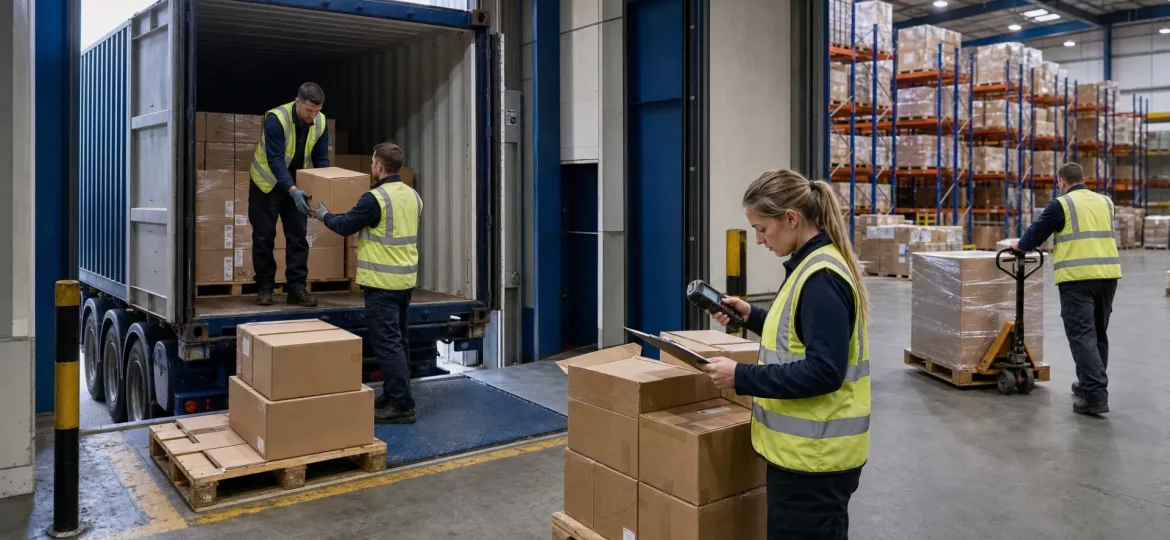
That warehouse arrival process is called container de-stuffing. In plain English, it means unloading the contents of a shipping container and turning that stock into usable warehouse inventory. Done well, it gives you accurate stock records, fewer picking errors and a clear view of what you actually have available. Done badly, it can create stock discrepancies before your goods have even reached the shelves.
For importers new to using a 3PL, this guide explains what normally happens once your container arrives, step by step.
What container de-stuffing actually involves
Container de-stuffing is more than simply opening the doors and pulling boxes out. It is part of the wider goods-in process, where the warehouse receives your inbound shipment and checks it against the information you supplied in advance.
A typical process includes:
- Receiving the container at the warehouse
- Checking the container number, seal and booking details
- Unloading loose cartons or pallets
- Inspecting goods for obvious damage
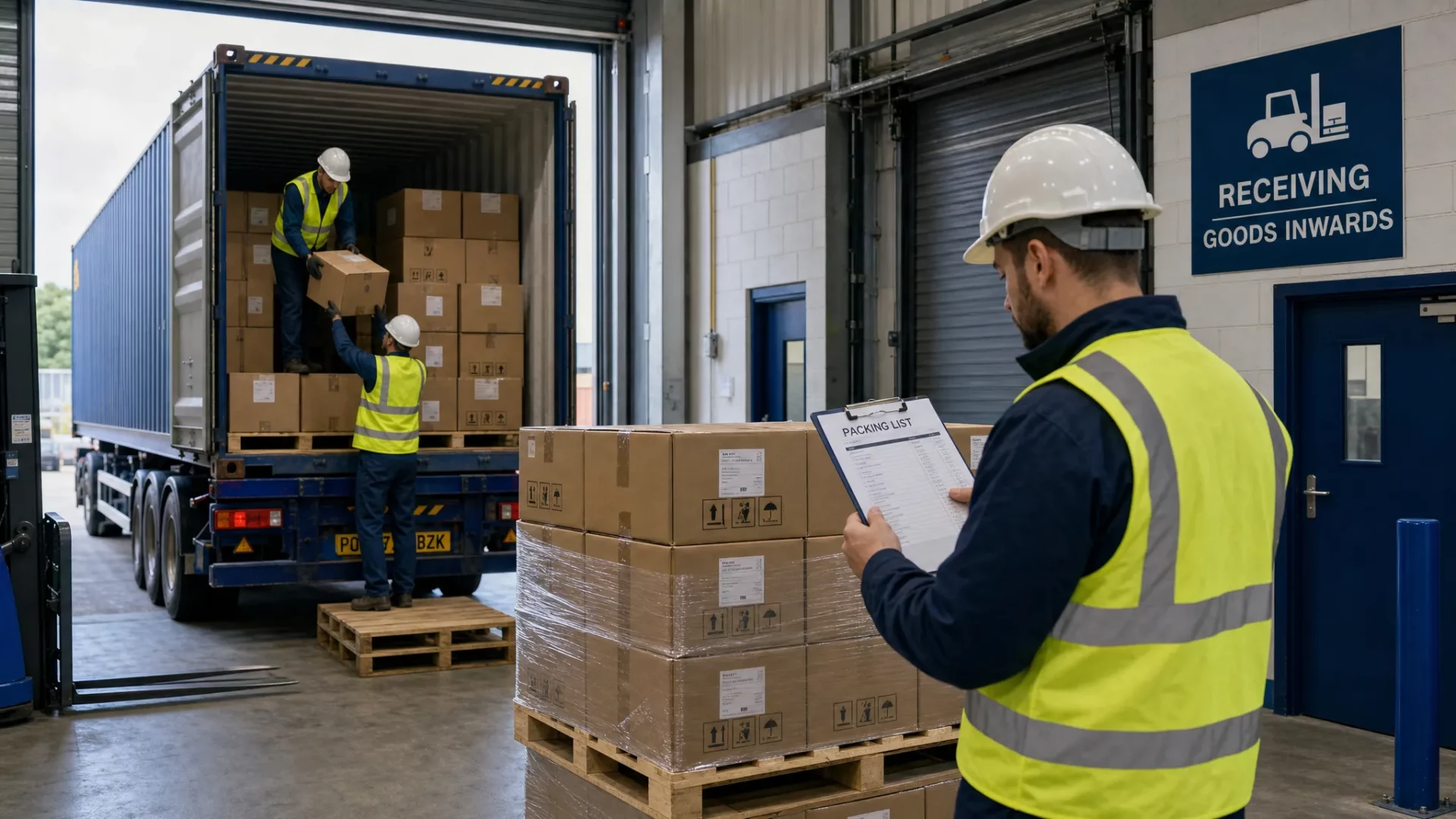
- Counting stock against the packing list or purchase order
- Recording any discrepancies
- Booking stock into the warehouse management system, often called a WMS
- Labelling, palletising if needed and moving stock into storage locations
Good logistics management starts before the container reaches the warehouse. The more accurate your paperwork and product information, the smoother the arrival is likely to be.
Before the container arrives: what your 3PL needs from you
A 3PL cannot check stock properly without knowing what should be inside the container. Before arrival, you will usually need to send clear inbound documentation.
Useful information includes:
- Container number and expected arrival date
- Haulier details and delivery booking reference
- Supplier packing list
- Purchase order or inbound reference
- SKU codes and product descriptions
- Carton quantities and units per carton
- Pallet details if the goods are palletised
- Batch numbers, serial numbers or best-before dates if relevant
- Any special handling instructions
If the stock is loose-loaded, your 3PL should know this in advance. A loose-loaded container takes more time and labour to unload than a palletised container. If there are many SKUs mixed across cartons, the warehouse may also need extra time to sort and count the goods correctly.
It is also worth making one point clear: container de-stuffing is not the same as customs clearance. Your freight forwarder, customs agent or shipping partner usually handles the port and customs side. The 3PL handles the physical receiving, checking and storage once the container is delivered to the warehouse.
Step 1: Arrival and initial checks
When the container reaches the warehouse, the receiving team will normally confirm that it matches the expected inbound booking. This includes checking the container number, vehicle details, delivery reference and, where relevant, the seal number.
The seal check matters because it helps confirm that the container has not been opened since it was sealed for transport. If the seal number does not match the paperwork, or if the seal appears damaged, the warehouse should record this before unloading begins.
The team may also inspect the container externally and internally for obvious issues, such as water ingress, heavy impact damage or unsafe loading. These checks are important because damage discovered later can be harder to trace back to the correct stage of the journey.
Once the booking and safety checks are complete, the container can be positioned for unloading.
Step 2: Unloading the container
The unloading method depends on how the supplier loaded the goods. Some containers arrive palletised, meaning goods are already stacked on pallets and can often be removed using warehouse handling equipment. Others arrive loose-loaded, meaning cartons are stacked directly inside the container.
Loose-loaded containers are common for importers because they can make better use of shipping space. However, they also require more manual handling at the warehouse.
| Arrival format | What it means | Typical impact on goods-in |
|---|---|---|
| Palletised stock | Goods arrive already stacked on pallets | Usually faster to unload, easier to move into storage if pallet labels are clear |
| Loose-loaded cartons | Cartons are stacked directly in the container | Takes longer to unload and may need sorting, palletising and extra checks |
| Mixed SKU pallets or cartons | Different products are packed together | Requires careful sorting to avoid incorrect stock records |
| Batch or date-controlled goods | Stock must be tracked by batch, serial number or best-before date | Needs accurate capture during goods-in before stock is released |
During unloading, the warehouse team will look for obvious damage, unstable cartons, split packaging or signs that stock has shifted in transit. Any visible damage should be separated or noted so it can be reported back to you.
If cartons need to be palletised, the team will usually stack them by SKU, product type, batch or another agreed method. This makes counting and storage easier later in the process.
Step 3: Goods-in checking
Goods-in checking is where the warehouse compares what has arrived against what was expected. This is one of the most important parts of the whole process because it creates the foundation for accurate stock control.
At this stage, the team may check:
- SKU codes on carton labels
- Product descriptions against the packing list
- Number of cartons received
- Units per carton, where applicable
- Batch, serial or best-before details if required
- Condition of packaging
- Any missing, surplus or unidentified stock
The exact level of checking should be agreed before the container arrives. For example, some importers want carton-level counts only, while others require unit-level counting across every SKU. Unit-level counting gives more detail, but it also takes longer, particularly when cartons contain mixed products.
If your supplier labels cartons clearly, goods-in is much easier. If cartons arrive with vague product names, missing SKU codes or handwritten markings, the warehouse may need support to identify stock correctly. This can delay booking in and may create uncertainty over available stock.
Step 4: Stock counting and discrepancy reporting
Once goods are unloaded and sorted, the warehouse counts the stock against the expected quantities. Any difference between expected and received stock should be recorded as a discrepancy.
Common discrepancies include:
- Fewer cartons received than expected
- More cartons received than expected
- Cartons containing different quantities than listed
- Incorrect SKUs received
- Damaged goods
- Unlabelled or unclear cartons
- Mixed items in cartons that were expected to contain one SKU
A good discrepancy report should be clear enough for you to act on. It should explain what was expected, what was received and what needs a decision. In some cases, damaged or unclear stock may be placed into a quarantine area until you confirm what should happen next.
This is where many importers first discover supplier packing issues. That is not always a bad thing. If your 3PL finds recurring discrepancies early, you can feed that information back to the supplier and improve future shipments.
Step 5: Booking stock into the WMS
After stock has been counted and checked, it needs to be booked into the warehouse management system. A WMS is the system that records what stock is in the warehouse, where it is stored and whether it is available for orders.
This step usually includes entering or confirming:
- SKU references
- Quantities received
- Storage location
- Pallet IDs or location labels
- Batch numbers, serial numbers or dates if required
- Stock status, such as available, damaged or quarantined
Stock should not normally be treated as available for sale until it has been properly booked in. If your sales channels are connected to warehouse stock records, booking in is the point where inventory can start feeding through to your order process, depending on how your systems are set up.
For eCommerce importers, this is a critical moment. If stock is booked in incorrectly, customers may be able to order products that are not actually available, or your team may believe you are out of stock when goods are sitting in the warehouse under the wrong SKU.
Step 6: Labelling, palletising and racking
Once the goods are checked and booked in, the warehouse team prepares them for storage. Loose cartons may be palletised, pallets may be wrapped, and stock may be labelled with pallet IDs or location references.
The stock is then moved into its agreed storage area. This could be racked pallet storage, bulk floor storage, pick-face locations or a combination of these. The right setup depends on the product size, order volume, handling requirements and how quickly the stock is expected to move.
Fast-moving SKUs may be placed closer to picking areas. Slow-moving or bulk stock may be stored higher in racking or in reserve areas. Date-controlled goods may need to follow first-expiry-first-out rules. Fragile or heavy items may need specific handling methods.
This is the point where your imported stock stops being an inbound shipment and becomes managed warehouse inventory.
Step 7: Releasing stock for orders or onward movement
Once the WMS shows stock as available, it can be used for the next stage of your operation. For some importers, that means picking and packing eCommerce orders. For others, it may mean sending pallets to retailers, moving stock to another warehouse, preparing wholesale orders or holding goods until a promotion goes live.
If the goods need extra work before sale, such as re-packing, labelling, kitting or point of sale assembly, this should be planned before the container arrives. It is much easier to build those requirements into the receiving process than to locate and rework stock later.
The key is to make the arrival plan match the commercial plan. If you need products available for a launch date, retail delivery window or seasonal peak, your 3PL needs to understand that timeline before the container lands.
What can slow container de-stuffing down?
Most delays are caused by missing information or stock arriving in a different format than expected. A warehouse can only work efficiently when the inbound plan matches the physical goods.
The most common causes of delay include poor carton labelling, missing packing lists, mixed SKUs inside cartons, unexpected loose-loaded stock, damaged pallets, unclear batch requirements and last-minute delivery changes.
Another issue is unrealistic timing. Importers sometimes expect a container to arrive in the morning and all stock to be available for dispatch immediately. That may be possible for simple, palletised goods with clear paperwork, but it is not something to assume. A mixed container with many SKUs, loose cartons and detailed checks will naturally take longer.
The best approach is to ask your 3PL how they want inbound information supplied, how much notice they need, and what level of checking is included. Clear expectations prevent frustration on both sides.
A simple container arrival checklist for importers
Before your next container reaches the warehouse, check that you have covered the basics.
| Question | Why it matters |
|---|---|
| Have you sent a complete packing list? | The warehouse needs it to check what has arrived |
| Are all SKUs clearly labelled? | Clear labels reduce identification errors and delays |
| Is the stock palletised or loose-loaded? | This affects labour, time and unloading plans |
| Are batch, serial or date details required? | These must be captured during goods-in, not guessed later |
| Do you need damaged stock quarantined? | The warehouse needs to know how exceptions should be handled |
| When do you need stock available? | Timing affects labour planning and onward dispatch expectations |
If this is your first container into a 3PL, it is worth walking through the process in advance. A short planning call can prevent confusion on arrival day.
Frequently asked questions
How long does container de-stuffing take? It depends on the container size, whether the stock is palletised or loose-loaded, how many SKUs are inside, and what level of checking is required. Ask your 3PL for an expected timeline before the delivery is booked.
Do I need to palletise stock before it reaches the 3PL? Not always. Loose-loaded stock is common, but it usually takes longer to unload and process. Palletised stock can be quicker to handle if pallets are safe, well stacked and clearly labelled.
What happens if the stock count does not match my supplier paperwork? The warehouse should record the discrepancy and report it to you. Depending on the issue, stock may be booked in with adjusted quantities, placed in quarantine or held while you investigate with the supplier.
Can my orders start dispatching as soon as the container arrives? Usually not immediately. Stock normally needs to be unloaded, checked, counted and booked into the WMS before it is available for orders. The simpler the shipment and the clearer the paperwork, the faster this can happen.
What should I do if my cartons are not labelled properly? Tell your 3PL before arrival if you know labels may be unclear. They may be able to help identify and relabel stock, but this will usually require extra handling time and clear product information from you.
If you are importing stock into the UK and want a practical 3PL partner to handle container de-stuffing, goods-in, storage and onward movement, Gus Logistics can help. Based in Nantwich, Cheshire, the team supports businesses with pallet and bulk warehouse storage, order fulfilment and UK transport services. To discuss an upcoming container arrival, call 01270 335014 or get in touch via the contact page.
Looking for a Logistics Partner You Can Trust?
From warehousing and order fulfilment to transport and FSDU design - Gus Logistics handles it all from our base in Nantwich, Cheshire. Over 10 years experience, no minimum volumes, no long contracts.
