
FSDU vs Shelf Displays: Which Works Harder for Your Product?
If you are planning an in-store promotion, one question comes up quickly: should your product fight for attention on the shelf, or should it stand on its own in a Free Standing Display Unit?
It is not a small decision. Retail space is limited, retailer approval can take time, and the wrong display format can leave good products unnoticed. Shelf displays and FSDUs both have a place in retail, but they do different jobs. A shelf display works with the shopper's existing journey through the aisle. An FSDU creates a separate point of attention, often away from the standard fixture.
So, when comparing FSDU vs shelf displays, the real question is not which one looks better. It is which one works harder for your product, your campaign and your retailer relationship.
The basic difference between shelf displays and FSDUs
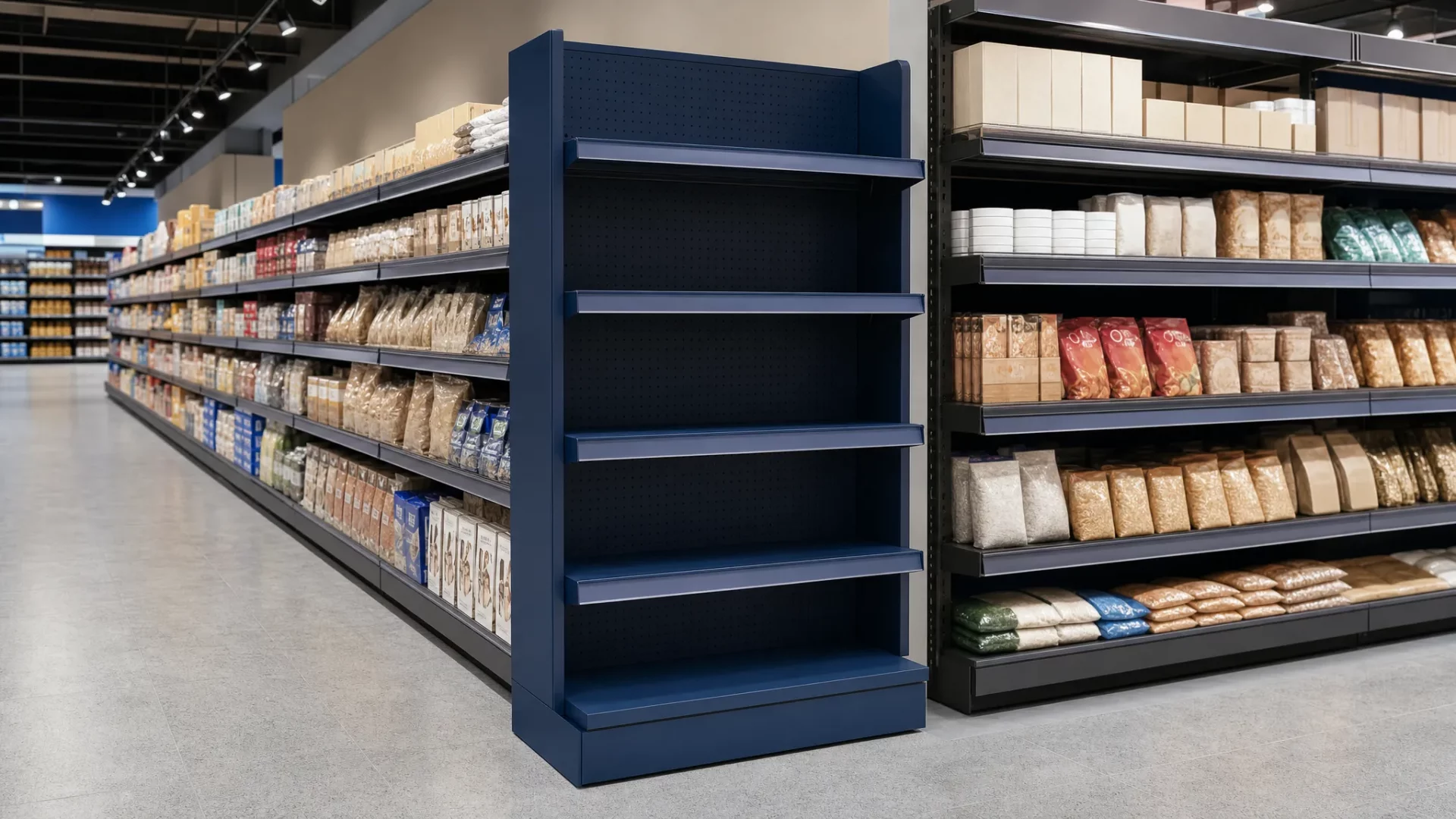
Retail shelving display units are part of the existing shelf environment. They can include shelf-ready packaging, branded trays, shelf strips, shelf talkers, risers, shelf dividers and other small point-of-sale features. Their job is to make a product easier to find, easier to understand or more appealing within its normal category space.
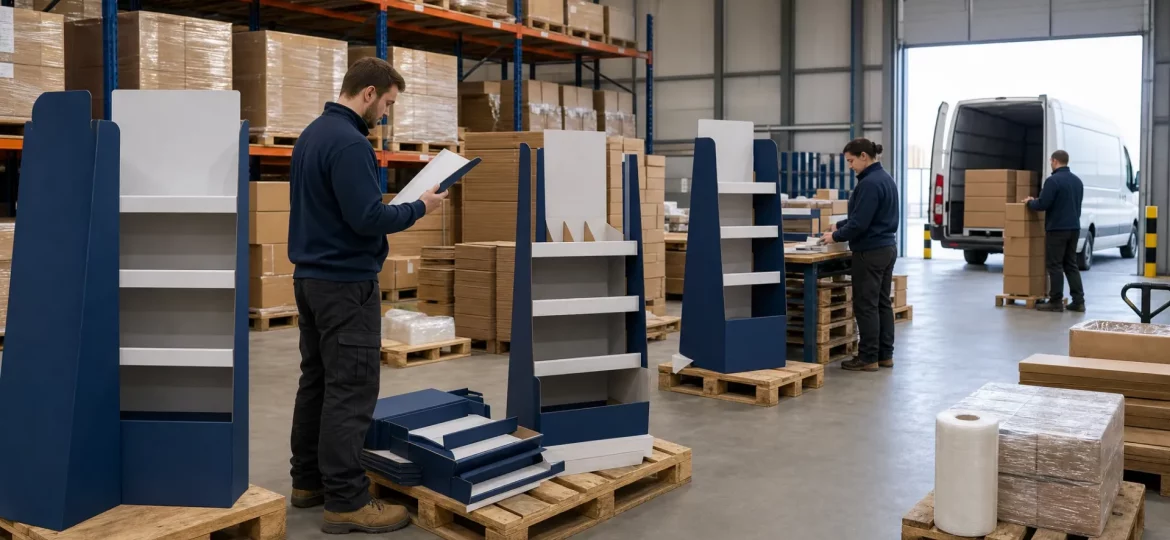
An FSDU is a separate display unit that stands independently on the shop floor. It may use shelves, hooks, dump bins or compartments, depending on the product. It can be placed in promotional areas, aisle ends, seasonal zones or other high-traffic spaces, subject to retailer approval. If you want a fuller definition of the format, this guide to what an FSDU is explains the main types and uses.
The difference matters because a shelf display is usually competing inside the category. An FSDU can create a second selling location outside the normal shelf set. That can change how shoppers notice, compare and buy the product.
Where shelf displays genuinely work well
Shelf displays are often the right choice for products shoppers already expect to find in a specific aisle. If someone is buying pasta sauce, toothpaste, pet food or batteries, they are likely to go to the relevant section and compare familiar options. In that situation, a well-designed shelf display can help your product stand out without asking the retailer for extra floor space.
They also work well for long-term listings. A shelf display can support consistent availability and repeat buying because it sits within the retailer's normal replenishment process. Store teams already know where the stock belongs, and shoppers can return to the same place each time they buy.
Shelf displays can also be more practical for smaller campaigns or lower-margin products. They often need less material, less transport space and less in-store setup than a full FSDU. If your campaign is mainly about improving shelf presence rather than creating a major promotional moment, shelf-based point of sale may be enough.
There is another advantage that should not be overlooked: shelf displays keep your product in context. If shoppers want to compare size, price, ingredients, colour, flavour or specification, being close to similar products can help. For considered purchases, comparison is part of the decision process.
Where shelf displays start to struggle
The main weakness of shelf displays is that they rely on shoppers reaching the shelf in the first place. If your product is new, seasonal, impulse-led or not yet part of the shopper's routine, the shelf may not give it enough attention.
A shelf is also a crowded environment. Your product may sit next to competitors with similar packaging, similar promotions and similar claims. Even with strong branding, it is hard to control the wider visual context. Your display has to work within the retailer's fixture, planogram and category rules.
Shelf space can be especially limiting when a product needs explanation. If you are launching something new, bundling products together, showing a usage occasion or promoting a limited-time offer, a small shelf strip or tray may not give you enough room to make the message clear.
There is also the issue of stock volume. A shelf display can only hold so much stock before it disrupts the shelf layout. If a promotion is expected to move higher volumes quickly, frequent replenishment may become a problem. Poorly replenished shelf displays can look untidy or empty, which weakens the campaign.
What FSDUs do differently
An FSDU creates a dedicated selling space for your product. Instead of relying only on the category shelf, it gives the product its own physical presence. That can be useful when you want to interrupt routine shopping behaviour and draw attention to a launch, seasonal offer or retail campaign.
FSDUs also give brands more creative control. The unit can carry stronger graphics, clearer messaging and a product arrangement designed around the promotion. It can show multiple variants, bundle related items or make a hero product more prominent. For brands exploring wider point of sale displays, FSDUs are often the format that offers the most space to tell a simple in-store story.
That does not mean an FSDU is always better. It needs retailer approval, floor space, suitable construction and proper delivery planning. If it is too large, too weak, difficult to replenish or awkward for store staff, it can create more friction than value.
But when the product benefits from visibility, explanation or impulse purchase, an FSDU can work much harder than a shelf display. It is not just holding stock. It is acting as a mini retail destination.
FSDU vs shelf displays: a practical comparison
Use this table as a working comparison when deciding which route is more suitable for your product.
| Factor | Shelf display | FSDU |
|---|---|---|
| Visibility | Strongest for shoppers already in the aisle | Can attract attention in secondary or promotional locations |
| Retail space | Uses existing shelf space | Requires approved floor space |
| Brand control | Limited by shelf layout and nearby competitors | Greater control over graphics, shape and product presentation |
| Best use | Everyday lines, repeat purchases and category browsing | Launches, seasonal campaigns, impulse products and promotions |
| Stock capacity | Usually limited by fixture space | Can hold more campaign stock if designed correctly |
| Setup | Often simpler for store teams | May need pre-fill, assembly or clear store instructions |
| Cost profile | Usually lower display production and logistics cost | Higher upfront work, but potentially stronger campaign impact |
| Shopper behaviour | Supports comparison and routine buying | Creates a separate reason to stop, notice and buy |
How each option performs against common retail goals
New product launches
For a new product, shelf space is important because it gives the product a permanent home. Shoppers need to know where to find it again. However, the shelf alone may not be enough to introduce the product properly, especially if the brand is not already recognised.
An FSDU can be more effective for the launch phase because it gives you space to explain what is new, who it is for and why shoppers should try it. It can also place the product in a higher-footfall area where people who would not normally visit the category can still notice it.
Seasonal promotions
Shelf displays work well when the product naturally belongs in a seasonal category. For example, a known Christmas line or summer barbecue product may perform well with strong shelf positioning in the right aisle.
FSDUs often become more compelling when the campaign crosses categories. A seasonal gift item, snack bundle, garden accessory or limited-edition product may benefit from a standalone unit near entrances, aisle ends or promotional zones. The display can make the seasonal occasion obvious without relying on shoppers searching for the product.
Premium or technical products
Premium products can benefit from shelf displays when comparison matters. Being placed next to lower-priced or similar alternatives can help justify the difference if the packaging communicates quality clearly.
However, if the product needs more explanation, an FSDU may be stronger. It gives more room for benefit-led messaging, product education and a cleaner presentation. That can be useful for health, beauty, electronics accessories, home products or any item where the shopper needs a little more confidence before buying.
Everyday replenishment products
This is where shelf displays often win. If shoppers buy the product regularly and expect to find it in a specific place, the shelf is doing important work. The priority is availability, clear pricing and reliable replenishment.
An FSDU may still help during a promotion, but it should not replace the shelf position. For repeat purchase products, the best approach is often shelf presence for routine buying and an FSDU for campaign visibility.
Impulse-led products
For impulse products, FSDUs usually have the advantage. The shopper may not have planned to buy, so the display needs to create the prompt. Placement, colour, product accessibility and a simple message all matter.
Shelf displays can still support impulse, especially near checkout or in high-traffic fixture areas, but a standard category shelf may be too passive. If the product is easy to understand and suited to quick decision-making, an FSDU can create a stronger buying moment.
The cost question: cheaper is not always lower risk
Shelf displays are often cheaper to produce and easier to distribute. That makes them attractive, particularly for brands testing retail activity or working with tighter margins. But cost should not be judged only by the display unit itself.
A lower-cost shelf display that is barely noticed can still be an expensive mistake. Equally, a more expensive FSDU is not automatically worth it if the product does not need standalone visibility or if the retailer cannot place it well.
A better way to judge cost is to look at the full campaign. Consider the value of the stock held in the display, the expected campaign duration, the number of stores, the margin on each sale, the complexity of setup and the risk of poor compliance. In plain English, will the display actually reach the shop floor, look right and stay stocked?
This is where operational planning becomes just as important as design. A brilliant FSDU that arrives late, damaged, overfilled or with unclear assembly instructions will not work hard for your product.
Operational reality: the display has to reach stores correctly
FSDUs ask more from the supply chain than most shelf displays. They may need to be manufactured, packed, pre-filled, palletised, stored, dispatched and delivered to multiple store locations or retailer depots. If any step is rushed, the in-store result can suffer.
Before committing to an FSDU campaign, it is worth answering a few practical questions:
- Will the unit be delivered flat-packed or pre-filled?
- How much stock should each unit hold at launch?
- Will stores need refill stock during the campaign?
- Can the display withstand transport and normal store handling?
- Are the dimensions suitable for retailer requirements and delivery routes?
- Who is responsible for packing, labelling and dispatch accuracy?
These questions may not feel as exciting as artwork and branding, but they decide whether the display works in the real world. If you are planning a campaign that needs design, manufacture, pre-fill and store distribution, Gus Logistics provides FSDU support for retail brands from concept through to dispatch.
Transport planning also matters. Some campaigns need timed delivery, retailer booking slots, multi-drop routes or careful handling because the displays are already filled with stock. Planning transport and delivery requirements early reduces the risk of delays once the promotion is live.
When to choose shelf displays, and when to choose FSDUs
There is no universal answer, but the pattern is usually clear once you look at the job the display needs to do.
| Choose shelf displays if… | Choose FSDUs if… |
|---|---|
| Your product is already known and regularly bought | Your product needs extra attention or explanation |
| Shoppers expect to find it in a specific category | You want a secondary selling location outside the normal shelf |
| The campaign is small, simple or long-term | The campaign is a launch, seasonal push or short-term promotion |
| You need to keep costs and logistics simple | You are prepared to invest in stronger in-store impact |
| Comparison with nearby products helps the sale | Standing apart from competitors helps the sale |
For many brands, the strongest answer is not one or the other. It is both. The shelf gives the product a permanent home. The FSDU creates campaign visibility and drives shoppers towards the product. Once the promotion ends, the shelf position can continue capturing repeat purchase.
The honest answer: which works harder?
Shelf displays work hard when the shopper is already in the right place, already considering the category and mainly needs a clear reason to choose your product. They are practical, efficient and often the right option for everyday retail presence.
FSDUs work harder when your product needs to earn attention. They are stronger for launches, seasonal campaigns, impulse buys, promotional bundles and products that need more space to explain their value. They also give you more control over how the product is presented, provided the unit is well designed and properly delivered.
So the conclusion is not that shelf displays are weak. It is that FSDUs are better suited to moments where visibility, storytelling and secondary placement matter. If your product needs to do more than sit within the category, an FSDU is usually the harder-working option.
Frequently Asked Questions
Are FSDUs better than shelf displays? Not always. FSDUs are often better for launches, promotions and impulse products, while shelf displays can be better for known products, repeat purchases and long-term category presence.
Are retail shelving display units cheaper than FSDUs? They are often cheaper to produce and simpler to distribute, but the best choice depends on the full campaign cost, the product margin, the number of stores and how much visibility the product needs.
Can an FSDU include shelves? Yes. Many FSDUs use shelves, hooks, trays or bins. The key difference is that an FSDU stands independently, rather than forming part of the retailer's fixed shelving.
When should a brand use both shelf displays and FSDUs? Using both can make sense when you want a permanent shelf position for repeat buying and a separate promotional display to create extra attention during a launch or campaign.
What should be planned before producing an FSDU? You should confirm retailer requirements, display dimensions, stock capacity, artwork, packing method, transport needs, delivery timings and whether the unit will be flat-packed or pre-filled.
Plan your next retail display with Gus Logistics
Choosing between shelf displays and FSDUs is not just a design decision. It affects stock, packing, transport, store setup and the success of your campaign.
Gus Logistics supports retail brands with FSDU design, manufacture, pre-fill and dispatch, alongside warehousing, co-packing and transport services from its base in Nantwich, Cheshire. If you are weighing up the best display format for your next retail promotion, call 01270 335014 or get in touch via the contact page to talk through your product, timings and store delivery requirements.
Looking for a Logistics Partner You Can Trust?
From warehousing and order fulfilment to transport and FSDU design - Gus Logistics handles it all from our base in Nantwich, Cheshire. Over 10 years experience, no minimum volumes, no long contracts.
