
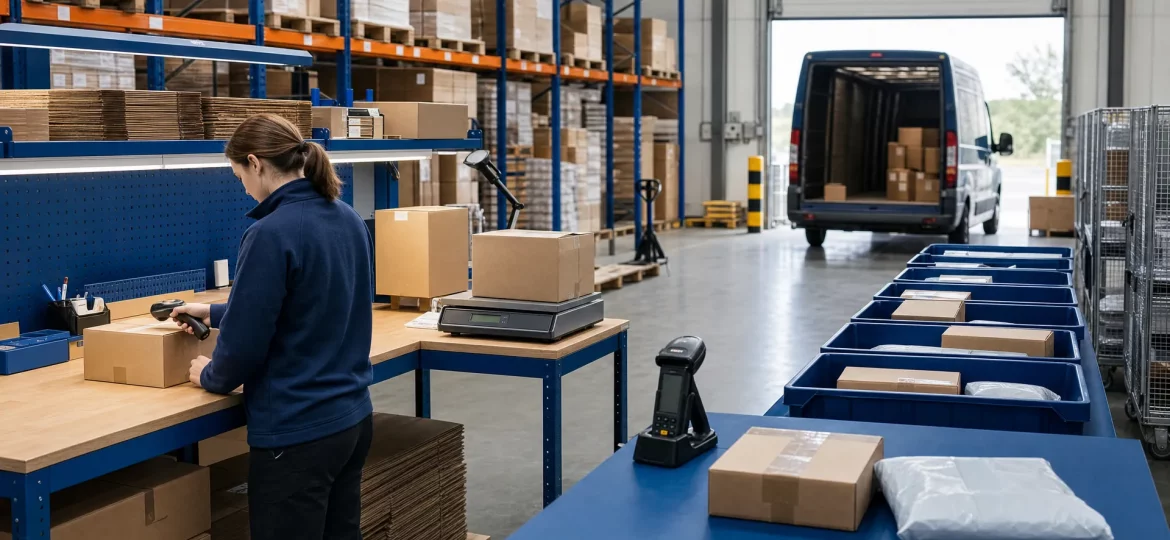
How to Reduce Fulfilment Errors and Protect Your Customer Reviews
A wrong item in the box feels small when it happens once. For a growing eCommerce business, repeated fulfilment errors can quickly become expensive: refunds, replacement shipments, extra customer service work and reviews that put future customers off before they buy.
Good order fulfilment for eCommerce is not just about dispatching quickly. It is about building a process that sends the right product, in the right quantity, to the right address, in the right condition, as consistently as possible.
If you are currently handling orders in-house, or you are reviewing whether your current 3PL is doing enough, this guide explains the practical steps that reduce errors and protect your customer reputation.
Why fulfilment errors damage reviews so quickly
Customers rarely see the work that goes into receiving stock, storing it, picking it, packing it and booking transport. They only see the result. If the parcel is late, damaged or wrong, the brand gets the blame.
That matters because customer reviews are often one of the first trust signals a buyer checks before ordering. The Competition and Markets Authority guidance on online reviews also makes clear that reviews need to be handled fairly and honestly, which means the best protection is not hiding problems. It is preventing avoidable problems in the first place.
The most common fulfilment errors usually come from process gaps rather than careless people. A picker chooses from a shelf with similar products. Stock is booked into the wrong location. An address is copied manually from one system to another. A multi-item order is packed without a final check. Each mistake has a root cause, and most root causes can be controlled.
Start by defining what counts as a fulfilment error
You cannot reduce errors properly until you know what you are measuring. Many businesses only track obvious mistakes, such as sending the wrong product, but fulfilment accuracy is wider than that.
Use a simple error log that records the type of issue, the order number, the SKU, the channel, the person or process stage involved and the resolution. The aim is not to blame individuals. The aim is to spot patterns.
| Fulfilment error | What the customer experiences | Likely process cause | Practical prevention |
|---|---|---|---|
| Wrong item sent | Customer receives a product they did not order | Similar SKUs, poor shelf labelling or manual picking | Barcode scanning, clearer SKU naming and separated locations |
| Wrong quantity | Missing units or too many units in the parcel | Pick list not checked or multi-pack confusion | Quantity prompts, pack bench checks and clear unit rules |
| Late dispatch | Delivery arrives later than expected | Orders not imported quickly or cut-offs missed | System integration, realistic cut-offs and daily exception checks |
| Damaged parcel | Item arrives broken, crushed or leaking | Poor packaging choice or rough handling risk | Product-specific packing rules and stronger packaging materials |
| Incorrect address | Parcel delayed or returned | Manual address entry or incomplete customer data | Automated order import and address validation checks |
| Stock discrepancy | Order accepted but item is not available | Poor goods-in process or missed stock adjustments | Regular cycle counts and accurate warehouse management system records |
Once you have three to four weeks of data, trends usually become clear. If 70 percent of errors come from one product range, one marketplace or one packing step, that is where to focus first.
Get stock accuracy right before picking starts
Many fulfilment errors begin long before an order is placed. If stock is received incorrectly, labelled badly or stored in the wrong location, the picking team is already working against the odds.
A reliable goods-in process should confirm what has arrived, compare it with the expected delivery, record any shortages or damages, and make sure the stock is put away in the correct location. For products with batch codes, serial numbers or best-before dates, those details should be captured before the item is available for sale.
This is especially important if you sell across several channels. If Shopify, Amazon, eBay and wholesale orders are all drawing from the same stock pool, a small stock error can lead to overselling and cancelled orders. That is not just an operational issue. It is a customer experience issue.
Good storage also reduces picking mistakes. Similar products should not sit loosely next to each other without clear identification. Fast-moving items should be easy to access. Slow-moving or seasonal stock should still be visible in the system, even if it is stored away from the main pick face.
If your stock is outgrowing a back room, unit or small warehouse, using structured pallet and bulk storage with proper stock visibility can help reduce the messy conditions that often lead to errors.
Reduce picking errors with systems, not memory
A fulfilment operation should not depend on someone remembering which product looks similar to another. Memory is useful, but it is not a control system.
The strongest picking processes are designed so the correct choice is the easiest choice. That usually means clear product locations, barcode scanning, accurate pick lists and a warehouse management system that updates stock as orders move through the process.
For eCommerce sellers, system integration is particularly important. If orders are manually downloaded, printed, copied or rekeyed, every touchpoint creates a chance for error. Direct integration between sales platforms and the fulfilment operation reduces manual handling and helps orders move faster.
Gus Logistics provides order fulfilment and pick and pack services that integrate with 60+ platforms, including Shopify, Amazon, eBay, WooCommerce and Magento. For growing brands, that kind of connection can reduce the need for manual order handling while improving dispatch consistency.
Picking accuracy also depends on how orders are grouped. Single-item orders may be simple, but multi-item orders need more control. If one customer buys five different products, the picker and packer both need a way to confirm that all five are present before the parcel is sealed.
Make packing your final quality control point
Packing should not be treated as the final chore before dispatch. It is the last opportunity to catch an error before the customer does.
A good packing process checks the order reference, the product, the quantity, the delivery service and any special instructions. If the product is fragile, liquid, high value or temperature sensitive, the packing rules should be specific enough that different team members pack it the same way.
This is also where brand reputation is protected. A product can be picked correctly but still generate a bad review if it arrives crushed, leaking or poorly presented. Packaging should be strong enough for the delivery route and suitable for the item, not simply the cheapest box available.
For businesses sending bundles, promotional kits or retail-ready packs, packing rules matter even more. If the customer expects a complete set, a missing component can make the whole order feel wrong.
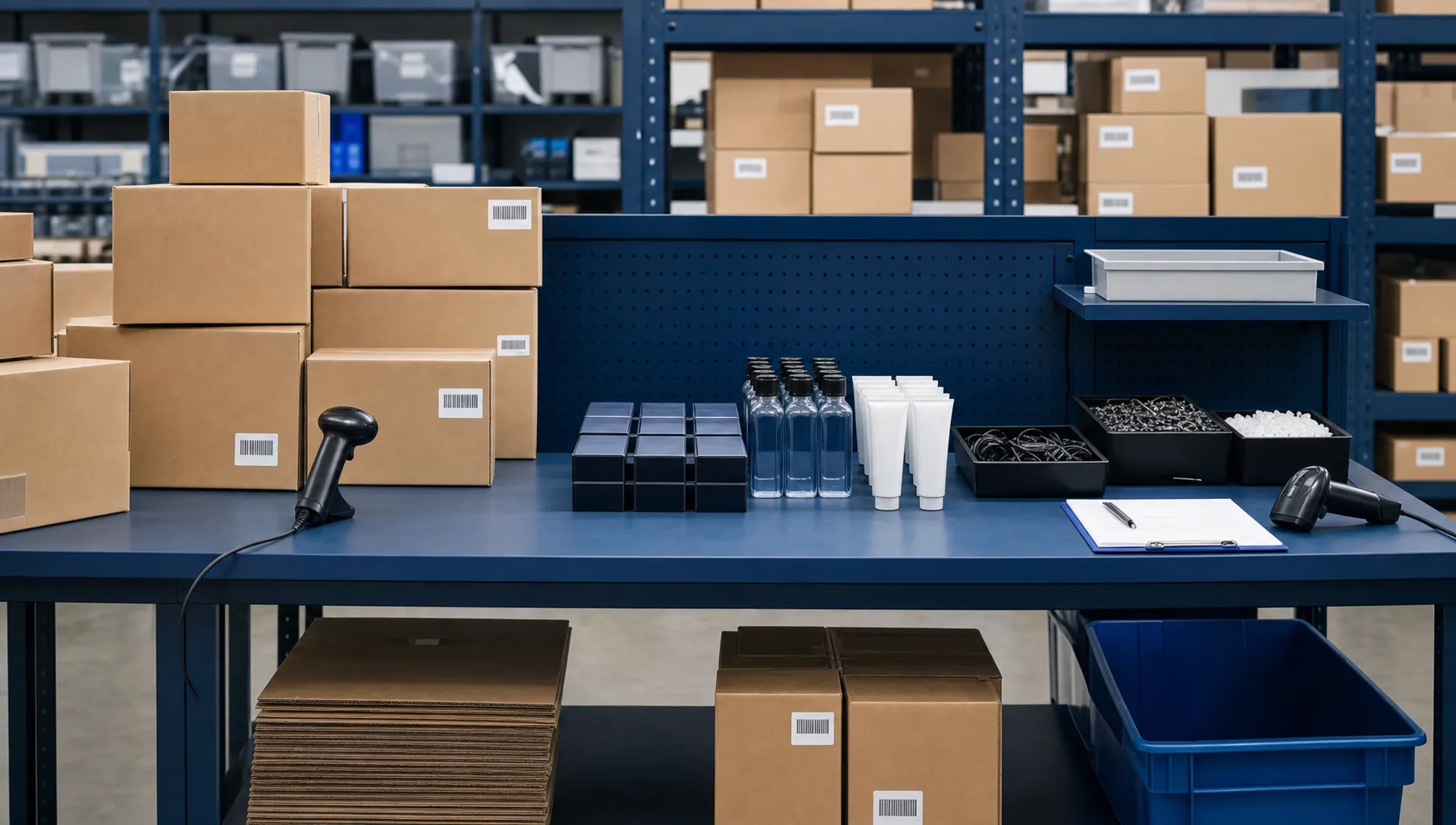
Simple pack bench controls can make a real difference. For example, keep only one open customer order at each packing station where possible, separate picked items clearly, and use a final scan or manual check before sealing the parcel. If a product has a common accessory, insert or instruction leaflet, make that part of the packing checklist rather than relying on habit.
Control dispatch promises and delivery expectations
Some bad reviews are caused by genuine warehouse mistakes. Others happen because the business promises more than its operation can reliably deliver.
Fast dispatch is valuable, but only if it is accurate. If your website promises next-day delivery, your fulfilment process needs clear cut-offs, fast order import, available stock and a reliable carrier handover. If any of those stages are weak, customer expectations will be missed.
Customers are usually more forgiving when communication is clear. Order confirmations, dispatch notifications and tracking updates reduce uncertainty. If an issue occurs, a fast and honest update is better than silence.
For businesses that need time-critical movement, especially outside standard parcel networks, same-day and next-day transport support can help match the delivery method to the promise made to the customer. Gus Logistics operates its own fleet and also has access to a wider UK and Europe-wide vehicle network, which can be useful when a standard carrier service is not the right fit.
Use returns and reviews as an error reporting system
Returns are not just a cost to process. They are a source of operational feedback.
When an item comes back, record why. Was it the wrong SKU, damaged in transit, delivered late, not as described, or simply unwanted? If the same product keeps coming back damaged, the packaging may need changing. If one SKU keeps being confused with another, the warehouse location or product labelling may need attention.
Customer service messages can be just as useful. Phrases such as "I ordered X but received Y", "part of my order is missing" or "the box was damaged" should not stay trapped in an inbox. They should be fed back into fulfilment operations.
If returns are starting to absorb too much internal time, a structured returns management process in Cheshire can help you manage the flow of goods coming back while learning from recurring problems.
Reviews should be monitored in the same way. Responding politely is important, but the bigger value is identifying operational patterns. One negative review may be an isolated incident. Five reviews mentioning the same issue are a process warning.
Set realistic accuracy checks for your team or 3PL
Whether fulfilment is handled in-house or outsourced, accuracy should be discussed openly. Vague promises such as "we are careful" are not enough. You need practical controls.
For an in-house team, that may mean daily error reviews, weekly stock checks, better shelf labels and more training for temporary staff during busy periods. For an outsourced provider, it means asking how orders are imported, how stock is tracked, how picking is checked and how quickly issues are reported.
The right 3PL should be able to explain their process in plain English. They should also give you enough visibility to feel in control. That does not mean you need to manage every parcel yourself. It means you should know what is happening, where your stock is and how problems are being handled.
For businesses in Cheshire, Warrington and the wider North West, Gus Logistics offers warehousing and fulfilment support in Warrington as part of its wider UK logistics service. That can be particularly useful for companies that want a regional fulfilment partner with practical transport links and direct communication.
When outsourcing can reduce fulfilment errors
Outsourcing fulfilment is not only about saving space. It can also reduce errors when your current setup has become too manual, too cramped or too dependent on one or two people.
Common signs that it may be time to consider outsourcing include frequent stock discrepancies, missed dispatch cut-offs, rising customer complaints, staff spending too much time packing orders, or seasonal peaks that overwhelm your normal process.
A good 3PL should bring structure: dedicated storage locations, warehouse systems, trained teams, carrier processes and clear exception handling. For growing SMEs, that can provide a more stable fulfilment base without taking on extra premises or building a warehouse team from scratch.
Gus Logistics is a family-run 3PL based in Nantwich, Cheshire, supporting eCommerce brands, manufacturers and product businesses across the UK. The business offers no minimum volume requirements, same-day quotes as standard and direct contact with the people handling your freight, which can be valuable when you need answers quickly.
A practical fulfilment error reduction checklist
Use this checklist to review your current operation. If several answers are unclear, that is where your risk is likely to be.
- Are all SKUs clearly labelled and easy to tell apart?
- Are stock quantities updated in real time or close to real time?
- Are orders imported automatically from your sales channels?
- Are pickers directed to the correct warehouse location?
- Is there a final check before each parcel is sealed?
- Are packaging rules documented for fragile, heavy or bundled items?
- Are dispatch cut-offs realistic and visible to the team?
- Are returns reasons logged and reviewed regularly?
- Are customer complaints fed back into warehouse processes?
- Do you know which products or channels create the most errors?
The aim is not to create paperwork for the sake of it. The aim is to remove guesswork. Fulfilment accuracy improves when the process is clear, repeatable and visible.
Frequently Asked Questions
What is a fulfilment error? A fulfilment error is any mistake that prevents the customer receiving the correct order as expected. This can include the wrong item, missing items, wrong quantity, late dispatch, damaged goods or incorrect delivery details.
How can eCommerce businesses reduce wrong-item errors? The most effective steps are clearer SKU naming, separate storage locations for similar products, barcode scanning, accurate stock records and a final packing check before dispatch.
Do I need to outsource fulfilment to reduce errors? Not always. Some businesses can improve accuracy by tightening in-house processes. Outsourcing becomes more useful when order volumes, storage needs, seasonal peaks or multi-channel selling make the operation difficult to control internally.
How do fulfilment errors affect customer reviews? Fulfilment errors create frustration at the point where the customer is most emotionally invested: receiving their order. If the parcel is wrong, late or damaged, customers may leave negative reviews even if the product itself is good.
Can Gus Logistics support smaller eCommerce brands? Yes. Gus Logistics has no minimum volume requirements, which means growing brands can discuss fulfilment support without needing to hit a large order threshold first.
Reduce errors before they reach your customers
Fulfilment mistakes are costly, but most are preventable with better stock control, clearer picking processes, stronger packing checks and the right logistics partner.
If errors are taking up too much of your team’s time, or you want to improve fulfilment accuracy before your next growth phase, speak to Gus Logistics. Call 01270 335014 or get in touch via the contact page to discuss your order fulfilment, warehousing or transport needs.
Looking for a Logistics Partner You Can Trust?
From warehousing and order fulfilment to transport and FSDU design - Gus Logistics handles it all from our base in Nantwich, Cheshire. Over 10 years experience, no minimum volumes, no long contracts.
