
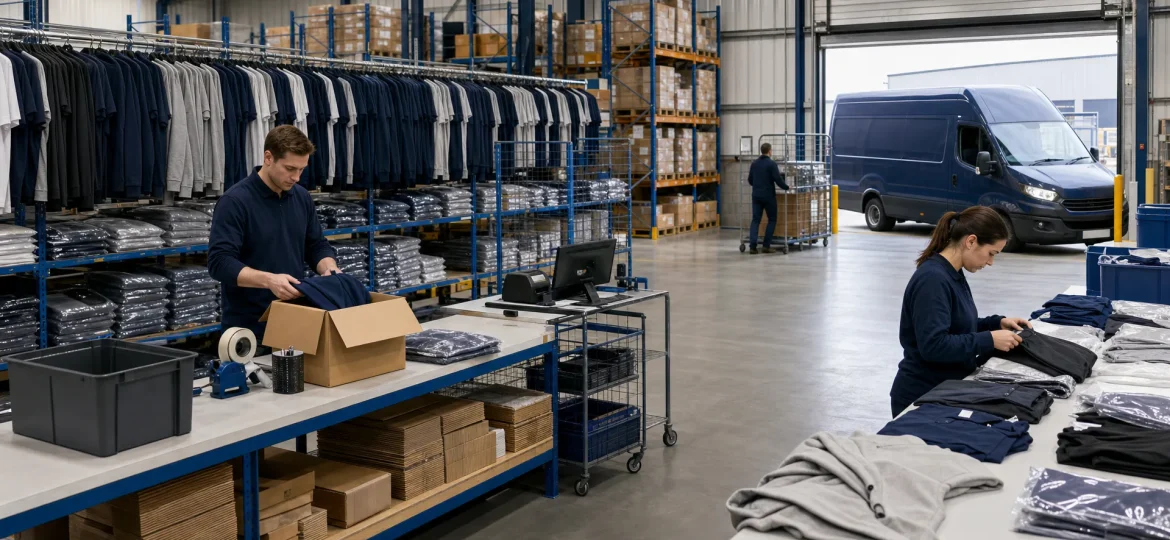
Fulfilment for Apparel and Fashion Brands
Selling clothing online looks straightforward until the orders start scaling. A single design can quickly become dozens of SKUs once you add sizes, colours, fits and seasonal variations. Then come exchanges, returns, launch spikes, packaging expectations and customers who want fast, accurate delivery every time.
That is why apparel fulfilment needs more than a basic pick and pack process. Fashion brands need a fulfilment set-up that protects stock accuracy, keeps garments presentable, handles returns properly and gives the business room to grow without turning the warehouse into a daily distraction.
If you are comparing apparel fulfilment in the UK, this guide explains what to look for, what can go wrong and when outsourcing to a 3PL partner makes commercial sense.
Why apparel fulfilment is different
Fashion products create more operational detail than many other categories. A brand selling candles, supplements or homeware might have a relatively simple SKU structure. An apparel brand may have one product available in five sizes, six colours and multiple seasonal drops. That increases the chances of picking errors, stock discrepancies and customer complaints if the process is not controlled.
The customer experience is also more sensitive. Clothing is personal. If the wrong size arrives, if the item is creased, or if the return process feels clumsy, the customer may not buy again. Good fulfilment does not just move stock from shelf to courier. It supports the customer journey from the moment an order is placed to the moment an exchange or return is resolved.
Fashion brands also tend to face sharper peaks. A new collection, influencer campaign, payday promotion, Black Friday offer or end-of-season sale can create sudden order spikes. If fulfilment is being managed from a spare room, small unit or overstretched warehouse, those peaks can quickly lead to missed cut-offs and delayed dispatch.
What good apparel fulfilment should include
A strong apparel fulfilment process starts before the first order is picked. It includes receiving goods correctly, storing them in a way that makes sense, keeping inventory visible and making sure each order is dispatched with the right item, presentation and timing.
For growing brands, the key areas are usually stock control, pick accuracy, packing quality, platform integration and returns handling.
Accurate goods-in and storage
When clothing arrives from a manufacturer or supplier, it should be checked, counted and booked into stock accurately. This is where many later fulfilment issues begin. If stock is received incorrectly, the website may show availability that does not exist, or the warehouse may struggle to find the correct variant when orders arrive.
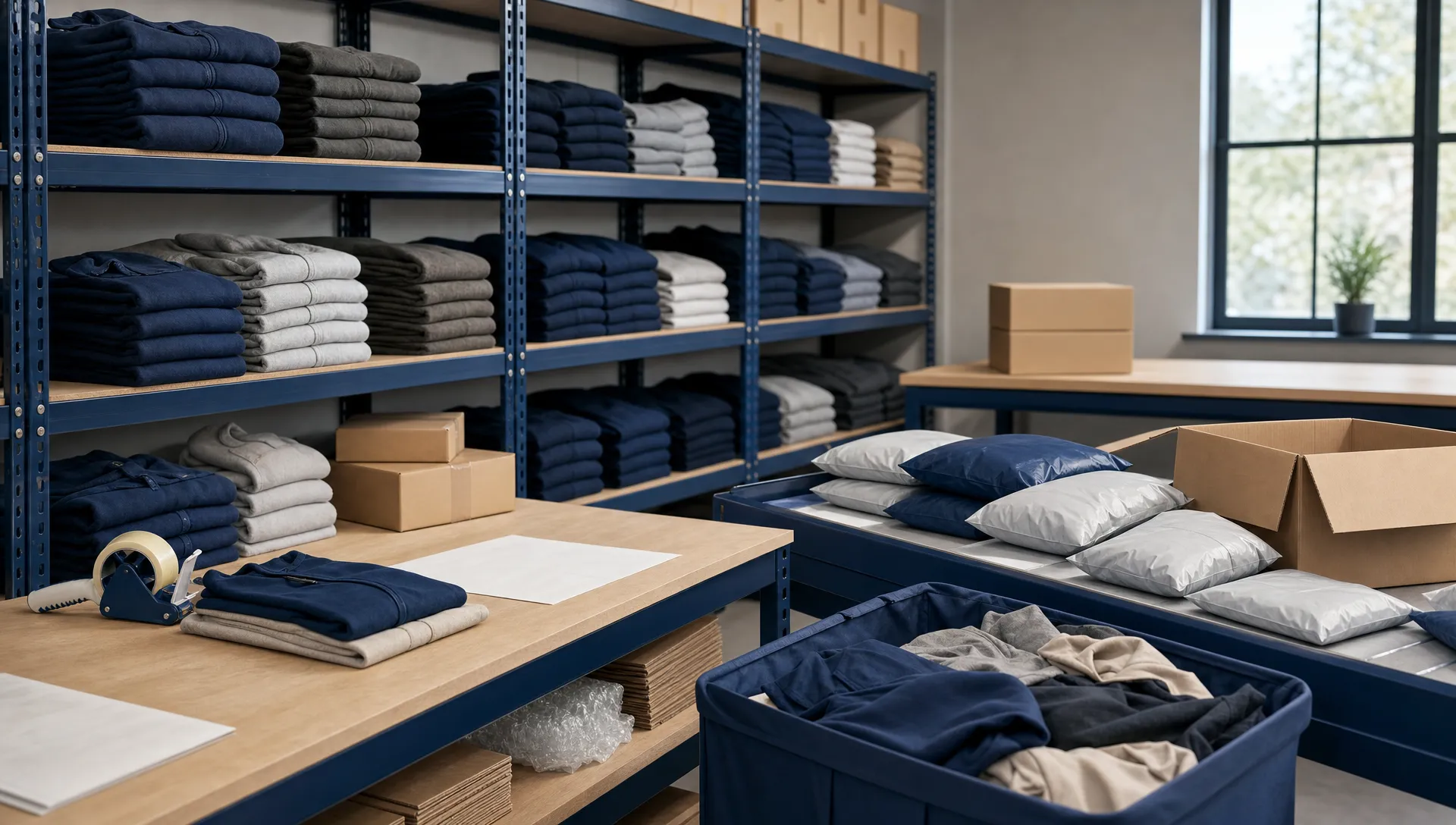
A 3PL partner should be able to separate sizes, colours and product lines clearly. For boxed or bulk stock, the storage model also needs to support replenishment, so fast-moving items stay accessible while slower-moving lines are still properly tracked.
If your brand is holding larger volumes of seasonal stock, using structured pallet and bulk storage can help you avoid overcrowded workspaces and improve stock visibility.
Careful pick and pack
Pick and pack for apparel is not just about speed. Accuracy matters just as much. The warehouse team must be able to identify the exact size, colour and style ordered, then pack the item in a way that reflects your brand standards.
That might include folding, polybag handling, branded inserts, tissue paper, swing tags, returns slips or specific packaging instructions. Not every fashion brand needs premium presentation, but every brand needs consistency. Customers notice when one parcel feels carefully prepared and the next feels rushed.
A fulfilment partner offering order fulfilment and pick and pack services should be able to support your packing requirements without making the process overcomplicated.
Integration with your sales channels
Manual order processing can work for a handful of orders per week. It becomes risky as soon as volume increases. Orders can be missed, stock can oversell and tracking information can be delayed.
For apparel brands selling through Shopify, Amazon, eBay, WooCommerce, Magento or multiple channels, integration is important. Orders should flow into the fulfilment system automatically, stock should update correctly and tracking should be passed back to the customer where possible.
This is especially important for fashion brands because stock availability changes quickly. A popular size can sell out within hours. If inventory is not updating properly, you risk selling items you cannot dispatch.
Returns and exchanges
Returns are a normal part of fashion retail. Customers order more than one size, try items at home and send back what does not fit. The challenge is making returns efficient without letting them absorb too much time or margin.
A practical returns process should make it clear what has come back, whether it can be returned to saleable stock and what action is needed next. Some items may need inspection, re-bagging or separation if they are damaged or unsuitable for resale.
If returns are becoming a regular drain on your team, a specialist returns management process can help keep stock moving and improve visibility over what is actually available to sell.
In-house fulfilment versus outsourced apparel fulfilment
Outsourcing is not always the right move on day one. Many fashion brands start by packing orders themselves because it keeps costs low and gives direct control over presentation. But as order volume grows, in-house fulfilment can become a constraint.
The decision is usually less about size and more about operational pressure. If fulfilment is taking time away from product development, marketing, wholesale conversations or customer service, it may be time to review your set-up.
| Area to consider | In-house fulfilment | Outsourced apparel fulfilment |
|---|---|---|
| Control | Direct oversight of every parcel | Control through agreed processes and reporting |
| Space | Limited by your premises | Scalable warehousing and storage options |
| Labour | Your team handles picking, packing and returns | 3PL team handles day-to-day fulfilment tasks |
| Peak periods | Can become difficult during launches and promotions | More flexible capacity for higher volumes |
| Systems | Often manual at early stages | Integrated order and stock management |
| Focus | Operations can distract from growth | Internal team can focus on brand, sales and customers |
The right point to outsource is different for every brand. Some move early because they want a professional process from the start. Others wait until fulfilment is clearly slowing growth. Either way, the best time to explore options is before your current set-up breaks under pressure.
Common apparel fulfilment mistakes to avoid
Fashion fulfilment problems are often caused by small process gaps that compound over time. A few wrong picks per week can lead to refunds, replacements, customer service emails and avoidable courier costs.
Some of the most common issues include unclear SKU naming, poor separation of similar products, weak stock checks, inconsistent packaging and slow handling of returns. These problems are not always obvious when volumes are low, but they become expensive as the brand grows.
Choosing a fulfilment partner purely on the lowest pick fee can also be a false economy. Apparel brands need to understand the full cost of poor accuracy, missed dispatches and slow returns. A slightly cheaper fulfilment process is not really cheaper if it damages repeat purchase rates or creates extra work for your team.
What to ask a 3PL before moving your apparel fulfilment
Before handing over stock, ask practical questions about how the fulfilment partner will manage your products. You do not need a complicated procurement process, but you do need clear answers.
Useful questions include:
- Can you integrate with our current sales platform and courier process?
- How do you separate products by size, colour and style?
- What dispatch cut-offs are available?
- How are returns checked, recorded and put back into stock?
- Can you support our packaging requirements and inserts?
- How quickly can we see stock and order status updates?
- What happens during peak periods, launches or promotions?
The answers will tell you a lot about whether the provider understands apparel, or whether they are simply offering generic warehousing.
Preparing your fashion brand for outsourced fulfilment
A smooth transition depends on preparation. Before moving stock to a 3PL, take time to clean up your product data and agree how orders should be handled. This reduces mistakes during the early stages and helps the warehouse team work accurately from day one.
Start with your SKU structure. Every product variant should have a clear, unique code. Avoid vague names that rely on someone remembering the product range. A warehouse team should be able to identify the correct item without needing brand-specific guesswork.
Next, document your packing rules. If some products need tissue paper, some require a specific mailer and some should include promotional inserts, this needs to be agreed in advance. The more clearly you define the process, the easier it is to repeat at scale.
You should also think about transport. Customers may not see what happens in the warehouse, but they do see delivery speed and tracking. For brands needing flexible UK distribution, same-day and next-day transport options can support urgent stock movements, wholesale deliveries or time-sensitive campaigns.
How Gus Logistics supports apparel and fashion brands
Gus Logistics works with growing eCommerce brands and product businesses that need practical, reliable fulfilment support in the UK. Based in Nantwich, Cheshire, the business is family-run and supports brands with order fulfilment, warehousing, transport, co-packing and related logistics services.
For apparel and fashion brands, that means you can combine stock storage, pick and pack, dispatch and returns support without having to build your own warehouse operation. Gus Logistics integrates with 60+ platforms, including Shopify, Amazon, eBay, WooCommerce and Magento, and offers late cut-offs up to 10pm with next-day dispatch.
The team also provides real-time WMS tracking through a client portal, helping brands keep visibility over orders and inventory. For smaller or growing brands, there are no minimum volume requirements, which can make outsourcing more accessible before you reach large-scale order volumes.
Because Gus Logistics is located near the M6, M56 and M62, it is well placed for brands needing efficient distribution across the North West and wider UK. Just as importantly, customers speak directly to the people handling their freight, with no call centres in the middle.
Frequently Asked Questions
What is apparel fulfilment? Apparel fulfilment is the process of storing clothing stock, picking the correct size and colour when an order is placed, packing it to the required standard and dispatching it to the customer. It can also include returns handling, exchanges, stock checks and platform integration.
When should a fashion brand outsource fulfilment? You should consider outsourcing when packing orders is taking too much time, stock accuracy is becoming difficult, returns are slowing your team down, or you are struggling to keep up during launches and peak periods.
Can a 3PL handle different sizes, colours and product variants? Yes, but you should check how the 3PL manages SKU separation, stock locations and picking accuracy. Apparel brands should choose a partner that understands the complexity of size and colour variants.
Do apparel fulfilment services include returns? Many 3PL providers can support returns, but the process should be agreed clearly. You need to know how returned garments will be checked, recorded, repacked if suitable and returned to available stock.
Is outsourced fulfilment only for large fashion brands? No. Some 3PL providers, including Gus Logistics, support growing brands without minimum volume requirements. This can help smaller apparel businesses access professional fulfilment before they reach large volumes.
Speak to Gus Logistics about apparel fulfilment
If your fashion brand is spending too much time packing orders, managing returns or trying to keep stock under control, it may be time to look at a more scalable fulfilment process.
Gus Logistics can support apparel and fashion brands with order fulfilment, storage, transport and returns management from its Cheshire base. To discuss your requirements, call 01270 335014 or get in touch via the contact page.
Looking for a Logistics Partner You Can Trust?
From warehousing and order fulfilment to transport and FSDU design - Gus Logistics handles it all from our base in Nantwich, Cheshire. Over 10 years experience, no minimum volumes, no long contracts.
