
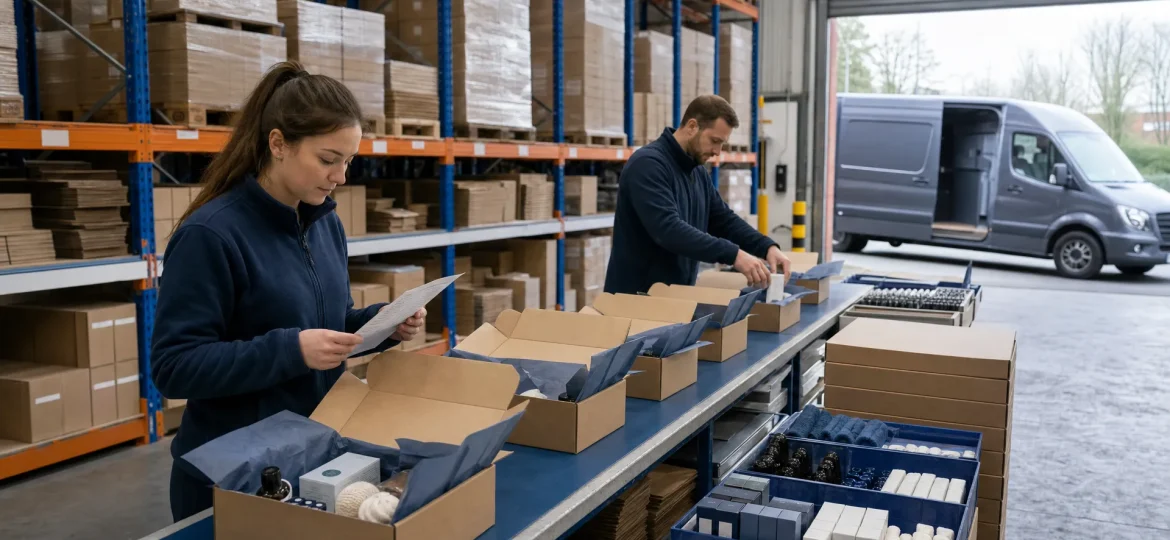
Fulfilment for Subscription Box Brands
Subscription box brands live and die by consistency. Customers expect the right items, in the right box, at the right time, every month. If one dispatch is late, badly packed or missing an item, the customer does not see a warehouse issue. They see a broken promise.
That is why fulfilment for subscription box brands needs a different approach from standard online orders. You are not just picking single orders as they arrive. You are often building batches of boxes, managing changing customer preferences, handling recurring dispatch dates, preparing inserts, checking packaging presentation and keeping stock ready for the next cycle before the current one has even left the warehouse.
For growing UK subscription brands, this can quickly become too much to manage from a spare room, small unit or in-house warehouse team. The challenge is knowing when to outsource, what to look for in a fulfilment partner and how to keep control of the customer experience once someone else is packing your boxes.
Why subscription box fulfilment is different
A normal eCommerce order is usually triggered by one customer buying one or more products. A subscription box model is more predictable in one sense, because orders often run in cycles, but it is more demanding operationally because many orders need to be prepared and dispatched within the same window.
That creates pressure in several areas. Stock needs to be available before the pick begins. Packaging needs to be ready. Any product swaps, personalisation rules or subscription tiers need to be clear. The fulfilment team needs accurate data, not last-minute spreadsheets full of manual changes.
Subscription box fulfilment in the UK also has to account for customer expectations around delivery speed and communication. Even if the customer only receives one parcel per month, they still expect tracking, neat packaging and confidence that the order is on its way.
The main difference is that subscription fulfilment is about repeat trust. A first box wins the customer. The second, third and fourth boxes keep them subscribed.
What a fulfilment partner needs to handle
Before choosing a 3PL, it helps to break subscription fulfilment into its core jobs. The right partner should be able to support the whole process, not just provide storage space and packing benches.
| Fulfilment requirement | Why it matters for subscription boxes | What to ask a 3PL |
|---|---|---|
| Stock receiving | Products often arrive from several suppliers before each monthly cycle | Can you receive, check and store stock before dispatch week? |
| Kitting and assembly | Boxes may include multiple SKUs, inserts, samples or seasonal items | Can you build boxes consistently to a clear specification? |
| Inventory control | Running out of one item can delay the whole subscription run | Can I see stock levels and movements in real time? |
| Platform integration | Subscription orders should flow into the fulfilment system accurately | Which eCommerce and subscription platforms can you connect with? |
| Packaging control | Unboxing is part of the customer experience | Can you follow packing rules, inserts and branded packaging requirements? |
| Dispatch timing | Many boxes need to leave within a tight time window | What cut-off times and carrier options are available? |
| Returns handling | Customers may return damaged items, wrong boxes or cancelled orders | Can returns be processed and recorded clearly? |
For many brands, the biggest risk is not one single failure. It is small errors repeated at scale. A missing sample in 20 boxes, the wrong insert in a customer segment or a delay caused by unclear stock records can all create avoidable customer service work.
Kitting, packing and presentation matter
Subscription boxes are not just parcels. They are part product, part experience. The customer may have seen your packaging on social media, received a referral from a friend or signed up because the box felt like a treat. The fulfilment process needs to protect that feeling.
That means clear packing instructions are essential. If your box includes tissue paper, cards, stickers, samples or tier-specific items, your fulfilment partner needs to know exactly what goes where. Photos, packing guides and agreed quality checks can make a real difference.
Presentation standards will vary depending on the audience. A health supplement box, a pet treat box, a beauty box and a homeware subscription all have different expectations. For example, a home and lifestyle subscription aimed at customers interested in premium living spaces would need a different tone from a snack box for students.
The point is simple: fulfilment should match the customer. If your customer sees the box as a monthly treat, the packing should never feel rushed or careless.
Stock control is where many subscription brands struggle
Subscription box stock planning is often more complex than it first appears. You may know how many subscribers are active, but you still need to factor in new sign-ups, cancellations, failed payments, product variants, promotional boxes and supplier delays.
If one product is missing, the entire dispatch run may be affected. That is why stock visibility matters so much. A good warehouse process should help you see what has arrived, what has been allocated, what has been packed and what remains available for future orders.
For products with dates, batches or serial numbers, the stakes are even higher. Food, supplements, cosmetics and certain regulated goods may need tighter stock rotation and traceability. Gus Logistics offers batch, serial number and best-before date tracking where required, which can help brands manage products that need more than basic SKU-level control.
If you are moving from in-house fulfilment to a 3PL, this is one of the first areas to get right. Clean SKUs, accurate product names, clear pack sizes and agreed stock rules will make the transition smoother.
When should a subscription box brand outsource fulfilment?
There is no single order volume where outsourcing becomes the right choice. Some brands need help early because their boxes are complex. Others can manage in-house for longer if they have simple products and predictable volumes.
The signs are usually practical rather than theoretical:
- Packing weeks are taking over your team’s time.
- You are hiring temporary labour just to get monthly boxes out.
- Stock is stored in too many places and becoming hard to track.
- Customer service issues are increasing because of packing mistakes or delays.
- You cannot confidently scale a promotion because you are unsure whether you can dispatch on time.
- Your warehouse or office space is limiting growth.
If fulfilment is stopping you from marketing, product development or customer service, it may be time to consider outsourcing. A 3PL should give you more capacity without forcing you to take on a larger warehouse, more staff or extra vehicles yourself.
Gus Logistics supports growing product businesses with order fulfilment and pick and pack services that can connect with more than 60 platforms, including Shopify, Amazon, eBay, WooCommerce and Magento. For subscription brands, that integration can reduce manual work and help orders move from your selling platform into the warehouse process more smoothly.

How to prepare before outsourcing
The best fulfilment partnerships start with good preparation. A 3PL can bring systems, space and people, but your brand still needs to provide accurate information about what is being packed and when.
Before speaking to providers, gather the basics. This should include your current monthly order volume, expected growth, number of SKUs, box types, packaging requirements, dispatch frequency, returns process and any special handling needs.
You should also be clear about your subscription rules. For example, do customers choose variants? Are there different box tiers? Do cancelled subscribers need to be removed from the dispatch run by a certain date? Are inserts different for new customers and existing customers? These details need to be mapped before they reach the warehouse floor.
Good preparation also reduces onboarding delays. Gus Logistics offers a 24-hour integration turnaround for cloud-based logistics systems, but any integration still depends on clean data, access to the right platform and clear agreement on how orders should flow.
Storage and warehousing for subscription stock
Storage is often overlooked until it becomes a problem. Subscription brands may need to hold bulk stock for upcoming boxes, packaging materials, seasonal items and promotional bundles. If suppliers deliver at different times, your warehouse needs to receive and organise those goods before the packing window begins.
A flexible warehousing setup helps because subscription volumes can change. You may have a quiet month followed by a large seasonal campaign. You may test a limited edition box or launch a collaboration that needs extra space for a short period.
Gus Logistics provides pallet and bulk warehousing with racked and floor storage, supported by real-time WMS tracking via a client portal. For subscription brands, that means stock can be stored, monitored and called into the fulfilment process as needed.
The key is to avoid treating storage and fulfilment as separate problems. If your stock is stored in one place and packed somewhere else, you introduce more movement, more admin and more room for error. Keeping storage and fulfilment under one roof can make the monthly dispatch process simpler.
Delivery needs to fit the promise you sell
Subscription box delivery does not always need to be next day, but it does need to be dependable. If your website says boxes dispatch during a certain week, customers expect that to happen. If your brand sells premium products, delivery updates and parcel condition matter even more.
Carrier choice will depend on box size, weight, value, destination and customer expectations. Some subscription brands want the lowest practical cost. Others are willing to pay more for faster delivery or better tracking. The right 3PL should help you match delivery options to your commercial model.
Gus Logistics can support brands with same-day and next-day transport through its own fleet and wider vehicle network. This can be useful when stock needs to move quickly, when a dispatch run requires extra support or when business freight needs to travel outside standard parcel routes.
For subscription brands, transport is not just the final step. It is part of the promise customers pay for every month.
Returns, failed deliveries and customer changes
No subscription operation is perfect. Customers move house, payment statuses change, parcels get returned and products can arrive damaged. What matters is how quickly and clearly those exceptions are handled.
Your fulfilment partner should be able to record returned goods, identify the reason for return and make sure stock is dealt with properly. Some items may be suitable for resale. Others may need to be quarantined, written off or inspected.
Address changes are another common issue. If customers update their details after the order data has been exported, you need a clear cut-off point. Otherwise, the warehouse may dispatch to the old address while your customer service team believes the change has been made.
Set rules early. Decide when the order file is frozen, who can make changes, how urgent exceptions are handled and how customers are updated. These small process decisions prevent confusion during busy dispatch periods.
Choosing a UK 3PL for subscription box fulfilment
When comparing providers, do not only ask for a price per pick. Low headline costs can become expensive if the provider cannot handle kitting, packaging requirements, stock visibility or peak dispatch windows.
A better conversation starts with operational fit. Can the 3PL support your type of box? Can they handle your dispatch rhythm? Do they have room for your stock? Can they integrate with your sales platform? Will you be able to speak to someone who understands your account when something needs attention?
This is where many SMEs value a more direct relationship. Gus Logistics is a family-run 3PL based in Nantwich, Cheshire, with more than 10 years of experience supporting eCommerce brands, manufacturers and product businesses across the UK. There are no call centres, so customers speak directly to the people handling their freight.
The location also helps. Being close to the M6, M56 and M62 gives Gus Logistics a strong base for UK-wide distribution, particularly for businesses in Cheshire, the North West and surrounding regions.
Just as importantly, Gus Logistics has no minimum volume requirements. That can be helpful for subscription box brands that are growing, testing a new offer or moving fulfilment out of an in-house setup for the first time.
What to ask before you sign
Before choosing a fulfilment partner, ask practical questions that reflect how your business actually works. You want clear answers, not vague promises.
Ask how the provider handles kitting instructions, stock discrepancies, packaging changes, subscription cut-off dates, damaged items, returns and urgent dispatches. Ask what happens if supplier stock arrives late. Ask how quickly they can quote for new work. Ask who you speak to when there is a problem.
You should also ask to see how order and stock data will be shared. A client portal, live tracking or regular reporting can make the difference between feeling in control and feeling disconnected from your own operation.
If you sell through Shopify or another major platform, integration should be part of the discussion from the start. Manual CSV uploads may work for a short period, but they often become a source of errors as order volume grows.
How Gus Logistics can support subscription box brands
Gus Logistics can support subscription box brands with the main operational pieces needed to scale: storage, pick and pack, platform integration, stock tracking, transport and practical account support.
For brands that need recurring monthly or seasonal box builds, the team can help receive stock, store products, pick items, pack orders and dispatch them across the UK. Late cut-offs up to 10pm and next-day dispatch can support brands that need speed and flexibility, while same-day quotes help when plans change quickly.
Because Gus Logistics also provides co-packing and contract packing services, the business is well placed to support brands that need re-packing, POS assembly, container de-stuffing or product preparation alongside standard order fulfilment.
The best fit is usually a brand that wants to grow without losing the personal, practical support that comes from dealing directly with an experienced logistics team.
Frequently Asked Questions
What is subscription box fulfilment? Subscription box fulfilment is the process of receiving stock, assembling boxes, packing customer orders and dispatching them on a recurring schedule. It often includes kitting, inserts, stock control, platform integration and returns handling.
Is subscription box fulfilment different from normal eCommerce fulfilment? Yes. Subscription boxes usually involve batch packing, recurring dispatch dates, multiple items per box and stricter presentation requirements. A standard one-off order may be simpler, while a subscription box needs repeat accuracy at scale.
Can I outsource fulfilment if my subscription brand is still small? Yes, if outsourcing solves a real operational problem. Gus Logistics has no minimum volume requirements, which can help smaller brands move from in-house packing to a professional fulfilment setup when the time is right.
What information does a 3PL need before taking on a subscription box brand? A 3PL will usually need order volumes, SKU details, packaging requirements, box contents, dispatch schedules, platform information, stock handling rules and returns requirements. Clear instructions make onboarding much smoother.
Can subscription box fulfilment integrate with Shopify? Yes, many fulfilment providers can integrate with Shopify and other eCommerce platforms. Gus Logistics integrates with more than 60 platforms, helping orders flow into the fulfilment process with less manual admin.
Ready to make subscription fulfilment easier?
If packing subscription boxes is taking too much time, creating errors or limiting your growth, outsourcing could give you the space and support to scale with more confidence.
Gus Logistics helps UK subscription box brands with storage, pick and pack, stock tracking, platform integration and transport from its base in Nantwich, Cheshire. To discuss your requirements, call 01270 335014 or get in touch via the contact page.
Looking for a Logistics Partner You Can Trust?
From warehousing and order fulfilment to transport and FSDU design - Gus Logistics handles it all from our base in Nantwich, Cheshire. Over 10 years experience, no minimum volumes, no long contracts.
