
Co-Packing vs In-House Packing: Which Is Right for Your Brand?
If you are weighing up co-packing vs in-house packing, you are probably not asking a theoretical question. You are likely dealing with real pressure: more SKUs, more retail requirements, seasonal spikes, staff stretched too thin, or a packing area that has slowly taken over space meant for stock, production or growth.
At a small scale, packing in-house can feel sensible. Your team knows the product, you can make changes quickly, and you feel close to quality control. But as volumes grow, packing can become one of those operational tasks that looks simple from the outside and quietly drains time, margin and management attention.
The right answer is not always to outsource. Some brands should keep packing in-house for longer. Others reach a point where a co-packing partner becomes the more reliable and cost-effective choice. This guide breaks down the practical differences so you can make the right decision for your brand.
What co-packing and in-house packing actually mean
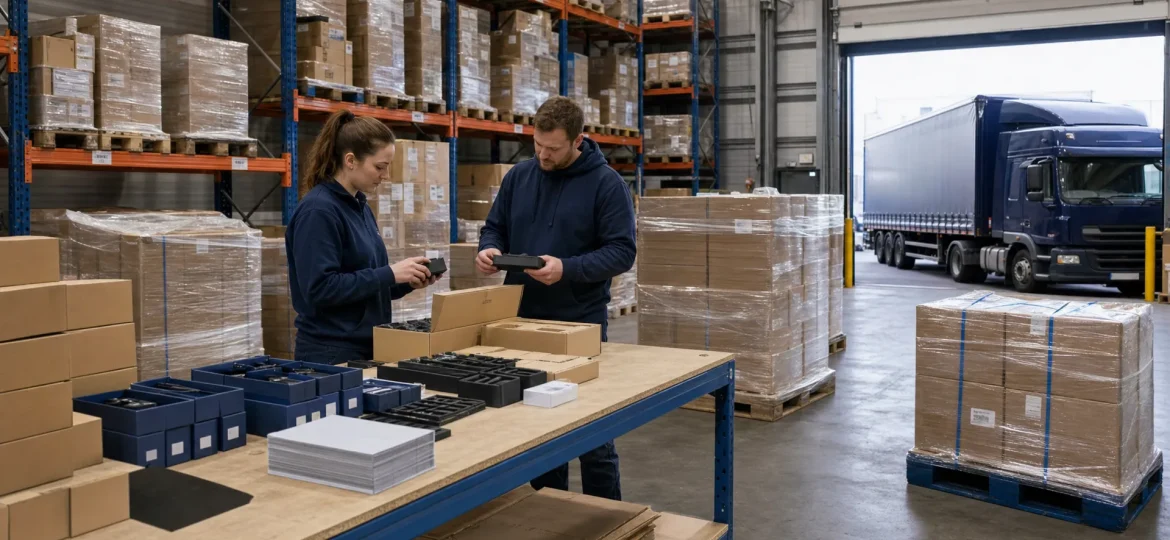
In-house packing means your own team handles the packing work using your own space, equipment, processes and labour. That might include packing individual products, building bundles, adding inserts, labelling, preparing cartons, assembling promotional packs, or getting products ready for retail dispatch.
Co-packing, also known as contract packing, means an external logistics or packing partner carries out some or all of that work for you. This could include re-packing, kitting, labelling, point of sale assembly, promotional pack building, subscription box preparation, retail display pre-fill, or preparing products for onward transport.
It is worth separating co-packing from standard pick and pack. Pick and pack usually focuses on selecting items from stock and dispatching customer orders. Co-packing often happens before that stage, where products are prepared, bundled, reworked or made retail-ready. If you need both, it can make sense to use a partner that offers professional order fulfilment as well as packing support, so products can move smoothly from preparation into dispatch.
Co-packing vs in-house packing at a glance
| Factor | In-house packing | Co-packing |
|---|---|---|
| Control | Direct day-to-day control over staff and process | Control through agreed specifications, checks and reporting |
| Flexibility | Very flexible for small changes and urgent tweaks | Flexible when planned properly, but changes need clear communication |
| Cost structure | Labour, space, equipment and management overheads sit with you | Costs are usually tied to the work, volume, materials and storage required |
| Space | Uses your premises, often more than expected | Frees up internal space for stock, production, sales or office use |
| Scalability | Limited by staff, shifts, benches and storage space | Easier to scale for peaks, promotions and larger projects |
| Quality | Depends on internal training, supervision and consistency | Depends on the partner, specification and quality control process |
| Best fit | Low volume, complex bespoke work, early product testing | Growth, repeated packing tasks, retail projects, promotions and seasonal peaks |
When in-house packing makes sense
In-house packing is often the right option when volumes are low, work is highly bespoke, or your product is still changing frequently. If your team is testing new bundle formats, changing inserts every few days, or packing a small number of orders with very specific instructions, keeping the process close can be useful.
It can also suit brands that already have the right space, trained staff and spare capacity. If packing is not causing delays, errors or missed opportunities, there may be no urgent need to outsource it.
In-house packing may be the better choice when:
- Your order or project volume is still low and predictable.
- Your packaging changes constantly and needs hands-on product team involvement.
- Your products require specialist knowledge that has not yet been documented.
- You already have enough space, equipment and labour available.
- Packing is not distracting your team from sales, production or customer service.
The key phrase here is still working. In-house packing is only low-cost if it is not absorbing valuable staff time, delaying dispatch, creating errors or blocking your ability to take on bigger projects.
Where in-house packing starts to create pressure
The problem with in-house packing is that the cost is often hidden. You can see the cost of tape, boxes and labels. It is harder to see the cost of managers stepping in to help, customer service dealing with packing errors, warehouse staff moving stock three times because the packing area is full, or sales opportunities missed because the team is busy getting products out of the door.
Space is usually the first pressure point. Packing benches, empty cartons, product components, inserts, pallets and completed stock all need room. If your packing operation keeps spilling into walkways, offices or production areas, that is a sign the process has outgrown its original setup.
This is where external pallet and bulk storage can help, especially if stock, packaging and finished goods are competing for the same internal space. Even if you do not outsource all packing work, moving stock into a managed warehouse can make your own operation easier to run.
Labour is the second pressure point. Packing work can be repetitive, but it still needs care. Temporary staff need training. Permanent staff can become overloaded during busy periods. If your team is working late to complete packing projects, you are no longer comparing a simple in-house cost against a co-packing quote. You are comparing operational strain, staff availability and business focus.
Errors are the third pressure point. A mislabelled carton, missing insert, damaged pack or wrong bundle might look small, but it can affect customer experience, retailer relationships and margin. The more manual the process, the more important it becomes to have clear packing instructions, stock control and quality checks.
When co-packing is the better fit
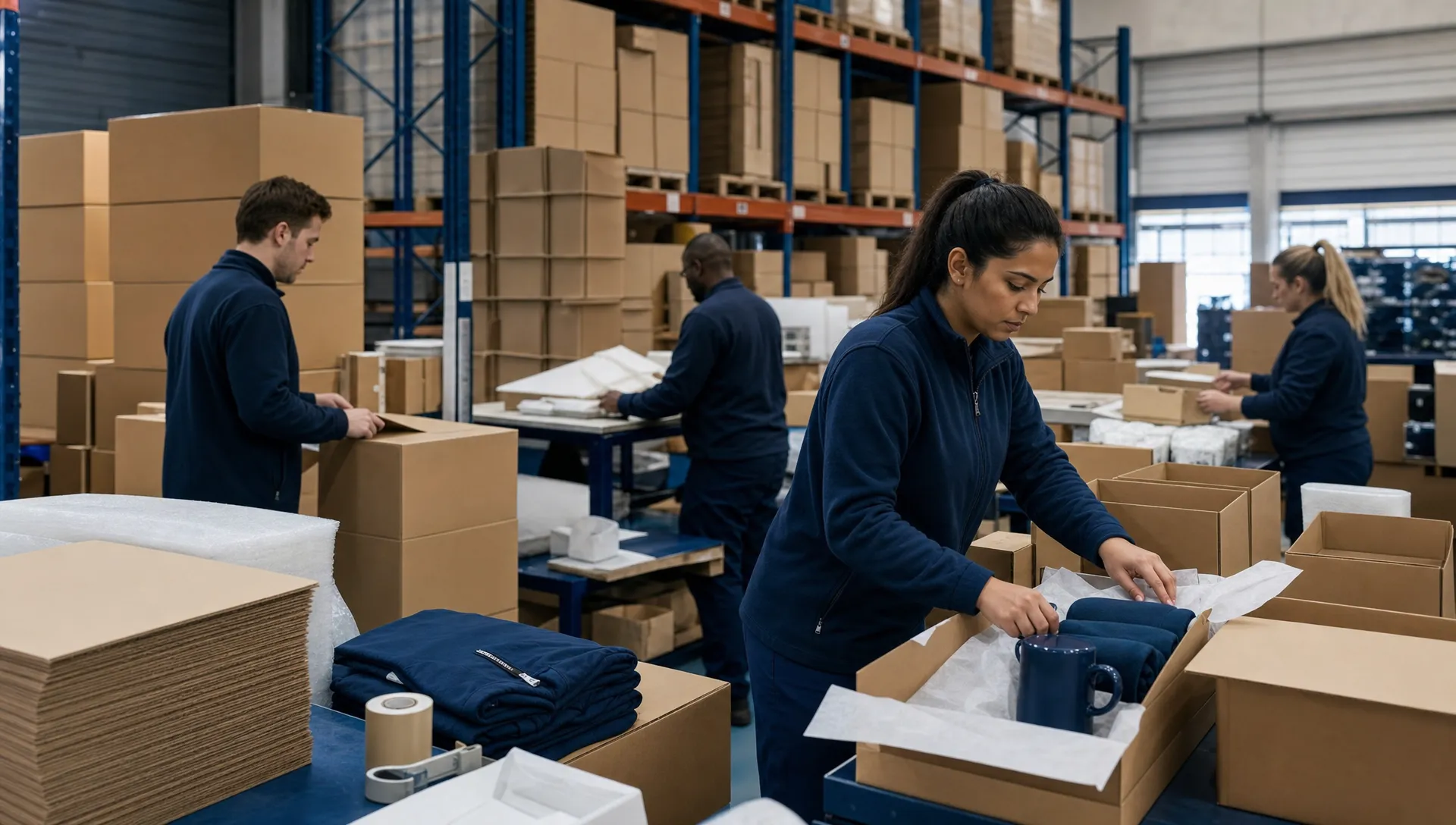
Co-packing usually becomes the stronger option when packing work is repeatable, time-sensitive or too large for your internal team to handle efficiently. It is particularly useful when you need to prepare a defined batch of products, build promotional packs, assemble point of sale materials, or get stock ready for a retail launch.
For retail brands, co-packing can be especially valuable when products need to arrive in a specific format. Supermarkets and high street retailers may expect cartons, displays or promotional units to be prepared in a consistent way. If you are planning in-store campaigns, a partner that can support FSDU design, manufacture, pre-fill and dispatch can reduce the number of suppliers involved and make the project easier to manage.
Co-packing is also useful when demand is uneven. Many brands do not need a full packing team all year round, but they do need extra capacity before Christmas, during product launches, or ahead of retailer deadlines. Outsourcing lets you increase packing capacity for a defined period without taking on permanent overheads.
It can also protect your core team. Instead of pulling people away from buying, production, marketing or customer service, you can keep internal staff focused on the work that drives growth while a specialist partner handles the packing process.
Cost comparison: what to include before deciding
A common mistake is comparing a co-packing quote only against the hourly wage of an internal team member. That is too narrow. A fair comparison should include labour, space, materials, equipment, supervision, errors, rework and opportunity cost.
| Cost area | In-house packing | Co-packing |
|---|---|---|
| Labour | Wages, holiday cover, sick cover, overtime and training | Labour included in the agreed project or unit cost |
| Space | Packing benches, stock holding, packaging storage and finished goods areas | Space may be included or priced alongside storage needs |
| Materials | You source, store and manage packaging materials | Materials may be supplied by you or managed by the partner, depending on the project |
| Management time | Your team plans, supervises, troubleshoots and checks the work | The partner manages the packing process against the agreed brief |
| Equipment | You provide benches, scales, tools, labellers and handling equipment | The partner provides the operational setup needed for the work |
| Errors and rework | Your team handles fixes, customer issues and retailer queries | Responsibility and process should be agreed before the project starts |
| Peaks | You may need overtime, temporary staff or extra shifts | Capacity can be planned around campaigns and deadlines |
The cheapest option on paper is not always the lowest-cost option in practice. If in-house packing is delaying dispatch, increasing mistakes or stopping the business from taking on larger orders, the real cost is higher than the payroll line suggests.
A good way to judge this is to look at recent projects and ask: how much time did packing actually take, who was pulled in to help, what else was delayed, and how many issues had to be corrected afterwards?
Quality control does not have to mean doing it all yourself
One of the biggest concerns about co-packing is quality control. That concern is valid. Your packaging is part of your brand, and poor presentation can damage trust quickly.
However, keeping packing in-house does not automatically guarantee better quality. Quality depends on process. A well-managed outsourced packing project should start with a clear brief, agreed samples, documented requirements and checks before stock leaves the packing area.
Before outsourcing, prepare the basics:
- A clear packing specification with photos or approved samples.
- Product codes, quantities, carton requirements and label positions.
- Rules for inserts, barcodes, batch numbers or best-before dates if needed.
- A definition of what counts as a defect or failed pack.
- A sign-off process for first runs, changes and completed work.
- A named contact for quick decisions if questions come up.
The more clearly you explain the finished result, the easier it is for a co-packing partner to repeat it accurately. This is especially important for promotional work, multi-SKU bundles and retailer-specific requirements.
If your products need traceability, ask whether the partner can track batch numbers, serial numbers or best-before dates. If products need to go straight from packing into delivery, check whether they can also arrange same-day and next-day transport so completed stock does not sit waiting for another supplier to collect it.
The hybrid approach: you do not have to choose one forever
For many brands, the best answer is not fully in-house or fully outsourced. A hybrid model can work well.
You might keep new product trials, very small batches and last-minute samples in-house, while outsourcing larger repeatable projects. You might pack standard eCommerce orders through a fulfilment partner, but keep VIP or influencer packs with your own team. Or you might handle everyday packing internally, then use a co-packer for seasonal peaks, gift sets, retail displays or rework projects.
This approach gives you flexibility without forcing the business into a permanent all-or-nothing decision. It also lets you test a co-packing partner on a defined project before handing over more work.
The important thing is to avoid running two disconnected processes. If stock sits in one place, packing happens in another, and dispatch is managed somewhere else, the handovers can create errors and delays. The more joined-up your storage, packing and transport are, the easier it is to maintain control.
Questions to ask before choosing a co-packing partner
If you are considering outsourcing, do not just ask for a price per unit. Ask questions that show how the partner will actually run the work.
- Have you handled similar products, pack formats or retail requirements before?
- Can you manage one-off projects as well as ongoing packing work?
- How do you check quality before finished stock leaves the warehouse?
- Can you store components, packaging materials and finished goods if needed?
- How do you handle changes to the packing brief?
- Can you track batches, serial numbers or best-before dates where required?
- Can you support onward fulfilment or transport after packing?
- Who will we speak to if there is a question or urgent issue?
The final question matters more than many brands realise. Packing projects often involve practical decisions, and those decisions need quick answers. A partner that is easy to contact can prevent small issues from becoming delays.
Decision guide: which option is right for your brand?
| Your situation | Likely best fit | Why |
|---|---|---|
| You pack small volumes with frequent changes | In-house | Direct control and fast changes are more valuable than scale |
| You are building a one-off retail promotion | Co-packing | A defined project can be planned, packed and dispatched efficiently |
| Your packing area is taking over valuable space | Co-packing or hybrid | Outsourcing can free up space and reduce internal pressure |
| Your team is missing dispatch times during peaks | Co-packing or fulfilment support | Extra capacity can protect service levels when demand rises |
| You need product development samples | In-house | Your team can test and adjust quickly |
| You need repeatable bundles, kits or POS packs | Co-packing | Repeatable work suits a documented packing process |
| You are unsure about future volumes | Hybrid | You can keep control while testing outsourced support |
The right decision should support the next stage of your business, not just solve this week’s packing problem. If your growth plans include more retail listings, more SKUs, larger promotions or higher online order volumes, it is worth building a packing setup that can cope before the pressure arrives.
How Gus Logistics can support co-packing projects
Gus Logistics is a family-run 3PL provider based in Nantwich, Cheshire, supporting eCommerce brands, manufacturers and product businesses across the UK. The team provides co-packing and contract packing support, including re-packing, POS assembly, container de-stuffing, FSDU projects, warehousing, fulfilment and transport.
Because Gus Logistics offers connected logistics services, brands can avoid juggling separate suppliers for storage, packing, dispatch and delivery. That can be particularly helpful for growing businesses that need practical support without losing visibility or direct communication.
Gus Logistics has no minimum volume requirements, offers same-day quotes as standard, and gives customers direct access to the people handling their freight and stock. For brands in Cheshire, the North West and across the UK, the Nantwich location also offers strong access to major motorway routes including the M6, M56 and M62.
Frequently Asked Questions
Is co-packing the same as contract packing? In most practical business conversations, yes. Co-packing and contract packing both refer to outsourcing packing work to a specialist partner. This can include bundling, labelling, re-packing, kitting, POS assembly and preparing products for retail or dispatch.
Is co-packing only for large brands? No. Co-packing can be useful for small and medium-sized brands, especially when they have a defined project, a seasonal peak, a retail opportunity or limited internal space. The key is finding a partner that can work with your volume and requirements.
Will I lose control if I outsource packing? Not if the project is managed properly. Control shifts from doing every task yourself to setting clear specifications, approving samples and agreeing quality checks. A good brief and clear communication are essential.
When should I move from in-house packing to co-packing? Consider outsourcing when packing is taking up too much space, causing delays, creating errors, stretching staff or stopping your team from focusing on growth. It is also worth considering before major promotions, retail launches or seasonal peaks.
Can the same partner handle co-packing and order fulfilment? Yes, some logistics partners can manage both. This can be useful when packed products need to move straight into storage, dispatch or retail distribution without extra handovers between suppliers.
Ready to review your packing setup?
If you are unsure whether co-packing or in-house packing is the better fit, Gus Logistics can help you look at the practical options based on your products, volumes, space and deadlines. To discuss an upcoming project or get a same-day quote, call 01270 335014 or get in touch through the Gus Logistics contact page.
Looking for a Logistics Partner You Can Trust?
From warehousing and order fulfilment to transport and FSDU design - Gus Logistics handles it all from our base in Nantwich, Cheshire. Over 10 years experience, no minimum volumes, no long contracts.
