
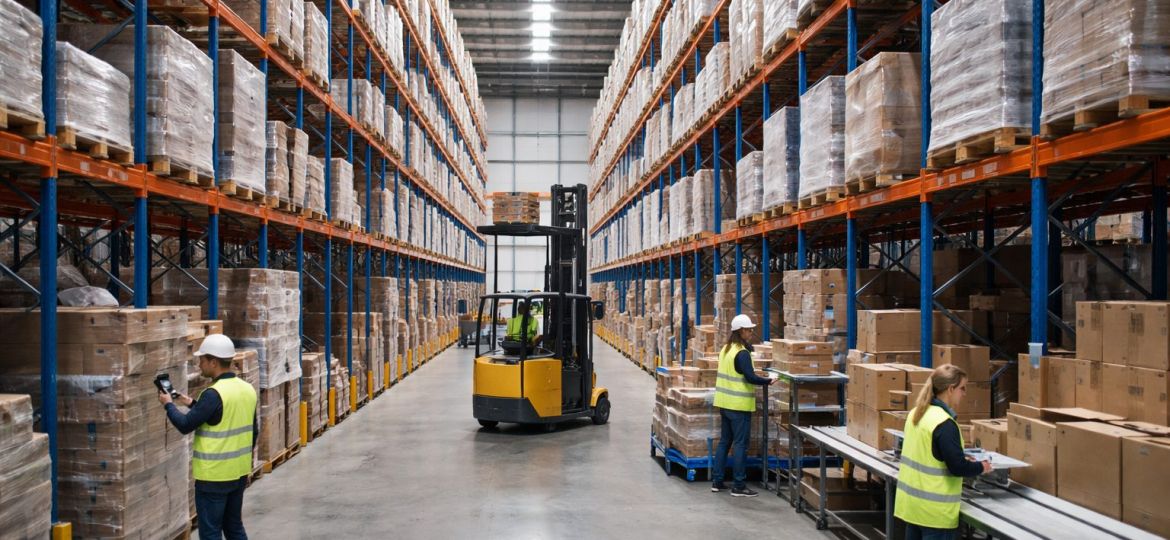
How warehousing decisions affect day-to-day operations
Warehousing services are often selected once and then left unchanged for years. As long as stock is stored securely and orders continue to leave the building, the arrangement rarely comes under scrutiny. In many cases, however, the warehouse is doing only the minimum it was asked to do, and that can create limitations that become more noticeable as a business grows.
These limitations do not always show up as obvious failures. More often, they appear as slower order processing, uncertainty around stock levels, or difficulty responding quickly to changes in demand. Over time, these issues can affect customer service, cash flow, and planning accuracy.
A warehouse that only provides storage may be adequate in the short term, but it rarely supports long-term operational efficiency.
Warehousing as Part of the Operating Model
A warehouse is not just a place where goods sit between arrival and dispatch. It is part of the wider operating model of a business. The way stock is received, recorded, picked, packed, and released has a direct impact on delivery times, inventory accuracy, and administrative workload.
Some warehousing services focus purely on space and handling. Others are set up to manage stock at a detailed level, process individual orders, prepare goods for dispatch, and coordinate directly with transport providers. When these activities are managed together, information flows more reliably and delays caused by handovers are reduced.
The distinction becomes more important as order volumes increase or as fulfilment requirements become more complex.
Suitability of Storage and Handling
Not all products have the same storage or handling needs. Standard pallet storage is appropriate for many goods, but some businesses require alternative layouts, higher picking accuracy, or specific handling processes.
When a warehouse is not well matched to the type of stock being stored, businesses often compensate by adding manual checks or workarounds. These adjustments can increase costs and introduce errors without being immediately obvious.
A suitable warehouse arrangement should align with the characteristics of the products being stored, rather than forcing operations to adapt to fixed limitations.
Visibility and Information
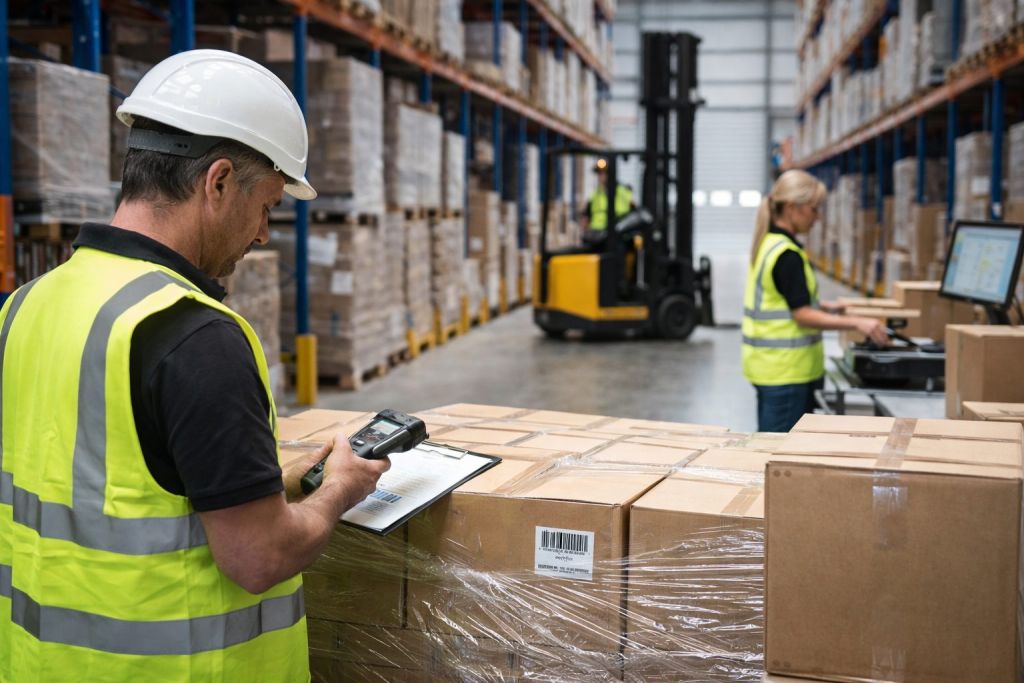
Access to accurate, timely information is one of the main differences between basic and more developed warehousing operations. Limited reporting may confirm what has been dispatched, but it often does not provide enough detail to support purchasing decisions, stock planning, or sales forecasting.
More robust systems can provide current inventory levels, movement history, and exception reporting. This allows businesses to make decisions based on what is actually in stock rather than estimates or delayed reports.
Without this visibility, warehousing can become a source of uncertainty rather than control.
Recognising When a Warehouse Is No Longer a Good Fit
It is not always obvious when a warehousing arrangement has been outgrown. Common indicators include frequent discrepancies between stock records, difficulty increasing capacity at short notice, delays in dispatch during busy periods, or a lack of clear processes for handling returns.
In some cases, these issues can be addressed by reviewing how the warehouse operates or by making better use of existing services. In others, they indicate that a different type of warehousing support is required.
Warehousing as an Operational Capability
Treating warehousing purely as a fixed overhead encourages decisions based mainly on cost per pallet or square metre. Viewing it as an operational capability shifts the focus to how well it supports the wider business.
A well-structured warehousing operation can reduce administrative effort, improve order accuracy, and support growth without the need for constant changes to internal processes.
Choosing an arrangement that can adapt as requirements change is often more effective than selecting the lowest-cost option at a single point in time.
Warehousing That Supports Business Development
As businesses develop, their warehousing needs change. Order profiles evolve, customer expectations increase, and volumes fluctuate. Warehousing arrangements that allow for flexibility in both capacity and services are better placed to support these changes.
At GUS Logistics, warehousing is designed to integrate with wider supply chain operations rather than operate in isolation. Storage, inventory management, order processing, and distribution are managed as connected activities, allowing businesses to adapt their operations as requirements change.
If your current warehousing services feel increasingly restrictive, it may be worth reviewing whether it still supports how your business operates today, rather than how it operated when the agreement was first put in place.
