
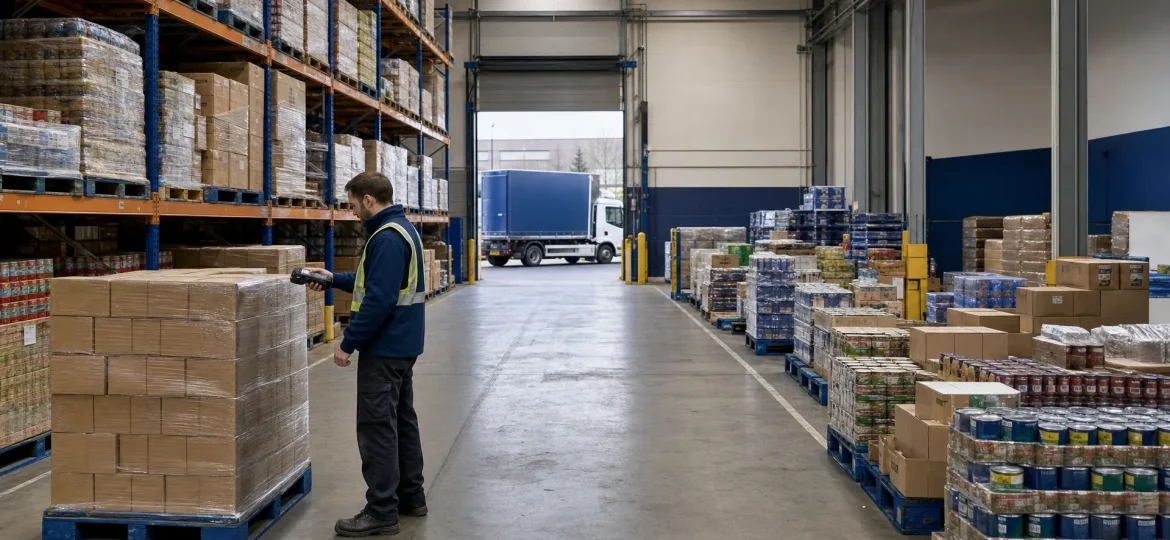
Fulfilment for FMCG Brands
FMCG brands live and die by availability. If a customer wants your product today and it is out of stock, late, damaged or incorrectly picked, they may not wait. They may simply buy from someone else.
That makes fulfilment a commercial issue, not just an operational one. For fast-moving consumer goods, the right 3PL partner helps you keep stock moving, protect margins, meet retail or marketplace expectations, and stay focused on sales rather than warehouse firefighting.
If you are comparing FMCG fulfilment UK providers, this guide explains what matters, what to ask, and when outsourcing becomes the sensible next step.
What makes FMCG fulfilment different?
FMCG stands for fast-moving consumer goods. It covers everyday products that tend to sell quickly, often at high volume, such as ambient food and drink, household products, toiletries, beauty items, pet products, wellness goods and other repeat-purchase items.
The fulfilment challenge is not just speed. It is consistency. FMCG brands often deal with regular replenishment, promotional peaks, multi-channel orders, retailer requirements, batch tracking, best-before dates and tight delivery windows. Small fulfilment errors can quickly multiply when order volumes rise.
A standard pick and pack operation may be enough when you only send a few parcels a day. But as stock turns faster, you need a system that can handle accuracy, traceability, flexible storage and reliable dispatch without relying on memory, spreadsheets or last-minute manual fixes.
The main fulfilment pressures FMCG brands face
Most FMCG fulfilment problems come from the same root cause: growth makes a once-simple operation more complex. You add new SKUs, sell through more channels, run promotions, take on retailers, or move from small parcels into palletised orders. Each change adds another layer of operational risk.
Common pressure points include:
- Stock accuracy: Fast-moving lines need reliable stock visibility so you do not oversell, under-order or lose track of what is available.
- Batch and date control: Products with batch numbers or best-before dates need clear tracking so older stock moves first and recall queries can be handled properly.
- Peak demand: Seasonal campaigns, influencer activity, supermarket promotions and marketplace events can all create sudden order spikes.
- Mixed channel fulfilment: A brand may need to send individual D2C parcels, wholesale cartons and palletised retail orders from the same stock pool.
- Packaging consistency: FMCG items may need careful packing to reduce leaks, crushing, contamination risk or presentation issues.
- Retail delivery expectations: Retailers often require clear labelling, booking-in processes, pallet standards and accurate paperwork.
None of these issues are unusual. The key is having processes in place before they start affecting customers, retailers or cash flow.
What good FMCG fulfilment should include
A good FMCG fulfilment partner should make your operation simpler, not more distant. You should know what stock you have, where it is, what has been shipped, and who to speak to when something needs attention.
For FMCG brands, the most important areas to check are storage, systems, picking accuracy, dispatch speed and communication.
| Fulfilment requirement | Why it matters for FMCG brands | What to check with a 3PL |
|---|---|---|
| Real-time stock visibility | Prevents overselling and supports replenishment planning | Does the provider use a WMS and client portal? |
| Batch and best-before tracking | Helps control dated stock and supports traceability | Can they track batch numbers, serial numbers or best-before dates where needed? |
| Fast pick and pack | Keeps customers and retailers supplied on time | What cut-off times and dispatch options are available? |
| Flexible storage | Lets stock expand or reduce around campaigns | Can they handle cartons, pallets, floor storage and bulk stock? |
| Multi-channel capability | Supports D2C, marketplace, wholesale and retail orders | Can they integrate with your selling platforms? |
| Clear communication | Reduces delays when priorities change | Will you speak directly to the people handling your stock? |
This is where outsourcing can become more than a way to remove boxes from your premises. Used properly, a 3PL becomes part of your growth infrastructure.
Stock control is the heart of FMCG fulfilment
For FMCG brands, stock control has to be more disciplined than simply counting what is on a shelf. You need to know how much stock is available, which batches are in storage, which products are close to date, and which orders have already been allocated.
If your products have best-before dates, a fulfilment partner should be able to rotate stock properly. This is often called first-expired, first-out, which simply means products with the earliest usable date are sent first where appropriate. If you sell items with batch numbers, your fulfilment process should also be able to record which batch was sent to which customer or retailer.
This matters because FMCG brands often operate on tight margins. Dead stock, expired stock, mispicks and avoidable returns all eat into profit. Strong stock control reduces waste and gives you better information when planning purchasing, production and promotions.
Gus Logistics provides pallet and bulk warehousing with racked and floor storage, plus real-time WMS tracking through a client portal. Batch, serial number and best-before date tracking are available, which can be especially useful for FMCG and other product businesses that need better stock visibility.
Speed matters, but accuracy matters more
Late dispatch is frustrating. Incorrect dispatch is often worse. If the wrong product reaches a customer, you may pay for the original pick, the outbound shipping, the customer service time, the return, the replacement and possibly the loss of trust as well.
That is why FMCG fulfilment should be built around repeatable processes. Popular SKUs should be stored logically. Similar-looking products should be clearly separated. Bundles, multipacks and promotional packs should be set up correctly before orders start flowing. If products are fragile, liquid, heavy or easily crushed, packaging rules should be agreed in advance.
For brands selling online, integrations also make a major difference. Manual order entry can work at very low volume, but it becomes risky as sales increase. Integrating your sales platforms with your fulfilment provider helps orders flow into the warehouse without constant copying and pasting.
Gus Logistics offers order fulfilment and pick and pack services with integrations across 60+ platforms, including Shopify, Amazon, eBay, WooCommerce and Magento. Late cut-offs up to 10pm and next-day dispatch are available, helping growing brands keep up with customer expectations.
B2C, B2B and retail orders need different handling
Many FMCG brands do not sell through one route only. You might ship individual orders to online customers, cartons to independent retailers, pallets to wholesalers, and pre-filled display units to larger retail sites.
These order types are operationally different. A D2C order may involve one or two units in a branded or plain parcel. A wholesale order may involve full cases, mixed cartons or palletised stock. A retail campaign may involve timed deliveries, point of sale materials, display units and strict delivery instructions.
Trying to run all of that from one small stockroom can become difficult very quickly. The warehouse team needs to understand the difference between each order type and pack accordingly. Your systems also need to separate stock allocation, so a retail order does not accidentally drain products needed for existing online orders.
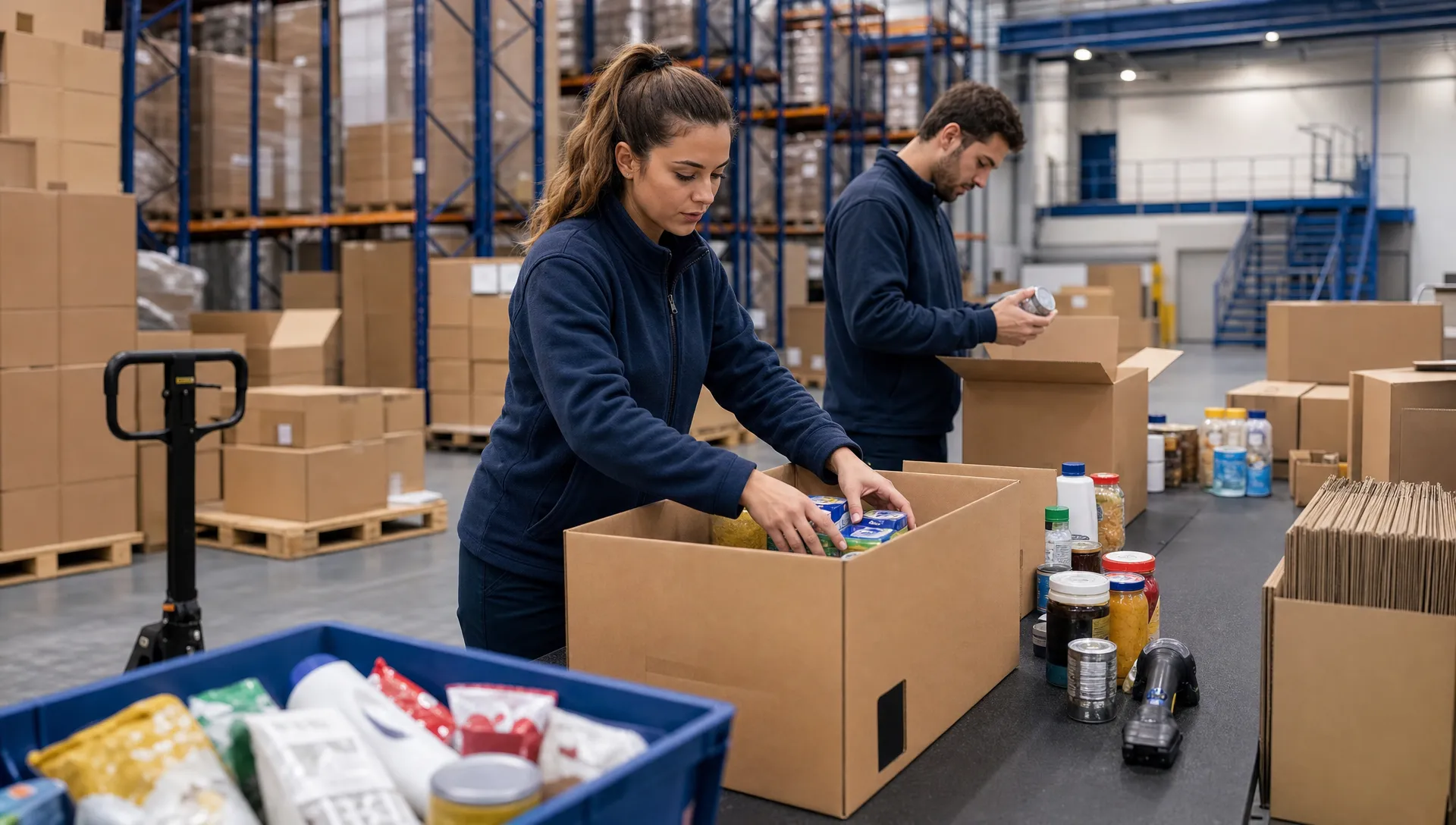
This is especially important if you sell into supermarkets, high street retailers or trade accounts while also growing your own website. A fulfilment partner should be able to support both day-to-day dispatch and project-based requirements such as promotional packing, POS assembly or FSDU preparation.
When should an FMCG brand outsource fulfilment?
Outsourcing is not always the right move on day one. In the early stages, packing orders yourself can help you understand your customers, packaging requirements and sales patterns. But there comes a point where in-house fulfilment starts holding the business back.
You may be ready to outsource if:
- Your team is spending too much time picking, packing and chasing couriers.
- Stock is taking over your office, unit, garage or production area.
- Order cut-off times are slipping because dispatch depends on staff availability.
- You are using spreadsheets or manual checks to manage fast-moving inventory.
- Promotional peaks are causing errors, delays or overtime.
- Retail or wholesale orders are becoming difficult to handle alongside online sales.
- You need better storage, batch control or delivery options than you can manage internally.
The right 3PL should not force you into a rigid model that only suits very large brands. For SMEs, flexibility matters. You need room to grow, but you also need sensible communication, fair processes and a team that understands where your business is now.
Location still matters for UK-wide FMCG fulfilment
Even with modern systems and national courier networks, warehouse location can still affect speed, cost and resilience. A well-located fulfilment base can make inbound deliveries easier, support faster onward distribution and give brands better access to key routes.
For businesses in Cheshire, Crewe, Nantwich, Manchester, Liverpool, Stoke-on-Trent and the wider North West, working with a nearby 3PL can also make site visits, stock reviews and operational planning easier. You can still serve customers across the UK, but you are not dealing with a warehouse hundreds of miles away.
Gus Logistics is based in Nantwich, Cheshire, close to the M6, M56 and M62. For local businesses looking for a practical regional partner, the page on warehousing and fulfilment in Crewe explains how this location supports storage, fulfilment and distribution across the surrounding area and beyond.
Transport is part of the fulfilment promise
Fulfilment does not end when an order is picked. FMCG brands need reliable transport options, whether that means parcels, pallet deliveries, same-day movements, next-day replenishment or retail distribution.
If you are supplying retailers, late or failed deliveries can create problems beyond the immediate order. Delivery slots may be missed, goods may be refused, or a promotion may launch without enough stock in place. If you are selling D2C, slow or unreliable delivery can affect reviews and repeat purchases.
A good fulfilment partner should help you match the delivery method to the order. A small consumer order does not need the same solution as a palletised wholesale replenishment. A time-sensitive retail delivery may need more hands-on transport planning than a standard parcel.
Gus Logistics provides same-day and next-day transport using its own fleet of vans, 7.5t, 18t and 26t rigids, artics and Moffetts, alongside access to 5,000+ vehicles across the UK and Europe. That gives FMCG brands options when orders need more than standard parcel shipping.
Do not choose an FMCG fulfilment partner on price alone
Cost matters, but the cheapest pick fee is not always the lowest-cost option overall. Poor stock control, weak communication, slow receiving, missed cut-offs and unclear processes can all create extra costs elsewhere in the business.
When comparing providers, ask practical questions:
- How quickly can you receive and book in inbound stock?
- Can you track batches, serial numbers or best-before dates if required?
- Which eCommerce and marketplace platforms can you integrate with?
- What are your order cut-off times?
- Can you handle both parcel and pallet orders?
- Who will we speak to if something urgent changes?
- Can you support promotions, bundles, co-packing or display unit projects?
- Are there minimum volume requirements?
The answers should be clear. If a provider cannot explain how your stock will be received, stored, picked, packed and dispatched, it is worth pausing before you commit.
How Gus Logistics supports FMCG brands
Gus Logistics is a family-run 3PL provider based in Nantwich, Cheshire, with over 10 years of experience supporting eCommerce brands, manufacturers and product businesses across the UK.
For FMCG brands, the value is in combining storage, fulfilment, transport and project support under one roof. That can include order fulfilment, pick and pack, pallet storage, bulk warehousing, co-packing, contract packing, container de-stuffing, POS assembly, FSDU support and UK-wide delivery.
Just as importantly, Gus Logistics does not operate through call centres. Customers speak directly to the people handling their freight and stock. For growing brands, that level of communication can make a real difference when priorities change, a campaign goes live, or a retailer needs something turned around quickly.
There are also no minimum volume requirements, which is useful for FMCG brands that are growing, testing new channels, launching new products or moving from in-house fulfilment for the first time.
Frequently Asked Questions
What is FMCG fulfilment? FMCG fulfilment is the storage, picking, packing and dispatch of fast-moving consumer goods. It often involves high stock turnover, repeat orders, batch tracking, best-before date control, promotional peaks and a mix of D2C, wholesale and retail deliveries.
Do FMCG brands need specialist fulfilment? Many do, especially once volumes increase or products require batch, date or promotional control. If your goods are chilled, frozen, hazardous or heavily regulated, you should check that any 3PL has the right facilities and approvals before moving stock.
Can one 3PL handle both online and retail FMCG orders? Yes, provided the 3PL has the systems, storage layout and processes to manage different order types. D2C parcels, wholesale cartons and palletised retail orders all need different handling.
When should an FMCG brand move from in-house packing to a 3PL? A good time to review outsourcing is when fulfilment is taking your team away from sales, production or customer service, or when stock control, dispatch speed and peak demand are becoming difficult to manage internally.
Does Gus Logistics offer FMCG fulfilment across the UK? Gus Logistics supports product businesses across the UK from its base in Nantwich, Cheshire. Services include order fulfilment, warehousing, transport, co-packing and related logistics support, depending on your products and requirements.
If your FMCG brand needs faster dispatch, better stock control or a fulfilment partner that can support growth without unnecessary complexity, speak to Gus Logistics. Call 01270 335014 or get in touch via the contact page to discuss your products, volumes and next steps.
Looking for a Logistics Partner You Can Trust?
From warehousing and order fulfilment to transport and FSDU design - Gus Logistics handles it all from our base in Nantwich, Cheshire. Over 10 years experience, no minimum volumes, no long contracts.
