
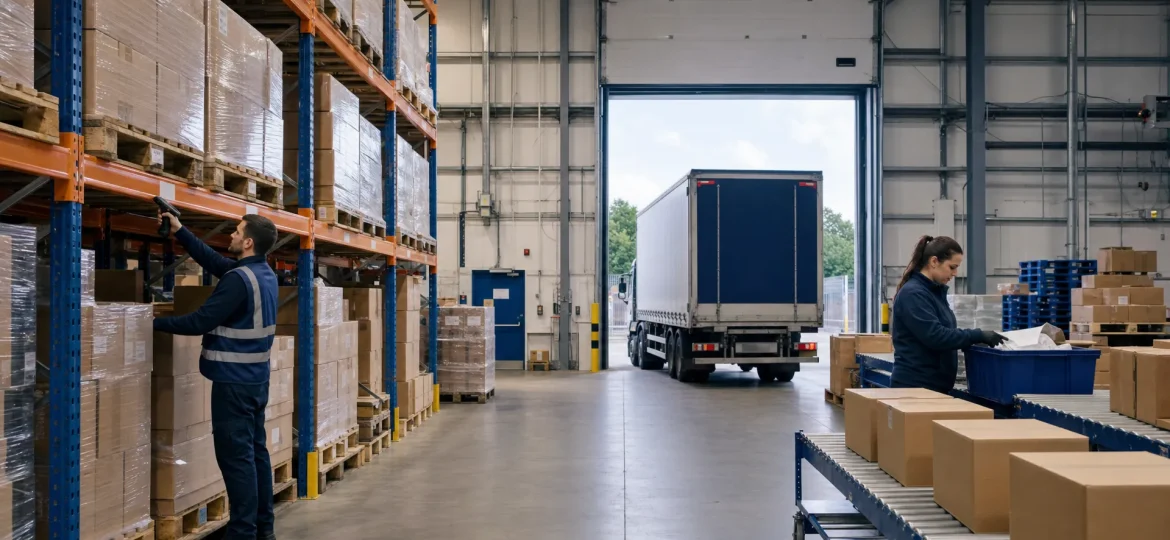
How 3PL Warehousing and Distribution Work Together
If your stock is in one place, your orders are managed somewhere else and your deliveries are booked separately, small problems can quickly turn into missed dispatches, stock errors and unhappy customers.
That is why many growing product businesses start looking at 3PL warehousing and distribution as one joined-up service, rather than as separate tasks. The aim is simple: store stock properly, know what is available, pick orders accurately and get goods to the right place at the right time.
For eCommerce brands, manufacturers, wholesalers and retail suppliers, warehousing and distribution are two sides of the same operation. Warehousing keeps stock safe, organised and visible. Distribution moves that stock out to customers, retailers, sites or other business locations. When both are managed by the same 3PL provider, information flows more cleanly and the whole process becomes easier to control.
What does 3PL warehousing and distribution mean?
A 3PL, or third-party logistics provider, handles logistics work on behalf of another business. In practical terms, that can include receiving goods, storing pallets or cartons, managing stock, picking and packing orders, booking transport, handling returns and providing tracking information.
Warehousing is the storage and management side. Distribution is the movement side. A good 3PL connects the two so that stock does not just sit in a warehouse, it moves through the warehouse in a controlled, traceable and cost-effective way.
For example, a product business might send a container of stock to a 3PL warehouse. The provider receives it, checks it in, records it on a warehouse management system and stores it in the right location. When customer orders arrive, the provider picks, packs and dispatches them. If a retailer needs bulk stock or a point of sale display delivered, the same operation can prepare and route that delivery too.
This is where the real value sits. Storage without distribution can create delays. Distribution without good stock control can create errors. Together, they create a practical logistics engine for the business.
How warehousing supports distribution
Distribution starts long before a vehicle leaves the yard. It starts with how stock is received, labelled, stored and recorded.
If a warehouse knows exactly what stock is available and where it is located, orders can be processed faster. If stock is badly organised, even a simple order can take longer to find, pick and dispatch. That delay then affects transport planning, customer service and cash flow.
Strong warehousing supports distribution by giving teams clear answers to important questions:
- What stock has arrived?
- Where is each product stored?
- Which batches or best-before dates need to be picked first?
- Which orders are ready to dispatch?
- Which goods need special handling, palletisation or rework?
For businesses holding pallets, cartons or mixed stock, a professional warehouse storage service can help keep products organised and ready to move. This matters whether you are fulfilling single online orders, shipping wholesale cartons or preparing retail displays for store delivery.
How distribution shapes warehouse decisions
The relationship also works the other way around. The way goods need to be distributed should influence how they are stored.
A fast-moving eCommerce product should usually be stored somewhere easy to access, because it may be picked many times a day. Slow-moving pallet stock may be better placed in racking or bulk storage. Retail display units may need space for assembly, pre-filling, wrapping and staged dispatch. Products with best-before dates need stock rotation rules so older stock is not left behind.
Good 3PL providers think about the full route from inbound stock to final destination. They do not treat the warehouse as a holding area only. They ask how the stock will leave, in what quantity, how often and to which destinations.
That is especially important for businesses selling through multiple channels. A single stock pool might need to support Shopify orders, Amazon orders, trade orders, retailer replenishment and samples for sales teams. If the warehouse and distribution process is not designed around that reality, stock can become fragmented and hard to manage.
The typical journey from stock arrival to final delivery
Although every business has different requirements, most 3PL warehousing and distribution operations follow a similar flow.
| Stage | What happens | Why it matters |
|---|---|---|
| Inbound receipt | Goods arrive at the warehouse and are checked against expected quantities | Reduces errors before stock enters the system |
| Stock recording | Items are added to the warehouse management system | Gives the business visibility of available stock |
| Storage | Products are placed in racking, floor storage or pick locations | Keeps goods safe, organised and accessible |
| Order processing | Orders are received from sales channels or business systems | Starts the fulfilment and dispatch workflow |
| Pick and pack | Items are picked, checked, packed and labelled | Protects order accuracy and presentation |
| Dispatch | Parcels, pallets or full loads are handed to carriers or transport teams | Moves goods to the customer, retailer or site |
| Tracking and proof | Delivery updates and proof of delivery are recorded | Helps customer service and operational reporting |
The key point is that each stage depends on the one before it. If inbound stock is recorded incorrectly, picking will be affected. If picking is delayed, dispatch may miss its cut-off. If transport is not planned around order readiness, vehicles may wait or deliveries may slip.
A joined-up 3PL operation reduces those gaps because the same provider has visibility across the process.
Why stock visibility is the link between warehousing and distribution
Stock visibility is one of the biggest reasons businesses move to an integrated 3PL model. It is difficult to make good distribution decisions if you do not know what you actually have available.
Modern warehouse systems can show stock levels, order status and movement history. Depending on the operation, they may also track batches, serial numbers or best-before dates. This matters for product businesses where traceability, stock rotation or warranty control are important.
For eCommerce businesses, stock visibility also supports better customer experience. If your website, marketplace listings and warehouse stock records are aligned, there is less chance of overselling. If orders flow into the warehouse quickly, dispatch can happen sooner.
That is why integrated order fulfilment and pick and pack is often a natural next step for businesses that have outgrown doing everything in-house. The warehouse becomes more than a storage space. It becomes the place where orders are turned into delivered customer experiences.
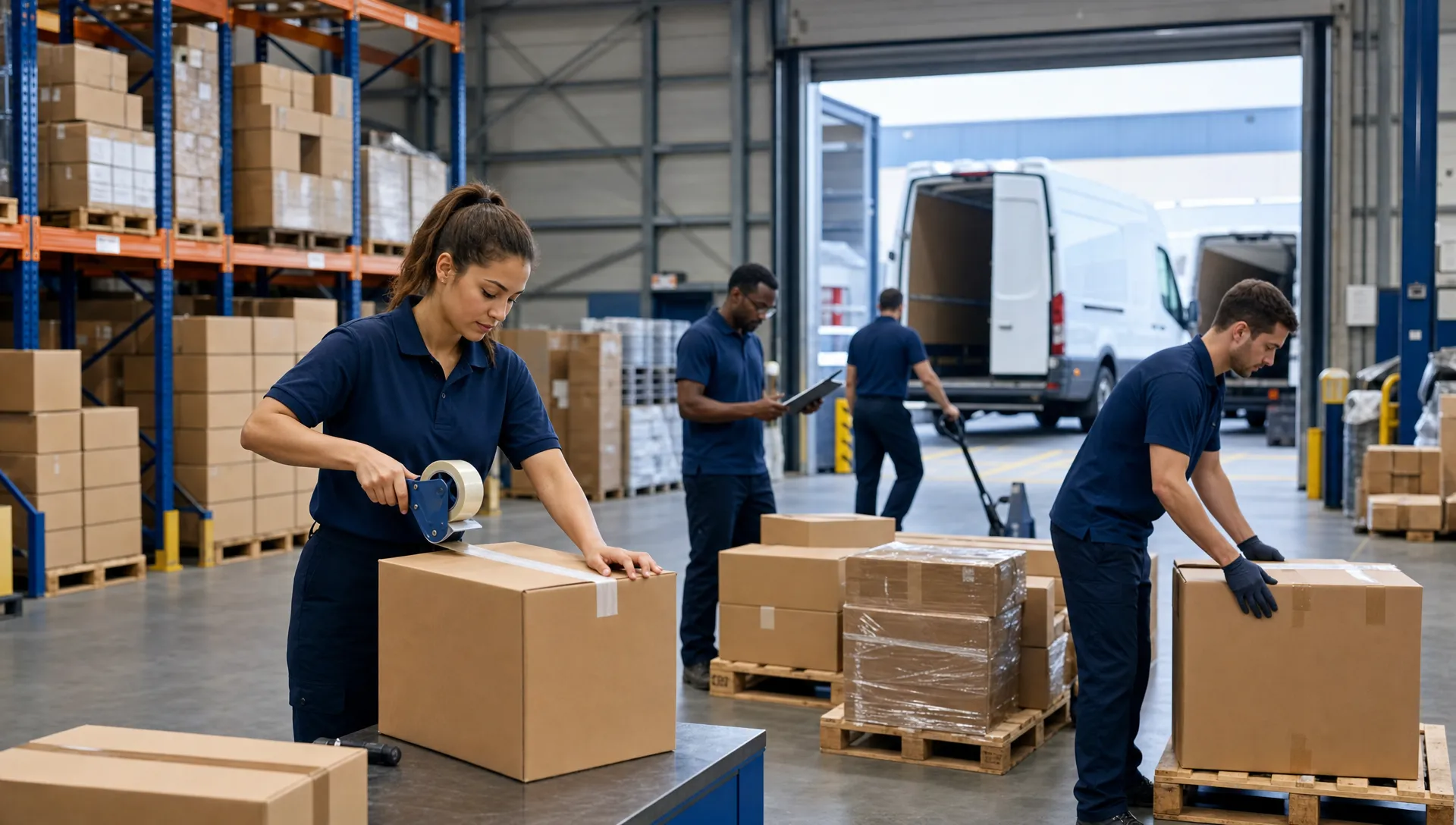
Why transport planning should not be an afterthought
Distribution is not just about booking a courier at the end of the day. It includes deciding the right delivery method, vehicle type, route, timing and proof of delivery process.
A small parcel order may need a next-day courier. A pallet delivery may need a tail-lift vehicle. A retail display unit may need careful handling and scheduled delivery. A same-day urgent movement may need a dedicated van. A construction, refurbishment or retail fit-out project may need goods delivered to a site at a specific time, and the same principle applies to project-led sectors such as luxury home renovation, where materials and finishes must arrive in the right sequence to keep work moving.
When warehousing and transport are planned together, the provider can prepare stock in the right format before dispatch. That might mean consolidating orders, wrapping pallets, producing labels, staging goods by route or separating goods by delivery date.
For businesses that regularly move goods across the UK, working with a 3PL that can support both warehousing and same-day or next-day transport reduces handovers. Fewer handovers usually means fewer chances for confusion.
What can go wrong when warehousing and distribution are separated?
Some businesses use one supplier for storage, another for fulfilment, another for transport and another for special projects. That can work if volumes are stable and processes are simple. But it can also create problems as the business grows.
Common issues include unclear stock ownership, delayed updates, duplicated admin, missed cut-offs and finger-pointing when something goes wrong. If the warehouse says the order was ready but the carrier says it was not booked correctly, the business owner is left trying to resolve the gap.
Separating suppliers can also make forecasting harder. If your transport partner does not know what is coming through the warehouse, they may not be able to plan capacity. If your warehouse does not understand delivery requirements, they may not prepare goods correctly.
An integrated 3PL does not remove every logistics challenge, but it gives one team a clearer view of the whole process. That makes it easier to diagnose problems and improve performance.
When should a business consider outsourcing both warehousing and distribution?
Many businesses start by outsourcing one part of logistics, usually storage or order fulfilment. Over time, it may make sense to bring more of the process under one 3PL partner.
You may be ready to outsource warehousing and distribution together if:
- Your team is spending too much time picking, packing or arranging deliveries.
- You are running out of safe or organised storage space.
- Stock errors are affecting customer service.
- You sell through multiple channels and need better system integration.
- You need regular pallet, parcel or same-day transport support.
- Seasonal peaks are putting pressure on your internal team.
- You are supplying retailers and need display, co-packing or staged dispatch support.
This is not only about reducing workload. It is about building an operation that can cope with growth. A business that sells 20 orders a day can often manage manually. A business that sells across several platforms, holds pallet stock and serves retailers usually needs stronger processes.
What should you ask a 3PL provider?
Before choosing a provider, ask practical questions about how warehousing and distribution actually work day to day. Avoid vague promises and look for clear operational answers.
Useful questions include:
- How is inbound stock checked and recorded?
- Can I see live or near-live stock information?
- Which sales platforms can you integrate with?
- What dispatch cut-offs are available?
- Can you handle pallets, parcels and dedicated transport?
- How are returns, damages and stock discrepancies managed?
- Can you support batch, serial number or best-before date tracking if needed?
- Who do I speak to when there is an urgent issue?
The final question is more important than many businesses realise. Logistics is operational, and problems sometimes need quick human decisions. A provider with clear communication can save hours of frustration.
How Gus Logistics brings warehousing and distribution together
Gus Logistics is a family-run 3PL provider based in Nantwich, Cheshire, supporting eCommerce brands, manufacturers and product businesses across the UK. The business combines order fulfilment, pallet and bulk warehousing, transport, FSDU services, co-packing and contract packing from one operation.
For warehousing, Gus Logistics offers racked and floor storage with real-time warehouse management system tracking through a client portal. Batch, serial number and best-before date tracking are available where required. For fulfilment, the team integrates with more than 60 platforms, including Shopify, Amazon, eBay, WooCommerce and Magento, with late cut-offs up to 10pm and next-day dispatch.
On the distribution side, Gus Logistics operates its own fleet of vans, 7.5t, 18t and 26t rigids, artics and Moffetts, with access to more than 5,000 vehicles across the UK and Europe. That gives businesses options for parcels, pallets, bulk movements and urgent same-day transport.
Location also helps. Being based near the M6, M56 and M62 gives Gus Logistics strong access to the North West and wider UK distribution routes. For businesses in Cheshire and nearby towns, the team also provides local support, including warehousing and fulfilment services in Warrington for companies that need a practical North West logistics partner.
There are no minimum volume requirements, which is useful for growing businesses that need professional support without being forced into unrealistic commitments.
Frequently Asked Questions
Is 3PL warehousing the same as distribution? No. Warehousing is the storage and management of stock. Distribution is the movement of that stock to customers, retailers or other destinations. In a strong 3PL setup, the two are connected so goods move smoothly from receipt to dispatch.
Can a 3PL handle both eCommerce orders and pallet deliveries? Many 3PL providers can, but you should check their facilities, systems and transport options. If your business sends both parcels and pallets, choose a provider that understands both workflows.
Why is stock visibility so important in 3PL distribution? Stock visibility helps prevent overselling, picking errors and dispatch delays. It also gives your team better information when planning promotions, replenishment and customer updates.
Do I need high order volumes to use a 3PL? Not always. Some providers require minimum volumes, but others support smaller and growing businesses. Gus Logistics has no minimum volume requirements, which can help SMEs outsource at the right stage.
What is the main benefit of using one provider for warehousing and distribution? The main benefit is joined-up control. When one provider manages storage, fulfilment and transport, there are fewer handovers, clearer accountability and better visibility across the operation.
Speak to Gus Logistics about warehousing and distribution
If your stock, orders and deliveries are becoming harder to manage, bringing warehousing and distribution together under one 3PL partner could make your operation simpler and more reliable.
To discuss your requirements, call Gus Logistics on 01270 335014 or get in touch via the contact page.
Looking for a Logistics Partner You Can Trust?
From warehousing and order fulfilment to transport and FSDU design - Gus Logistics handles it all from our base in Nantwich, Cheshire. Over 10 years experience, no minimum volumes, no long contracts.
