
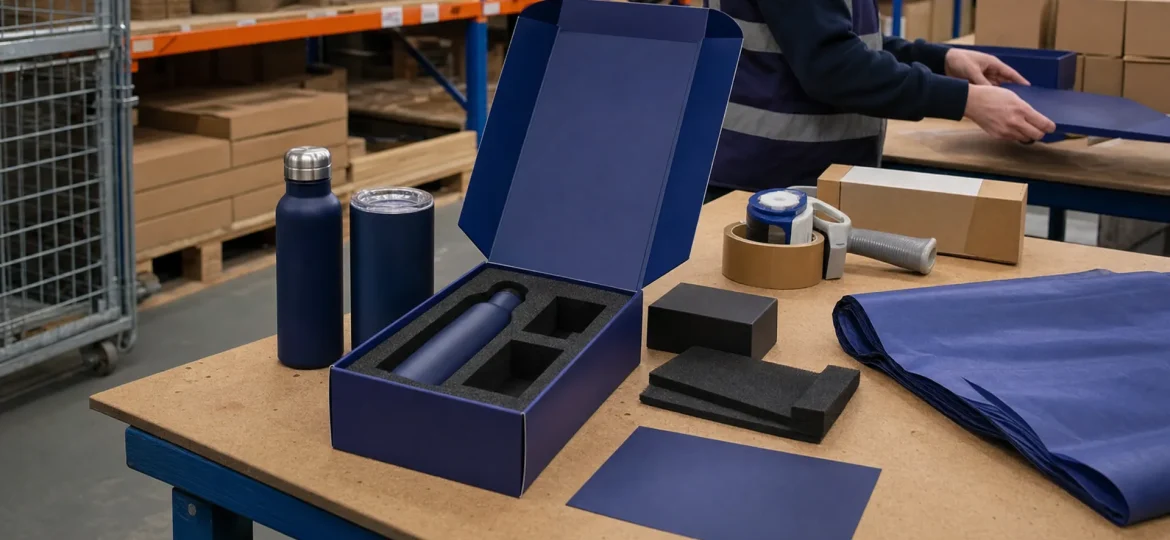
How Can I Get Hundreds of Promotional Packs Ready for a Product Launch?
You can get hundreds of launch packs ready by using promotional packing services to assemble an agreed pack design in a controlled production run. The key is to define exactly what goes in each box, get every component to the packing site and approve a finished sample before the main run starts.
For a product launch, packing speed is only part of the job. Your packs also need to reach the right recipients on time, contain the correct materials and stay under your control until you authorise dispatch. Here is how to organise that process without turning your office into a temporary packing station.
Work backwards from when the packs must arrive
Start with the date the packs need to be delivered, not simply the launch date. A press event, retailer appointment or coordinated creator campaign may require packs to arrive beforehand.
Work backwards through delivery, dispatch, quality checks, assembly and goods receipt. Ask the packing provider to confirm the latest acceptable arrival date for every component, including printed inserts and outer cartons.
Keep three milestones separate: sample approval, completion of the packing run and permission to dispatch. Finished packs may need to remain in storage until an agreed release date.
If the launch is confidential, explain who can authorise release and whether different recipient groups have different delivery windows. These instructions belong in the packing brief, not in a last-minute email.
What promotional packing services should cover
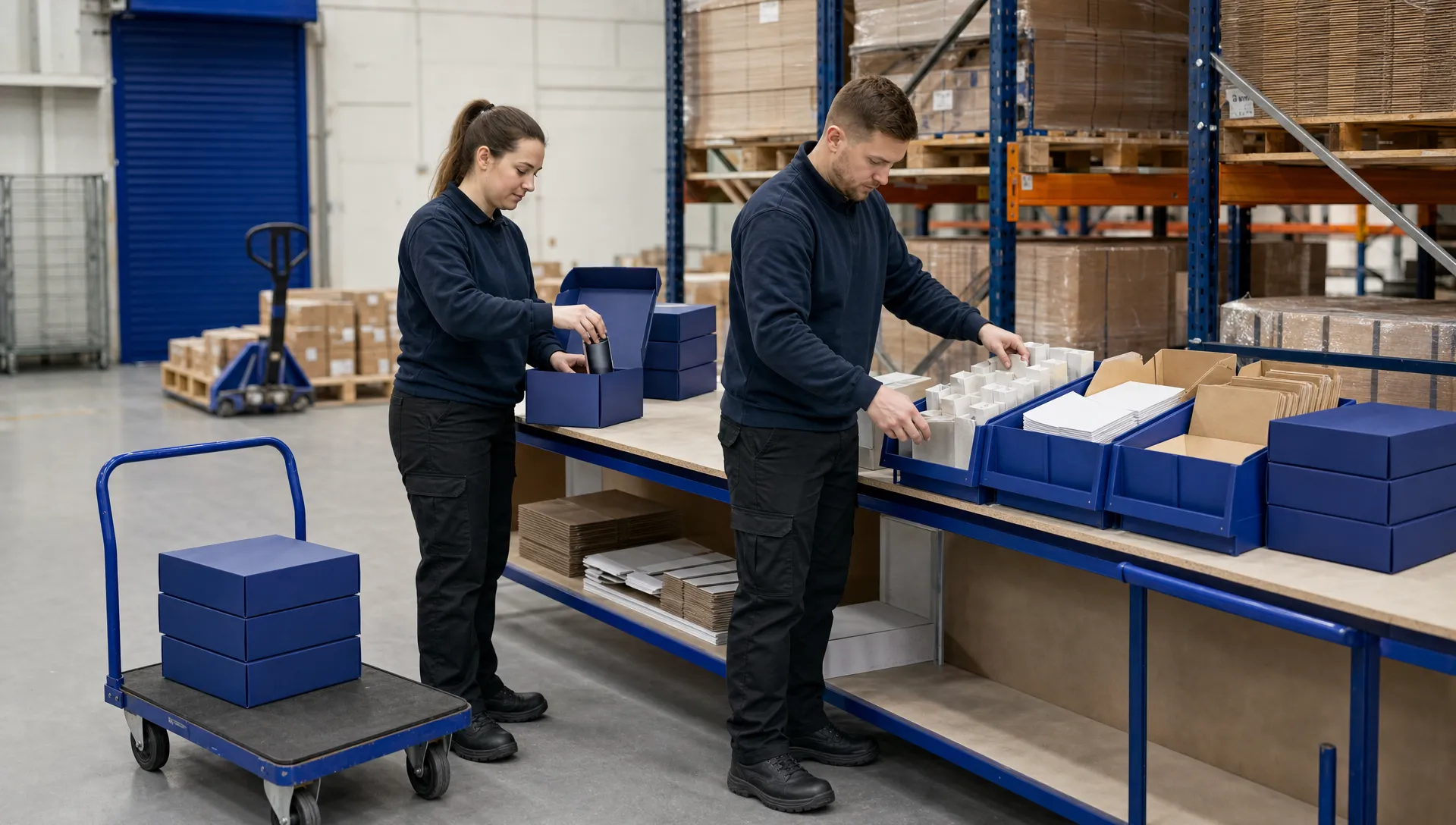
A launch packing job can include receiving stock, checking quantities, assembling boxes, adding products and inserts, applying labels and preparing completed packs for distribution. The exact scope needs agreeing before work begins.
Be clear about what you are outsourcing. A contract packer is not automatically responsible for designing your packaging, sourcing print or checking the legality of your marketing claims. Confirm who supplies each component and who approves the finished presentation.
Also distinguish the presentation pack from its shipping protection. A gift-style box may look right at an event but need a separate outer carton for parcel delivery. Check how it will travel before ordering hundreds of boxes.
For retailer launches, decide whether the requirement is individual promotional packs, shelf-ready cartons or filled display units. Those are different packing jobs with different handling requirements.
Create one packing brief that everyone follows
Before requesting promotional packing services, prepare a single specification rather than sending instructions across several messages. Include photographs or a simple layout showing the finished pack, with a version number so outdated instructions cannot be mistaken for current ones.
A useful brief covers the following:
| Detail | What to specify |
|---|---|
| Quantity | Total packs required, split by pack version |
| Contents | Product codes, quantities and approved inserts for each version |
| Presentation | Product positions, tissue, dividers and box closure |
| Materials | Who supplies boxes, labels, print and shipping cartons |
| Product controls | Any batch, best-before, serial number or handling requirements |
| Approval | Who signs off the sample and authorises changes |
| Dispatch | Recipient groups, delivery requirements and release date |
| Leftover stock | Whether unused components are returned, stored or otherwise handled by agreement |
Check quantities at component level. As a planning example, 500 packs containing one product, two sample sachets and one leaflet require 500 products, 1,000 sachets and 500 leaflets before any agreed spares.
Do not assume extra stock is unnecessary because the pack count is fixed. Agree how damaged materials and short deliveries will be handled. Any spare allowance should reflect the materials and job, rather than an arbitrary percentage.
Approve a physical sample before the full run
The most useful checkpoint in promotional packing services is an approved sample made with the actual products and packaging. A design mock-up cannot show whether a lid closes properly or an item moves around during handling.
Check both presentation and function. Products should sit as intended, inserts should be easy to find and labels should remain readable after closure. Confirm that tape, seals or wrapping do not obscure essential product information.
Test the proposed shipping arrangement through a representative handling or delivery trial where appropriate. Attractive packaging is not enough if the contents arrive loose or the presentation box gets crushed.
Keep the approved sample, or a clear photographic record, available to the packing team. Agree what must be checked on every pack and what can be checked periodically during the run.
Once approved, freeze the specification. A late change to an insert or accessory can require completed boxes to be reopened, checked and repacked, affecting both cost and timing.
Keep different pack versions clearly separated
When promotional packing services involve several versions, give each one a distinct pack code. “Press pack” and “customer pack” may sound clear, but a written contents list is still needed for each.
Separate the components and completed stock so similar-looking products or inserts cannot be mixed. Recipient lists should identify the required pack code rather than leaving the packing team to infer it from a name or address.
For a range such as wearable electric breast pumps, a launch brief would need to distinguish each model and its approved accessories. Keep the correct user instructions with the product and preserve original seals unless a specific handling process has been agreed. This level of detail matters whenever variants look similar but are not interchangeable.
If a batch reference or serial number needs recording against a pack or recipient, raise that before assembly. It may be difficult to recover that information once the box is sealed.
Separate packing completion from dispatch approval
Once the packs are assembled, ask for a completion report showing how many of each version passed checks, what stock remains and whether anything is awaiting a decision.
For promotional packing services tied to a launch, use a written dispatch instruction. It should confirm the approved quantities, recipient file version and release date. Do not rely on an assumed instruction to “send everything when ready”.
Check the delivery arrangements too. A retailer's distribution centre may require a booking and pallet labels, while individual press recipients may need parcel delivery. An event venue may accept deliveries only during a specified window.
Give the provider a named contact who can resolve address problems or delivery exceptions. Share recipient information securely and restrict it to the people who need it for the job.
If the launch will also trigger customer orders, plan that workload separately. These packs are only one part of fulfilment for flash sales and product launches.
Compare the full cost, not just the packing rate
Quotes for promotional packing services are easiest to compare when every provider prices the same specification. A low assembly rate tells you little if materials, goods receipt or shipping preparation sit outside it.
Ask for the costs of receiving and checking components, setting up the job, assembling each pack version, supplying materials and preparing dispatches. Establish whether quality checks are included and how changes after approval would be charged.
Include any warehouse storage needed before or after the run. Stock may arrive well ahead of launch, and completed packs may need holding until release. Leftover products and unused packaging also need a destination.
You should finish with a clear view of the total project cost, the assumptions behind it and what would trigger an additional charge. Avoid comparing a labour-only estimate with an all-inclusive quote.
Also check whether the provider is receiving finished products or doing work that needs specialist facilities. Food, cosmetics and other sensitive products can have handling requirements that must be confirmed before accepting the job.
Agree a fallback for missing or late components
A launch can be held up by one missing leaflet even when every product has arrived. Ask for component counts to be reconciled on receipt, with shortages reported early enough for you to act.
Decide in advance who can approve substitutions, revised quantities or a partial run. If materials are short, completing one priority recipient group may be more useful than leaving every pack unfinished.
Never let a deadline become permission to omit required instructions or substitute a product without approval. Record any revised specification and make sure the affected packs remain identifiable.
Finally, agree what happens to incomplete packs. Holding them separately with a clear status prevents them being mistaken for finished stock and released by accident.
Frequently asked questions
How far ahead should I book promotional packing services? Book once your pack specification and required delivery date are taking shape. The provider needs to assess capacity, materials, approvals and transport before confirming a schedule. There is no universal lead time that suits every launch.
Can I supply my own boxes and printed inserts? This can be agreed with the packing provider. Supply dimensions, quantities and an actual sample before committing to the full order. Confirm who is responsible if materials arrive short, damaged or unsuitable for assembly.
Can some packs go to retailers and others to press contacts? Yes, provided the pack versions and delivery instructions are agreed. Separate individual parcel deliveries from retail or event consignments, since their labelling, booking and transport requirements may differ.
How can I reduce unnecessary packaging? Start with a correctly sized pack and test the protection it genuinely needs. Avoid decorative layers that add no useful function, but do not remove protection that prevents damage in transit. Confirm material choices before approving the sample.
Get a launch packing plan from Gus Logistics
Gus Logistics provides contract packing in Cheshire, alongside warehousing, order fulfilment and UK-wide transport. The family-run team is based in Nantwich and has no minimum volume requirement.
To discuss promotional packing services for your launch, have your pack quantity, contents, packaging details and required delivery date ready. Gus Logistics usually returns quotes the same working day, with the project schedule agreed around the actual requirements.
Call 01270 335014 to discuss your launch packs and request a quote.
Looking for a Logistics Partner You Can Trust?
From warehousing and order fulfilment to transport and FSDU design - Gus Logistics handles it all from our base in Nantwich, Cheshire. Over 10 years experience, no minimum volumes, no long contracts.
