
How Can I Get My Products Delivered to Supermarket Distribution Centres?
Getting a supermarket order is only the start. For a successful supermarket distribution centre delivery, your stock must reach the correct depot, within an agreed booking window, packed and documented to the retailer's requirements. A carrier can move the goods, but transport alone does not make a load ready for acceptance.
The practical route is to obtain the retailer's delivery instructions, prepare the stock against the purchase order, agree who handles the booking and use transport that can meet it. Here is how to organise that process.
Get the retailer's instructions before arranging collection
Start with the purchase order and the retailer's current supplier delivery requirements. These take priority over your usual warehouse procedures or a carrier's standard service.
Confirm the receiving depot, delivery date, quantities and product codes. A supermarket may operate several distribution centres with different functions, so a familiar address from a previous order is not enough.
Ask your buyer or supply chain contact for any missing information, including access to the relevant booking system. Establish who is authorised to book deliveries and who can resolve discrepancies before dispatch.
A product listing, a purchase order and a delivery booking are separate things. Do not assume that approval to supply a supermarket means its depot will accept an unbooked vehicle.
This is a business-to-business stock delivery, not a home grocery delivery. Consumer delivery slots and doorstep services do not apply.
Prepare stock for supermarket distribution centre delivery
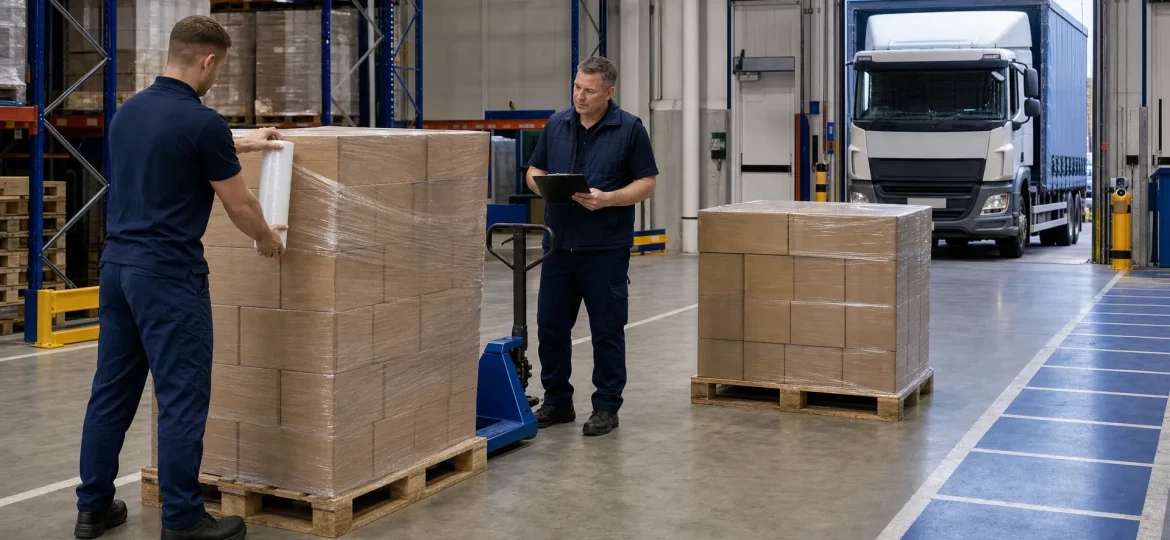
The retailer needs to identify, count and handle your products without having to resolve avoidable differences at the receiving bay. Check the physical stock against the order before wrapping or loading it.
Your preparation checks should cover:
- Products and quantities: Match product codes, case quantities and units per case to the purchase order.
- Pallet construction: Follow the specified pallet type, dimensions, maximum height and weight, including any restrictions on mixed products.
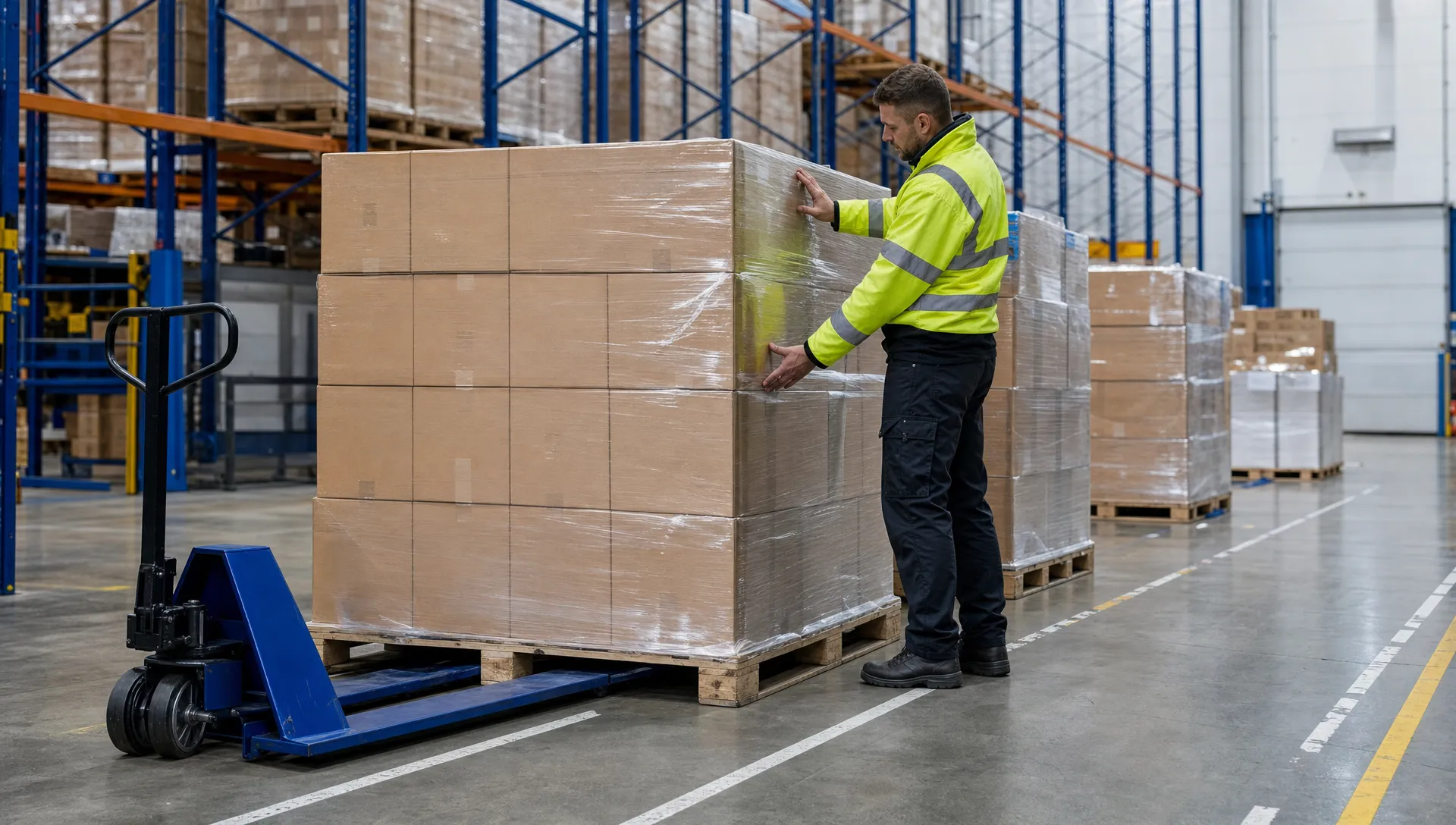
- Load stability: Use sound pallets and suitable wrapping, with no unsupported overhang or crushed cases.
- Identification: Apply the required case and pallet labels where receiving staff can scan them.
- Traceability: Record batch numbers, serial numbers or best-before dates where relevant.
- Order separation: Keep stock for different orders or depots identifiable and separated as instructed.
Do not assume that every supermarket uses the same pallet specification. Obtain the requirements for the actual destination rather than copying another customer's load.
If the retailer requires a Serial Shipping Container Code (SSCC), this identifies an individual logistics unit, such as a pallet. It is not the same as the product barcode printed on a retail pack. Follow the retailer's labelling guide alongside the relevant standards from GS1 UK.
Check temperature and remaining shelf life
For supermarket distribution centre delivery involving food or other temperature-sensitive goods, confirm the required conditions before choosing storage or transport.
Ambient, chilled and frozen products need different handling arrangements. Establish the required temperature range, any recording requirements and whether different goods can travel together. Do not assume that a general haulier or warehouse offers temperature-controlled services.
Check the minimum remaining shelf life at the point of receipt, not just when stock leaves your premises. Goods can arrive intact but still fail the retailer's date requirements.
For date-sensitive stock, allow for the possibility of a missed slot or rebooking. A load that only just meets the requirement on the planned delivery day leaves little room to recover from disruption.
Choose transport around the booking, not just the price
The right vehicle depends on the load, the destination's access rules and how tightly the arrival time must be controlled. Tell prospective carriers that the destination is a supermarket distribution centre before accepting a quote.
| Transport option | When it may suit | What to confirm |
|---|---|---|
| Pallet network | Smaller palletised consignments where the service matches the booking requirements | Whether the network accepts that depot, who books the slot and what delivery commitment applies |
| Dedicated vehicle | Loads needing direct movement or closer control over arrival | Vehicle suitability, booking responsibility and waiting arrangements |
| Part load or consolidated transport | Stock sharing vehicle capacity with other consignments | Whether collection sequencing and other stops leave enough time for the booking |
| Full vehicle load | Larger replenishment orders | Capacity, loading sequence, depot access and unloading arrangements |
For supermarket distribution centre delivery, a low headline rate is poor value if the service cannot meet the receiving arrangements. Ask the carrier to confirm what it is actually committing to, rather than relying on a general next-day description.
Vehicle size also matters. A van may carry the quantity but still be unsuitable for the depot's unloading process. Equally, a larger vehicle needs appropriate access. Confirm these points with the receiving site instead of guessing.
Book the slot and align the paperwork
Agree who makes the booking before the stock is collected. Depending on the retailer's process, that may be the supplier, its logistics partner or the carrier.
The person arranging it needs accurate load information. This can include the purchase order number, pallet count, delivery date, vehicle details and any handling requirements. Once confirmed, share the booking reference and arrival instructions with the driver and dispatch team.
An advance shipping notice (ASN) tells the retailer what is coming. Where required, it should match the physical shipment and be submitted within the retailer's deadline. Sending an ASN does not necessarily create a delivery appointment.
For supermarket distribution centre delivery, check that the purchase order, booking, ASN, delivery note and pallet labels describe the same shipment. If the quantity changes after booking, find out which records must be amended before departure.
Plan arrival using the depot's actual rules. An estimated arrival time from a tracking system is not a substitute for a confirmed slot, and arriving early does not necessarily mean the vehicle can enter or unload.
Give the driver a usable contact number for exceptions. A buyer's email address alone is unlikely to help when a vehicle is waiting at the gate.
Agree how delays, shortages and rejected goods will be handled
A delivery plan needs an exception process as well as an arrival time. Name the person who can authorise action if the depot reports a problem, and make sure that person is reachable during the delivery window.
Agree what happens if traffic threatens the slot, a pallet is damaged or receiving staff identify a quantity difference. The driver should know whom to contact, but should not be expected to decide commercial questions about substitutions or rejected stock.
A supermarket distribution centre delivery can involve waiting, partial acceptance or refusal. Establish who arranges rebooking, where rejected goods should go and who approves extra transport or storage costs. Do not send refused goods back to the depot without a new agreement.
Keep escalation manageable for the people involved
Avoid making one person responsible for every late-night issue without backup. Clear authority, an out-of-hours contact and a documented handover reduce pressure and make decisions easier. Drivers must not be pushed to compromise safe working or legal hours to rescue a booking.
Where persistent pressure affects someone's mental health, use qualified support appropriate to their location. For businesses with New York-based colleagues, psychiatric and psychological care in NYC is one location-specific option; UK-based teams should seek appropriate local services. Clinical support is separate from fixing an unreliable delivery process.
Check the full cost before approving the load
Ask for a written breakdown rather than comparing transport prices alone. Preparation, storage and exception handling can change the total cost of fulfilling a supermarket order.
For supermarket distribution centre delivery, clarify charges for pallet preparation, labels, booking administration, transport, waiting time, failed delivery, rebooking and returned goods. Some items may be included, while others depend on what happens at the depot.
Also check the retailer's commercial terms for any deductions associated with non-compliance. These are separate from the haulier's charges and should not be assumed to follow a standard industry tariff.
Use a simple comparison: what does each quote include, what could trigger an additional charge and who controls that risk? A slightly higher transport quote may be more suitable if it provides the timing and communication your order needs, but obtain those commitments in writing.
Close the delivery properly and learn from the first load
Delivery is not finished when the vehicle leaves your warehouse. Obtain proof of delivery and review any notes about shortages, damage or refused stock promptly.
A signed document or digital record is useful evidence, but check what it confirms. Depending on the receiving process, it may record arrival or pallet receipt without confirming every unit inside each case. Resolve discrepancies against your dispatch records and the retailer's receipt information.
For repeat supermarket distribution centre delivery, keep a separate instruction record for each retailer and depot. Include the source and version of the requirements, booking contacts, approved packing arrangements and previous delivery issues.
Review the first load before scaling up. Check whether the booking was straightforward, labels scanned correctly, stock was accepted and unexpected costs arose. Correct the process while volumes are manageable.
If deliveries become regular, plan replenishment with enough time for preparation and booking availability. Do not build a routine that only works when every step happens at the last possible moment.
How Gus Logistics can support supermarket supply
If your team can manage the retail relationship but needs help preparing and moving the stock, a logistics partner can take on the agreed warehouse and transport tasks. The scope should be clear before the first order is released.
Gus Logistics provides B2B fulfilment in Cheshire, alongside co-packing and transport services. Based in Nantwich, the business has its own fleet and access to a wider vehicle network for UK distribution.
Its pallet and bulk storage services include real-time warehouse management system tracking through a client portal, with batch, serial number and best-before date tracking available. These capabilities can support stock preparation and traceability, subject to the arrangements agreed for your products.
When discussing supermarket distribution centre delivery with Gus Logistics, provide the retailer's instructions rather than just the destination postcode. Share pallet quantities, dimensions, weights, collection readiness, booking requirements and any temperature or shelf-life constraints so suitability can be checked.
For promotional stock, establish whether the retailer wants ordinary cases, separate display components or pre-filled units. Gus Logistics also provides FSDU design, manufacture, pre-fill and dispatch services. Its supermarket FSDU deployment case study covers this related type of retail distribution.
Frequently asked questions
Can I use an ordinary parcel courier to supply a supermarket distribution centre? Only if the retailer permits that delivery method for the order and destination. A courier's standard service may not accommodate booked receiving slots, pallet handling or the required documentation. Confirm acceptance before dispatch.
Does the transport company arrange the booking? Sometimes, but it must be agreed. For supermarket distribution centre delivery, ask who books the slot, who submits any required ASN and who tells the depot if the shipment changes. Do not leave these responsibilities implied.
Can chilled or frozen products use a standard delivery service? Not unless the service can maintain the required conditions and meet the retailer's handling requirements. Confirm temperature capability, monitoring and contingency arrangements before booking. Do not assume these services are available from every provider.
What information should I send to get a useful quote? Supply the collection and delivery addresses, retailer instructions, purchase order details, pallet count, dimensions, weights and required dates. Add booking status, product handling needs and any preparation work needed before dispatch.
Category: Logistics
Arrange your first supermarket delivery
Have a purchase order ready to fulfil? Call Gus Logistics on 01270 335014 to discuss stock preparation, storage and transport. Have the retailer's delivery requirements to hand so the team can assess the work and quote for the service you need.
Looking for a Logistics Partner You Can Trust?
From warehousing and order fulfilment to transport and FSDU design - Gus Logistics handles it all from our base in Nantwich, Cheshire. Over 10 years experience, no minimum volumes, no long contracts.
