
How Do I Get My Products Into Shops Without Delivering to Every Store Myself?
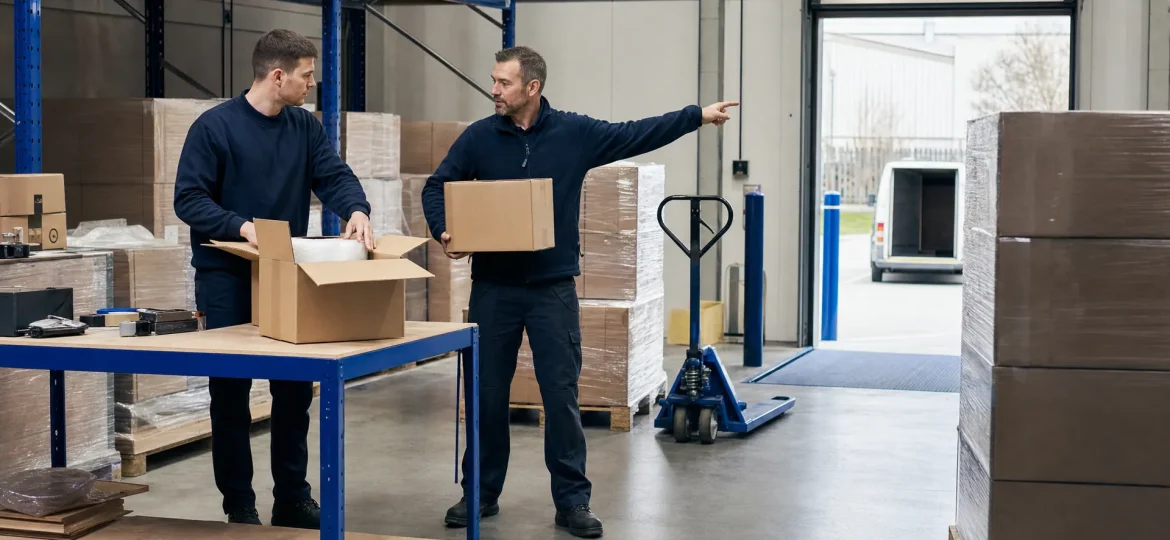
You do not need to drive to every stockist yourself. With direct to store distribution UK-wide, a logistics partner can hold your stock, prepare each shop's order and arrange delivery to that location. You keep the retailer relationship without spending your working week loading boxes and chasing delivery signatures.
The important part is agreeing how each retailer wants to receive stock, what your logistics partner will handle and what remains your responsibility. Here is how to set up that arrangement without losing control of your products, costs or customer service.
First, separate getting stocked from getting delivered
Getting a product onto a shop's shelves involves two different jobs: securing the commercial agreement and fulfilling the orders that follow.
A logistics company can store, prepare and transport your products. That does not normally mean it will persuade buyers to stock them, negotiate your wholesale price or purchase the stock from you. Those activities belong to your sales operation or a separately agreed distributor arrangement.
If you have not secured retail accounts yet, start with the commercial steps involved in getting your product into UK supermarkets. Delivery planning supports that process, but it does not replace a listing agreement.
Once a shop agrees to buy, ask for its delivery instructions before promising a start date. A small independent retailer and a national chain may have very different receiving arrangements.
How does direct to store distribution UK-wide work?
Direct-to-store distribution means products go to individual retail locations rather than first passing through the retailer's central distribution centre. You may also see it called direct store delivery or DSD.
It is a business-to-business delivery model, not a supermarket home-delivery service.
An outsourced arrangement usually follows this sequence:
- Your stock arrives at the logistics provider's warehouse and is checked into storage.
- You send an approved order identifying the shop, products and quantities required.
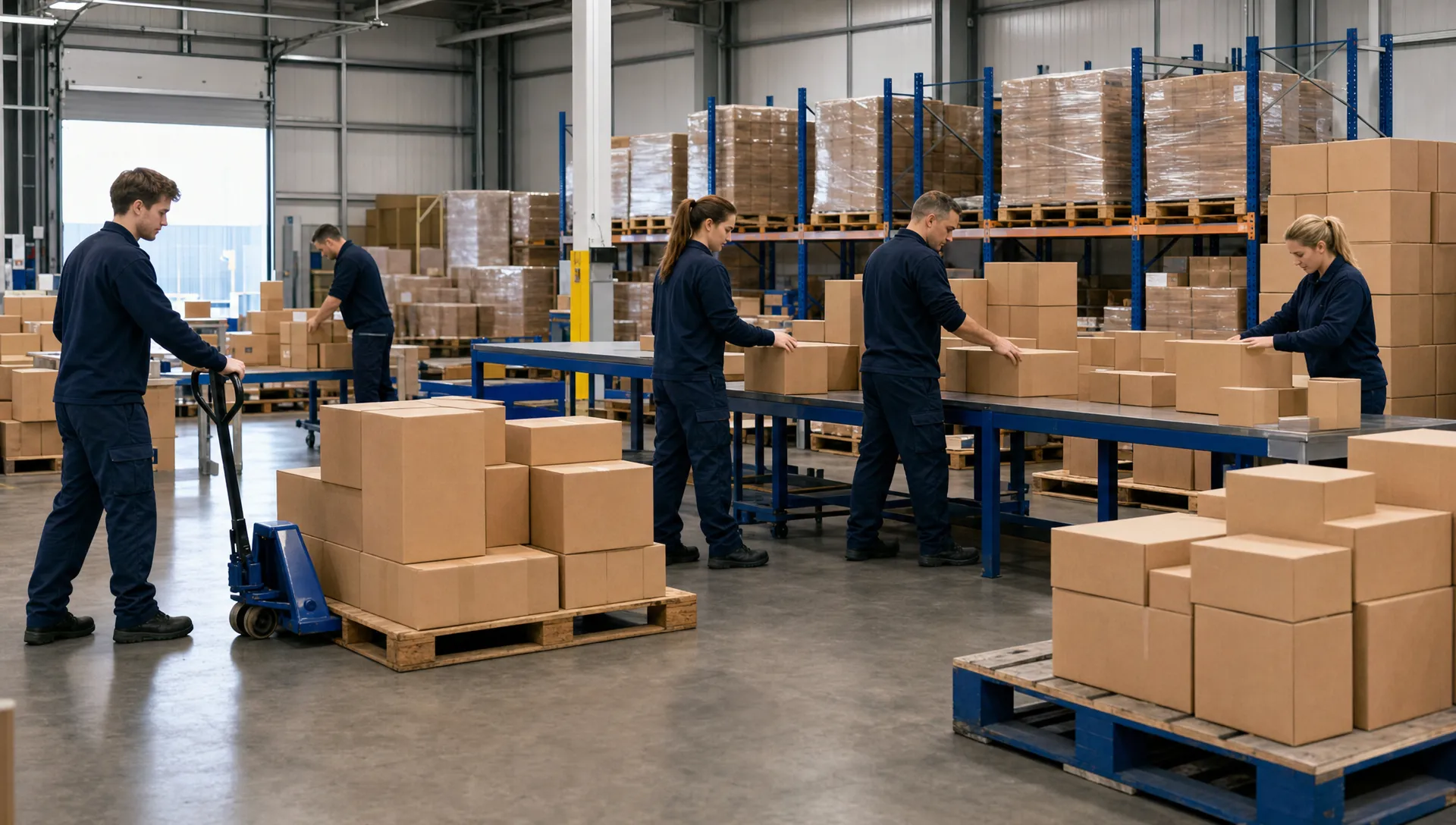
- The warehouse picks the goods and prepares the cartons, pallets or displays to the retailer's specification.
- The delivery is booked or scheduled according to the shop's receiving arrangements.
- Delivery evidence and any shortages, refusals or damage are reported back.
Some businesses only outsource transport. Others outsource storage, order preparation and dispatch together. The second option removes more daily handling from your own premises.
The practical value of direct to store distribution UK-wide is that adding another stockist need not mean adding another delivery run to your diary. However, the retailer must accept this supply route, and someone still needs to manage orders and exceptions.
Choose the supply arrangement your retailer accepts
Do not assume every shop wants you to deliver directly. A chain may require suppliers to use its distribution centre, while an independent shop may welcome deliveries to its back door.
| Arrangement | Where your stock goes | What to establish first |
|---|---|---|
| Direct to individual shops | Each agreed retail location | Store-specific receiving times, order quantities and delivery access |
| Delivery through a retailer's distribution centre | A central or regional receiving site | Whether the retailer requires this route and its booking specifications |
| Supply through a wholesaler or distributor | The intermediary's agreed receiving point | Who buys the stock, manages retailer accounts and arranges onward supply |
A third-party logistics provider, or 3PL, is not automatically a wholesaler. Holding and delivering your inventory does not mean taking ownership of it or finding buyers for it.
You can also use a mixed arrangement. Some retail accounts might receive stock through a distribution centre while others receive individual store orders. When planning direct to store distribution UK-wide, build the service around those agreed routes rather than imposing one method on every customer.
Agree who does what before the first order
A successful delivery is not necessarily the same as a stocked shelf. The driver may be responsible only for handing goods to an authorised member of staff at the agreed receiving point.
Shelf replenishment, display installation, removal of packaging and checking stock on the shop floor are separate tasks unless explicitly included. Agree whether products should arrive as loose cartons, palletised stock or pre-filled display units.
Set clear responsibilities for the less straightforward situations too:
| Situation | Decision to agree in advance |
|---|---|
| A shop reports missing units | Who checks the warehouse records and delivery evidence, then approves a credit or replacement? |
| A delivery is refused | Who authorises waiting, redelivery or return to the warehouse? |
| Products arrive damaged | What evidence is required and who manages the claim? |
| Stock remains unsold | Is it returnable, and under what commercial terms? |
| The shelf is empty but stock is in the back room | Who is responsible for moving it onto the shop floor? |
Do not treat proof of delivery as proof that every item has been counted or placed on sale. Clarify what the recipient's signature confirms and how discrepancies must be reported.
For direct to store distribution UK-wide, a written responsibility split is especially useful when your team, warehouse, carrier and retailer all handle different parts of the order. It prevents routine exceptions from becoming disputes about who should act.
Build a store-ready order file
Your provider needs more than a shop name and a quantity. Give every delivery location a consistent record so staff do not have to reconstruct the instructions whenever an order arrives.
Include the following information:
- Store identity: The branch name, full address, postcode, store code and receiving contact.
- Order references: The retailer's purchase order number and any required booking reference.
- Product details: Product codes, quantities, units per case and whether split cases are allowed.
- Receiving requirements: Delivery days, booking windows, access restrictions and unloading arrangements.
- Presentation rules: Carton labels, pallet requirements, delivery paperwork and display preparation instructions.
- Exception contacts: Who can approve substitutions, short deliveries, redelivery charges or returns.
Keep the retailer's original instructions available alongside your own summary. If a shop changes its opening hours or receiving entrance, update the central record rather than relying on a note in someone's inbox.
Check product acceptance before booking
Not every product in a range necessarily suits the same handling process. For example, a specialist range containing ant farm kits and live ant colonies includes both equipment and living stock. Those should not be treated as interchangeable consignments.
When arranging direct to store distribution UK-wide for any specialist range, confirm warehouse and carrier acceptance before quoting the retailer. Live goods, temperature-sensitive products and regulated items may need separate arrangements. A provider accepting ordinary boxed accessories should not be assumed to accept everything else you sell.
Test the process with a small group of shops
Before launching across your full store list, run a manageable pilot using representative locations. Include a shop with straightforward access and one with tighter receiving restrictions if those reflect your actual customer base.
For illustration, a brand supplying ten independent shops could send an initial replenishment order to three locations first. The purpose is not simply to check whether the vehicle arrives. It is to confirm that the right cases reach the right branch, staff recognise the paperwork and any delivery discrepancies reach the right person.
Check whether the shop received a useful quantity too. A large case size may reduce handling but leave a small retailer struggling for stockroom space. Conversely, frequent tiny orders can make delivery costs difficult to absorb.
Use the pilot to correct labels, order records and handover instructions before increasing volume. Expanding direct to store distribution UK-wide is easier when each new branch follows a tested process rather than creating another exception.
Compare the full cost, not just the delivery rate
A low transport quote can be misleading if it excludes work your orders regularly require. Ask prospective providers to price the same sample order profile so the comparisons are meaningful.
That profile should explain your typical order size, product dimensions, total weight, delivery geography and receiving restrictions. Include the likely split between cartons, pallets and promotional displays rather than supplying only an annual sales forecast.
Check how the quote treats goods-in handling, storage, picking, packaging, labelling and transport. Then ask about waiting time, unsuccessful deliveries, booking changes and returns. Confirm any minimum charges and whether quoted prices include VAT.
Your own commercial terms matter as well. Agree a retailer order minimum or delivery-charge policy that reflects the cost of serving small orders, rather than automatically promising free delivery everywhere.
Costing direct to store distribution UK-wide means looking at the cost per completed store order, including avoidable failures. A slightly higher planned charge may be preferable to a cheaper service that does not match the receiving requirements.
Keep replenishment and returns under control
Once deliveries are running, decide how repeat orders will be triggered. Retailers may place orders themselves, send a stock report or agree a regular replenishment schedule. Do not assume you will receive live sales data from every shop.
If you also sell through an online shop, agree how inventory is allocated between retail orders and eCommerce orders. A stock balance alone is not enough if the same units have effectively been promised twice.
For dated products, specify the minimum remaining shelf life each retailer will accept. Where relevant, batch and best-before records should support stock rotation and investigation of product issues.
Returns need their own approval process. Identify the original order, reason for return and condition of the goods before deciding whether they can go back into saleable stock. Outsourcing physical returns handling does not automatically transfer responsibility for retailer credits.
Reliable direct to store distribution UK-wide depends on these repeat processes, not just the first successful delivery. Review delivery failures, shortages and returns regularly so the same problems do not keep generating extra work.
Frequently asked questions
Do I need my own warehouse to supply shops? No. You can use a 3PL to receive and store stock, prepare retailer orders and arrange dispatch. You still need agreed product records, order instructions and commercial terms with each retailer.
Will a delivery company put my products on the shelves? Not unless merchandising or shelf replenishment is specifically included. Standard delivery may stop at an agreed receiving point. Confirm the handover location and any additional work before booking.
Can I supply independent shops and national retailers through one provider? Potentially, but the provider must be able to meet each account's requirements. Check individual store deliveries and distribution-centre deliveries separately, including booking, labelling and unloading rules.
Who invoices the shops when logistics is outsourced? Unless you have agreed a different commercial model, your business continues selling to and invoicing the retailer. The logistics provider charges you for the services it performs.
Do returned products automatically go back into stock? They should not. Agree inspection criteria and who can authorise restocking, quarantine or disposal, particularly for damaged, opened or dated goods.
Arrange retail deliveries with Gus Logistics
If you need direct to store distribution UK-wide without managing every order yourself, Gus Logistics can discuss storage, preparation and transport as one joined-up requirement.
Based in Nantwich, Cheshire, Gus Logistics is a family-run 3PL supporting product businesses across the UK. Its B2B fulfilment service in Cheshire provides a relevant starting point for discussing retail orders. If stockholding is part of the requirement, pallet and bulk storage includes racked and floor storage with real-time warehouse tracking through a client portal.
Gus Logistics also provides transport, co-packing and FSDU services, with no minimum volume requirements. Share your store list, product details, expected order sizes and retailer instructions so the proposed arrangement reflects the work involved.
Category: Logistics
Call Gus Logistics on 01270 335014 to discuss getting your products delivered to shops without making every delivery yourself.
Looking for a Logistics Partner You Can Trust?
From warehousing and order fulfilment to transport and FSDU design - Gus Logistics handles it all from our base in Nantwich, Cheshire. Over 10 years experience, no minimum volumes, no long contracts.
