
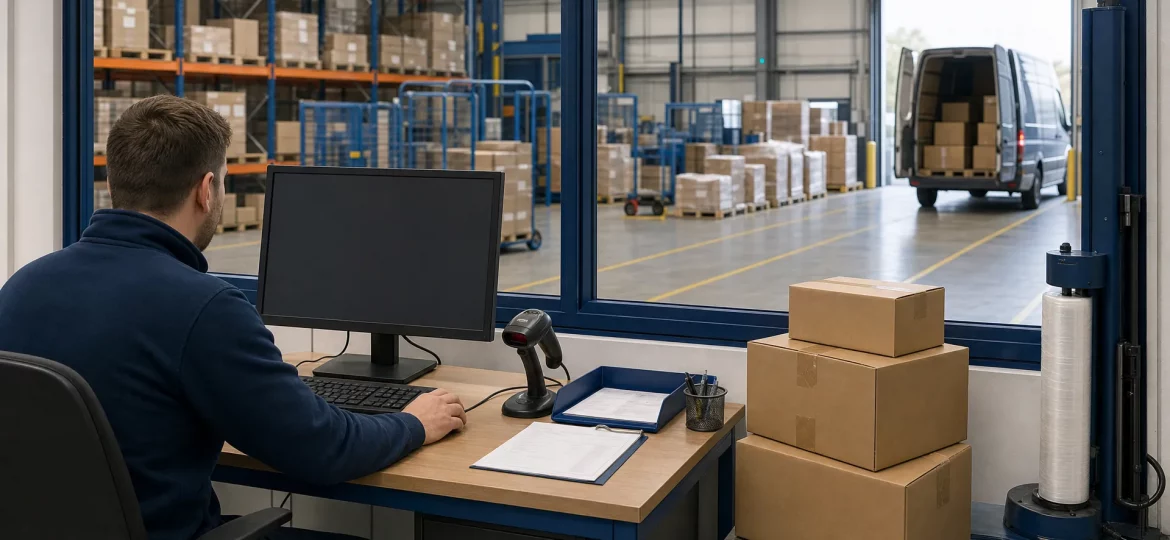
How to Choose a 3PL That Integrates With Shopify, Amazon and eBay
Selling through Shopify, Amazon and eBay can be a strong route to growth, but it can also make fulfilment harder to control. Orders arrive from different places, stock moves quickly, customers expect clear tracking, and each sales channel has its own way of handling order data.
That is why choosing a 3PL for multichannel selling should not start with the cheapest pick fee. It should start with one practical question: can this provider connect your sales channels to the warehouse, dispatch process and delivery network without creating more admin for your team?
The right eCommerce logistics partner should help you reduce manual work, protect stock accuracy and keep customers informed. The wrong one can leave you exporting spreadsheets, chasing missing tracking numbers and dealing with overselling at the worst possible time.
Why integration matters more than it first appears
A 3PL integration is not just a technical add-on. For a growing online seller, it is the link between the customer placing an order and the warehouse team picking, packing and dispatching it correctly.
If your 3PL does not integrate properly, your team may still need to download orders, upload CSV files, manually update stock, copy tracking numbers and check marketplace messages. That may work when you are shipping a handful of orders a day, but it becomes risky as volumes rise or when you start selling across multiple channels.
A good order fulfilment partner should connect your online stores and marketplaces with the operational work happening in the warehouse. The aim is simple: orders flow in, stock is visible, dispatch data flows back, and exceptions are spotted before they become customer complaints.
This is especially important for multichannel sellers because Shopify, Amazon and eBay often behave differently. Shopify may be your owned store with custom delivery options. Amazon may require prompt dispatch confirmations and accurate tracking. eBay buyers may have varied expectations depending on product type, delivery promise and seller history. Your 3PL needs to understand those differences in practice, not just say that the platforms are supported.
What a Shopify, Amazon and eBay integration should actually do
When a logistics provider says it integrates with Shopify, Amazon and eBay, ask what that means in daily use. There is a big difference between a basic order import and a properly managed fulfilment workflow.
Shopify, Amazon and eBay all provide ways for approved systems to exchange order and fulfilment data. If you want to understand the technical background, you can review the official Shopify Admin API, Amazon Selling Partner API and eBay Fulfillment API. As a business owner or operations manager, you do not need to become an API expert, but your 3PL should be able to explain how the connection works in plain English.
At a practical level, the integration should support these outcomes:
- New paid orders should be pulled into the warehouse system automatically.
- SKUs, quantities, customer addresses and delivery services should transfer accurately.
- Stock levels should be updated often enough to reduce overselling risk.
- Dispatch confirmations and tracking numbers should be sent back to the right channel.
- Exceptions such as missing SKUs, address issues or cancelled orders should be visible quickly.
The key phrase is end-to-end visibility. You should be able to see what has been ordered, what has been picked, what has shipped and what needs attention.
Map your sales setup before comparing 3PL providers
Before you speak to a 3PL, document how your sales channels currently work. This does not need to be complicated, but it will help you avoid vague conversations and make it easier to compare providers fairly.
A 3PL cannot design the right integration if the product data, SKUs and order rules are unclear. The more accurate your setup notes are, the smoother onboarding is likely to be.
| Area to document | What to check | Why it matters |
|---|---|---|
| Sales channels | Shopify, Amazon, eBay and any other platforms you use | The 3PL needs to know which systems must connect from day one |
| SKUs | Whether each product has the same SKU across every channel | Inconsistent SKUs are one of the most common causes of picking and stock errors |
| Product types | Single items, bundles, multipacks, fragile goods or dated stock | Different products may need different storage, packing or tracking rules |
| Delivery promises | Standard, next-day, economy, marketplace-specific services | Warehouse cut-offs and carrier choices must match what customers are promised |
| Stock rules | Shared stock pool or separate stock by channel | This affects how inventory is managed and how overselling is prevented |
| Returns process | Where returns go and how they are inspected | Returned stock can affect availability if it is not processed properly |
If you sell bundles or multipacks, pay special attention to SKU logic. A Shopify bundle may appear as one customer-facing product, while the warehouse may need to pick several individual items. If that mapping is not handled correctly, errors can happen even if the integration is technically live.
Test the onboarding process, not just the software claim
Many providers can say they support the main platforms. Fewer will walk you through a clear onboarding process. That process matters because it is where most integration problems are found and fixed.
Ask how the 3PL will import products, match SKUs, receive stock, test orders and confirm carrier services before going live. You should also ask who is responsible for each step. For example, will your team need to clean up product data first? Will the 3PL run test orders from each channel? Who checks that tracking data is being returned correctly?
A reliable onboarding process usually includes product data review, stock receipt planning, test orders, carrier service mapping and a go-live checklist. If a provider wants to connect everything without testing, be cautious. Fast onboarding is useful, but it should not mean skipping basic checks.
It is also worth asking what happens after go-live. Integrations are not something you set once and ignore forever. Sales channels update, SKUs change, new delivery services are added and product ranges grow. Your 3PL should have a clear way to manage changes without disrupting daily dispatch.
Make stock visibility part of your decision
Stock accuracy is where eCommerce logistics succeeds or fails. Even the best sales channel integration will not help if the warehouse stock record is unreliable.
Ask whether the 3PL uses a warehouse management system, how clients access stock information, and whether stock is tracked by SKU, batch, serial number or best-before date where needed. If you sell food, cosmetics, electronics, regulated products or dated goods, these details can be important.
For businesses holding pallets, bulk stock or mixed product ranges, flexible pallet and bulk storage can be just as important as the sales channel integration. Your stock needs to be stored, counted and replenished in a way that supports fast picking.
| Stock visibility question | Strong answer to look for |
|---|---|
| Can I view stock online? | You can access stock information through a client portal or agreed reporting method |
| How often is stock updated? | Updates are frequent enough to support your sales velocity and marketplace activity |
| Can you track batches or dates? | Batch, serial number or best-before tracking is available if your products need it |
| How are discrepancies handled? | There is a clear process for investigating and correcting stock differences |
| What happens when returns come back? | Returned goods are checked before being made available for resale |
Check how dispatch rules work across each channel
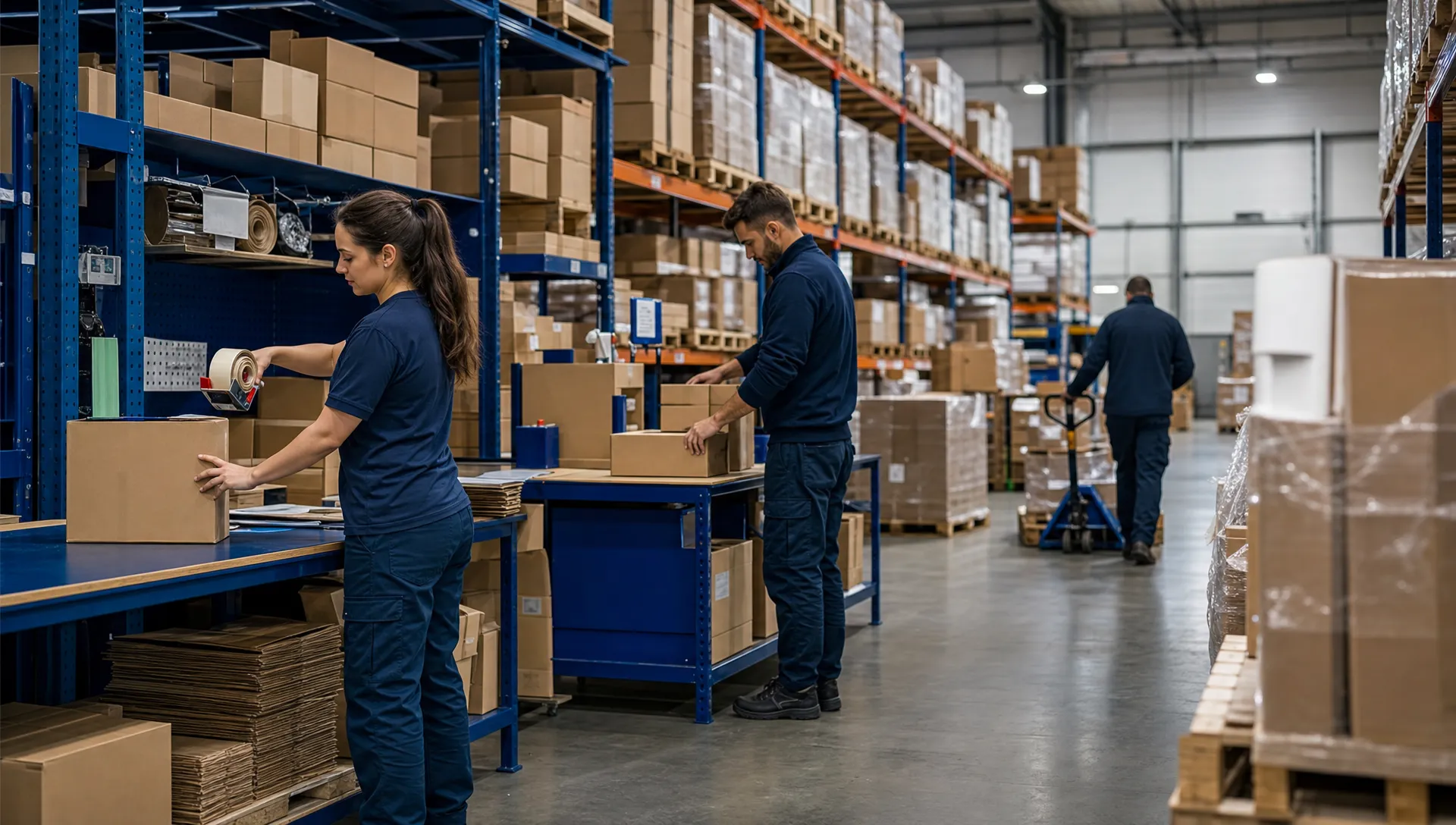
Once orders are flowing into the warehouse, the next question is whether the 3PL can dispatch them in line with your promises. This is where cut-off times, carrier options and warehouse processes become important.
If your Shopify store offers next-day delivery, the warehouse must receive the order in time, pick it accurately, pack it correctly and pass it to the right carrier. If Amazon or eBay orders need tracking numbers returned quickly, the integration must send dispatch data back without your team manually chasing it.
A provider offering same-day and next-day transport can be valuable when speed matters, but you still need to check how that works operationally. Ask what the daily cut-off is, which carriers are used, how failed collections are handled and whether urgent orders can be prioritised.
| Dispatch area | What to confirm |
|---|---|
| Order cut-off | The latest time an order can be received for same-day dispatch |
| Carrier mapping | Which delivery service is used for each channel and delivery option |
| Tracking updates | Whether tracking is sent back automatically to Shopify, Amazon and eBay |
| Packaging | Whether the 3PL can follow your packing requirements and product handling rules |
| Exceptions | How you are alerted if an order cannot be dispatched as planned |
Do not assume that next-day dispatch means the same thing with every 3PL. Some providers have early cut-offs. Others may support later cut-offs for certain services. The right answer depends on your order volume, product type, carrier network and customer promise.
Do not choose by integration count alone
It is useful if a 3PL integrates with a wide range of platforms, but the number alone does not prove the provider is right for you. A list of integrations tells you what is possible. It does not tell you how carefully the provider manages your operation.
For example, if Shopify is your main storefront, you may want to look more closely at how Shopify fulfilment in Cheshire can support stock management, order flow and dispatch. If Amazon and eBay are major channels too, you need to understand how all channels will share stock and how orders will be prioritised.
The better question is not only whether the 3PL can connect to your platforms. It is whether they can support your actual way of selling. That includes peak periods, promotions, returns, new product launches, carrier issues and customer service pressure.
A good provider should ask detailed questions about your business before recommending a setup. If they do not ask about SKUs, order volumes, product handling, dispatch rules and stock control, they may not fully understand what your operation needs.
Pay attention to people, not just systems
Technology matters, but logistics is still a people-led service. When something goes wrong, you need to know who to speak to and how quickly they can act.
This is especially important for growing businesses that do not have a large operations team. If orders are stuck, stock does not look right or a marketplace feed needs checking, you do not want to be passed around a call centre. You want someone who understands your account and can speak directly to the warehouse or transport team.
Ask who your day-to-day contact will be. Ask how issues are raised. Ask whether you will speak to people who are close to the operation or to a generic support desk. The answer can make a significant difference when you are dealing with peak trading, urgent dispatch or a stock query.
Location can also matter. A 3PL based near major routes can support faster movement of goods into and out of the warehouse. For brands distributing across the UK, access to strong transport links can make stock replenishment and delivery planning more straightforward.
Red flags when choosing an integrated 3PL
Most problems with 3PL selection appear after go-live, when changing provider becomes disruptive. These warning signs are worth spotting early.
| Red flag | Why it matters |
|---|---|
| The provider cannot explain the integration process clearly | You may end up managing technical issues yourself |
| They rely heavily on manual CSV uploads | Manual handling increases the risk of delays and errors |
| They do not ask about SKU consistency | Poor SKU mapping can cause picking mistakes and stock mismatches |
| There is no test order process | Problems may only appear once live customer orders are affected |
| They cannot explain stock update frequency | You may face overselling or inaccurate availability |
| They avoid discussing exceptions | Every fulfilment operation has exceptions, so the process needs to be clear |
| You do not know who your contact is | Slow communication can make small issues bigger |
A confident 3PL should welcome detailed questions. If your business is growing, you need a provider that is comfortable discussing both normal operations and edge cases.
A practical shortlist for your final decision
Once you have spoken to several providers, compare them against practical criteria rather than relying on the sales pitch. The best option is usually the one that gives you the clearest route to stable, scalable fulfilment.
| Selection factor | What a good answer looks like |
|---|---|
| Platform fit | Shopify, Amazon and eBay are all supported in a way that matches your setup |
| Stock control | You can see stock clearly and track product details where required |
| Dispatch capability | Cut-offs, carriers and warehouse processes match your customer promises |
| Onboarding | There is a defined plan for product data, test orders and go-live |
| Communication | You know who handles your account and how to raise issues |
| Flexibility | The provider can support changing volumes, promotions and new product lines |
| Wider logistics | Warehousing, fulfilment and transport can be managed together if needed |
Price still matters, of course. But a cheaper provider can become expensive if your team spends hours fixing order errors, responding to marketplace complaints or manually reconciling stock. Look at the total operational impact, not only the per-order charge.
Where Gus Logistics fits
Gus Logistics is a family-run 3PL provider based in Nantwich, Cheshire, supporting eCommerce brands, manufacturers and product businesses across the UK.
For online sellers, Gus Logistics provides order fulfilment and pick and pack services with integrations for 60+ platforms, including Shopify, Amazon, eBay, WooCommerce and Magento. The service includes late cut-offs up to 10pm and next-day dispatch, helping growing businesses meet faster delivery expectations.
The wider operation also includes pallet and bulk warehousing, real-time WMS tracking through a client portal, batch tracking, serial number tracking and best-before date tracking where required. For delivery, Gus Logistics operates its own fleet and has access to a wider UK and Europe-wide vehicle network when needed.
Just as importantly, Gus Logistics is built around direct communication. There are no call centres, no minimum volume requirements and same-day quotes are standard. That can make a real difference if you are moving from in-house fulfilment to outsourced logistics and need a partner who will help you get the details right.
Frequently Asked Questions
Can one 3PL integrate with Shopify, Amazon and eBay at the same time? Yes, many modern 3PL providers can connect with multiple sales channels. The important point is how those channels share stock, how orders are prioritised, and whether dispatch updates and tracking are returned correctly to each platform.
Should I choose the 3PL with the most integrations? Not necessarily. A long integration list is useful, but it does not guarantee strong onboarding, accurate stock control or good communication. Choose the provider that best understands your order flow, products and customer promises.
What information will a 3PL need before integration? A 3PL will usually need details of your sales channels, SKUs, product dimensions, stock quantities, delivery services, packaging rules and returns process. Clean product data makes the setup much smoother.
How long does a 3PL integration take? It depends on the platforms, product data and complexity of the setup. Straightforward integrations can be completed quickly, while complex SKU structures, bundles or multiple stock locations may need more testing before go-live.
What if my Shopify, Amazon and eBay SKUs do not match? Tell the 3PL early. Inconsistent SKUs can often be mapped, but they need to be handled carefully. If they are ignored, they can cause picking errors and stock discrepancies.
Ready to choose a 3PL that fits your sales channels?
If you sell through Shopify, Amazon, eBay or a mix of channels, choosing the right 3PL can make fulfilment faster, clearer and easier to manage. Focus on integration quality, stock visibility, dispatch capability and the people behind the service.
To discuss your eCommerce logistics needs with Gus Logistics, call 01270 335014 or get in touch through the contact page.
Looking for a Logistics Partner You Can Trust?
From warehousing and order fulfilment to transport and FSDU design - Gus Logistics handles it all from our base in Nantwich, Cheshire. Over 10 years experience, no minimum volumes, no long contracts.
