
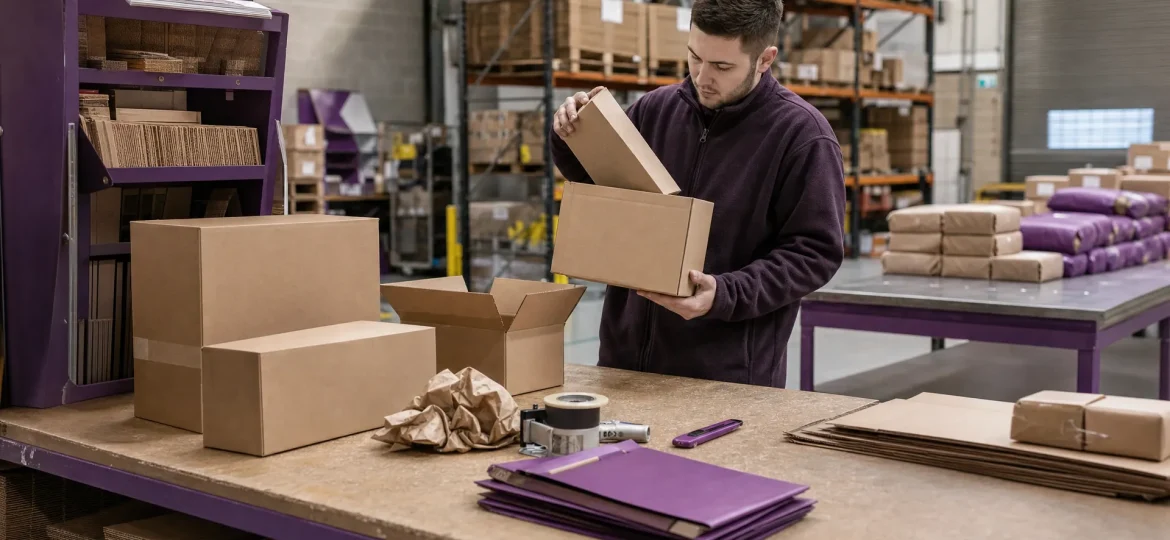
How to Reduce Fulfilment Costs Without Switching Providers
Rising fulfilment costs can be frustrating, especially when your current provider is broadly doing a decent job. Orders are going out, customers are receiving parcels, and changing partner feels like a major disruption. But the invoice keeps creeping up, storage charges are higher than expected, and every promotion seems to create extra admin.
The good news is that you do not always need to switch 3PL providers to reduce fulfilment costs. In many cases, the quickest savings come from tightening the way your stock, orders, packaging and delivery rules are set up.
Before you go through the effort of moving inventory, rebuilding integrations and retraining your team, it is worth reviewing the parts of your operation that drive cost. Some changes are simple. Others need a proper conversation with your fulfilment provider. Either way, the aim is the same: remove avoidable work from the process so you pay for value, not waste.
Start by understanding what is actually costing you money
A fulfilment bill can look simple on the surface, but several smaller charges usually sit behind the final monthly figure. If you only look at the total, it is hard to know whether the issue is picking, storage, packaging, delivery, returns, inbound goods or exception handling.
Ask your provider for a clear breakdown by activity. You want to see which costs move with order volume and which are caused by operational complexity. For example, an increase in order volume is not necessarily a problem if your cost per order stays stable. But if the cost per order rises as you grow, something in the process may be adding unnecessary work.
The main areas to review are:
- Pick and pack charges
- Packaging materials
- Storage charges
- Inbound goods handling
- Delivery and carrier charges
- Returns processing
- Manual admin or exception fees
Once you have this breakdown, look for patterns. Are certain SKUs more expensive to pick? Are slow-moving lines taking up too much warehouse space? Are too many orders being sent on a premium service when a standard option would meet the customer promise?
If you use outsourced order fulfilment, this kind of review should be a normal part of managing the relationship, not a one-off conversation when the bill feels high.
Make your stock easier to receive, store and pick
One of the most practical ways to reduce fulfilment costs is to make your products easier for the warehouse team to handle. The more decisions, checks and manual work required for each item, the more time the process takes.
Start with product data. Every SKU should have a clear name, barcode, unit quantity, weight, dimensions and packaging type. If your warehouse team has to guess whether two similar items are different products, or check an email thread before dispatching a bundle, the process is already costing more than it should.
SKU confusion is especially common for brands with multiple variants. Similar colours, sizes, multipacks, gift sets and seasonal packaging can all create picking delays if they are not clearly labelled. The fix is not complicated, but it does require discipline. Keep naming conventions consistent across your website, stock system and warehouse records.
Inbound goods also matter. If pallets arrive mixed, unlabelled or with no advance notice, the receiving team has to spend extra time identifying, counting and sorting stock before it can be made available for orders. A clean goods-in process reduces handling time and helps prevent stock discrepancies later.
It is also worth reviewing whether bestsellers should be stored separately from slow-moving stock. Fast-moving SKUs should be easy to access, while seasonal or bulk items can often sit in less active storage areas. This is where a good warehouse layout and clear stock control process can make a real difference.
Cut storage waste before negotiating storage rates
Storage costs are often blamed on the provider’s rate card, but the bigger issue is sometimes the amount of stock being held. Paying for space is unavoidable, but paying to store stock that is not moving can quietly drain margin.
Review your inventory by age, sales velocity and future demand. If a product has not sold for months and there is no planned promotion, ask whether it should remain in fulfilment stock. Dead stock, excess packaging, outdated POS materials and old product versions all take up space.
For businesses using pallet and bulk warehousing, the difference between well-managed stock and unmanaged stock can be significant. Racked storage, floor storage, batch tracking and real-time warehouse management systems can help, but the commercial benefit comes from using that information to make decisions.
A simple monthly storage review can help you identify:
- Products that should be discounted, cleared or removed
- SKUs where replenishment quantities are too high
- Seasonal stock that should be separated from active fulfilment stock
- Packaging or display materials that no longer need to be held
The aim is not to run dangerously lean. You still need enough stock to meet demand. But holding the right stock in the right quantity is usually cheaper than simply asking for a lower storage rate.
| Cost area | What often drives the cost up | Practical way to reduce it |
|---|---|---|
| Picking | Similar SKUs, unclear labels, too many manual checks | Improve SKU naming, barcodes and pick instructions |
| Storage | Slow-moving or obsolete stock taking up space | Review aged stock monthly and clear dead lines |
| Packaging | Too many box sizes or oversized parcels | Standardise packaging and match box size to products |
| Delivery | Premium services used when not needed | Match delivery service to customer promise and order value |
| Returns | Poor return information or unclear restocking rules | Track return reasons and agree a clear returns process |
Revisit packaging, not just labour
Packaging is one of the most overlooked areas in fulfilment cost control. It affects material spend, packing time, damage rates and delivery charges.
If your packaging range is too wide, packers may spend longer choosing the right box. If it is too narrow, products may be sent in oversized cartons with too much void fill. Both situations add cost. Oversized parcels can also affect carrier pricing, as many delivery networks consider size as well as weight.
A packaging review should look at the most common order combinations, not just individual products. If customers often buy the same two or three items together, there may be a better carton or mailer for that combination. If fragile items are regularly returned damaged, stronger packaging may cost slightly more upfront but save money in replacements, refunds and customer service time.
Do not assume branded packaging is always the right answer either. It can improve customer experience, but it can also increase cost and storage requirements. For some brands, a simple outer box with a branded insert is a better balance between presentation and efficiency.

Check whether your delivery service matches the customer promise
Delivery is often one of the largest variable costs in fulfilment. It is also an area where small changes can make a visible difference without damaging customer experience.
Start by reviewing your delivery promise. If your website offers next-day delivery as a premium paid option, not every order needs to be shipped on a premium service. If your marketplace rules require dispatch within a certain window, make sure you are meeting that requirement without automatically over-specifying every shipment.
You can also segment orders by value, destination, product type or customer choice. A high-value order may justify a tracked next-day service. A low-value accessory may not. Some business-to-business orders may need timed delivery, while others simply need reliable next-day or two-day service.
For urgent movements, retail deliveries or larger consignments, it can help to discuss same-day and next-day transport options with your provider rather than defaulting to parcel networks for everything. The right transport method depends on size, urgency, destination and handling requirements.
The key question is simple: are you paying for delivery speed or service levels your customer has not asked for?
Use automation you already have access to
Manual order processing is expensive because it creates more admin, more checking and more opportunity for mistakes. If orders are being exported, edited, emailed and rekeyed, there is almost certainly cost in the process that can be removed.
Ask your provider what integrations are available for your sales channels and systems. Many eCommerce brands can reduce manual work by connecting platforms such as Shopify, Amazon, eBay, WooCommerce or Magento directly into the fulfilment process. Once orders, stock updates and tracking information flow automatically, the team spends less time managing spreadsheets and more time dispatching accurately.
Automation does not remove the need for good communication. You still need agreed rules for back orders, split shipments, address errors, cancelled orders and product substitutions. But the fewer routine tasks handled manually, the more scalable your fulfilment operation becomes.
If you already have an integration in place, check whether it is being used properly. Old workflows often remain long after a system has been connected. For example, your team may still be sending separate email instructions for things that could be handled through order tags, SKU rules or predefined packing notes.
Reduce returns cost at the source
Returns are part of selling physical products, but avoidable returns are expensive. You pay for the outbound fulfilment, the return movement, inspection, restocking and sometimes replacement or refund handling.
To reduce the cost, look beyond the warehouse first. Are customers returning items because product descriptions are unclear? Are size guides, images or technical specifications causing confusion? Are items arriving damaged because the packaging is not suitable? Are wrong-item complaints linked to similar SKUs or poor product labelling?
Your fulfilment provider should be able to help you identify repeat patterns if returns are being recorded properly. Even simple return reason codes can show whether the issue is product quality, customer expectation, picking accuracy, packaging or delivery damage.
You should also agree clear rules for what happens when stock comes back. Can it be returned to sale immediately? Does it need inspection? Should damaged packaging be replaced? Should certain items be quarantined? Clear rules reduce back-and-forth communication and speed up the turnaround.
Plan promotions and peaks earlier
Promotions can increase sales, but they can also increase fulfilment costs if the warehouse only finds out when order volume suddenly jumps. Extra labour, urgent replenishment, delayed inbound processing and rushed packaging decisions all add cost.
If you are planning a product launch, influencer campaign, retail promotion, seasonal peak or flash sale, tell your provider early. Share expected volumes, key SKUs, promotion dates, packaging requirements and any special dispatch rules. Even if the forecast is not perfect, it gives the warehouse time to prepare.
Pre-kitting can also help in some situations. If a promotion always includes the same products, it may be cheaper and faster to prepare bundles in advance rather than pick each component separately for every order. This depends on order volume, storage space, product type and how likely the bundles are to sell through, so it should be assessed case by case.
Good planning does not only reduce cost. It also protects customer experience during the periods when your brand is most visible.
Ask your provider the right questions before switching
If you want to reduce fulfilment costs without switching providers, the conversation needs to be specific. A vague request for a cheaper price is unlikely to solve the underlying issue. A focused operational review is much more useful.
Helpful questions include:
- Which SKUs or order types take the most time to pick and pack?
- Are there avoidable manual steps in our current process?
- Are we using the most suitable packaging for our common order profiles?
- Can storage be reorganised to reduce handling time or space used?
- Are our delivery services matched to the customer promise?
- Which returns reasons are most common?
- What information do you need from us earlier to plan peaks better?
A good provider should be willing to discuss these points openly. They may not be able to remove every cost, but they should be able to explain what drives the charges and where practical improvements can be made.
When cost cutting is not enough
Sometimes the issue is not just process. If your provider cannot give you clear data, does not support your sales channels, regularly misses agreed dispatch times or is difficult to reach when something goes wrong, then switching may become the right decision.
But switching should come after you have separated avoidable cost from poor service. If the provider is reliable and responsive, you may be able to improve margins by changing how the operation is set up. If the provider is unable to support your growth, then a new partner may be needed.
For businesses in Cheshire, Crewe, Nantwich and the wider North West, location can also play a part. Working with a provider close to your stock, suppliers or transport routes can make inbound deliveries, urgent stock movements and site visits easier. Gus Logistics supports businesses looking for warehousing and fulfilment in Crewe and across the UK from its base in Nantwich, Cheshire.
How Gus Logistics can help you control fulfilment costs
Gus Logistics is a family-run 3PL provider with over 10 years of experience supporting eCommerce brands, manufacturers and product businesses. The team provides order fulfilment, warehousing, transport, co-packing, returns management and FSDU services from Cheshire, with direct communication rather than call centres.
For businesses reviewing fulfilment costs, the useful starting point is not simply a rate card. It is understanding how your stock moves, how your orders are packed, how your delivery rules work and where manual work is adding unnecessary cost.
Gus Logistics offers order fulfilment with integrations across 60+ platforms, pallet and bulk storage with real-time WMS tracking, same-day and next-day transport options, and support for returns, co-packing and retail display projects. There are no minimum volume requirements, which makes the service suitable for growing businesses as well as more established operations.
Frequently Asked Questions
Can I reduce fulfilment costs without changing my 3PL provider? Yes. Many savings come from improving stock data, packaging, storage use, delivery rules, returns processes and promotion planning. If your provider is reliable and willing to work with you, it is worth reviewing these areas before switching.
What is the quickest way to reduce fulfilment costs? Start by asking for an itemised breakdown of your fulfilment costs. Once you know whether the main issue is picking, storage, packaging, delivery or returns, you can target the right fix instead of guessing.
Does cheaper packaging always reduce fulfilment costs? Not always. Cheap packaging can increase damage, returns and packing time if it is not suitable. The goal is cost-effective packaging that protects the product, fits common order combinations and works well with your delivery services.
How often should I review storage costs? A monthly review is sensible for most growing product businesses. Look for slow-moving stock, obsolete lines, excess packaging and seasonal products that are taking up active fulfilment space unnecessarily.
When should I consider switching fulfilment provider instead? Consider switching if your provider cannot give clear data, does not integrate with your systems, regularly misses dispatch requirements, lacks capacity for growth or is difficult to communicate with when issues arise.
If your fulfilment costs are rising and you want a practical review before making a major change, speak to Gus Logistics. Call 01270 335014 or get in touch via the contact page to discuss your current operation and the options available.
Looking for a Logistics Partner You Can Trust?
From warehousing and order fulfilment to transport and FSDU design - Gus Logistics handles it all from our base in Nantwich, Cheshire. Over 10 years experience, no minimum volumes, no long contracts.
