
Pick and Pack Services: What to Look For in a UK Partner
If your team is still picking orders from shelves, packing them between customer emails and chasing courier cut-offs every afternoon, you are not alone. Many growing product businesses reach a point where in-house fulfilment starts to hold them back.
The right pick and pack services can take that pressure off your team. The wrong partner can create new problems, including stock errors, late dispatches, poor packaging and frustrated customers.
This guide explains what to look for in a UK pick and pack partner, what questions to ask before signing, and how to spot whether a 3PL is set up to support your next stage of growth.
What do pick and pack services include?
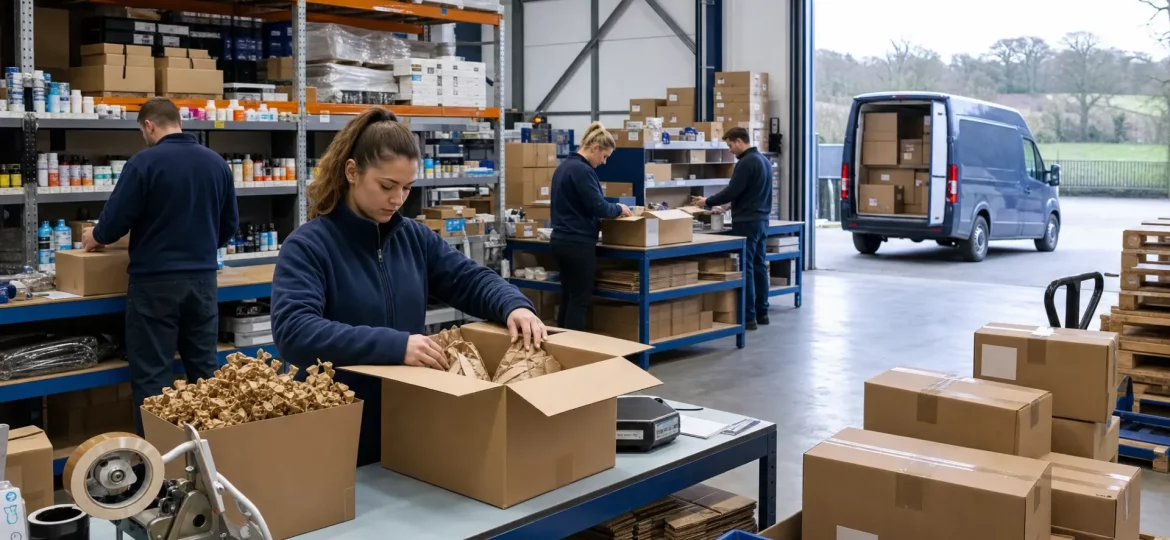
Pick and pack is the part of order fulfilment where products are selected from stock, checked, packed and prepared for dispatch. In practice, a good service usually covers far more than putting items into boxes.
A reliable partner should be able to handle goods in, storage, stock control, order picking, packing, labelling, carrier booking and dispatch updates. Depending on your products, they may also support kitting, promotional inserts, batch tracking, serial number tracking, best-before date control and returns handling.
For eCommerce brands, pick and pack services are often the operational bridge between your online store and your customer’s doorstep. When they work well, your customer simply receives the right order, on time, in suitable packaging. When they do not, your support inbox usually tells the story quickly.
Start with accuracy, not price
Price matters, but accuracy matters more. A cheap pick and pack provider can become expensive if they send the wrong products, lose stock, miss dispatch deadlines or need constant chasing.
Before you compare quotes, ask how each provider controls accuracy inside the warehouse. You want to understand how stock is received, where it is stored, how pickers are directed, how orders are checked and how mistakes are recorded.
A good partner should be able to explain their process in plain English. If the answer is vague, that is a warning sign. You do not need to know every technical detail, but you should feel confident that your stock will not disappear into a black hole.
| Area to check | What to ask | Why it matters |
|---|---|---|
| Goods in | How is inbound stock counted and booked in? | Errors at arrival can affect every order afterwards. |
| Stock locations | Is stock assigned to specific warehouse locations? | Location control reduces picking mistakes and wasted time. |
| Order checks | Are items scanned, checked or verified before dispatch? | A second check can prevent costly customer complaints. |
| Stock visibility | Can clients see stock levels and order status? | Better visibility helps you make buying and sales decisions. |
| Error handling | How are mistakes investigated and corrected? | You need a partner that fixes root causes, not just symptoms. |
Check platform integrations and order visibility
If you sell through Shopify, Amazon, eBay, WooCommerce, Magento or multiple channels at once, your fulfilment partner needs to connect cleanly with your systems.
Manual CSV uploads might work for a handful of orders, but they become risky as volume increases. Delays, duplicate orders and missed updates can quickly cause customer service issues. Ideally, orders should flow from your sales platform into the warehouse system with minimal manual handling.
Ask potential partners how quickly they can integrate your store, which platforms they support and what information flows back after dispatch. At minimum, you should expect order status updates, tracking details and clear stock reporting.
This is especially important if you sell across more than one marketplace. Without a clear stock view, it is easy to oversell popular products or keep too much cash tied up in slow-moving lines.
Look at cut-off times and dispatch promises
Many providers talk about fast dispatch, but you need to understand exactly what that means.
A cut-off time is the latest point at which an order can be received and still be dispatched that day. For an eCommerce brand, later cut-offs can be a real advantage, especially during peak trading periods or promotional launches.
Ask these questions before you commit:
- What is the standard same-day dispatch cut-off?
- Are later cut-offs available for certain services or volumes?
- What happens if order volumes spike unexpectedly?
- Which carriers are used for next-day and economy services?
- How are delayed orders flagged and communicated?
The most important point is not just whether a provider offers a late cut-off. It is whether they can consistently meet it. A later promise is only useful if the warehouse, systems and carrier collections are aligned behind it.
Make sure storage fits your products
Pick and pack does not happen in isolation. It depends on good storage.
If your products are small, light and fast-moving, you may need efficient shelf locations and quick picking routes. If you sell bulky goods, palletised stock or seasonal ranges, you may need racked or floor storage with enough flexibility to scale up and down.
Product type also matters. A candle brand, food supplement supplier and electronics retailer may all need pick and pack services, but their stock control requirements are not the same. Fragile items need careful handling. Products with expiry dates need date control. Higher-value goods may need serial number tracking. Retail-ready stock may need specific labelling or carton handling.
When choosing a partner, ask whether their pallet and bulk storage can support your current range and your likely future range. Moving warehouses every time your product mix changes is disruptive, so it pays to choose a provider with room to grow.
Packaging should protect your product and your brand
Customers judge the delivery experience long before they use the product. A damaged box, crushed item or messy presentation can make a good product feel less professional.
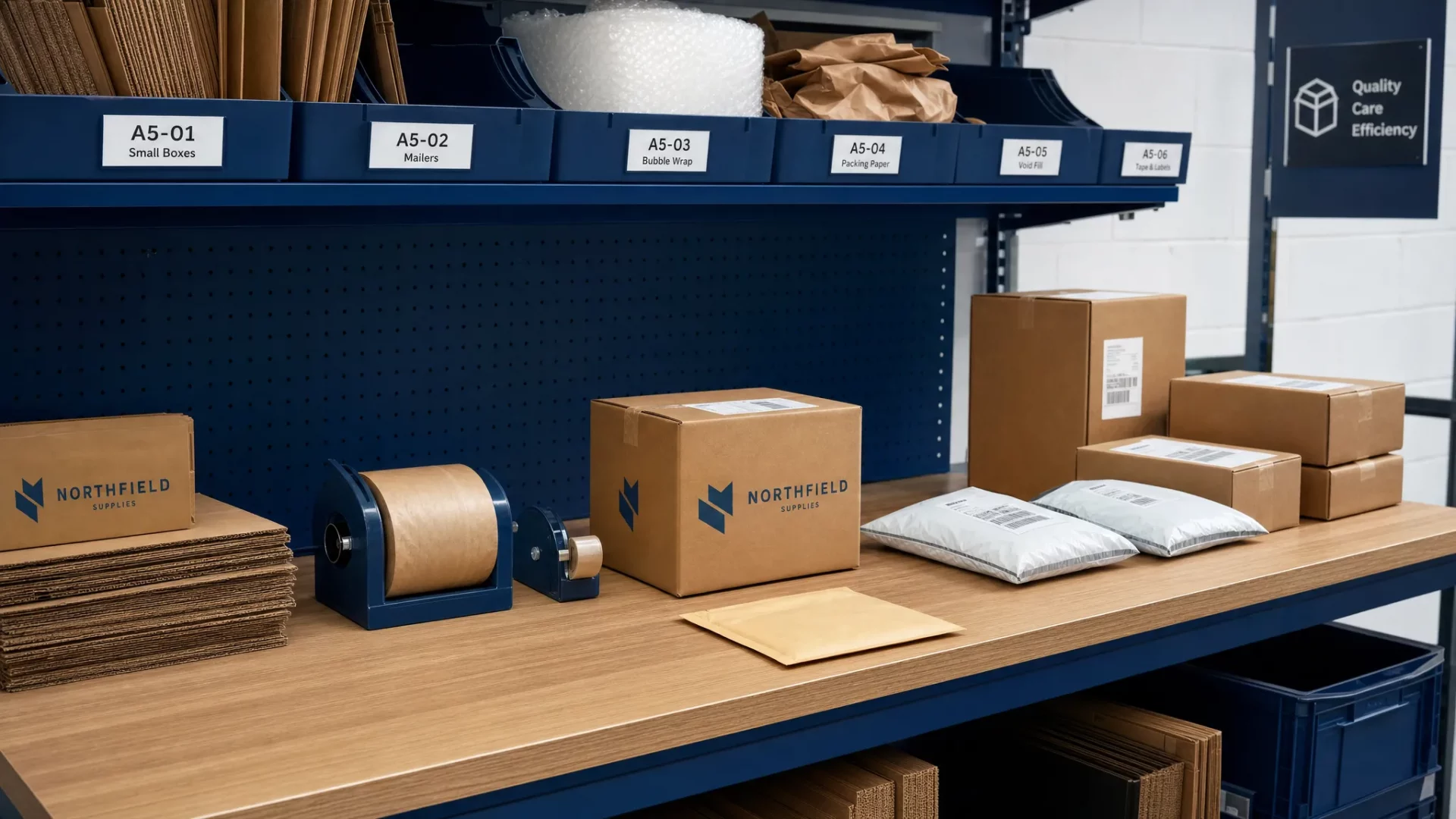
Your pick and pack partner should understand both protection and presentation. This does not always mean expensive bespoke packaging. It means using the right box size, void fill, tape, labels and packing method for the product and delivery route.
For some brands, plain and efficient packaging is best. For others, the unboxing experience is part of the brand. If you use branded inserts, gift notes, bundles or promotional materials, check that the provider can follow those instructions accurately.
Packaging also affects cost. Oversized boxes can increase carrier charges and waste materials. Poor protection can increase returns and replacements. A practical fulfilment partner will help you find the balance between customer experience, product safety and margin.
Understand pricing before you sign
Pick and pack pricing can vary widely because every operation is different. A simple single-item order is not the same as a multi-SKU order with inserts, fragile wrapping and marketplace labelling.
Do not just ask for a headline price per order. Ask for a full breakdown so you can understand what is included and what may cost extra.
Common cost areas include goods in, storage, picking, packing, packaging materials, shipping, returns and any special projects such as kitting or relabelling. Some providers may also charge setup or integration fees.
The aim is not always to find the lowest unit price. It is to understand your total cost per order and whether the service level supports your customer promise. A slightly higher pick fee may be worthwhile if it reduces errors, speeds up dispatch and gives you better visibility.
Ask how they handle peaks and promotions
Your normal order volume is only part of the picture. The real test often comes during peak periods.
If you run seasonal campaigns, influencer launches, wholesale drops, Black Friday offers or retailer promotions, your fulfilment partner needs to plan around those spikes. That planning might include extra labour, extra packing stations, earlier stock intake or agreed dispatch priorities.
Ask how much notice they need for a large promotion. Ask what happens if orders double for a week. Ask whether they can handle temporary storage increases. These questions help reveal whether the provider is genuinely flexible or only comfortable with predictable daily volume.
For SMEs, flexibility is particularly important. You may not have steady enterprise-level volume every month. A partner that can support growth without forcing you into unsuitable minimums can make outsourcing much easier to manage.
Do not ignore transport and carrier options
Pick and pack ends when the parcel or pallet leaves the warehouse, but your customer still sees delivery as part of the same experience.
A good UK partner should be able to advise on carrier options, service levels and practical delivery choices. For parcel orders, that may mean next-day, economy or tracked services. For larger consignments, it may involve pallet networks, dedicated vehicles or timed deliveries.
If you also move bulk stock, retail orders or trade deliveries, it can be helpful to work with a provider that understands both fulfilment and transport. Having access to same-day and next-day transport can be valuable when urgent stock movements or time-sensitive deliveries come up.
The key question is simple: can the provider support the way your customers actually buy and receive your products?
Review communication and account support
Systems matter, but people still matter too.
When something goes wrong, you need to know who to contact and how quickly they will respond. If stock arrives damaged, a carrier collection is missed or a customer needs an urgent order change, the quality of communication can make a huge difference.
Before choosing a partner, pay attention to how they handle the sales process. Are they clear? Do they ask sensible questions? Do they understand your products? Do you feel like a number, or like a business they genuinely want to support?
For many growing businesses, the best logistics partner is not necessarily the biggest. It is the one that combines the right systems with accessible, practical support.
Questions to ask a UK pick and pack partner
Before you make a decision, use a simple checklist. The answers will help you compare providers fairly and avoid surprises later.
- Which sales platforms and marketplaces do you integrate with?
- How long does onboarding usually take?
- What are your standard and latest dispatch cut-off times?
- How do you track stock accuracy?
- Can you handle batch numbers, serial numbers or best-before dates if needed?
- What packaging options are available?
- How are returns processed?
- What reports or client portal access will we have?
- Are there any minimum order volumes or storage commitments?
- How quickly can we speak to someone if there is a problem?
If a provider can answer these questions clearly, you are much more likely to build a successful working relationship.
When is it time to outsource pick and pack?
There is no single perfect time to outsource. Some businesses make the move when order volume becomes too high for their team. Others outsource earlier because they want to avoid hiring warehouse staff, taking on a lease or investing in systems.
Typical signs include regular dispatch delays, rising picking errors, lack of storage space, too much management time spent on parcels, or difficulty coping with seasonal peaks. If fulfilment is stopping you from focusing on sales, product development or customer service, it is probably time to review your options.
Outsourcing does not mean losing control. With the right partner, it should give you more control because you gain clearer processes, better reporting and a team focused on logistics every day.
For businesses ready to compare options, Gus Logistics provides UK order fulfilment services from its base in Nantwich, Cheshire, supporting eCommerce brands, manufacturers and product businesses with pick and pack, storage and dispatch.
Why location still matters
Even with modern warehouse systems, location can still make a practical difference. A UK fulfilment partner based near strong motorway links can support faster inbound stock movements, efficient carrier collections and responsive transport options.
For businesses in Cheshire, the North West and across the UK, choosing a well-connected logistics partner can make site visits, stock checks and urgent projects easier to manage. It can also help if you need a blend of parcel fulfilment, pallet storage, contract packing and transport from one provider.
Location should not be your only selection factor, but it should be part of the decision, especially if you value access to the people handling your stock.
How Gus Logistics supports pick and pack operations
Gus Logistics is a family-run 3PL provider based in Nantwich, Cheshire, with over 10 years of experience supporting eCommerce brands, manufacturers and product businesses across the UK.
For pick and pack, Gus Logistics integrates with 60+ platforms, including Shopify, Amazon, eBay, WooCommerce and Magento. The team can support late cut-offs up to 10pm and next-day dispatch, with no minimum volume requirements. Clients also benefit from cloud-based logistics systems, live order tracking and digital proof of delivery.
Alongside order fulfilment, Gus Logistics offers pallet and bulk warehousing, same-day and next-day transport, co-packing, contract packing and FSDU services. That makes it a practical option for businesses that need more than a basic parcel warehouse.
The family-run approach also means no call centres. Customers speak directly to the people handling their freight, stock and orders, which is especially useful when priorities change quickly.
Frequently Asked Questions
What are pick and pack services? Pick and pack services involve receiving customer orders, selecting the right products from stock, packing them safely and preparing them for dispatch. Many providers also support storage, stock control, labelling, tracking updates and returns.
How do I choose a pick and pack partner in the UK? Look for accuracy, clear stock control, reliable integrations, suitable storage, realistic cut-off times, transparent pricing and good communication. The best partner should understand your products, your sales channels and your customer promise.
Are pick and pack services only for large businesses? No. Many SMEs use outsourced pick and pack services to avoid taking on warehouse space, staff and systems. The right provider should be able to support your current volume and scale with you as demand grows.
Can a pick and pack provider integrate with Shopify or Amazon? Many 3PL providers can integrate with popular platforms, but you should always confirm which systems are supported and how quickly orders, stock updates and tracking details will sync.
What information should I prepare before requesting a quote? Prepare your average monthly order volume, number of SKUs, product sizes and weights, storage needs, sales channels, packaging requirements, return volumes and any special handling needs such as batch tracking or fragile goods.
Ready to compare pick and pack services?
If you are reviewing pick and pack services for your UK business, start with the practical questions: can the provider protect your stock, dispatch accurately, integrate with your systems and support your growth?
Gus Logistics can help you understand the best setup for your products, order volumes and delivery requirements. To discuss your fulfilment needs, call 01270 335014 or get in touch via the contact page.
Looking for a Logistics Partner You Can Trust?
From warehousing and order fulfilment to transport and FSDU design - Gus Logistics handles it all from our base in Nantwich, Cheshire. Over 10 years experience, no minimum volumes, no long contracts.
