
Racked vs Bulk Pallet Storage: Which Is Right for Your Stock?
Choosing between racked and bulk pallet storage is not just a warehouse layout decision. It affects how quickly your stock can be accessed, how much space you pay for, how safely products are handled, and how easily you can scale when order volumes change.
For many growing product businesses, the right answer is not obvious. Racked storage can feel more organised, but bulk storage can be more space efficient for the right type of stock. The best choice depends on your pallet volumes, SKU count, picking activity, stock rotation needs and onward transport plans.
If you are comparing providers, look for pallet storage and warehousing services that can support both racked and floor storage. Many businesses need a practical mix, rather than one fixed method for every pallet.
What is racked pallet storage?
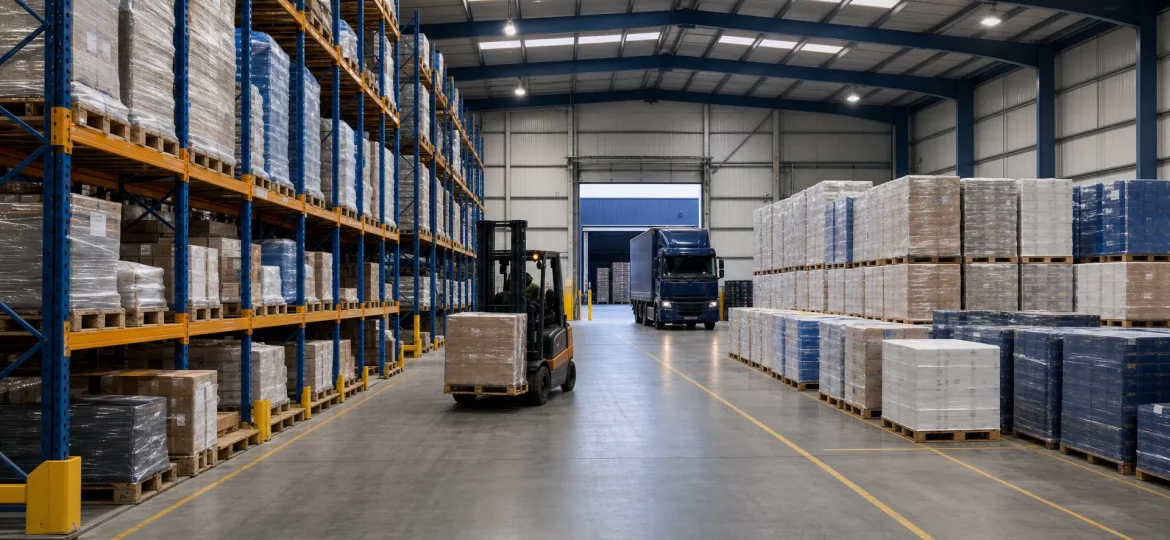
Racked pallet storage means pallets are stored in individual racking locations. In a typical setup, each pallet has its own position and can be accessed by forklift without moving several other pallets first.
This makes racking useful when you have a varied stock profile. If you sell multiple product lines, hold different batch numbers, manage best-before dates, or need regular access to specific pallets, racking gives you better control.
The main advantage is accessibility. Warehouse teams can locate, pick, replenish or dispatch the right pallet with less unnecessary handling. That can reduce confusion, support better stock rotation, and make it easier to keep your warehouse management system accurate.
Racked storage is often a good fit for eCommerce brands, wholesalers, manufacturers and retail suppliers that need stock to be available quickly and reliably.
What is bulk pallet storage?
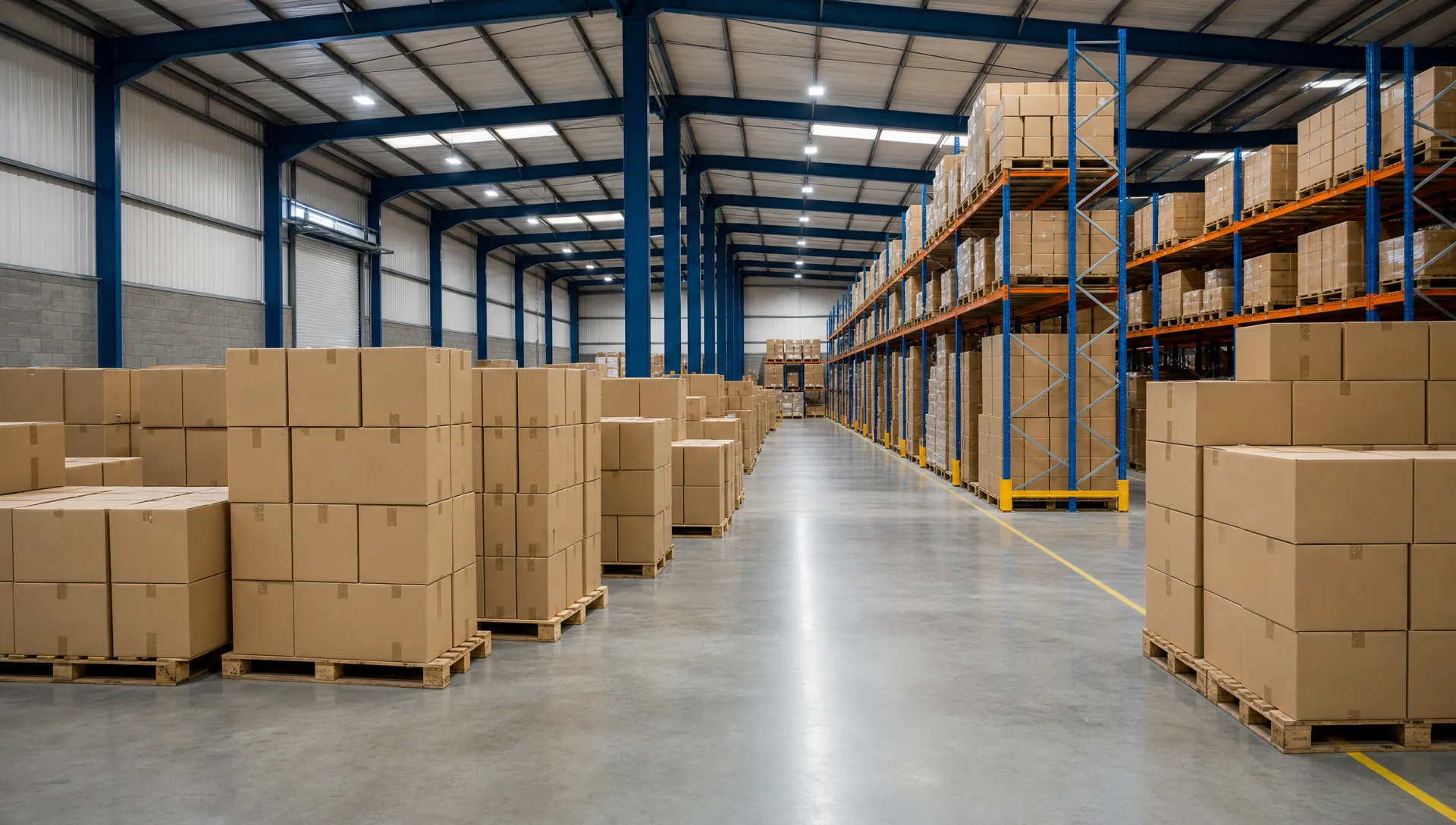
Bulk pallet storage, often called floor storage or block stacking, means pallets are stored directly on the warehouse floor in rows, blocks or lanes. Instead of every pallet having its own racking location, pallets are grouped together, often by SKU, batch or customer.
This can be very efficient when you have high volumes of the same product. For example, if you receive 100 pallets of one SKU and most of them will leave as full pallets, bulk storage can make sense.
The trade-off is access. If a pallet is at the back of a block, other pallets may need to be moved before it can be reached. That is not always a problem, especially for slow-moving or identical stock, but it can create extra handling if you frequently need specific pallets.
Bulk storage also depends on the product and packaging. Some pallets can be safely stacked, while others cannot. Fragile goods, unstable pallets, mixed-height loads, or products with packaging that crushes easily may not be suitable for high block stacking.
Racked vs bulk pallet storage at a glance
| Factor | Racked pallet storage | Bulk pallet storage |
|---|---|---|
| Access to individual pallets | Strong, each pallet can usually be reached directly | Limited, pallets may be blocked by others |
| Best for | Multiple SKUs, frequent access, stock rotation | Large volumes of the same SKU, slower-moving stock |
| Space efficiency | Good vertical use, but requires aisles | Can be highly space efficient for suitable stock |
| Stock rotation | Easier to manage by batch, serial number or date | Works best when rotation is simple |
| Handling time | Usually lower when specific pallets are needed | Can increase if pallets need to be moved around |
| Product suitability | Useful for fragile, varied or non-stackable goods | Best for stable, stackable and uniform pallets |
| Typical risk if chosen badly | Paying for access you rarely need | Extra handling, delays and possible stock damage |
The table shows the core trade-off. Racking gives you control and direct access. Bulk storage gives you density and simplicity when pallets move in larger, more predictable batches.
The real choice: access or density
The practical question is not which storage method is better. It is whether your stock needs access or density.
If your warehouse team needs to reach individual pallets often, racking usually wins. If your stock arrives in full loads, stays together, then leaves in full pallet quantities, bulk storage may be the more sensible option.
Access also includes how your team, suppliers, carriers and retail partners reach the stock. If your business involves overseas supplier visits or operational site checks, practical travel support such as car hire in South Africa can make those journeys easier to manage. The same thinking applies to UK warehousing: the best setup is the one that helps goods and people move efficiently, not just the one that stores pallets neatly.
A warehouse that looks tidy on paper can still cause problems if the wrong stock is buried, expiry dates are hard to manage, or transport collections are delayed because pallets are difficult to reach.
When racked pallet storage is usually the better fit
Racked storage is often the right choice when your stock needs regular access, accurate tracking or careful rotation. It is particularly useful for businesses with a larger number of SKUs, even if the total pallet count is not huge.
Racking usually suits stock profiles like these:
- You hold many SKUs, variants, flavours, sizes or colours.
- You need regular access to specific pallets.
- You manage batches, serial numbers or best-before dates.
- Your pallets cannot be safely stacked.
- Your stock feeds into carton picking, unit picking or order fulfilment.
- You need clear visibility of stock by location.
For eCommerce and product brands, racked storage can make fulfilment easier. When pallet stock is being broken down into cartons or units for customer orders, the warehouse needs accurate locations, clean replenishment processes and good stock visibility. If that is part of your growth plan, storage should be considered alongside order fulfilment services, rather than treated as a separate decision.
Racking can also help when you need to reduce avoidable handling. Every extra pallet movement takes time and increases the chance of mistakes or damage. If the stock is valuable, fragile, date-sensitive or fast-moving, direct access can be worth more than the theoretical saving from dense floor storage.
When bulk pallet storage is usually the better fit
Bulk storage is often the better option when stock is consistent, stable and moved in larger quantities. It can work well for manufacturers, importers, wholesale suppliers and retail promotion stock where pallet loads are uniform.
Bulk storage may be suitable when:
- You have large quantities of the same SKU.
- Pallets arrive and leave as full pallets.
- Stock is not picked from frequently.
- Pallets are stable and suitable for stacking.
- You are holding seasonal, promotional or overflow stock.
- Rotation requirements are simple.
For example, a supplier holding a large run of identical retail display stock may not need each pallet to be individually accessible every day. If the outbound plan is simple and stock will leave in waves, bulk storage can reduce complexity.
However, bulk storage becomes less attractive when customer orders require frequent access to different pallets. If warehouse teams regularly need to dig out specific batches or move pallets just to reach other pallets, the apparent efficiency can disappear quickly.
How to judge your own stock profile
Before choosing a storage method, look at how your stock behaves in practice. The pallets themselves are only part of the decision. You also need to think about how often they move, how they are picked, and what information you need to track.
| Question | Points towards racked storage | Points towards bulk storage |
|---|---|---|
| How many SKUs do you hold? | Many SKUs or regular changes | Few SKUs in high volume |
| How often do you need access? | Daily or weekly access to specific pallets | Infrequent access or planned bulk movements |
| Can pallets be stacked safely? | No, or only with restrictions | Yes, consistently and safely |
| Do you need stock rotation? | Batch, date or serial tracking matters | Rotation is simple or stock is identical |
| How does stock leave the warehouse? | Units, cartons or mixed pallet orders | Full pallets or full loads |
| Do volumes fluctuate? | Mixed demand across lines | Seasonal peaks or overflow pallets |
A simple way to decide is to separate your stock into active stock and reserve stock. Active stock needs easy access because it supports regular picking, replenishment or dispatch. Reserve stock may sit for longer and can sometimes be stored in bulk, depending on product suitability.
This is why a hybrid approach often works best. You might keep fast-moving or varied stock in racking, while using bulk storage for overflow, promotional stock or slow-moving full pallets.
Do not separate storage from transport
Pallet storage should never be planned in isolation. The way goods leave the warehouse matters just as much as the way they are stored.
If pallets need to be dispatched at short notice, picked for retail deliveries, or moved into production schedules, the warehouse layout must support fast loading and clear transport planning. A dense bulk storage area may save space, but it can create delays if the wrong pallets are difficult to access when a vehicle arrives.
This is especially important for businesses that need flexible delivery options. If your stock may need urgent movement, regional distribution, or timed delivery, it helps to use a provider that can connect storage with same-day and next-day transport services.
Good warehousing services should make the whole operation smoother. That includes inbound goods, storage, picking, dispatch, returns and transport, not just the cost of holding a pallet in a building.
Common mistakes when choosing pallet storage
One of the most common mistakes is choosing based only on the lowest pallet storage rate. A cheaper storage method can become more expensive if it creates extra handling, slower dispatch, poor visibility or avoidable stock damage.
Another mistake is underestimating SKU complexity. A business may only hold 80 pallets, but if those pallets are split across 60 SKUs, racking and accurate location tracking may be more important than maximum density.
It is also easy to overlook seasonality. Some businesses need racked access for most of the year, then bulk storage during peak promotional periods. Others need temporary overflow storage for imported stock before it moves into fulfilment or retail distribution.
Finally, businesses sometimes forget to ask how pallet movements are recorded. Whether you choose racked or bulk storage, you need confidence that stock locations, quantities and movements are being tracked properly.
Questions to ask a 3PL before you decide
Before committing to a warehouse provider, ask practical questions that relate to your actual stock and order profile.
- Can you offer both racked and bulk pallet storage if my needs change?
- How will pallet locations be tracked and reported?
- Can you track batch numbers, serial numbers or best-before dates if needed?
- How are handling charges applied when pallets are moved, picked or dispatched?
- Can storage link directly with fulfilment, returns or transport services?
- What happens if my pallet volumes increase during peak season?
- Will I speak directly to the people managing my stock?
The answers should be clear. If a provider cannot explain how your stock will be stored, accessed and moved, it is worth asking more questions before you hand over control.
How Gus Logistics can help
Gus Logistics provides racked and floor storage from Nantwich, Cheshire, supporting businesses across the UK. The team works with eCommerce brands, manufacturers, retail suppliers and product businesses that need flexible warehouse space without unnecessary complexity.
Because Gus Logistics offers pallet and bulk warehousing, order fulfilment, co-packing and transport under one roof, storage decisions can be made with the wider operation in mind. That means your stock can be planned around how it arrives, how it is stored, how it is picked, and how it needs to leave.
The warehouse operation includes real-time WMS tracking through a client portal, with batch, serial number and best-before date tracking available where needed. Gus Logistics also has no minimum volume requirements, which is useful for growing businesses that need room to scale without being forced into a rigid warehouse model.
As a family-run 3PL provider, Gus Logistics avoids call centres. Customers speak directly to the people handling their freight and stock, which can make a real difference when decisions need to be made quickly.
Frequently Asked Questions
Is racked pallet storage more expensive than bulk pallet storage? Not always. Racked storage may cost more per pallet location, but it can reduce handling time, improve access and lower the risk of mistakes. The true cost depends on your stock profile and how often pallets need to move.
Can bulk pallet storage be used for any product? No. Bulk storage depends on pallet stability, packaging strength, weight, height and how often you need access. Fragile, unstable or non-stackable goods may be better suited to racking.
What if I need both storage and pick and pack? A mixed approach is often best. Active SKUs used for picking may work better in racking, while reserve or overflow pallets may be stored in bulk if suitable. The important point is that storage and fulfilment are planned together.
How do I know how many pallet spaces I need? Look at your average stock holding, peak stock holding, SKU count, inbound frequency, outbound order patterns and any returns or packing space needed. Do not base the decision on pallet count alone.
Is bulk storage safe? It can be safe when pallets are suitable, stacking rules are followed, and the warehouse layout is managed properly. It is not suitable for every product, so the provider should assess your stock before recommending it.
Need help choosing the right pallet storage setup?
If you are weighing up racked vs bulk pallet storage, Gus Logistics can help you choose a practical setup based on your stock, access needs and growth plans.
To discuss your warehousing requirements or request a quote, call 01270 335014 or get in touch via the Gus Logistics contact page.
Looking for a Logistics Partner You Can Trust?
From warehousing and order fulfilment to transport and FSDU design - Gus Logistics handles it all from our base in Nantwich, Cheshire. Over 10 years experience, no minimum volumes, no long contracts.
