
Retailer Chargebacks – How Fulfilment Mistakes Can Cost Brands Money
If you sell into supermarkets, department stores, national retailers or larger wholesale accounts, retailer chargebacks can turn a profitable order into a costly one. They often appear after the goods have already left your site, when it is too late to fix the picking error, labelling issue or missed delivery window that caused the deduction. For growing brands, the real problem is not just the charge itself. It is the lost margin, extra admin and strain on important customer relationships.
Retailers use chargebacks to enforce supplier compliance. From their point of view, an incorrect label or late delivery creates extra work in their warehouse, delays stock getting to shelf and disrupts their own customer promise. From your point of view, it can feel like a penalty for a small operational mistake. The best defence is a fulfilment process that catches problems before stock leaves the warehouse.
What are retailer chargebacks?
Retail chargebacks are deductions or fees applied by a retailer when a supplier does not meet agreed trading, delivery or compliance requirements. They are usually set out in a supplier manual, vendor guide or trading agreement. The detail varies by retailer, but the principle is the same: if an order arrives late, incorrectly labelled, damaged, incomplete or different from the paperwork, the retailer may recover the cost from the supplier.
This is different from a consumer return. A consumer return usually involves one end customer sending back one order. A retail chargeback can relate to a full pallet, multiple cartons or a bulk shipment into a distribution centre. It can also affect payment reconciliation, future purchase orders and the retailer's confidence in your operation.
Many retailer chargebacks start with a small warehouse issue that slips through unnoticed. A wrong SKU in one carton, a missing carton label, an incorrect pallet configuration or a mismatch between the delivery note and the goods received can all trigger a dispute.
Why fulfilment mistakes trigger costly deductions
Retailers rely on predictable inbound stock. Their warehouses are built around scanning, receiving and routing goods quickly. If your shipment does not match the expected format, somebody has to stop, investigate and correct the problem. Chargebacks are one way retailers push that cost back to the supplier.
The most common issues are practical rather than complicated. They often come down to accuracy, timing, packaging and paperwork. A strong fulfilment process reduces risk because it treats retailer compliance as part of the order, not as an afterthought.
| Fulfilment issue | Why it causes problems for retailers | Common consequence for the brand |
|---|---|---|
| Late dispatch or missed booking slot | Stock cannot be received as planned | Delivery penalty or refused delivery |
| Incorrect quantities | The retailer receives less or more than expected | Invoice deduction or dispute |
| Wrong SKU picked | The goods do not match the purchase order | Return, rework or shortage claim |
| Poor carton or pallet labelling | Warehouse teams cannot scan or route stock efficiently | Manual handling fee or delay |
| Damaged outer packaging | Goods may be rejected or quarantined | Replacement cost and deduction |
| Incorrect paperwork | Delivery note, order data or pallet information does not match | Payment delay or admin charge |
| Batch or date errors | Stock rotation and traceability become unreliable | Rejection, query or rework |
Common fulfilment errors that lead to chargebacks
Retail compliance is not only about transport. The problem often begins much earlier, when goods are received, stored, picked, packed or prepared for dispatch.
Late dispatch and missed delivery windows
A retailer may allocate a specific delivery slot at its distribution centre. If the order leaves the warehouse late or the carrier is not booked correctly, the delivery can miss that slot. Some retailers will rebook the load, but the delay may still create a deduction.
This is why fulfilment teams need realistic cut-off times, clear carrier booking processes and good communication between the warehouse and transport provider. Late dispatch is rarely an isolated event. It is often a sign that order flow, stock availability or labour planning needs attention.
Picking mistakes and quantity mismatches
Wrong items, missing units and incorrect case quantities are some of the fastest ways to lose margin. The retailer orders one thing, receives another and then has to investigate. Even if the products are later corrected, the supplier may still be charged for the extra handling.
Retailer chargebacks linked to picking errors are usually preventable with barcode scanning, clear SKU locations, stock checks and exception reporting. Human error can never be removed completely, but it can be reduced when warehouse teams are working from accurate data and simple pick instructions.
Labelling, barcode and paperwork problems
A shipment can contain the right products and still fail compliance if the labels are wrong. Carton labels, pallet labels, product barcodes and delivery documentation all need to match the retailer's instructions. Some retailers also require specific data to be sent before the goods arrive, often called an advance shipping notice or ASN.
If that information does not match what physically arrives, the retailer may need to receive stock manually. That creates delays and gives the retailer a reason to deduct costs from the supplier.
Packaging damage and poor pallet presentation
Retail orders are often handled several times before reaching store or an end customer. Weak cartons, poor pallet wrapping or unstable stacking increase the risk of damage in transit and at the distribution centre.
Retailer chargebacks rarely stop at the fee shown on the debit note. Damaged goods can also mean replacement stock, additional transport, lost sales and more internal time spent dealing with the dispute. For brands selling seasonal, promotional or short shelf-life products, the knock-on cost can be higher than the original deduction.
How to reduce chargebacks before stock leaves the warehouse
The most effective way to reduce deductions is to build checks into the fulfilment process rather than relying on someone to spot issues at the end. If a retailer has strict routing and labelling rules, those rules should be translated into warehouse instructions that pickers, packers and dispatch teams can follow easily.
For brands that sell both direct to consumer and into retail, this matters even more. A single-item eCommerce order and a multi-carton retail order should not be treated in the same way. Retail orders often need different carton rules, pallet build standards, booking processes and paperwork.
Turn retailer manuals into simple operating procedures
Supplier manuals can be long and detailed. Warehouse teams do not need to read the whole manual every time an order is packed. They need clear instructions for the specific retailer, product range and order type.
A practical procedure should cover carton labelling, pallet height, packaging requirements, delivery notes, booking references, date or batch rules and who signs off the order before dispatch. Reducing retailer chargebacks becomes easier when compliance is built into daily routines rather than stored in a document nobody opens.
Keep stock data accurate from goods-in to dispatch
Strong stock control starts when goods arrive at the warehouse. If stock is booked in incorrectly, the mistake can follow the product all the way to dispatch. That is especially risky for brands managing multiple SKUs, mixed cases, expiry dates, batches or serial numbers.
Real-time warehouse management systems help teams track where stock is, what has been picked and whether the order matches the customer's requirements. Gus Logistics supports pallet and bulk storage with WMS tracking, including options such as batch, serial number and best-before date tracking where needed.
Check labels, cartons and pallets before handover
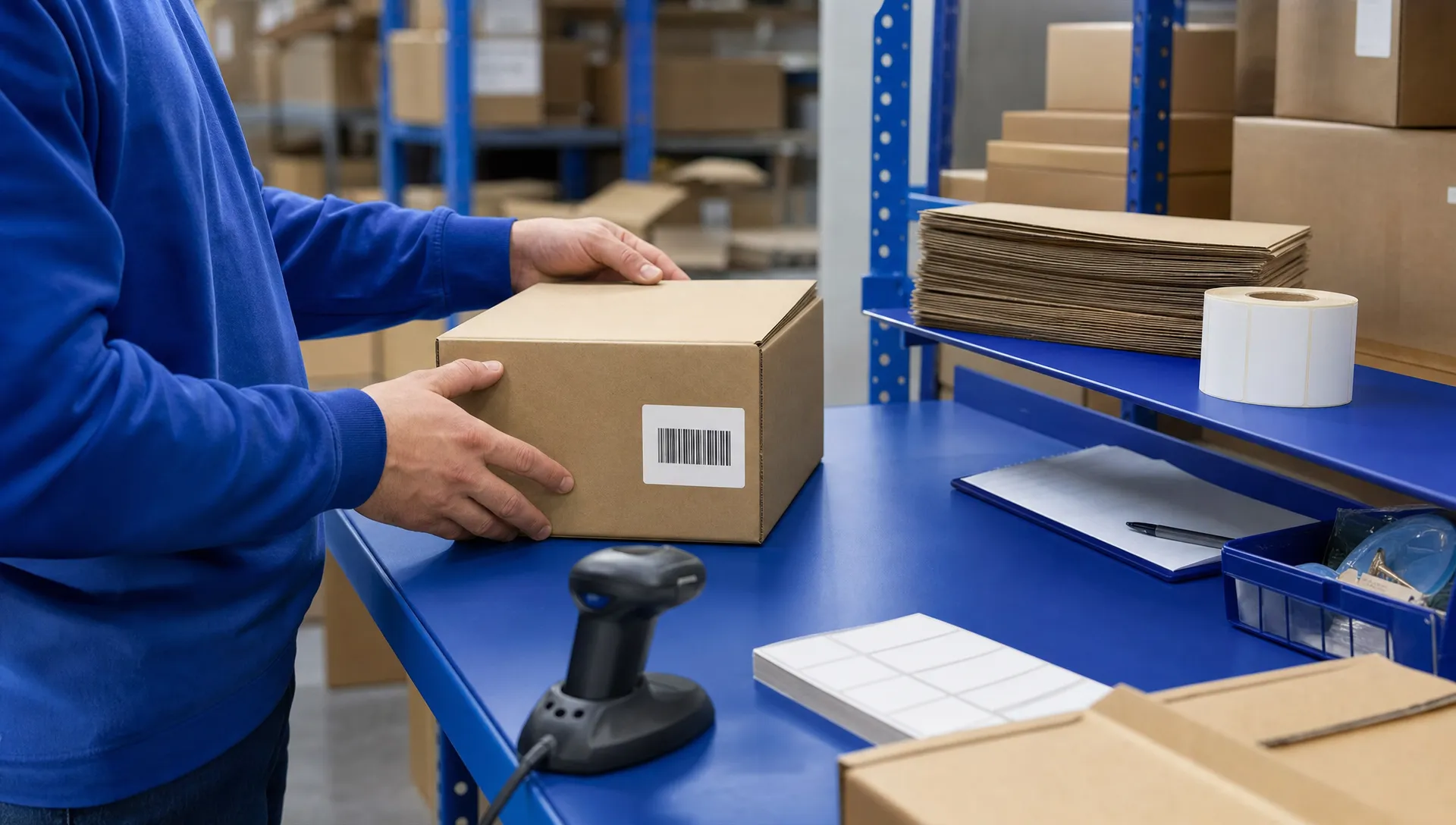
A final dispatch check is not a substitute for good picking, but it is a useful safety net. This check should confirm that the number of cartons or pallets is correct, labels are applied in the right position, cartons are not damaged and the paperwork matches the shipment.
It also helps to photograph or record completed pallets before collection, particularly for high-value retail orders. This gives your team better evidence if a delivery dispute arises later.
Use the right transport service for the retailer requirement
The cheapest transport option is not always the lowest-cost option overall. If a retailer requires a timed booking or specialist vehicle access, the transport plan needs to reflect that from the start. A failed or refused delivery can quickly cost more than the saving made on carriage.
For time-sensitive retail deliveries, Gus Logistics provides same-day and next-day transport services using its own fleet and wider vehicle network across the UK and Europe.
Why B2B fulfilment needs different controls from standard eCommerce fulfilment
Direct to consumer fulfilment is usually focused on individual orders, fast dispatch and customer experience. B2B and retail fulfilment has a different risk profile. Orders are larger, compliance requirements are stricter and one mistake can affect a whole purchase order rather than one parcel.
Retailer chargebacks are more likely when a fulfilment process designed for small parcel orders is stretched to handle retail distribution. For example, a brand might have good parcel dispatch accuracy but no clear process for pallet labelling, booking slots or ASN checks.
If your business is moving into wholesale, marketplaces, high street retail or supermarket supply, it is worth reviewing whether your warehouse partner can handle both order types properly. Gus Logistics offers B2B fulfilment in Cheshire for brands that need accurate picking, packing, storage and dispatch for trade and retail customers.
What to ask your 3PL about retail compliance
If you already outsource fulfilment, do not wait until deductions appear on your account statement before asking questions. A good 3PL should be able to explain how retail orders are received, checked, packed and released.
Useful questions include:
- Can retailer-specific packing and labelling rules be stored against each customer?
- How are SKUs, batches, serial numbers or expiry dates tracked?
- What happens if an order does not match the available stock?
- Are dispatch checks recorded before goods leave the warehouse?
- Who handles delivery queries, proof of delivery and failed booking issues?
- Can the warehouse support FSDUs, co-packing or promotional builds as well as standard cartons?
If retailer chargebacks are already happening, ask your 3PL for a breakdown by reason code, retailer, product and order type. Patterns matter. If most deductions relate to one retailer's labelling rules, the fix is different from a problem caused by damaged pallets or incorrect quantities.
How Gus Logistics supports brands selling into retail
Gus Logistics is a family-run 3PL provider based in Nantwich, Cheshire, supporting eCommerce brands, manufacturers and product businesses across the UK. The team handles order fulfilment, warehousing, same-day transport, co-packing, returns and retail display work from one operation, which helps brands reduce handovers between different suppliers.
For retail-facing brands, that can include order fulfilment and pick and pack services integrated with major sales platforms, bulk and pallet storage, transport planning, returns handling and support for promotional or point of sale activity. For brands supplying supermarkets and high street retailers, Gus Logistics also provides FSDU design, manufacture, pre-fill and dispatch as an end-to-end service.
The benefit is not just having somewhere to store stock. It is having a fulfilment partner that understands how small operational details affect margin, retailer relationships and repeat orders. With no minimum volume requirements and direct contact with the people handling your freight, Gus Logistics is set up to support growing brands without forcing them into a call centre model.
Frequently Asked Questions
What are retailer chargebacks? Retailer chargebacks are deductions or fees applied when a supplier does not meet a retailer's agreed requirements, such as delivery timing, labelling, quantities, packaging or paperwork.
Can a 3PL help reduce retailer deductions? Yes. A 3PL with strong stock control, clear packing processes, warehouse scanning, dispatch checks and reliable transport planning can reduce the fulfilment mistakes that commonly lead to deductions.
Are chargebacks only caused by late deliveries? No. Late delivery is only one cause. Incorrect quantities, wrong SKUs, damaged packaging, missing labels, poor pallet presentation and paperwork mismatches can all create problems.
What should I do if deductions have already started? Start by listing the reason codes, retailers affected, dates, order numbers and products involved. Once you can see the pattern, you can fix the specific process rather than guessing.
Need help protecting your retail orders?
If fulfilment errors are costing your brand money or putting retailer relationships under pressure, Gus Logistics can help you build a more reliable process for storage, pick and pack, transport and retail-ready dispatch.
Call 01270 335014 to speak to the team, or get in touch via the contact page to discuss your fulfilment requirements.
Looking for a Logistics Partner You Can Trust?
From warehousing and order fulfilment to transport and FSDU design - Gus Logistics handles it all from our base in Nantwich, Cheshire. Over 10 years experience, no minimum volumes, no long contracts.
