Shopify Fulfilment UK: How to Outsource Your Orders Without Losing Control
Shopify makes it genuinely straightforward to build an online store and start selling. What it doesn’t do is pick, pack, and ship your orders for you. As long as you’re handling a handful of orders a day from your spare room or a small unit, that’s manageable. But there comes a point – and most Shopify store owners know exactly when they hit it – where fulfilment stops being an operational task and starts being a business problem.
Missed cut-offs. Stock you can’t find. Orders going out in the wrong packaging. Evenings spent at a packing table instead of working on the business. If any of that sounds familiar, outsourcing your Shopify fulfilment to a UK-based third-party logistics provider is almost certainly the right next step. This guide explains how it works, what to look for, and what to watch out for.
What Is Shopify Fulfilment and How Does Outsourcing Work?
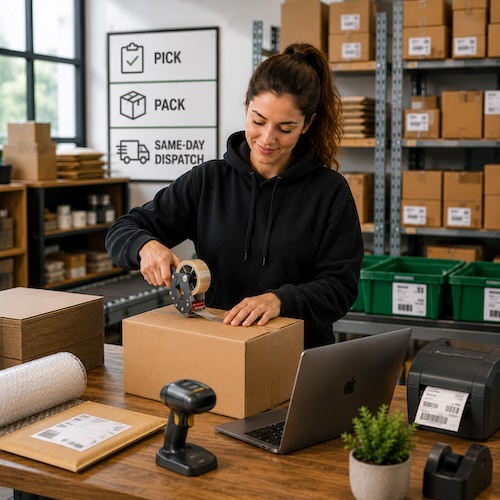
When you outsource your Shopify fulfilment, you’re handing the physical side of your operation – storing your stock, picking and packing orders, and dispatching them to your customers – to a specialist 3PL provider. Your Shopify store carries on working exactly as it always has. Customers place orders, they get confirmation emails, they receive their parcels. The difference is that none of that physical work is happening in your garage anymore.
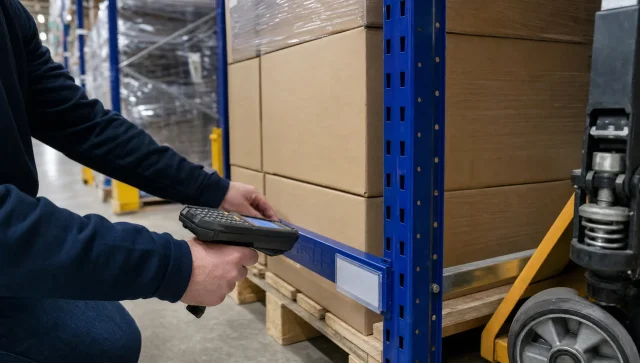
The integration between Shopify and a 3PL is what makes this possible. A properly set-up fulfilment partner will connect directly to your Shopify store so that when an order is placed, it appears automatically in their warehouse management system. Staff pick and pack it, the tracking information gets pushed back to Shopify, and your customer receives their dispatch notification – all without you doing anything manually.
According to Shopify’s own guidance on eCommerce fulfilment, getting your fulfilment operation right is one of the most significant factors in customer retention and repeat purchase rates. Slow or inaccurate fulfilment is one of the leading causes of negative reviews and lost customers.
When Is the Right Time to Outsource Your Shopify Fulfilment?
There’s no single answer, but there are some clear signals that the time has come.
You’re Spending More Time on Logistics Than on Growing the Business
If a meaningful part of your working week is spent packing boxes, booking couriers, or chasing missing parcels, that’s time you’re not spending on marketing, product development, or customer relationships. For most founders, this becomes unsustainable somewhere between 20 and 50 orders a day – though it varies depending on how complex your products and packaging are.
Your Error Rate Is Climbing
Wrong items, missing items, damaged packaging – these things happen when fulfilment is being done at pace without proper systems in place. Each one costs you in returns, refunds, and customer goodwill. A 3PL with trained staff and a proper warehouse management system will typically deliver significantly higher pick accuracy than a manual in-house setup.
You’re Running Out of Space
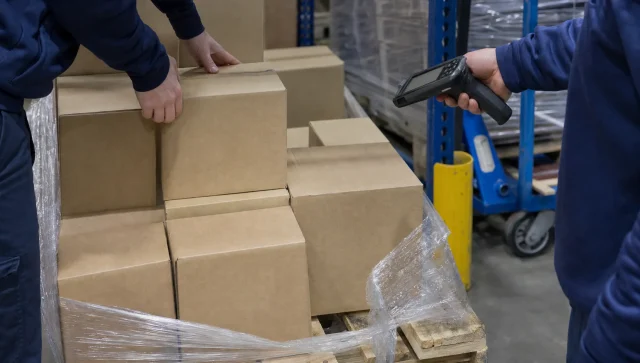
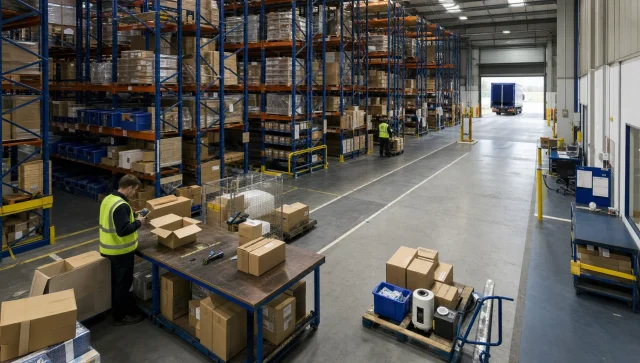
Stock piling up in your home, office, or a rented unit that’s already too small is a sign that your storage solution isn’t scaling with your business. A 3PL gives you access to professional warehouse space – racked pallet storage, bulk storage, climate-appropriate environments – without the overhead of a lease and your own staff.
You Want to Offer Faster Delivery Without the Infrastructure
Customer expectations around delivery speed have shifted dramatically. Next-day delivery is now standard on most marketplaces and expected by a large proportion of online shoppers. Hitting that reliably requires late cut-off times, multiple courier relationships, and consistent daily operations – all of which a good 3PL has in place already.

How Shopify Integrates With a 3PL
The technical side of connecting Shopify to a fulfilment partner is much simpler than most store owners expect. At Gus Logistics, we integrate with Shopify and over 60 other eCommerce platforms including Amazon, eBay, WooCommerce, and Magento. Most new clients are live and shipping within 24 hours of integration going live.
Once connected, the integration handles:
Automatic Order Import
Every order placed on your Shopify store flows through to our warehouse system automatically. No manual exports, no spreadsheets, no copying and pasting. Orders appear in the pick queue in real time.
Real-Time Stock Visibility
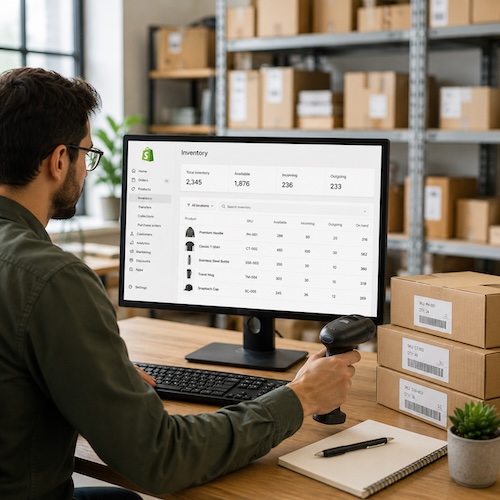
Your stock levels in the warehouse are visible through your client portal at all times. You can see what you have, where it is, and get low-stock alerts before you run out – rather than discovering you’ve oversold something after the fact.
Tracking Pushed Back to Shopify
Once an order is dispatched, the tracking reference is automatically pushed back to your Shopify store and triggers the customer dispatch notification. Your customers get the same seamless experience they’d expect from a much larger operation.
Returns Processing
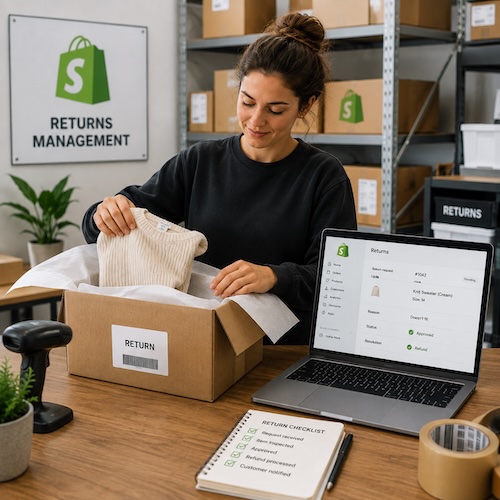
Returns come back to the warehouse, are inspected and booked back into stock if suitable, and the return is logged against the original order. You have full visibility of what’s come back and why.
What to Look for in a UK Shopify Fulfilment Partner
Not all 3PL providers are equal. Here’s what actually matters when you’re choosing who to trust with your orders.
A Direct Shopify Integration – Not a Manual Process
Some smaller fulfilment operations still work off emailed order exports or daily CSV files. This introduces delay, human error, and a cut-off point in the evening after which orders won’t be processed until the next morning. You want a direct API integration that processes orders in real time, around the clock.
Late Cut-Off Times
The later your fulfilment partner’s cut-off, the more orders qualify for next-day dispatch on any given day. Our order fulfilment service operates with late cut-offs up to 10pm, which is significantly later than many providers and makes a real difference to your customer experience.
Multiple Courier Options
A 3PL with relationships across multiple carriers – DPD, Royal Mail, Evri, Amazon Shipping, Yodel – can route each order to the most appropriate service based on destination, size, weight, and speed requirement. This is more efficient and usually cheaper than managing a single courier account yourself. The Ofcom postal monitoring reports are a useful reference point for understanding UK carrier performance benchmarks if you’re evaluating service levels.
Transparent Pricing
Look for a provider who can give you a clear breakdown of storage costs, pick and pack fees, and shipping rates – and who is upfront about any minimum charges or additional fees. Our post on how much 3PL costs in the UK walks through every component in detail so you know what to expect.
No Minimum Volume Requirements
If you’re growing but not yet at high volume, minimum order commitments can make outsourcing unworkable. Look for a provider that will take you on at your current scale and grow with you. At Gus Logistics we operate with no minimum volumes – you ship what you ship, and the relationship scales as your business does.
Location and Distribution Reach
Where your fulfilment partner is based affects both your storage costs and your delivery speed. Our warehouse in Nantwich, Cheshire sits at the heart of the UK motorway network with direct access to the M6, M56, and M62 – giving us fast reach to Manchester, Liverpool, Birmingham, and nationwide distribution routes without the cost premium of a London or South East location. You can read more about our warehousing and storage options if you want to understand how we manage stock.
What About Shopify Fulfilment Network?
Shopify operates its own fulfilment network (SFN) in some markets, though its UK availability and scope remains limited compared to working with an independent 3PL. For most UK Shopify sellers, an independent fulfilment partner gives more flexibility, more personal service, and more competitive pricing than a platform-owned solution – particularly for businesses with non-standard products, complex packaging requirements, or the need for co-packing and retail distribution alongside eCommerce.
If you’re also selling through retail channels and need services like FSDU assembly and dispatch or pallet deliveries to store, an independent 3PL that handles both eCommerce and retail fulfilment under one roof is a significantly more practical solution than a platform-native service.
Getting Started With Outsourced Shopify Fulfilment
The process of moving from in-house to outsourced fulfilment is simpler than most people expect. The main steps are: agree rates and services with your chosen provider, set up the Shopify integration, send your stock into the warehouse, and go live. A good 3PL will guide you through each stage and have you operational quickly.
The businesses that get the most out of outsourced fulfilment are usually the ones that treat their 3PL as a proper operational partner rather than just a supplier. Share your growth plans, flag upcoming promotions or seasonal peaks, and give visibility of any new product lines coming – that kind of communication makes a significant difference to how well your fulfilment runs day to day.
Our post on why small eCommerce brands are ditching in-house fulfilment in 2026 covers the broader decision in more detail if you’re still weighing it up.
Talk to Us About Your Shopify Fulfilment
We’re a family-run 3PL based in Cheshire with over 10 years of experience handling Shopify fulfilment and eCommerce logistics for growing brands across the UK. Direct Shopify integration, late cut-offs, multiple courier options, no minimum volumes, and a team you can actually speak to.
Get in touch for a same-day quote or call us on 01270 335014 – we’ll turn it around the same working day.