
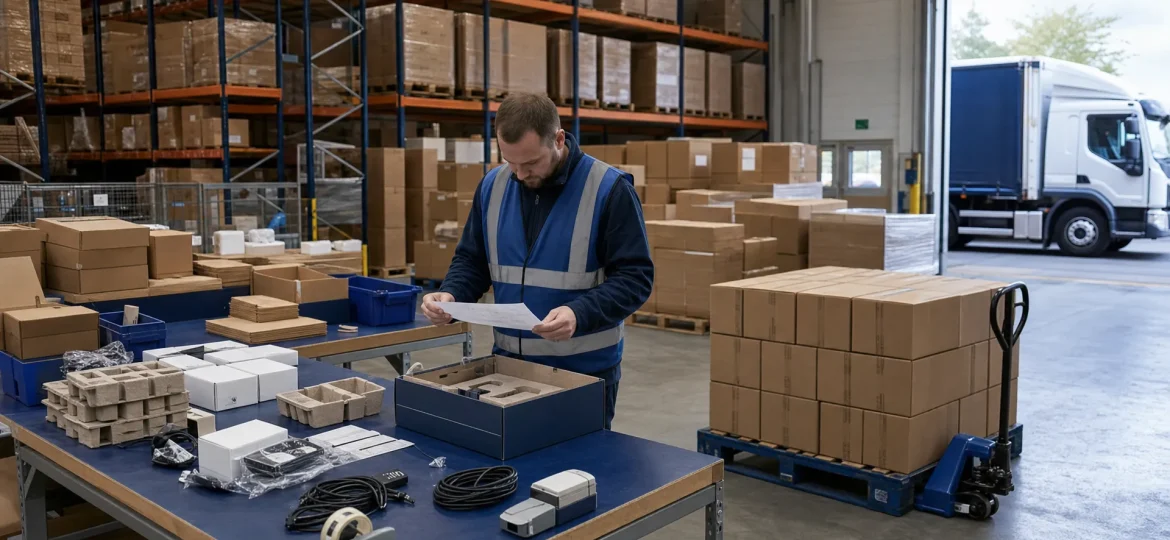
What Is Kitting in Logistics?
If you sell products in sets, starter packs, promotional bundles or retail displays, kitting can save a lot of time in the warehouse. Instead of treating every item as a separate pick, pack and dispatch task, kitting brings the right products together in advance or at the point of order so they can move through fulfilment more smoothly.
For eCommerce brands, manufacturers and retail suppliers, kitting is one of those logistics processes that sounds simple until stock starts moving at volume. Get it right, and it can improve accuracy, reduce packing time and make promotions easier to manage. Get it wrong, and you risk stock mismatches, delayed orders and confused warehouse teams.
What does kitting mean in logistics?
Kitting in logistics is the process of grouping separate products, components or materials together into one ready-to-pick, ready-to-pack or ready-to-ship unit.
A kit might be sold as a single SKU, such as a skincare gift set containing a cleanser, moisturiser and face cloth. It might also be created for operational reasons, such as grouping parts that are needed together for assembly, installation or a retail display.
In practical terms, kitting answers one question: what items need to travel together, and how should they be prepared before dispatch?
A typical logistics kit might include:
- Several finished products sold as one bundle
- A product plus accessories, instructions or inserts
- Components that need to be assembled before delivery
- Promotional items packed together for a campaign
- Retail display stock prepared for store distribution
Kitting can happen before orders are placed, which is often called pre-kitting, or after an order is received, which is sometimes called on-demand kitting. The right approach depends on your sales pattern, storage space, stock control requirements and how predictable demand is.
Kitting vs bundling, co-packing and pick and pack
These terms often overlap, but they do not all mean exactly the same thing. Understanding the difference helps you brief a warehouse or 3PL provider properly.
| Term | What it means | Common example |
|---|---|---|
| Kitting | Bringing multiple items together into one operational or sellable unit | A beauty starter kit with three products and an instruction leaflet |
| Bundling | Selling multiple products together as a commercial offer | Buy a camera with a case and memory card |
| Co-packing | Packing, repacking, labelling or assembling products for sale or distribution | Applying labels, building mixed packs or preparing promotional packs |
| Pick and pack | Picking stock for an order and packing it for dispatch | Picking two separate items from storage and sending them to a customer |
| Assembly | Physically putting parts together before shipment | Adding components to create a finished point of sale display |
Kitting is usually part of a wider fulfilment or co-packing process. For example, an eCommerce brand might use kitting to create subscription boxes, then use a pick and pack operation to dispatch each box to customers. A retail supplier might kit products into display-ready units, then arrange palletised delivery to stores or distribution centres.
Common examples of kitting in logistics
Kitting is used across many sectors because it supports both customer experience and warehouse efficiency. You do not need to be a large brand to use it. Many smaller product businesses use kitting when they start selling bundles, gift sets or seasonal promotions.
eCommerce product bundles
An online brand might sell a starter bundle that includes several products, packaging inserts and a promotional card. Instead of picking each item separately for every order, the warehouse can create the bundle as one kit and store it under a dedicated SKU.
This is especially useful when bundles sell regularly, because the packing process becomes faster and more consistent. It can also make stock control clearer if the kit is properly recorded in the warehouse management system.
Subscription boxes
Subscription boxes are a classic kitting example. Each box may contain multiple products, leaflets, samples and branded packaging. The challenge is not just putting items in a box. It is making sure every customer receives the correct version, especially if there are variations based on subscription type, preferences or promotional campaigns.
Retail promotional packs
Retailers often require products to be packed in a specific way for shelf-ready displays, seasonal campaigns or point of sale activity. Kitting can include grouping products, adding labels, inserting promotional materials and preparing stock for onward distribution.
This is closely linked to FSDU design, manufacture, pre-fill and dispatch when brands need display units prepared before they reach stores.
Manufacturing and component kits
Manufacturers may kit parts together so teams, installers or customers receive everything needed for a job in one consignment. This reduces the risk of missing components and can make production, installation or aftersales support more reliable.
Returns and replacement packs
Kitting can also support replacement orders. If customers often need the same spare parts, accessories or documents, those items can be grouped into a ready-to-send pack rather than built from scratch each time.
How the kitting process works
The exact process depends on the product, but most kitting operations follow a similar flow. The key is to define the kit clearly before warehouse work begins.
First, the business confirms the bill of materials. This is simply the list of items that make up the kit. It should include SKUs, quantities, packaging requirements, inserts, labels and any version differences.
Next, the warehouse checks that the required stock is available and correctly recorded. If one component is missing, the whole kit may be delayed, even if every other item is in stock. This is why good inventory visibility matters.
The items are then picked from storage and brought to a packing or assembly area. Depending on the kit, staff may place items into boxes, bags, sleeves, trays or display units. They may also add labels, barcodes, batch details, best-before information or customer-facing inserts.
Once the kit is complete, it is checked for accuracy. The finished kit may then be stored as a new SKU, allocated to existing orders or dispatched immediately.
For brands using outsourced fulfilment, the process works best when kitting instructions are documented clearly. Photos, packing diagrams and approved samples can all help reduce errors, especially for seasonal campaigns or retailer-specific requirements.
Why kitting can be valuable for growing businesses
Kitting is not just a warehouse task. It can improve how products are sold, stored, picked and delivered.
One of the biggest benefits is speed. If your warehouse team has to pick five separate items every time a bundle sells, every order takes longer. If those five items are already kitted, the team can pick one finished unit instead.
Accuracy can also improve. When kits are built in batches and checked properly, there are fewer opportunities for individual order errors. This matters when customers expect every item in a bundle to arrive together.
Kitting can also make promotions easier to manage. If you are launching a gift set, influencer box, retail campaign or limited-edition bundle, you can prepare stock before demand hits. That helps avoid last-minute warehouse pressure.
There are stock control benefits too, provided the system is set up correctly. A good warehouse process should track both the individual components and the finished kit, so you know what is available to sell and what is tied up in prepared stock.
For businesses that outsource order fulfilment, kitting can sit neatly alongside pick and pack, carrier booking and dispatch. The result is a more joined-up process from stock receipt to customer delivery.
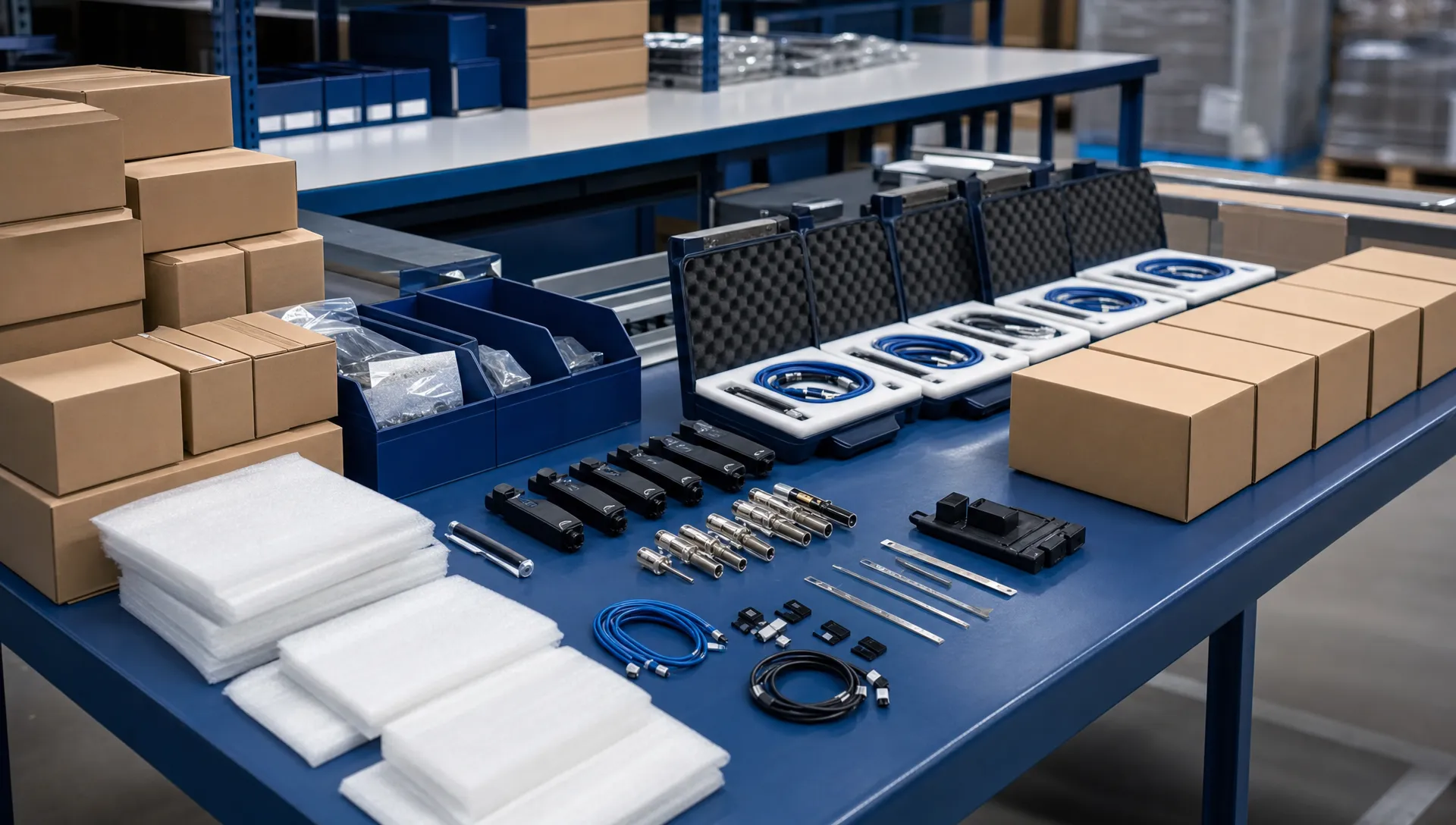
When should you pre-kit products?
Pre-kitting means preparing kits before orders come in. This can be a good option when demand is predictable or when each kit takes time to assemble.
Pre-kitting often makes sense if you sell the same bundle regularly, run planned promotional campaigns or need to meet retailer delivery windows. It can also help during peak trading periods, because some of the labour is completed before order volume increases.
However, pre-kitting is not always the best answer. If demand is uncertain, you may tie up stock in kits that do not sell. That can create availability problems if the same components are also needed for individual product orders.
On-demand kitting is often better when bundles change frequently, personalisation is required or stock is limited. It gives more flexibility, but it can take longer per order.
The best approach is often a blend. Fast-moving kits can be pre-built, while less predictable combinations are created when orders arrive.
What can go wrong with kitting?
Kitting problems usually come from unclear instructions, weak stock control or poor communication between sales and warehouse teams.
If a kit is sold online but the warehouse system does not reserve the right component stock, you can accidentally oversell. If packaging instructions are vague, staff may build kits inconsistently. If retailer requirements are missed, deliveries may be rejected or delayed.
Common kitting issues include incorrect item quantities, missing inserts, wrong labels, poor packaging quality, barcode errors and stock being allocated to kits without being reflected in available inventory.
These issues are avoidable, but only if the process is treated properly. A kit should be managed as a defined product or operational unit, not as an informal instruction passed around by email.
What information should you give a kitting provider?
If you are asking a 3PL or co-packing partner to handle kitting, give them enough detail to quote accurately and build the kit correctly.
Useful information includes:
- The SKUs and quantities included in each kit
- Whether the kit will have its own SKU or barcode
- Packaging type, size and presentation requirements
- Any labels, inserts, batch codes or date controls needed
- Expected volumes and campaign dates
- Whether kits are pre-built or assembled on demand
- Any retailer, marketplace or carrier requirements
Samples are particularly helpful. A physical approved sample lets the warehouse see exactly how the finished kit should look, which reduces interpretation and avoids rework.
If your business is expanding into new territories, remember that kitting is only one part of the operational picture. For example, brands planning commercial activity in the UAE may also need expert support with company setup, governance and compliance from providers such as Alldren while they plan fulfilment and distribution.
How kitting affects warehousing and storage
Kitting changes how stock is stored and counted. Components may need to be held separately, moved to a kitting area, then recorded as finished kits once assembled. If this movement is not tracked properly, stock figures can quickly become unreliable.
Storage layout also matters. Products that are often kitted together should be easy to access. Packing benches need enough space for components, packaging and quality checks. If kitting is part of a larger campaign, the warehouse may need temporary floor space for prepared pallets or completed retail displays.
That is why kitting often works best when it is connected to proper warehouse storage and stock visibility. Real-time tracking, clear locations and disciplined goods-in processes all help keep kits accurate.
For products with batch numbers, serial numbers or best-before dates, the kitting process must also preserve traceability. The business needs to know which stock went into which kit, especially for regulated, dated or high-value products.
Should you handle kitting in-house or outsource it?
In-house kitting can work well when volumes are low, the process is simple and you have enough space. It gives you direct control and can be useful while testing a new bundle.
Outsourcing becomes more attractive when kitting starts to interfere with daily operations. If your team is spending evenings building promotional packs, running out of space or making mistakes during peak periods, a 3PL or co-packing partner may be a better fit.
Outsourced kitting can be especially useful when you need warehousing, stock control, assembly, packing and dispatch under one roof. It avoids unnecessary movement between suppliers and gives one team responsibility for preparing stock and getting it out on time.
When comparing providers, ask practical questions. Can they handle your product type? Can they store components and finished kits? How do they record stock movements? Can they integrate with your sales channels? What happens if demand changes suddenly?
For growing brands, the right partner should make kitting feel controlled rather than complicated.
How Gus Logistics supports kitting and related logistics work
Gus Logistics is a family-run 3PL provider based in Nantwich, Cheshire, supporting eCommerce brands, manufacturers and product businesses across the UK.
Kitting often sits alongside the services Gus Logistics already provides, including pick and pack, order fulfilment, pallet and bulk storage, co-packing, retail display preparation and transport. The team works with businesses that need practical logistics support without call centres or unnecessary complexity.
For eCommerce brands, Gus Logistics can support fulfilment operations that involve product bundles, promotional packs and dispatch through integrated platforms including Shopify, Amazon, eBay, WooCommerce and Magento. For retail brands, kitting may form part of preparing display units, point of sale materials or store-ready stock. For manufacturers, it can help organise components and finished packs before onward delivery.
Because Gus Logistics also provides UK transport support, kitted stock can be prepared and moved through the next stage of distribution without the business needing to coordinate multiple suppliers.
Frequently asked questions
What is an example of kitting in logistics? A simple example is a skincare gift set where three separate products, a leaflet and a presentation box are assembled into one sellable unit. The warehouse can then pick the finished kit instead of picking every item separately for each order.
Is kitting the same as pick and pack? No. Pick and pack usually means selecting items for a specific order and packing them for dispatch. Kitting means grouping items together into a defined kit, either before an order is placed or as part of the order process.
Does kitting need a separate SKU? Not always, but it often helps. If a kit is sold as its own product, a dedicated SKU makes stock control, ordering and reporting much clearer. If the kit is built only for a one-off campaign, your warehouse partner can advise on the simplest setup.
Can kitting help reduce fulfilment errors? Yes, if the process is well controlled. Pre-built and checked kits can reduce the number of separate picks needed per order, which can lower the chance of missing items. Poorly managed kitting can create errors, so clear instructions and stock tracking are essential.
Is kitting suitable for small businesses? Yes. Many small and medium-sized brands use kitting for bundles, gift packs, subscription boxes and promotional campaigns. It becomes especially useful when order volumes increase or internal space becomes limited.
Need help with kitting, co-packing or fulfilment?
If kitting is becoming too time-consuming in-house, or you are planning a new bundle, retail campaign or promotional pack, Gus Logistics can help you work through the practical options.
To discuss kitting, co-packing, storage or fulfilment support, call Gus Logistics on 01270 335014 or get in touch via the contact page.
Looking for a Logistics Partner You Can Trust?
From warehousing and order fulfilment to transport and FSDU design - Gus Logistics handles it all from our base in Nantwich, Cheshire. Over 10 years experience, no minimum volumes, no long contracts.
