
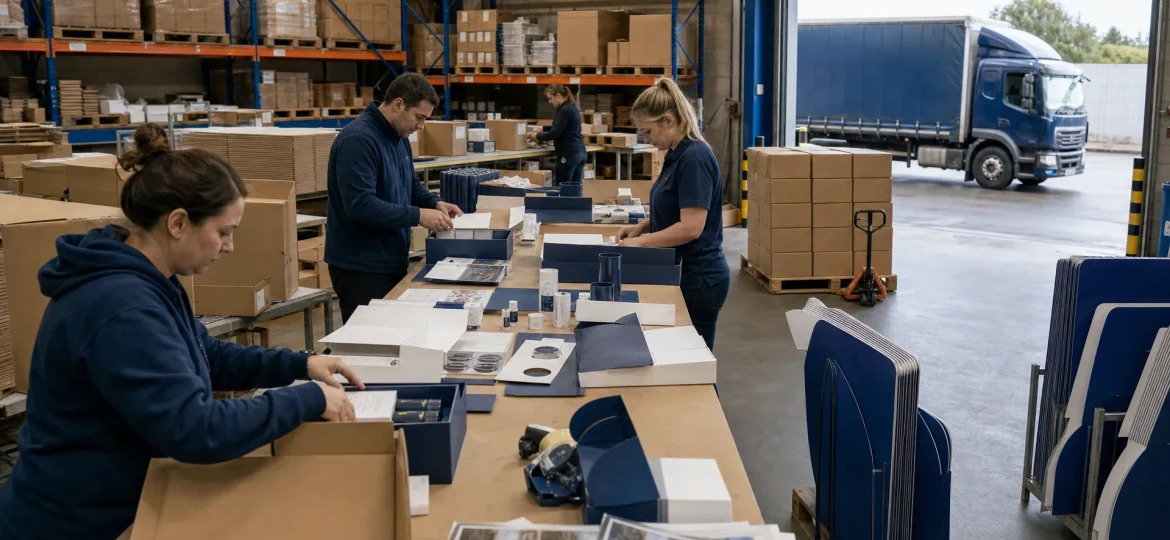
What to Look for in a Contract Packing Company
If your team is spending more time packing, labelling, reworking or building promotional units than selling, it may be time to outsource. A good contract packing company can take repetitive packing work off your hands, improve consistency and free up space, staff and management time.
The difficult part is choosing the right partner. Many contract packing companies in the UK can handle simple packing jobs, but not all of them will be right for your stock, deadlines, quality standards or delivery requirements. Price matters, but it should never be the only factor. A cheap job that causes missed retailer deadlines, incorrect packs or stock confusion can cost far more than it saves.
Here is what to look for when comparing contract packing providers, especially if you are an eCommerce brand, manufacturer, retail supplier or growing product business.
Start with the exact job you need done
Before you ask for quotes, be clear about the work you want outsourced. Contract packing can mean different things depending on the product, route to market and customer requirements.
You may need a provider to handle:
- Re-packing products into new outer packaging
- Labelling, barcoding or applying compliance labels
- Bundling multiple products into gift sets or promotional packs
- Kitting subscription boxes, sample packs or launch packs
- Assembling point of sale displays or retail-ready units
- Checking, sorting or reworking stock after a packaging issue
- Container de-stuffing, palletising and preparing goods for storage or dispatch
A strong provider will ask detailed questions before quoting. They should want to know the product type, pack format, number of units, component count, deadlines, stock arrival plan, quality requirements and delivery destination. If a company gives a firm price without understanding the job properly, treat that as a warning sign.
The better your brief, the more accurate the quote and the smoother the project. For repeat work, it is worth creating a simple packing specification with photos, pack quantities, label positions and quality checks.
Look for proven quality control
Quality control is one of the biggest reasons to use a professional contract packing company. The aim is not just to get products packed quickly. The aim is to get them packed correctly, consistently and in a way that protects your brand.
Ask how the company controls accuracy on the packing line. For example, do they check components before work starts? Do they create a sample pack for approval? How do they make sure the right label goes on the right product? What happens if stock is damaged, short or incorrectly supplied?
For food, drink, cosmetics, healthcare, pet products or any product with expiry information, batch control and best-before tracking may be essential. For electrical goods, premium products or regulated categories, serial number tracking may also matter.
Quality control should be practical and visible. You do not need a provider to bury you in jargon, but you do need confidence that your stock is being handled in a controlled process, not just packed as quickly as possible.
| Quality area | What to ask | Why it matters |
|---|---|---|
| Pack accuracy | How do you check each finished pack matches the specification? | Reduces customer complaints, returns and retailer issues |
| Stock control | How do you record components, finished goods and damaged stock? | Prevents inventory mismatches and missing items |
| Batch or date tracking | Can you track batch numbers, serial numbers or best-before dates where required? | Supports compliance, recalls and product traceability |
| Sign-off process | Can we approve a sample before the full run begins? | Catches issues before they affect the whole job |
| Issue reporting | How will you tell us about shortages, damage or unclear instructions? | Keeps projects moving without costly delays |
Check capacity, flexibility and speed
Contract packing projects often come with fixed dates. A retailer promotion may have a delivery window. A product launch may have a go-live date. A seasonal campaign may need thousands of units prepared quickly.
That means capacity matters. Ask how quickly the provider can start, how they plan labour for larger jobs and whether they can flex up for peak periods. A small operation may be excellent for hand-finished work but struggle with urgent volume. A larger provider may have more resource but be less flexible with smaller projects.
The right fit depends on your business. If you run smaller, frequent campaigns, you may need a company that can handle changing requirements without demanding huge minimum volumes. If you supply national retailers, you may need a provider with enough space, people and transport links to manage larger runs under pressure.
Be honest about your volumes. If they vary, say so. A good contract packing partner should help you build a practical plan rather than force your work into a rigid model.
Make sure storage is part of the conversation
Contract packing rarely happens in isolation. Your stock needs to arrive, be counted, stored, picked for packing, converted into finished goods and then moved on to customers, retailers or another warehouse.
If your packing provider also offers warehousing, you can reduce handovers and simplify stock control. This is especially useful when components arrive from multiple suppliers, when products need to be packed over several weeks, or when finished goods need to be held until dispatch.
When you compare providers, ask how they manage goods-in, pallet storage, bulk storage and stock visibility. A warehouse management system can make a big difference because it gives you a clearer view of what is on site and what has been processed. If stock accuracy is important to your operation, look for a partner with robust warehousing and storage services rather than treating storage as an afterthought.
Also ask about the physical warehouse setup. Racked storage, floor storage, secure areas and clear stock segregation all help reduce errors. For product businesses, the question is simple: will your stock be easy to find, easy to track and easy to move when deadlines are tight?
Consider fulfilment and delivery after packing
Once products are packed, they still need to go somewhere. That could be a consumer, marketplace customer, retailer distribution centre, store network or your own site. If you have to move finished stock to another provider for fulfilment or transport, you add time, cost and risk.
For eCommerce brands, it can be useful to choose a contract packing company that also offers order fulfilment and pick and pack support. This means promotional bundles, subscription boxes or limited edition packs can be prepared and dispatched from the same operation.
For retail suppliers and manufacturers, transport capability is just as important. Ask whether the provider can arrange same-day, next-day, pallet or larger vehicle movements. A company with its own fleet or strong carrier network can be valuable when a retailer changes a delivery slot or a campaign needs to move quickly. If delivery is a key part of your project, look for a provider with practical transport and delivery services as well as packing space.
Fewer handovers usually means fewer delays. It also gives you one point of contact when something changes.
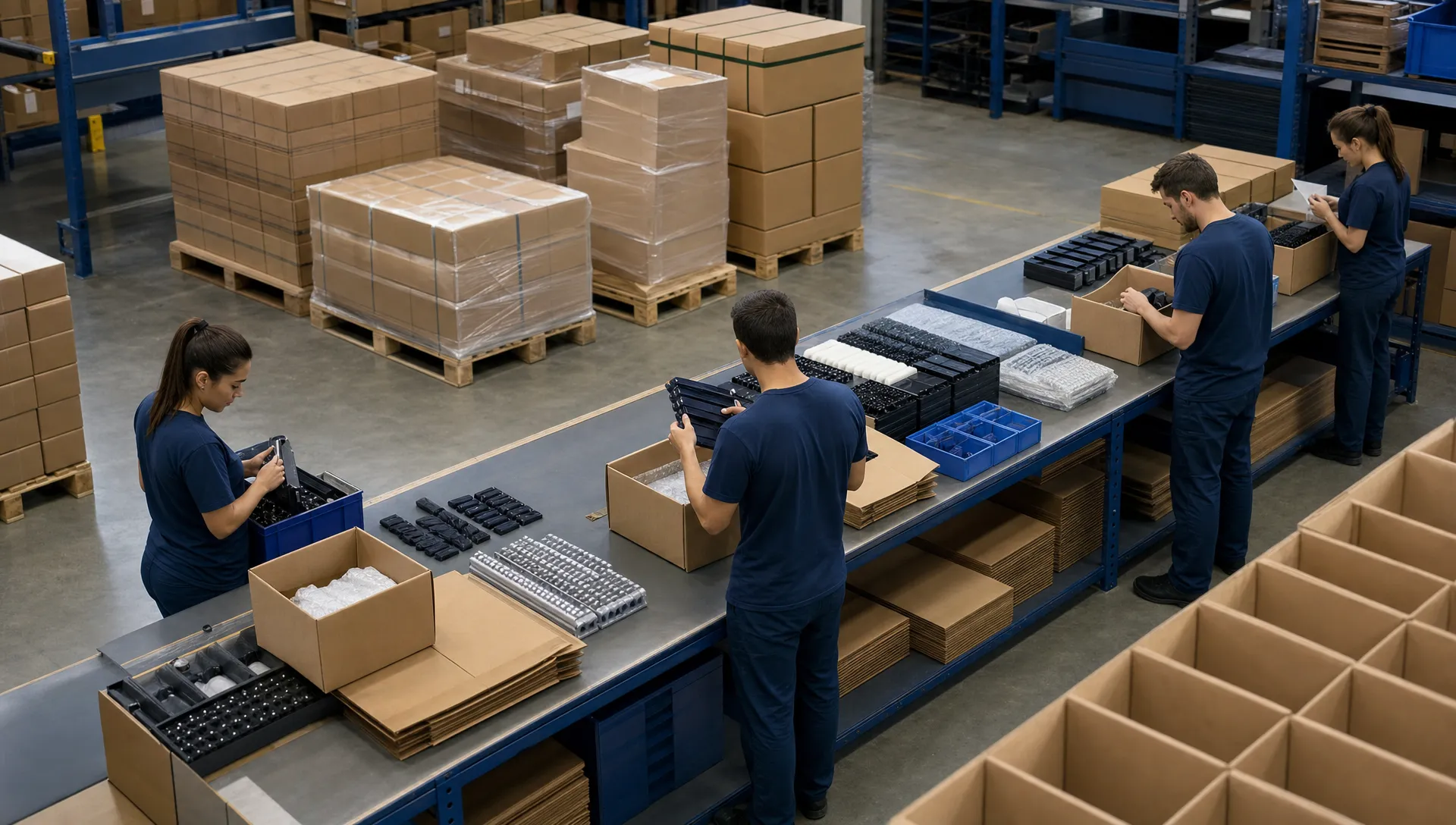
Ask about packaging materials and retail requirements
Some businesses supply all packaging themselves. Others need help sourcing cartons, inserts, sleeves, labels, bags or display components. Before choosing a contract packing company, check how involved they can be.
If your job is simple, such as applying labels or bundling two products together, packaging support may not be a major issue. If you are building retail displays, promotional shippers or complex kits, it becomes much more important.
Retail work often has stricter requirements than direct-to-consumer packing. Products may need to face the right way, display units may need to be pre-filled in a set order, and outer cartons may need specific labels for retailer intake. If you sell through supermarkets or high street retailers, choose a partner that understands the practical detail of point of sale work and can support FSDU design, manufacture, pre-fill and dispatch where needed.
It is also worth asking who is responsible for packaging waste, damaged components and unused materials at the end of the project. A clear agreement prevents confusion later.
Look for systems that give you visibility
You do not need to stand in the warehouse to know what is happening with your stock. A modern contract packing company should be able to provide clear updates, accurate inventory information and timely communication.
For one-off projects, a simple progress update may be enough. For ongoing work, you may need portal access, stock reports, order tracking or integration with your selling platforms. This is especially important if contract packing sits alongside eCommerce fulfilment, marketplace orders or retailer replenishment.
Ask what systems the provider uses and what information you will receive. Can they show stock received, stock packed and finished goods available? Can they track batches, serial numbers or best-before dates if your products require it? Can they provide digital proof of delivery when goods leave site?
Good systems do not replace good people, but they do remove guesswork. They help you plan campaigns, avoid overselling and answer customer or retailer queries faster.
Pay attention to communication and accountability
When you outsource packing, you are trusting another business with your stock, your deadlines and your brand presentation. Communication is therefore a core part of the service, not a nice extra.
Before signing off a project, ask who your main contact will be. Will you speak to someone who understands the job, or will every question go through a call centre? How quickly can they respond if stock arrives late, a retailer changes its requirements or you need to increase volume?
The best contract packing relationships are built on clarity. You should know what the provider needs from you, what they are responsible for and how problems will be handled. If a company is vague before the work starts, communication is unlikely to improve once the deadline pressure arrives.
Understand pricing, but do not buy on price alone
Contract packing pricing can be based on labour time, units packed, project complexity, storage, packaging materials, setup work, transport or a combination of these. A simple labelling job will be priced differently from a multi-component promotional kit or a fully assembled retail display.
When comparing quotes, make sure each provider is pricing the same scope. A lower quote may exclude storage, packaging materials, rework, quality checks, transport or project setup. It may also assume stock arrives perfectly sorted, labelled and ready to process.
Ask for a clear breakdown. You should understand what is included, what is excluded and what could trigger extra charges. This does not mean you need the cheapest provider. It means you need a quote you can trust.
A reliable contract packing company should be comfortable explaining how the price has been built. If the work changes, the cost may change too, but there should be no surprises caused by unclear assumptions.
Check location and transport links
Location matters more than many businesses realise. A well-placed contract packing company can reduce inbound and outbound travel time, especially if your stock moves around the UK by pallet, parcel or dedicated vehicle.
For businesses in Cheshire, the North West, the Midlands and beyond, access to major routes can help keep projects moving. It can also make site visits easier if you want to approve samples, inspect stock or discuss a complex project in person.
You do not always need the closest provider. You need the provider that gives you the right balance of capability, reliability, cost and access. For national campaigns, a central or well-connected location can be more useful than a local provider with limited capacity.
Red flags when choosing a contract packing company
Some warning signs are easy to spot once you know what to look for. Be cautious if a provider:
- Gives a fixed quote without asking detailed questions about the job
- Cannot explain how stock will be checked, stored or tracked
- Has no clear process for sample approval or quality control
- Is unclear about who will manage your account day to day
- Cannot handle storage, fulfilment or transport if your project needs them
- Pushes you into high minimum volumes that do not fit your business
- Treats deadlines casually or gives vague answers about capacity
A good provider will not always say yes to everything. In fact, honest questions and practical limitations are usually a good sign. They show the company is thinking through the job properly.
How Gus Logistics supports contract packing projects
Gus Logistics is a family-run 3PL provider based in Nantwich, Cheshire, supporting eCommerce brands, manufacturers and product businesses across the UK. With over 10 years of experience, the team handles contract packing, co-packing, warehousing, fulfilment, transport and retail display projects from one operation.
For businesses that want one partner rather than several handovers, this joined-up service can be valuable. Stock can be received into warehouse storage, prepared or reworked, packed into kits or displays, held until needed and dispatched through the right transport route.
Gus Logistics also supports order fulfilment with integrations across 60+ platforms including Shopify, Amazon, eBay, WooCommerce and Magento. For warehousing, clients can access real-time WMS tracking through a client portal, with batch, serial number and best-before date tracking available where required. For transport, Gus Logistics operates its own fleet and has access to a wider UK and Europe-wide vehicle network.
Just as importantly, customers speak directly to the people handling their work. There are no call centres, no minimum volume requirements and same-day quotes are standard. For growing SMEs, that flexibility can make outsourcing much easier to start.
Frequently asked questions
What does a contract packing company do? A contract packing company packs, re-packs, labels, bundles, kits or prepares products on behalf of another business. This can include promotional packs, retail displays, subscription boxes, rework projects and stock preparation before fulfilment or distribution.
How do I compare contract packing companies in the UK? Compare providers on quality control, capacity, storage, systems, communication, transport options, location and pricing clarity. Do not choose on price alone unless you are confident the quote includes the same scope of work.
Can a contract packing company store my stock as well? Many providers can, but not all offer proper warehousing and stock visibility. If storage matters, ask about goods-in checks, stock tracking, pallet storage, bulk storage, reporting and how finished goods are managed after packing.
Is contract packing only for large brands? No. Contract packing can suit SMEs, eCommerce brands, manufacturers and retail suppliers. The key is finding a provider whose minimum volumes, communication style and service model fit your business.
When should I outsource contract packing? It is worth considering when packing work is taking too much staff time, limiting warehouse space, causing errors, delaying dispatch or stopping you from accepting larger retail or promotional opportunities.
Need a contract packing partner you can speak to directly?
If you are looking for a practical contract packing company in Cheshire, the North West or for UK-wide projects, Gus Logistics can help with co-packing, storage, fulfilment, transport and FSDU work.
Call 01270 335014 to discuss your project, or get in touch via the contact page to request a quote.
Looking for a Logistics Partner You Can Trust?
From warehousing and order fulfilment to transport and FSDU design - Gus Logistics handles it all from our base in Nantwich, Cheshire. Over 10 years experience, no minimum volumes, no long contracts.
