
What Is Inventory Shrinkage and How Can Warehouses Reduce It?
Inventory shrinkage is the gap between the stock your system says you have and the stock you can physically find, sell or dispatch. For a business owner or operations manager, that gap is more than an accounting nuisance. It can lead to overselling, delayed orders, write-offs, awkward customer conversations and wasted warehouse time spent searching for items that are no longer there.
The problem is that shrinkage rarely comes from one obvious place. A few units may be damaged, a pallet may be booked in incorrectly, a picker may take stock from the wrong location or a return may never make it back into available stock. This guide explains what to look for and the practical steps warehouses can take to reduce stock loss before it affects customers.
What Is Inventory Shrinkage?
In simple terms, inventory shrinkage means stock has been lost somewhere between being recorded and being counted. If your warehouse management system, spreadsheet or sales platform says you have 500 units of a product, but a stock count only finds 470 saleable units, the missing 30 units are shrinkage.
A simple way to view it is:
| Stock figure | Meaning | Example |
|---|---|---|
| Expected stock | What your system says should be available | 500 units |
| Actual stock | What your team can physically count and use | 470 units |
| Shrinkage | The difference between the two | 30 units |
For a growing product business, inventory shrinkage can be especially damaging because it affects cash flow and customer service at the same time. You have already paid for the goods, storage and handling, but you cannot sell the missing or unsaleable units.
It is also different from dead stock. Dead stock is usually stock you still have but cannot sell quickly, often because it is outdated, overordered or no longer in demand. Shrinkage is stock that is missing, written off, damaged beyond sale or incorrectly recorded.
Why Inventory Shrinkage Happens in Warehouses
In most warehouses, inventory shrinkage is caused by a mix of process gaps, human error, damage, system issues and poor visibility. Theft can happen, but it is far from the only cause. Many losses are created by everyday operational problems that go unnoticed until a stock count exposes them.
Goods-in errors
Shrinkage can start the moment stock arrives. If a delivery is booked in without being checked properly, missing cartons, supplier shortages or damaged goods can be accepted into the system as if everything arrived correctly.
Common goods-in problems include counting pallets but not cartons, failing to check product codes, booking stock into the wrong SKU or not separating damaged goods from saleable stock. If the record is wrong from day one, every later count, pick and replenishment decision is built on a bad number.
Poor location control
Stock can be present in the warehouse but effectively lost if nobody knows where it is. This often happens when goods are moved without updating the system, placed in temporary locations for too long or mixed with similar-looking products.
Clear location control matters more as your SKU range grows. A small stockroom can sometimes rely on memory, but a busy warehouse needs consistent locations, disciplined moves and accurate system updates.
Picking, packing and dispatch mistakes
Picking errors create another route to stock loss. A customer may receive the wrong item, too many units or the wrong product variant. If the issue is not recorded clearly, the system can show stock that no longer exists.
This is why pick and pack accuracy is closely linked to inventory shrinkage. Barcode scanning, order checks and clear product labelling all help reduce the risk of the wrong item leaving the building.
Damaged goods and poor handling
Damaged stock is not always counted as shrinkage straight away. It may sit in a corner, be moved into quarantine or be returned from a customer weeks later. If the status is not updated properly, your system may still treat those items as available to sell.
Damage can happen through poor pallet stacking, unsuitable racking, overhandling, weak packaging, careless loading or storage in the wrong conditions. The earlier a warehouse records damage, the easier it is to decide whether stock can be repaired, repacked, returned to supplier or written off.
Returns that are not processed properly
Returns can create confusing stock records if they are not inspected and processed quickly. A returned item may be saleable, damaged, incomplete, incorrectly labelled or sent back to the wrong SKU.
If returned goods are left unprocessed, the business loses visibility. The item may not be available for resale, but the system may not show why. In high-volume eCommerce, that delay can quickly distort stock availability.
Theft and unauthorised access
Theft is a sensitive topic, but warehouses still need sensible controls. Stock should not be accessible to anyone who does not need it for their role, and high-value or easy-to-resell items may need tighter monitoring.
This does not mean creating a culture of suspicion. It means using access controls, visitor sign-in, clear procedures, CCTV where appropriate and proper investigation when discrepancies appear repeatedly.
How Warehouses Can Reduce Inventory Shrinkage
Reducing inventory shrinkage starts with one principle: every stock movement should have a reason, a location and a record. When goods arrive, move, get picked, get damaged, get returned or leave the warehouse, the system should reflect what physically happened.
Tighten the goods-in process
A reliable goods-in process is one of the best defences against shrinkage. Deliveries should be checked against purchase orders, delivery notes or expected inbound records before stock is made available.
Useful controls include checking quantities at carton or unit level where needed, photographing visible damage, recording supplier shortages immediately and keeping questionable stock in quarantine until it is resolved. If batch numbers, serial numbers or best-before dates matter to your products, they should be captured at receipt rather than added later from memory.
Use clear locations and live stock records
A warehouse does not need to be overcomplicated, but it does need structure. Each pallet, carton or pick face should have a clear location, and stock moves should be recorded as they happen.
A warehouse management system helps by linking products, locations and stock movements in one place. If you are still relying on spreadsheets or manual updates, our guide to what a warehouse management system is explains how WMS software supports better stock visibility.
For businesses that need external space, professional pallet and bulk warehousing can also reduce the risk of stock being misplaced by giving goods a controlled storage environment with proper handling processes.
Count stock continuously, not just once a year
Annual stocktakes are useful, but they are often too late to prevent losses. Cycle counting spreads stock checks throughout the year, focusing on smaller groups of products at a time.
Regular cycle counts turn inventory shrinkage from a surprise into a manageable issue. If a discrepancy appears soon after the last confirmed count, it is much easier to investigate what happened.
A practical cycle counting plan can focus on:
- High-value SKUs
- Fast-moving products
- Products with frequent discrepancies
- Seasonal stock before peak periods
- Items that look similar or are easy to mix up
The aim is not to count everything every day. It is to create a rhythm where errors are found while the trail is still fresh.
Protect stock from damage
Stock that is damaged, crushed, contaminated or made unsaleable still affects your bottom line. Damage reduction is a shrinkage control because it protects the physical goods you have already bought.
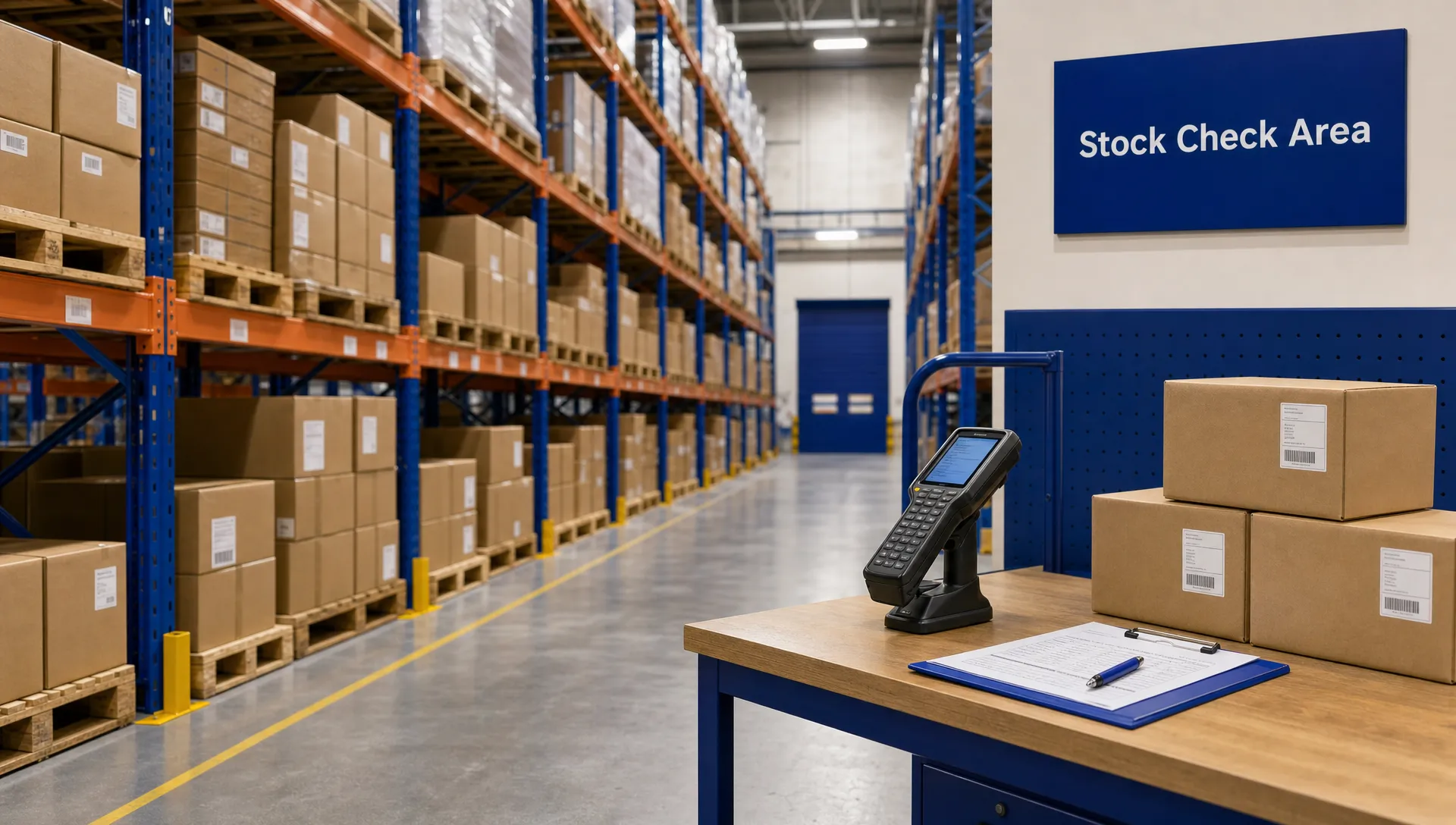
Good damage prevention starts with the basics: suitable racking, safe pallet stacking, correct wrapping, trained handling and clear separation of fragile or high-value goods. Heavy items should not be stored above crushable items, and products should not be left in busy traffic routes where they can be clipped by equipment.
If your stock is often damaged after it leaves the warehouse, it is worth reviewing packaging, loading and carrier handling as part of the same process. Our article on reducing damaged stock in transit covers the dispatch side in more detail.
Improve pick, pack and dispatch checks
A strong picking process reduces stock discrepancies and customer errors. Warehouses should make it easy for pickers to choose the right item first time, especially where products have similar names, packaging or variants.
Barcode scanning, clear bin labels, sensible pick routes and a final dispatch check all help. For higher-risk orders, a second check before sealing the parcel or pallet can prevent mistakes from leaving the warehouse.
If your team is struggling to keep up with order volumes, outsourced order fulfilment and pick and pack can give you access to established processes without building the warehouse operation yourself.
Make returns visible from the moment they arrive
Returns should not disappear into a pile. They need a defined route from arrival to inspection, grading, restocking, repair, supplier return or disposal.
The key is to separate physical handling from stock availability. A returned item should not automatically go back into saleable stock until someone confirms its condition. Equally, if it is saleable, it should not sit unprocessed while the business buys more of the same SKU.
Review access and accountability
Shrinkage controls work best when everyone understands their role. Staff should know how to report damaged stock, where to put discrepancies and what to do when a product is not where the system says it should be.
Access should also match operational need. Not everyone needs access to every storage area, and high-value stock should be handled with extra care. Clear accountability makes it easier to fix process problems without blaming individuals for wider system gaps.
Measuring Inventory Shrinkage Properly
To reduce inventory shrinkage, you first need a clear way to measure it. Counting missing units is helpful, but value matters too. Losing five low-value accessories is not the same financial problem as losing five premium products.
A simple internal measure is:
| Measure | How to use it | Why it helps |
|---|---|---|
| Unit difference | Compare expected units with counted units | Shows physical stock accuracy |
| Value difference | Compare the cost value of missing stock | Shows financial impact |
| Discrepancy by SKU | Track losses by product | Highlights problem items |
| Discrepancy by location | Track losses by storage area | Highlights process or layout issues |
| Reason code | Record damage, mispick, supplier shortage or unknown loss | Helps you fix root causes |
The most useful reporting is specific. Instead of simply writing off a monthly loss, break it down by SKU, location, movement type and likely cause. Patterns will tell you where to improve first.
For example, repeated losses on one product could suggest poor labelling or similar-looking variants. Repeated losses in one location could point to uncontrolled moves, counting errors or access issues. Repeated supplier shortages may mean the inbound checking process needs to be firmer.
When Outsourcing Warehousing Can Help
If inventory shrinkage is becoming a regular problem, it may be a sign that your current setup has outgrown the business. That can happen when stock is stored in multiple places, sales channels are not connected properly or the same small team is trying to handle purchasing, picking, packing, returns and customer service at once.
Outsourcing does not remove the need for good stock control, but it can give you better systems, clearer processes and more disciplined warehouse handling. A good 3PL should be able to explain how stock is booked in, stored, counted, picked, packed, dispatched and reported.
Gus Logistics is a family-run 3PL provider based in Nantwich, Cheshire, supporting eCommerce brands, manufacturers and product businesses across the UK. The team provides warehousing and storage, order fulfilment, returns management, same-day and next-day transport, co-packing and FSDU support. Stock can be managed through cloud-based logistics systems with live order tracking, digital proof of delivery and client visibility.
For businesses comparing options, the practical question is not just how much storage space a provider has. It is how carefully that space is managed. Ask about goods-in checks, WMS visibility, batch or serial tracking where relevant, stock counting routines, damage handling and how quickly discrepancies are communicated.
Frequently Asked Questions
What is inventory shrinkage in a warehouse? It is the difference between the stock recorded in your system and the stock that is physically available, saleable or dispatchable. It can be caused by miscounts, damage, picking errors, returns issues, theft or poor stock movement records.
How can I tell whether shrinkage is caused by theft or process errors? Look for patterns before making assumptions. Repeated discrepancies around goods-in, similar SKUs, returns or one storage area often point to process issues. Theft should still be considered where there is evidence, but many warehouse losses come from everyday recording and handling problems.
How often should a warehouse count stock? Most businesses benefit from regular cycle counts as well as larger stocktakes. Fast-moving, high-value and problem SKUs should be counted more often than slow-moving, low-risk products.
Can a WMS stop inventory shrinkage completely? A WMS will not remove every loss on its own, but it can greatly improve visibility by recording stock movements, locations and order activity in real time. It works best when the warehouse team follows consistent processes.
When should a business consider outsourcing stock control to a 3PL? Outsourcing is worth considering when stock discrepancies, dispatch delays, space issues or returns backlogs are taking attention away from sales and growth. A 3PL can provide established warehousing processes and systems without you needing to build everything in-house.
Better stock control starts with better visibility, cleaner processes and a warehouse setup that matches your order volume. If you want to reduce stock loss and improve day-to-day logistics, Gus Logistics can help with warehousing, order fulfilment, returns handling and UK-wide transport.
Call 01270 335014 to speak directly with the team, or get in touch via the Gus Logistics contact page to discuss your stock and warehousing needs.
Looking for a Logistics Partner You Can Trust?
From warehousing and order fulfilment to transport and FSDU design - Gus Logistics handles it all from our base in Nantwich, Cheshire. Over 10 years experience, no minimum volumes, no long contracts.
