
What Is a Warehouse Management System (WMS)?
If your stock is still managed through spreadsheets, paper notes or a basic inventory list, it can work for a while. Then order volumes grow, new sales channels are added, products move between locations, and suddenly nobody is completely sure what is in stock, where it is, or whether it has already been sold.
That is where a warehouse management system, usually called a WMS, becomes important.
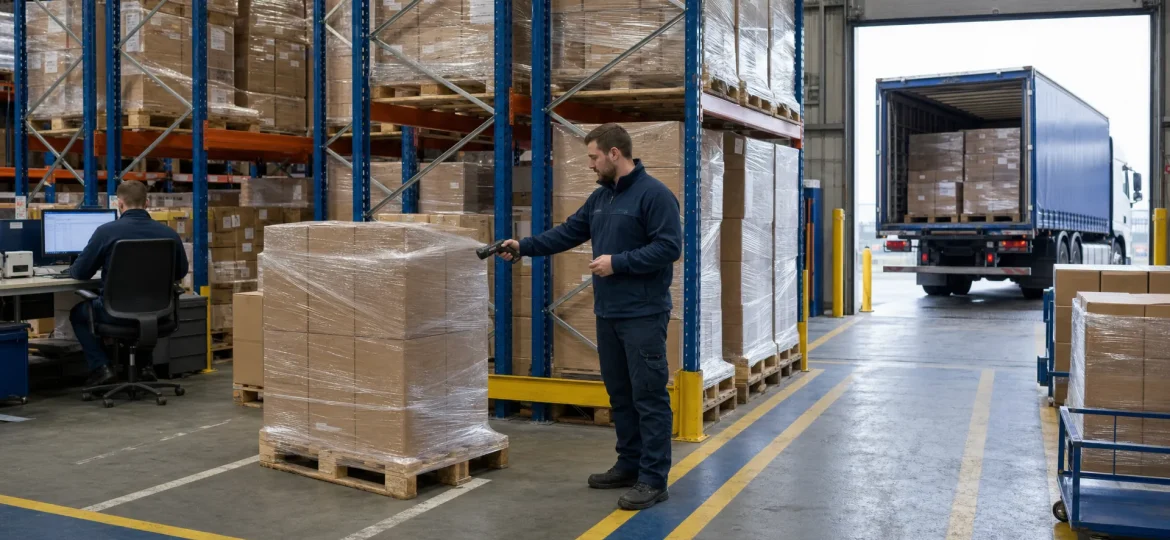
A WMS is the software and process framework used to control stock movement inside a warehouse. It helps warehouse teams receive goods, store products in the right location, pick orders accurately, pack items, dispatch them, and keep stock records up to date in real time.
For business owners and operations managers, the real value is simple: a WMS gives you better visibility and control. Instead of guessing what is on the shelf, relying on someone to check manually, or discovering errors after a customer has placed an order, you have a clearer view of stock from goods-in to dispatch.
What does a warehouse management system actually do?
A warehouse management system manages the day-to-day activity inside a warehouse. It connects stock records with physical warehouse actions, so the system reflects what is happening on the floor.
In plain English, a WMS helps answer questions such as:
- What stock has arrived?
- Has it been checked and booked in?
- Where is each item stored?
- Which orders need picking today?
- Has the correct item been picked and packed?
- Has the order been dispatched?
- How much stock is available to sell?
A basic inventory system may tell you that you should have 500 units of a product. A WMS helps show where those units are, whether any are allocated to open orders, whether some are in quarantine, and how the warehouse team should move them next.
That difference matters when you sell across multiple channels, hold a growing number of SKUs, need batch or best-before tracking, or rely on fast dispatch times.
How a WMS works in a typical warehouse
Although every warehouse is slightly different, most warehouse management systems support the same core stages of stock movement.
| Warehouse stage | What the WMS helps with | Why it matters |
|---|---|---|
| Goods-in | Records incoming stock, quantities and product details | Reduces booking-in errors and gives earlier stock visibility |
| Putaway | Assigns stock to storage locations | Makes products easier to find and pick later |
| Storage | Tracks stock by location, pallet, SKU, batch or serial number | Improves accuracy and reduces time spent searching |
| Picking | Creates pick instructions for customer orders | Helps the team pick the right products in the right sequence |
| Packing | Confirms the correct items are packed | Reduces incorrect orders and customer complaints |
| Dispatch | Links orders to carrier or transport processes | Supports faster handover and better delivery tracking |
| Reporting | Shows stock levels, movements and activity | Helps managers make better operational decisions |
For example, when a pallet arrives at a warehouse, the WMS can record the delivery, check it against the expected stock, assign it to a location, and update available stock once it is ready to sell. When a customer order comes in, the system can tell the warehouse team exactly where to pick the product from and record when it has been packed and dispatched.
If you outsource your stockholding, the same principle applies. A good 3PL partner should be able to show you how its WMS supports visibility across warehouse storage and pallet storage, fulfilment and dispatch.
WMS vs inventory management software: what is the difference?
The terms are sometimes used interchangeably, but they are not quite the same.
Inventory management software focuses mainly on stock quantities. It helps record what has been bought, sold or adjusted. It is useful for knowing how much stock you have on paper.
A warehouse management system goes further. It manages the physical flow of goods inside the warehouse. It deals with locations, picking routes, stock movements, goods-in checks, dispatch activity, and often barcode scanning or other verification steps.
Here is a simple way to think about it:
| System type | Main role | Typical use |
|---|---|---|
| Inventory software | Tracks stock quantities | Knowing what stock should be available |
| WMS | Controls warehouse activity and stock movement | Managing where stock is and what happens to it next |
| ERP | Manages wider business processes | Finance, purchasing, operations and reporting |
| Carrier software | Manages delivery labels and shipping services | Booking parcels, pallets or transport movements |
Many growing businesses use several systems together. For example, an eCommerce brand may use Shopify for orders, accounting software for finance, and a 3PL warehouse management system for storage, picking and dispatch.
The key is that the systems need to communicate properly. If your sales channels and warehouse stock records do not stay aligned, you increase the risk of overselling, late orders and manual admin.
Why a WMS matters for growing product businesses
A WMS becomes more valuable as operational complexity increases. You may not need one when you have a small number of products and a handful of weekly orders. But once order volume, SKU count or sales channels increase, manual processes can quickly become a bottleneck.
Common signs that your business needs better warehouse management include regular stock discrepancies, time wasted looking for products, orders missed because stock was not where expected, customers buying items that are no longer available, and warehouse teams relying too heavily on one person’s memory.
For eCommerce brands, the pressure is often dispatch speed. Customers expect accurate orders and fast delivery. If your warehouse process cannot keep up, the issue is not only internal efficiency. It can affect customer reviews, repeat orders and retailer relationships.
For manufacturers, wholesalers and retail suppliers, the challenge may be different. You may need to track batches, serial numbers, best-before dates, pallets, part pallets, or stock held for specific customers. A WMS helps create structure around those requirements so the warehouse is not dependent on manual notes and workarounds.

Key features to look for in a WMS
Not every WMS is the same. Some are built for large distribution centres, while others are better suited to flexible 3PL operations, eCommerce fulfilment or pallet storage. If you are reviewing your own system or choosing an outsourced logistics partner, focus on the features that affect your daily operation.
Real-time stock visibility
A useful WMS should update stock records as movements happen. That includes goods arriving, orders being picked, stock being relocated, returns being processed, and goods being dispatched.
Real-time visibility is especially important if you sell through multiple platforms. If stock is not updated quickly, two customers can buy the same item through different channels before anyone spots the problem.
Location control
Location control tells the warehouse exactly where stock is held. This could be a rack, shelf, bay, floor location or pallet position.
Without location control, teams waste time searching. With location control, goods can be stored more logically, picked more quickly, and counted more accurately.
Barcode scanning and verification
Barcode scanning helps reduce human error. Instead of relying only on visual checks, warehouse staff can scan products, locations or order references to confirm that the right item is being handled.
This is particularly useful for products with similar packaging, multiple variations, or high order volumes.
Batch, serial number and best-before tracking
Some businesses need to know exactly which batch, serial number or date code has been received, stored and dispatched. This is common in sectors where traceability matters, such as food, drink, cosmetics, electronics, health products and specialist manufacturing.
If this applies to your business, you should check whether the WMS can support the level of traceability you need before moving stock into a warehouse.
Sales channel integrations
For eCommerce fulfilment, integrations are critical. If your online store, marketplace or order platform connects directly with the WMS, orders can flow into the warehouse faster and with less manual work.
Gus Logistics supports order fulfilment and pick and pack with integrations across 60+ platforms, including Shopify, Amazon, eBay, WooCommerce and Magento.
Dispatch and transport visibility
A WMS should not operate in isolation from dispatch. Once an order has been picked and packed, the warehouse needs a clear handover into parcel, pallet or dedicated transport.
For businesses moving larger consignments, retail deliveries or urgent goods, it helps when warehousing and same-day or next-day transport are joined up rather than managed as separate disconnected processes.
Do you need to buy your own WMS?
Not always. This is one of the biggest practical questions for SMEs.
If you run your own warehouse, buying or implementing a WMS may be worthwhile. But it usually involves software costs, setup time, staff training, process changes, integrations and ongoing management. It can be the right choice if warehousing is a core part of your operation and you have the team to run it properly.
If you outsource warehousing or fulfilment to a 3PL, you can often benefit from the provider’s WMS instead. That means you do not need to build the warehouse technology stack yourself, but you still need to check what visibility and reporting you will receive.
| Option | Best suited to | What to consider |
|---|---|---|
| Your own WMS | Businesses operating their own warehouse | Setup cost, staff training, integrations and ongoing system management |
| 3PL WMS | Businesses outsourcing storage, fulfilment or distribution | Client visibility, sales channel integrations, reporting and service processes |
| Basic inventory software | Small businesses with simple stock needs | Limited warehouse control if order volume or complexity grows |
For many growing product businesses, the decision is less about software ownership and more about operational control. You need reliable stock records, clear communication, accurate fulfilment and a warehouse partner that can explain how its systems work.
Questions to ask a 3PL about its WMS
Before choosing a logistics partner, ask practical questions about how its warehouse management system works. You do not need a technical lecture. You need clear answers that show whether the system can support your business.
Useful questions include:
- Can I see live stock information through a client portal?
- Which eCommerce platforms and marketplaces can you integrate with?
- How quickly can integrations be set up?
- Can you track batches, serial numbers or best-before dates?
- How are goods checked when they arrive?
- How are stock discrepancies handled?
- Can the system support pallet storage, pick and pack, returns or co-packing?
- What reporting will I receive?
- How do warehouse processes connect with transport and delivery?
The answers should be specific. If a provider cannot explain how stock is received, located, picked, packed and reported, that is a warning sign.
How Gus Logistics uses WMS technology
Gus Logistics is a family-run 3PL provider based in Nantwich, Cheshire, supporting eCommerce brands, manufacturers and product businesses across the UK.
Its warehouse management approach is designed to give clients clearer control over outsourced logistics. For pallet and bulk warehousing, Gus Logistics uses real-time WMS tracking through a client portal, with batch, serial number and best-before date tracking available where required.
For eCommerce businesses, the WMS links into fulfilment processes, helping orders move from sales channels into pick, pack and dispatch. With late cut-offs available up to 10pm and next-day dispatch support, the system sits behind the practical work needed to get orders out accurately and on time.
Because Gus Logistics also provides UK logistics services across warehousing, fulfilment, transport, FSDUs and co-packing, the WMS is part of a wider operation rather than a standalone software tool.
Just as importantly, Gus Logistics is family-run with no call centres. Clients speak directly to the people handling their freight and stock, which can make a real difference when you need quick answers about orders, deliveries or stock movements.
Frequently Asked Questions
What is a warehouse management system? A warehouse management system, or WMS, is software used to manage stock movement inside a warehouse. It helps control goods-in, storage locations, picking, packing, dispatch and stock visibility.
Is a WMS the same as inventory management software? No. Inventory software mainly tracks stock quantities, while a WMS manages the physical warehouse process, including where stock is stored and how it moves through the warehouse.
Do small businesses need a WMS? Some very small businesses can manage with basic stock tools at first. A WMS becomes more important when order volumes grow, stock is held in multiple locations, products are sold across several channels, or accuracy problems start affecting customers.
Can a WMS connect to Shopify, Amazon or eBay? Many modern WMS platforms can connect to eCommerce platforms and marketplaces. Gus Logistics supports integrations with 60+ platforms, including Shopify, Amazon, eBay, WooCommerce and Magento.
What should I expect from a 3PL WMS? You should expect accurate stock records, clear goods-in processes, location tracking, order visibility, reporting and communication from the team managing your stock.
Need clearer stock control and outsourced warehousing support?
A WMS is only valuable when it is backed by good warehouse processes and a team that knows how to use it properly. If you are outgrowing spreadsheets, struggling with stock visibility, or looking for a 3PL partner that can support storage, fulfilment and transport, Gus Logistics can help.
To discuss your warehousing or fulfilment requirements, call 01270 335014 or get in touch through the Gus Logistics contact page.
Looking for a Logistics Partner You Can Trust?
From warehousing and order fulfilment to transport and FSDU design - Gus Logistics handles it all from our base in Nantwich, Cheshire. Over 10 years experience, no minimum volumes, no long contracts.
