
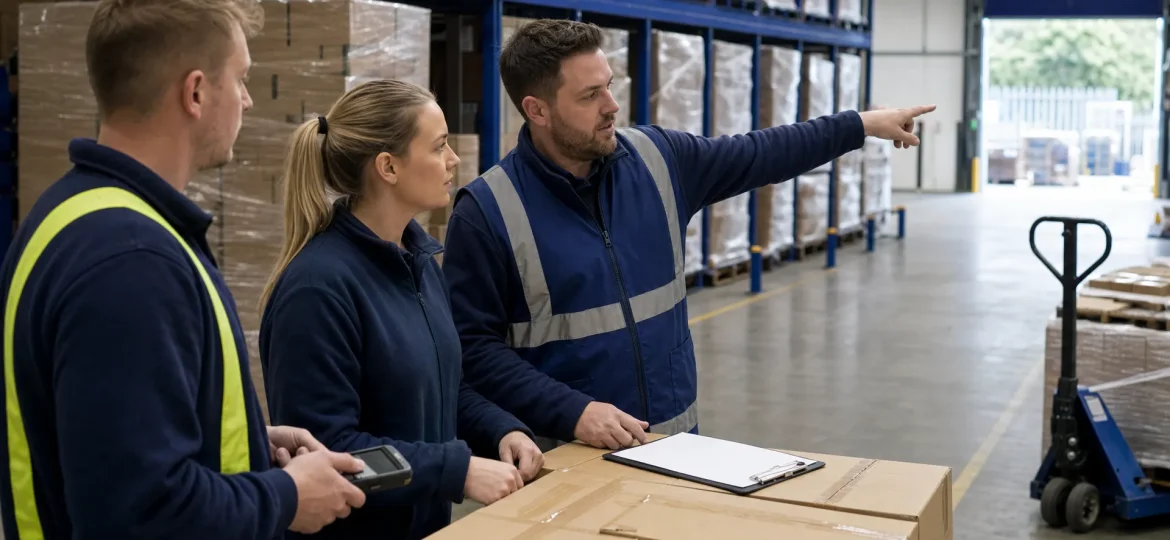
What Does a 3PL Need From You Before Your First Order Can Ship?
Before a 3PL can ship your first customer order, they need more than a signed agreement and a few pallets of stock. The 3pl onboarding process is the practical handover that turns your products, systems, packing rules and delivery promises into a repeatable warehouse routine.
If that handover is unclear, the first week can quickly become messy. Orders may fail to import, stock may not match the paperwork, warehouse teams may not know which packaging to use and customer service teams may be left chasing answers.
This guide explains what your 3PL needs from you before the first order can leave the warehouse, so you can prepare properly and avoid avoidable delays.
The 3PL onboarding process: what has to be ready first
The 3PL onboarding process is not just an admin exercise. It is the point where your business explains exactly how your stock should be received, stored, picked, packed, dispatched and, if needed, returned.
A good 3PL will ask practical questions before go-live because they need to protect your customers, your stock and their warehouse operation. If you are moving from in-house fulfilment, this can feel detailed at first. In reality, those details are what stop errors later.
If you are comparing providers locally, it also helps to work with a team that understands your routes, stock profile and dispatch expectations. Gus Logistics supports businesses looking for 3PL services in the North West, including growing eCommerce brands, manufacturers and product businesses that need UK-wide distribution from Cheshire.
1. Accurate product and SKU information
Your 3PL cannot pick and pack accurately unless the product data is clean. In the 3PL onboarding process, SKU information is one of the first things to check because it affects receiving, storage, picking, packing, stock counting and returns.
At a minimum, your provider will usually need a full product list with SKU codes, product names, barcodes where available, variants, dimensions and weights. If you sell products with batch numbers, serial numbers or best-before dates, that information also needs to be captured before stock arrives.
| Product detail | What to provide | Why it matters |
|---|---|---|
| SKU code | The exact code used in your sales channels | Prevents picking errors and duplicate records |
| Product name | Clear product description and variant | Helps warehouse teams identify items quickly |
| Barcode | EAN, UPC or internal barcode if used | Speeds up scanning and stock control |
| Dimensions and weight | Product and packed sizes where known | Supports storage planning and shipping choice |
| Batch, serial or date data | Rules for tracking and rotation | Helps manage traceability and stock control |
If you have changed SKU codes over time, tell your 3PL before onboarding begins. Old codes, marketplace codes and supplier codes can easily cause confusion if they are not mapped properly.
2. A clear inbound stock plan
Before the first order can ship, your stock has to be received and booked into the warehouse management system. This part of the 3PL onboarding process depends on good inbound information, not just a delivery turning up at the door.
Your 3PL should know when stock is arriving, how it is packed, how many pallets or cartons to expect and which purchase order or stock transfer it relates to. If goods are arriving from a manufacturer, supplier or port, share the paperwork as early as possible so the warehouse can plan labour and space.
For palletised goods, the provider will need pallet counts, carton counts and any handling requirements. For loose-loaded containers, they may need more time and labour to unload, sort, check and palletise stock before it can be stored.
Businesses with bulk stock or seasonal peaks should also discuss storage needs early. Gus Logistics provides pallet and bulk storage with racked and floor storage, plus real-time WMS tracking through a client portal.
3. Sales channel access and order integration
Once product and stock data are agreed, your 3PL needs to connect to the systems where orders are created. For many eCommerce businesses, this means platforms such as Shopify, Amazon, eBay, WooCommerce or Magento. It may also include wholesale portals, marketplaces or manual order uploads.
This stage of the 3PL onboarding process should confirm which systems are the source of truth for orders, stock levels, customer addresses and shipping services. If several systems are involved, make sure it is clear which one should override the others.
Test orders are useful before go-live. They confirm that orders import correctly, address fields appear in the right place, SKUs match warehouse records and tracking numbers can flow back to your store or marketplace.
If you are outsourcing pick and pack for the first time, it is worth reviewing how order flow will work day to day. Gus Logistics offers order fulfilment and pick and pack services that integrate with 60+ platforms, with late cut-offs up to 10pm and next-day dispatch available where agreed.
4. Packing rules and customer experience details
Your 3PL also needs to know how each order should look when it reaches the customer. A practical 3PL onboarding process covers packaging before the first order ships, rather than leaving warehouse teams to guess.
Share which products need boxes, mailers, void fill, fragile labels, protective wrap or special handling. If you use branded packaging, inserts, gift notes or promotional leaflets, explain when each item should be included. If certain products cannot be packed together, make that clear too.
For retail brands, packing rules may go beyond customer parcels. You may need goods re-packed, labelled, kitted, assembled into point of sale displays or prepared for store distribution. These details affect labour, space, materials and timelines, so they should be agreed before stock is live.
The clearer your packing rules are, the easier it is for the warehouse team to create a repeatable process that protects the customer experience.

5. Delivery services, cut-offs and carrier rules
Shipping is not just a label at the end of the process. Your 3PL needs to understand what delivery promises you make to customers and which services should be used for different order types.
The 3PL onboarding process should define standard delivery, next-day delivery, same-day options, pallet delivery, international shipping if relevant and any postcode exceptions. It should also confirm order cut-off times. If your website promises next-day dispatch before a certain time, the warehouse must be able to receive, pick, pack and dispatch orders within that window.
Delivery rules can also vary by product. Heavy items, fragile goods, high-value products and restricted goods may need different handling or carrier services. If a marketplace has strict delivery requirements, tell your 3PL before launch.
For businesses that need more than parcel delivery, Gus Logistics also provides same-day and next-day transport using its own fleet and access to a wider UK and Europe-wide vehicle network.
6. Returns, exceptions and escalation routes
Returns should not be left until after launch. Include them in the 3PL onboarding process so everyone knows what happens when goods come back.
Your provider needs to know where returns are sent, how they should be identified, how quickly they need processing and what should happen to each item after inspection. Some products may be restocked, some may need quarantine, some may need repacking and others may have to be written off.
You should also agree how exceptions are handled. This includes damaged stock, missing items, incorrect inbound quantities, failed deliveries, address problems and customer complaints linked to warehouse activity.
A simple escalation route helps. Decide who the 3PL should contact for stock discrepancies, urgent customer issues, system errors and packing questions. If every query goes to a shared inbox with no clear owner, decisions slow down and orders can sit unresolved.
7. Final checks before the first live order ships
At the end of the 3PL onboarding process, both sides should run through a go-live checklist. The aim is not to create paperwork for the sake of it. The aim is to make sure the first real customer order is treated like a normal order, not a trial run.
A sensible final check usually covers:
- All SKUs created and matched to sales channels
- Opening stock counted and reconciled
- Inbound discrepancies recorded and agreed
- Test orders imported, picked, packed and closed correctly
- Shipping services and cut-offs confirmed
- Packing rules documented and understood
- Returns process agreed
- Main contacts and escalation routes confirmed
If anything is unclear, pause before go-live rather than hoping the first week will reveal the answer. It is much easier to fix a product mapping issue, packing rule or carrier setting before orders start flowing.
For many SMEs, the best onboarding conversations are very practical. What sells most often? Which products cause picking confusion? Which customers or retailers have strict delivery requirements? Which mistakes have happened before? Honest answers help your 3PL build a process that fits the real business, not an idealised version of it.
How Gus Logistics supports a smoother 3PL onboarding process
Gus Logistics works with eCommerce brands, manufacturers and product businesses across the UK from its base in Nantwich, Cheshire. The team is positioned near the M6, M56 and M62, which makes it practical for businesses needing fast access to the North West and wider UK distribution.
The business is family-run, so customers speak directly to people involved in handling their freight rather than going through a call centre. That matters during onboarding because questions are often specific: a SKU mismatch, a late inbound delivery, a packing change or a customer order that needs urgent attention.
Gus Logistics can support order fulfilment, pallet and bulk warehousing, same-day and next-day transport, co-packing, returns management and FSDU work. There are no minimum volume requirements, which can make outsourcing more accessible for growing businesses that need a professional operation without committing to unrealistic order numbers from day one.
The right 3PL onboarding process should leave you with confidence that your stock is visible, your orders can flow correctly and your customers will receive what they ordered in the condition and timeframe you promised.
Frequently asked questions
How long does 3PL onboarding usually take? It depends on the number of SKUs, sales channels, stock movements, packing rules and integrations involved. A simple eCommerce setup can move faster than a complex retail or multi-channel operation, but the priority should be accuracy before speed.
Can a 3PL ship orders before all stock has arrived? Sometimes, but only if the available stock has been received, checked, booked into the system and matched to live products. If opening stock is incomplete or unverified, there is a higher risk of overselling or picking errors.
What causes delays before the first order ships? Common causes include missing SKU data, unclear inbound paperwork, unmatched barcodes, incomplete system access, late stock deliveries, undefined packing rules and unresolved shipping settings.
Do I need to have high order volumes before using a 3PL? Not always. Some providers require minimum volumes, but Gus Logistics has no minimum volume requirements, which can suit growing businesses that want to outsource before fulfilment becomes unmanageable.
Ready to get your first orders moving?
If you are preparing to outsource fulfilment, warehousing or transport, Gus Logistics can help you work through the practical details before your first order ships.
Call 01270 335014 to discuss your requirements, or get in touch via the contact page and a member of the Gus Logistics team will help you plan the next step.
Looking for a Logistics Partner You Can Trust?
From warehousing and order fulfilment to transport and FSDU design - Gus Logistics handles it all from our base in Nantwich, Cheshire. Over 10 years experience, no minimum volumes, no long contracts.
