
How Are Wholesale Orders Picked, Packed and Delivered to Retailers?
Wholesale order fulfilment is the process that gets bulk orders from your stock holding area to a retailer's warehouse, store or distribution centre in the right quantities, in the right format and on the agreed date. For growing product businesses, it is often the point where informal packing routines stop working, because wholesale orders bring larger volumes, stricter delivery rules and more consequences if something is wrong.
A direct-to-consumer order may be one parcel going to one customer. A wholesale order might include full pallets, mixed cases, retailer-specific labelling, booked delivery slots and proof of delivery requirements. This guide walks through how wholesale orders are picked, packed and delivered, so you know what should happen behind the scenes and what to ask from a logistics partner.
The wholesale order fulfilment journey at a glance
Although every retailer has its own requirements, wholesale order fulfilment usually follows a clear sequence. The detail matters because a mistake early in the process, such as the wrong SKU or missing delivery reference, can delay the whole shipment later.
| Stage | What happens | Why it matters |
|---|---|---|
| Order received | Purchase order, SKUs, quantities and delivery instructions are checked | Prevents picking the wrong stock or missing retailer rules |
| Stock confirmed | Inventory is checked in the warehouse system | Avoids short shipments and last-minute substitutions |
| Goods picked | Cases, units or pallets are selected from storage locations | Accuracy here protects retailer relationships |
| Goods packed | Items are labelled, protected, case packed or palletised | Retailers need goods to arrive saleable and compliant |
| Delivery booked | Transport is arranged around delivery windows and location needs | Reduces failed deliveries and unnecessary waiting time |
| Proof captured | Delivery is confirmed through signed paperwork or digital proof | Gives both parties a clear record of completion |
For many businesses, the aim is not just to send stock out of the building. Good wholesale order fulfilment gives you repeatable control over stock, picking, packing, dispatch and retailer communication.
Step 1: Receiving the retailer order properly
The process starts when the retailer, distributor or buyer sends a purchase order. This should include the product codes, quantities, delivery address, requested delivery date and any specific instructions. Larger retailers may also provide routing guides, pallet requirements or booking procedures.
At this stage, the fulfilment team checks whether the order details match the stock records. Product names alone are not enough. SKUs, barcodes, case quantities and pack sizes need to line up, especially if a product is sold in multiple formats such as single units, inner cartons and outer cases.
This is where wholesale order fulfilment differs from casual warehouse dispatch. The team is not simply printing a label and grabbing stock from a shelf. They are confirming that the order is valid, that the retailer's requirements are understood and that the warehouse can supply the goods in the requested format.
Common checks at this stage include whether the retailer needs delivery paperwork, whether specific carton labels are required, whether products must be shipped by batch or best-before date and whether the order should be held until all lines are available.
Step 2: Checking stock before picking begins
Once the order has been accepted, the warehouse checks stock availability. A good warehouse management system should show where each SKU is stored, how much stock is available, which stock is allocated to other orders and whether any items are subject to batch, serial number or best-before date rules.
This matters because wholesale orders often use stock in bigger chunks than consumer orders. A single order could take several pallets or clear a full batch. If the stock file is not accurate, the picker may discover shortages after work has already started, which creates delays and extra admin.
Well-run wholesale order fulfilment relies on disciplined stock control. This includes accurate goods-in procedures, clear storage locations, regular checks and visibility for the business owner or operations manager. If you are outsourcing, ask whether you can see stock movements in real time rather than waiting for manual updates.
For businesses holding pallets or bulk stock, dedicated warehouse storage with stock visibility can make this stage much easier. It means stock is not just stored somewhere, but managed in a way that supports accurate onward dispatch.
Step 3: Picking the order from the warehouse
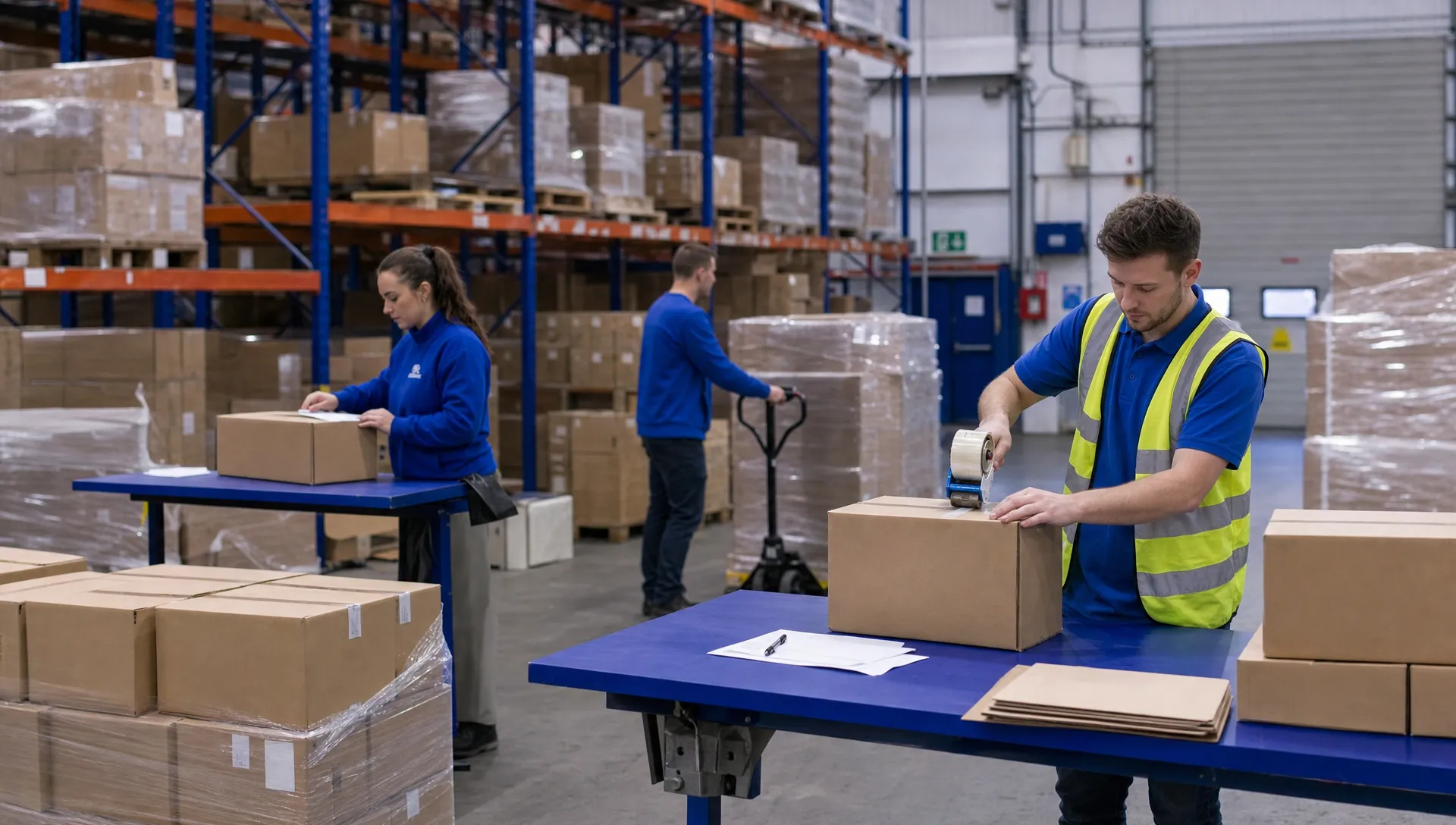
Picking is the physical process of selecting the goods from the warehouse. For wholesale orders, the picking method depends on the type of stock and the retailer's order format.
Some orders are simple full-pallet picks, where the warehouse moves complete pallets from racking or floor storage. Others involve case picking, where the team selects outer cartons from several SKUs. Mixed orders can be more complex, especially where different products need to be combined onto pallets in a sensible order.
In wholesale order fulfilment, accuracy is usually more important than pure speed. A retailer receiving centre may reject, delay or query deliveries where the wrong product, quantity or labelling has been supplied. The picking process should therefore include checks before the goods move to packing or staging.
Typical picking controls include barcode scanning, pick lists, location checks, batch checks and second-person verification for higher-risk orders. The right approach depends on the goods, order value and retailer requirements. A low-value full-case order may not need the same checking process as a mixed pallet of high-value products.
| Picking type | Best suited to | Main risk to control |
|---|---|---|
| Full-pallet picking | Bulk orders of one SKU | Wrong pallet or batch selected |
| Case picking | Orders made up of outer cartons | Quantity errors across multiple SKUs |
| Unit picking | Smaller wholesale or sample orders | Slower processing and mis-picks |
| Mixed-pallet picking | Retail replenishment or varied orders | Poor pallet build and hard-to-check loads |
Step 4: Packing for retailer requirements
Packing a wholesale order is not just about stopping goods from breaking in transit. The packaging also needs to match how the retailer receives, checks and processes stock.
For example, a retailer may expect cartons to be labelled on a particular side, pallets to stay under a certain height or mixed pallets to be clearly separated by SKU. Some goods need extra protection, some need batch details visible and some need plain outer packaging. If the order is going into a retail distribution centre, non-compliant packing can create avoidable delays.
This is why wholesale order fulfilment should include packing instructions that are documented and repeatable. The team should know whether goods are shipped as singles, inners, outers, display-ready cartons or palletised loads. They should also know what paperwork needs to travel with the shipment.
For retail brands, packing may overlap with co-packing or point-of-sale work. Products might need to be re-packed, bundled, labelled or assembled before dispatch. If you sell through supermarkets or high street retailers, this is especially relevant because your logistics process may need to support store-ready presentation as well as transport.
Step 5: Staging and checking before dispatch
After picking and packing, the order is usually moved to a dispatch or staging area. This is where the warehouse brings together everything that will travel on the same consignment.
Staging is a simple step, but it prevents many problems. It allows the team to confirm that the full order is present, the pallets or cartons match the paperwork and the goods are ready before the vehicle arrives. For larger orders, the warehouse may stage by retailer, delivery route, vehicle type or booking time.
Reliable wholesale order fulfilment uses this stage to catch issues before the load leaves the building. If a pallet label is missing, a carton count is wrong or the delivery paperwork has not printed correctly, it is much easier to fix it at dispatch than after the goods reach the retailer.
This is also where goods are prepared for transport. Pallets may be stretch wrapped, protected with corner boards, labelled and placed in the correct loading order. Cartons may be grouped, scanned and assigned to a carrier or vehicle route.
Step 6: Booking and delivering to the retailer
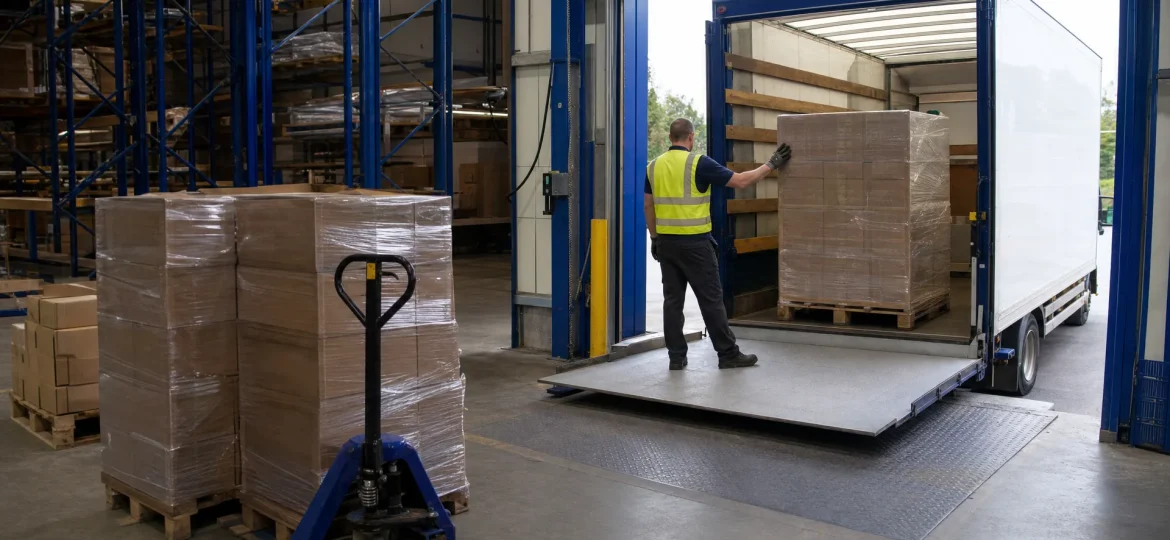
Retail deliveries often need more planning than consumer parcel deliveries. A retailer may have fixed booking slots, limited access, tail-lift requirements, pallet delivery rules or a distribution centre process that drivers must follow.
This is where transport planning becomes part of wholesale order fulfilment rather than a separate afterthought. The warehouse needs to know when the stock must arrive, what type of vehicle is suitable and whether the delivery point has any restrictions. A missed booking slot can mean waiting charges, rebooking delays or an unhappy buyer.
Transport options vary depending on order size. Smaller wholesale orders may travel by parcel or pallet network. Larger orders may need a dedicated van, rigid vehicle, artic or a vehicle with specific unloading equipment. The best choice depends on urgency, load size, delivery location and retailer expectations.
Gus Logistics supports businesses with B2B fulfilment in Cheshire and UK-wide distribution, combining warehouse handling with access to suitable transport options. This can be particularly useful when wholesale orders need both careful preparation and reliable delivery planning.
What can go wrong if the process is weak?
Wholesale orders expose weaknesses quickly. A small stock error that might affect one online customer can become a larger issue when a retailer is expecting multiple cases or pallets for a promotion, launch or replenishment cycle.
Poor wholesale order fulfilment often leads to the same types of problems: short shipments, wrong SKUs, unclear carton labelling, damaged goods, late deliveries, missing paperwork and slow response times when the retailer raises a query. These issues can damage trust, especially when the buyer has limited warehouse time or strict receiving procedures.
The cost is not always limited to the shipment itself. Your team may spend hours investigating what happened, arranging replacements or explaining the issue to the retailer. If the order is linked to a sales campaign, late stock can also mean missed revenue.
The practical fix is to design the process around checks rather than heroics. Clear order data, accurate stock records, documented packing requirements, careful staging and dependable transport planning all reduce the chance of errors reaching the retailer.
What to ask a 3PL about wholesale orders
If you are considering outsourcing, do not only ask for a price per order. Ask how the provider will manage the detail of your wholesale orders day to day. The cheapest option is rarely the best value if it creates retailer disputes or extra admin for your team.
A useful conversation should cover these points:
- Which systems can the 3PL integrate with?
- Can they handle bulk, pallet, case and mixed-SKU orders?
- How do they track stock, batches, serial numbers or best-before dates?
- Can they follow retailer-specific labelling and packing instructions?
- What happens if an order is short, delayed or queried?
- Can they manage both storage and transport from the same operation?
- Will you speak to people who understand your account, not a call centre?
Good wholesale order fulfilment should feel controlled, visible and practical. You should know where your stock is, what has been picked, what has shipped and who to speak to if something needs changing.
If you also sell direct to consumers, it is worth checking whether the same partner can support order fulfilment and pick and pack alongside wholesale dispatch. Many growing brands need both, especially when selling through their own website, marketplaces and retail accounts.
When outsourcing starts to make sense
Outsourcing is worth considering when wholesale orders start taking too much time away from sales, product development or account management. It can also help when you are running out of space, struggling with stock accuracy or facing retailer requirements that your current setup cannot handle reliably.
Wholesale order fulfilment becomes harder to manage in-house when order volumes are uneven. You may be quiet for several days, then receive a large retailer order that needs picking, packing and shipping quickly. A third-party logistics partner can provide warehouse space, trained people, systems and transport support without you having to build the whole operation yourself.
Gus Logistics is a family-run 3PL provider based in Nantwich, Cheshire, supporting eCommerce brands, manufacturers and product businesses across the UK. The team provides order fulfilment, pallet and bulk warehousing, same-day and next-day transport, co-packing, returns management and FSDU services. The business also offers integrations with 60+ platforms including Shopify, Amazon, eBay, WooCommerce and Magento, with no minimum volume requirements.
That combination is useful for businesses that need flexibility. You may need pallet storage now, wholesale dispatch next month and retail display preparation before a seasonal campaign. Working with one provider can reduce handovers and make the whole process easier to manage.
Frequently Asked Questions
How is wholesale fulfilment different from normal eCommerce fulfilment? Wholesale fulfilment usually involves larger order quantities, pallet or case picking, retailer delivery rules and stricter paperwork requirements. eCommerce fulfilment is more often focused on individual parcels sent directly to consumers.
Do wholesale orders always need to be palletised? No. Some wholesale orders ship as cartons, parcels or mixed consignments. The right format depends on order size, product type, retailer requirements and delivery method.
Can one 3PL handle both wholesale and direct-to-consumer orders? Yes, if the 3PL has the systems, storage setup and processes to manage both. This is useful for brands selling through websites, marketplaces, distributors and retailers at the same time.
What information should I provide before a wholesale order is picked? You should provide accurate SKUs, quantities, pack sizes, delivery address, required delivery date, retailer instructions, labelling rules and any batch or best-before requirements.
Why does wholesale order fulfilment need good stock visibility? Stock visibility helps prevent short shipments, overselling and last-minute delays. It also gives you a clearer picture of what is available for retail orders, eCommerce orders and future replenishment.
Need help with wholesale orders?
If your team is spending too much time picking, packing and chasing retail deliveries, Gus Logistics can help you build a more reliable process. To discuss wholesale order fulfilment, storage, transport or wider 3PL support, call 01270 335014 or get in touch through the contact page.
Looking for a Logistics Partner You Can Trust?
From warehousing and order fulfilment to transport and FSDU design - Gus Logistics handles it all from our base in Nantwich, Cheshire. Over 10 years experience, no minimum volumes, no long contracts.
