
How Can I Send Products to Shops Across the UK Without My Own Delivery Vans?
You can supply shops without owning a fleet by using retail distribution services UK-wide, from parcel couriers and pallet networks to dedicated vehicles. You pay another business to move your stock rather than buying vans, employing drivers and managing vehicle maintenance yourself.
The right arrangement depends on how much each shop orders, where the stock must go and what happens when the vehicle arrives. Sending two cartons to an independent retailer is a different job from delivering several pallets into a supermarket distribution centre. Start with those requirements, then choose the transport.
Which delivery option fits your shop orders?
There is no single delivery method that suits every retailer. You may need different services for small replenishment orders, bulk deliveries and urgent stock shortages.
| Delivery option | Usually suitable for | What to check before booking |
|---|---|---|
| Parcel courier | Smaller orders packed into individual cartons | Carton limits, tracking and whether the service meets the shop's receiving requirements |
| Pallet network | Palletised stock where a dedicated vehicle is unnecessary | Pallet dimensions, delivery windows and unloading arrangements |
| Dedicated vehicle | Time-sensitive, bulky or high-volume consignments | Vehicle capacity, access restrictions and responsibility for loading and unloading |
| Planned multi-drop route | Several shops supplied on an agreed route | Time allowed at each stop, delivery sequence and how delays will be handled |
When comparing retail distribution services UK-wide, choose by the delivery requirement rather than the cheapest headline price. A low-cost service is poor value if it cannot meet the retailer's booking slot or unload at the destination.
You can also use a third-party logistics provider, often called a 3PL, to coordinate storage, order preparation and transport. That is a wider arrangement than booking a carrier to collect goods you have already packed.
Would hiring a van solve the problem?
Van hire avoids vehicle ownership, but it does not remove the delivery work. The distinction is the same with other rentals: electric buggy hire on Terre-de-Haut provides a vehicle for your own travel, not someone to manage the journey for you.
For shop deliveries, renting a van still leaves you responsible for the driver, loading, route planning, insurance arrangements and failed drops. It can work for occasional local runs. Outsourced transport is the more relevant option when you want deliveries handled without taking yourself or an employee away from the business.
Confirm whether you are supplying shops or a distribution centre
Ask each retail customer where its orders must be delivered. The buyer's address is not necessarily the delivery address.
An independent shop may receive stock through its front entrance during opening hours. A retail chain might require deliveries to a regional distribution centre, where goods are received before being allocated to individual stores. Another customer may expect you to deliver directly to every branch.
The retail distribution services UK brands choose need to match that receiving model. Supplying one distribution centre can involve fewer destinations but stricter booking and labelling requirements. Direct-to-store deliveries can involve more stops, tighter access and different receiving hours at each location.
Get the retailer's delivery instructions before agreeing your service or pricing. Confirm the correct address, order reference, booking process, permitted delivery days and any requirements for cartons or pallets. Do not assume instructions for one chain apply to another.
Check unloading arrangements, not just the postcode
A vehicle reaching the shop is only part of the job. Someone must be able to receive and unload the goods safely.
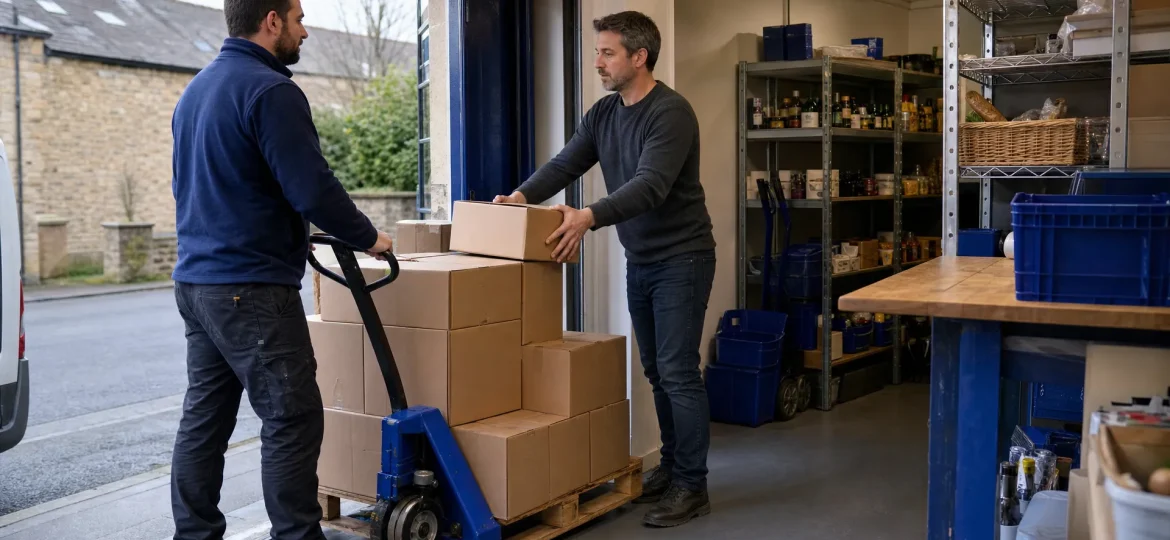
Check whether the destination has a loading bay, forklift or suitable area for a tail-lift delivery. A pallet truck needs an appropriate surface, so steps, gravel and uneven access can change what equipment is required. Also establish whether the delivery is to the kerbside, a loading area or an agreed location inside the premises.
Ask about vehicle size restrictions, pedestrianised streets and access times. A vehicle suitable for an industrial estate may not suit a small high street shop.
Loading and unloading responsibilities should be agreed in advance. The HSE's guidance on loading and unloading is a useful reference when planning safe arrangements with the carrier and receiving site.
Compare retail distribution services UK-wide on total cost
A transport quote only becomes useful when you know what it includes. Compare the full cost of completing the delivery, not simply a mileage rate or price per pallet.
Ask about collection, timed delivery, waiting time, additional stops and redelivery. Establish whether unloading equipment is included and what happens if the retailer refuses the goods. For Highlands, island or Northern Ireland destinations, request postcode-specific coverage, transit times and any additional requirements rather than assuming a mainland service applies.
The charging basis matters too. A parcel service may price by weight and dimensions, a pallet service by pallet specification and destination, and a dedicated vehicle by the job. Ask which changes would trigger a revised charge.
For example, two shops may each order one pallet, but one has a forklift and flexible receiving hours while the other needs a tail-lift vehicle within a short booking window. The handling requirements differ even though the stock quantity is identical.
Request quotes against the same delivery brief so you can make a fair comparison.
Agree delivery evidence and exception handling
Before booking, decide what confirmation you need after each drop. That could include a signed delivery record, recorded quantities or notes about damaged packaging and shortages.
Providers offering retail distribution services UK-wide should explain how you will hear about delays, refused deliveries and unsuccessful attempts. Ask who contacts the shop, who authorises waiting or redelivery costs and where undelivered goods go.
Do not treat proof of delivery as proof that every item was accepted without qualification. Check how discrepancies are recorded and obtain the provider's claims procedure, liability terms and insurance information. The value of your goods may require a separate conversation about cover.
A named operational contact is useful when a shop closes unexpectedly or cannot locate its order reference. Resolve that communication process before the vehicle leaves, not while it is waiting outside the premises.
Keep stock preparation aligned with shop orders
Transport cannot correct an order that contains the wrong products or arrives without the required labels. Give each retail order a clear reference and check product codes, case quantities and destination details before dispatch.
If you supply both shops and eCommerce customers, keep stock availability coordinated. Otherwise, units promised to a retailer can be sold online before the wholesale order is picked. Where products have batch numbers or best-before dates, specify any retailer requirements for traceability and remaining shelf life.
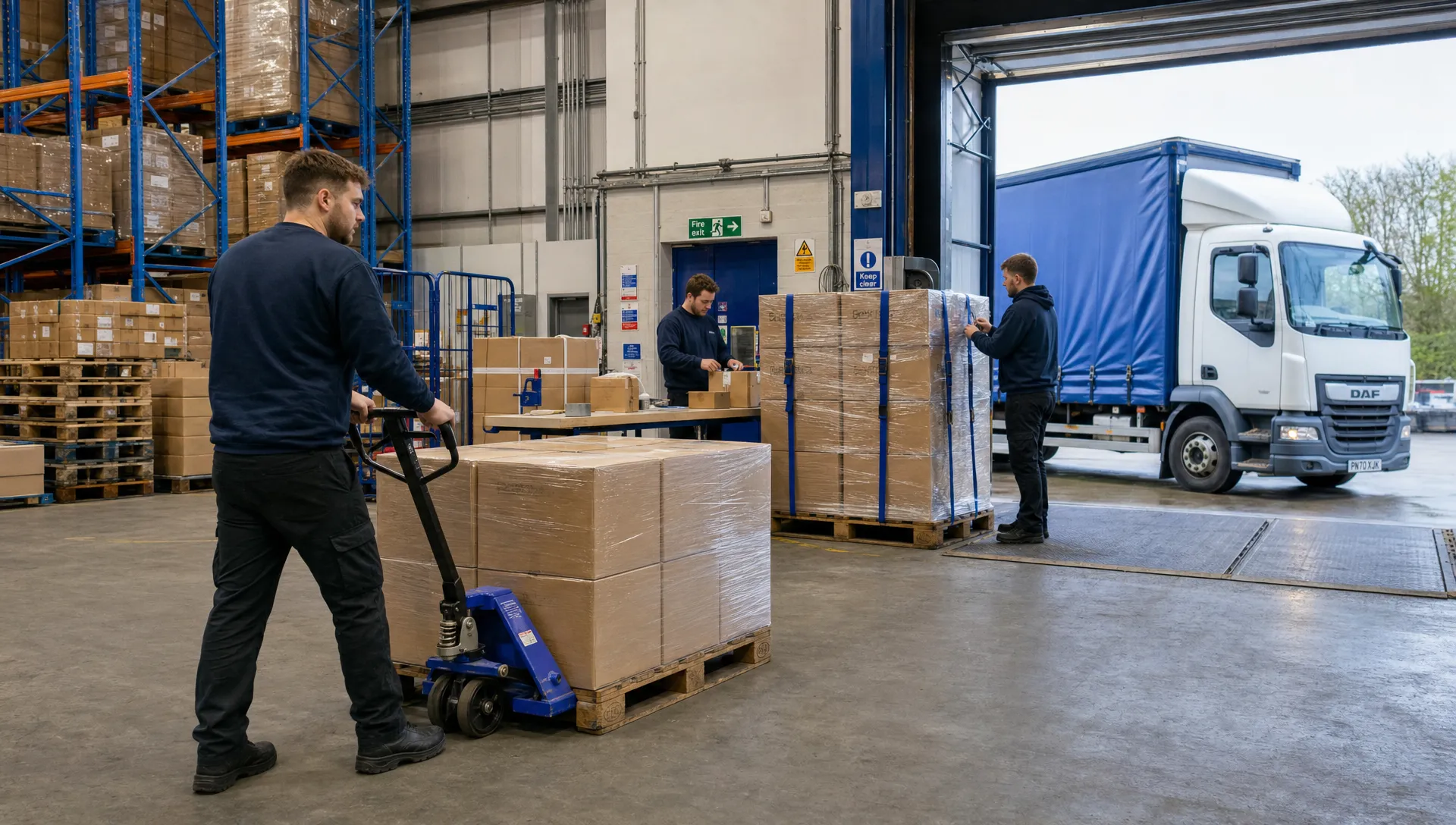
Using warehouse and pallet storage alongside transport can reduce handovers between separate sites. Ask how stock is received, allocated to orders and released for collection, and who checks the finished load.
For promotions involving free-standing display units, agree whether displays travel assembled, pre-filled or flat-packed. Their dimensions and handling needs can affect the vehicle and unloading plan.
Test the arrangement before adding more shops
Start with a representative group of destinations rather than moving every customer to a new arrangement at once. Include different order sizes and access conditions so the trial tests the service you actually need.
When reviewing retail distribution services UK-wide, measure successful delivery rather than dispatch alone. Check whether orders arrived within the agreed window, whether quantities matched and whether any extra charges arose. Record the reason for each failed or delayed drop so you can separate carrier issues from incorrect addresses, packing errors or unavailable receiving staff.
For regular replenishment, agree order deadlines and delivery days that both your business and the shops can maintain. Consolidating suitable orders may reduce unnecessary journeys, but it should not leave retailers short of stock.
If your immediate challenge is one unusually large consignment rather than an ongoing shop network, this guide to planning a large wholesale delivery covers the preparation involved.
What information should you send for a quote?
A clear brief lets a provider recommend the right vehicle and identify problems before collection. You do not need a complex document, but you do need accurate order and destination information.
Include the following details:
- Collection postcode, loading facilities and the date goods will be ready.
- Delivery postcodes, site contacts and whether each destination is a shop or distribution centre.
- Number of cartons or pallets, with dimensions, weights and whether loads can be stacked.
- Product handling requirements, including fragility, temperature needs or restricted goods where relevant.
- Receiving hours, booking slots, access restrictions and unloading equipment required.
- Expected frequency, likely changes in volume and any returns or refused-stock arrangements.
The quotes you receive for retail distribution services UK-wide will be more comparable when every provider receives the same information. If volumes are uncertain, share a realistic range and ask how the price changes, rather than presenting an optimistic forecast as a commitment.
How Gus Logistics can support deliveries to shops
Gus Logistics is a family-run 3PL provider based in Nantwich, Cheshire, with over 10 years of experience supporting product businesses across the UK. Its same-day and next-day transport services give businesses an alternative to operating their own delivery vehicles.
The available fleet includes vans, 7.5t, 18t and 26t rigid vehicles, artics and Moffetts, alongside access to more than 5,000 vehicles across the UK and Europe. The appropriate vehicle and handling arrangements should be agreed against your delivery brief.
For businesses needing more than transport, Gus Logistics also provides pallet storage, order fulfilment, co-packing, returns management and FSDU design, manufacture, pre-fill and dispatch. These services can support the preparation stages as well as the final journey.
There are no minimum volume requirements, and customers speak directly to the people handling their freight rather than a call centre. Discuss your destinations, order pattern and retailer requirements to establish the right arrangement.
Frequently asked questions
Can I outsource deliveries if I only supply a few shops? Yes. You can book suitable parcel, pallet or dedicated transport without owning a fleet. When comparing retail distribution services UK-wide, check minimum charges and commitments. Gus Logistics has no minimum volume requirements.
Do my products have to go into a warehouse first? No. A transport provider can collect prepared goods from your premises. Warehousing becomes useful when you also need someone to hold stock, prepare orders or coordinate regular replenishment.
Can one provider handle both shops and online customers? A 3PL may support both, but the requirements differ. Retail orders can need case quantities, pallet preparation and delivery bookings, while individual eCommerce orders usually require parcel picking and packing. Confirm both workflows explicitly.
What happens if a shop refuses a delivery? Follow the agreed exception process. The driver or transport team should record the reason and contact the authorised person. Confirm in advance who decides whether goods are returned, held or delivered again, and who pays the associated charges.
Discuss your shop delivery requirements
You do not need your own vans to supply retailers, but you do need a delivery arrangement that fits their receiving rules. Call 01270 335014 to discuss your collection point, shop destinations and expected volumes with Gus Logistics.
Looking for a Logistics Partner You Can Trust?
From warehousing and order fulfilment to transport and FSDU design - Gus Logistics handles it all from our base in Nantwich, Cheshire. Over 10 years experience, no minimum volumes, no long contracts.
