
How Do I Deliver Products That Are Too Large for a Normal Parcel Courier?
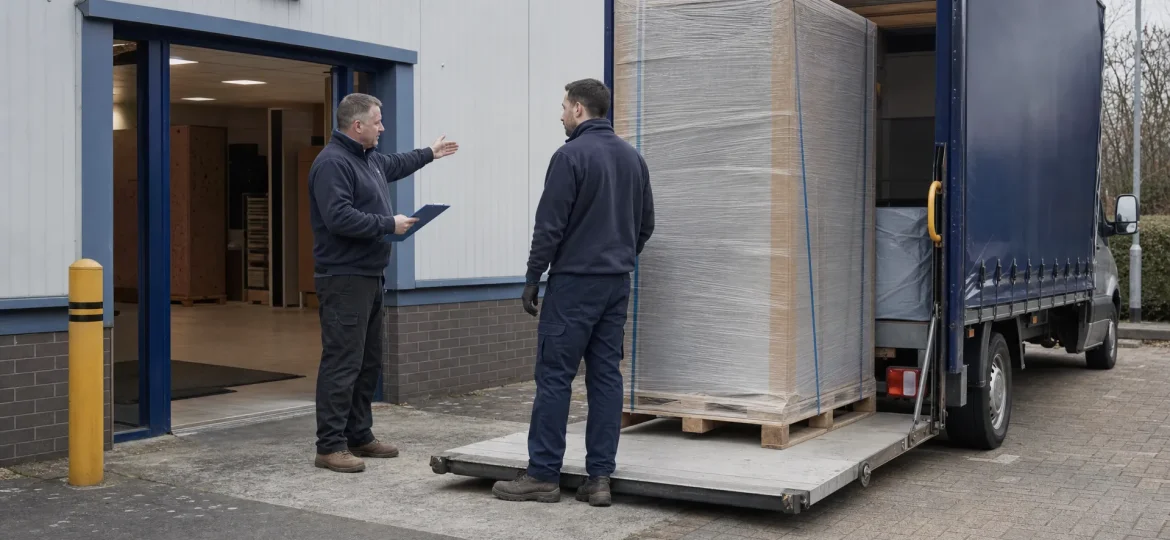
Arranging oversized goods delivery UK-wide starts with choosing a service that fits the packed product, the loading arrangements and the customer's address. If a normal parcel courier has rejected your goods, the practical alternatives are usually a pallet service, a dedicated vehicle or a specialist bulky-item delivery service.
The right choice depends on more than weight. A lightweight but awkwardly shaped item can be harder to transport than a heavy, compact box. Before booking, establish the finished dimensions, how the goods will be loaded and exactly where the customer expects them to be left.
Why a normal parcel courier may reject your product
Parcel services set limits on weight, length and overall dimensions. Some also restrict particular shapes, packaging types or products that cannot travel safely through their handling system.
Your goods might be unsuitable because they are too long, cannot be stacked or have exposed parts that could catch during handling. An assembled display unit, for example, presents different risks from the same components packed flat.
Check the limits for the exact service you intend to book. A courier's heavy-parcel option does not necessarily accept a particularly long or fragile item. Equally, being within the weight limit does not mean the packaging is suitable.
If the packed product exceeds those limits, do not enter smaller dimensions to get a booking accepted. Give the carrier accurate information and ask for a suitable freight option instead. This avoids collection refusals, unexpected charges and goods travelling through an unsuitable network.
Choosing oversized goods delivery UK-wide
Start by matching the product to the delivery method, rather than looking for a larger version of your usual parcel service.
| Delivery option | When it may suit your goods | What to confirm before booking |
|---|---|---|
| Pallet service | Products that can be secured safely to an accepted pallet base | Packed footprint, height, weight, overhang and unloading arrangements |
| Dedicated van or lorry | Awkward shapes, urgent movements or goods needing a direct journey | Usable load space, payload, securing points and handling equipment |
| Two-person delivery service | Bulky products requiring an assessed two-person handling plan | Crew provision, access restrictions and agreed delivery position |
| Specialist freight service | Unusually large, heavy or technically demanding loads | Vehicle suitability, route assessment and any specialist lifting requirements |
A pallet can make a compact machine easier to handle, but it will not automatically make an unstable or poorly protected product safe. Long items may need a purpose-made stillage or crate, with the dimensions approved before collection.
A dedicated vehicle can reduce transfers between vehicles, but it still needs suitable restraint and protection. It also does not automatically include a second person or lifting equipment.
For oversized goods delivery UK-wide, the deciding question is often whether the product can travel safely through a shared network or needs a vehicle and handling plan built around it.
Measure the packed goods and plan the packaging
Record the dimensions the carrier will actually receive
Measure after adding the pallet, crate, corner protection and any other packaging. Include protruding handles, legs and fittings. Give the carrier the total weight, including the transport packaging, rather than the product's catalogue weight.
For multiple pieces, provide the dimensions and weight of each handling unit. Saying “three items, 120kg in total” does not tell a planner whether those items will fit through a vehicle's doors or can be unloaded safely.
Photographs help, particularly when a product has an unusual shape, a high centre of gravity or limited lifting points. Show the finished pack as well as any handling restrictions.
Protect against movement, not just scratches
Packaging needs to protect the goods during lifting, braking and cornering. Stretch wrap can hold protective materials together, but it is not a substitute for securing a product to its base.
Fragile surfaces may need cushioning or a crate. Components that could move should be restrained using a method appropriate to the product. Check whether the item can bear weight above it and declare it as non-stackable if necessary.
When booking oversized goods delivery UK-wide, ask the carrier to approve any unusual packaging before dispatch. This is particularly useful for a first shipment or a new product line.
Confirm access and unloading before accepting the booking
A product fitting inside the vehicle is only half the job. The delivery can still fail if the vehicle cannot reach the address or the recipient cannot unload it.
Check both collection and delivery access
Ask about narrow roads, low entrances, restricted turning space, delivery time restrictions and loading bays. A large lorry may not be suitable for a residential cul-de-sac or a small shop on a busy high street.
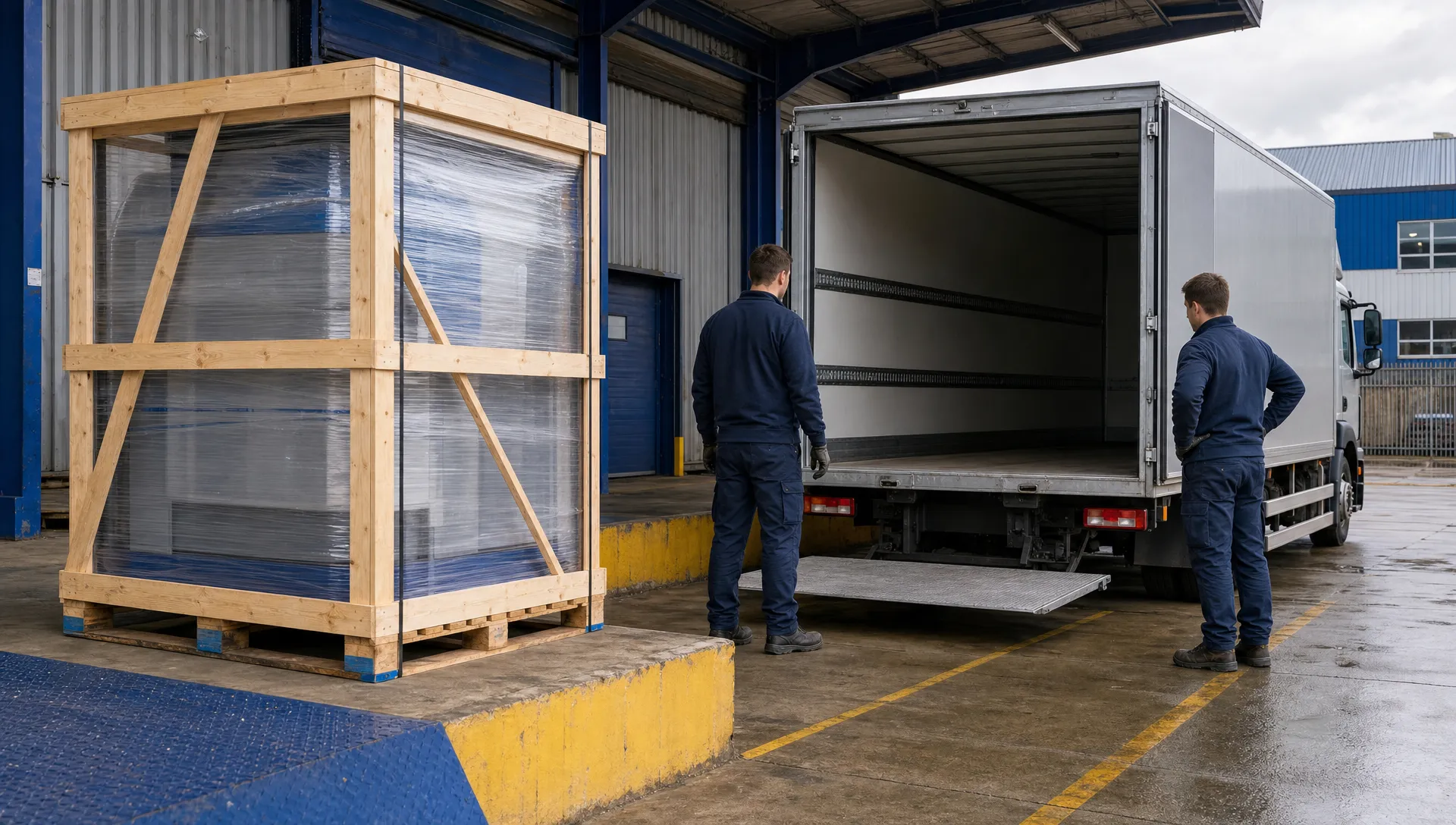
Establish what equipment is available at each end. A delivery address with a forklift is different from a home address with no handling equipment. Do not assume that a tail lift solves every problem: its platform dimensions and safe working capacity must suit the load, and the unloading surface must be suitable.
Pallet trucks generally need firm, reasonably level ground. Gravel, steps and steep slopes can prevent the planned unloading method from working.
Access details should form part of every oversized goods delivery UK-wide booking, not be left for the driver to discover on arrival.
Agree where the goods will be left
Kerbside delivery, delivery to a threshold and placement inside a building are different services. Confirm the agreed delivery point in writing, especially for residential customers.
If stairs, long carrying distances or awkward positioning are involved, discuss them before quoting the customer. The guide to which products need two-man delivery explains why handling requirements depend on access and product shape as well as weight.
Installation is another separate responsibility. A specialist such as TapTech, which provides sump pump installation in Kingston, Canada, assesses equipment and site conditions before fitting. If you supply pumps or similar equipment, make it clear whether your offer covers delivery only or includes separately arranged installation.
What affects the cost of delivering oversized products?
There is no reliable flat price without knowing the load and the route. Two products with the same weight can have very different transport costs if one takes up much more vehicle space or needs specialist handling.
The main pricing factors include the collection and delivery postcodes, packed dimensions, total weight and required service speed. Non-stackable goods can also affect how efficiently a vehicle can be loaded. Where relevant, a carrier may price using volumetric weight or another measure of the space occupied.
For oversized goods delivery UK-wide, compare quotes against the same written specification. One price may cover kerbside unloading during normal delivery hours, while another includes a dedicated vehicle or an agreed appointment.
Ask whether the price includes VAT, tail-lift provision, waiting time and any charges for failed delivery or redelivery. Check whether the quote assumes that a forklift will be available.
Also check liability and goods-in-transit cover. Ask what is covered, what exclusions apply and whether the settlement basis meets your needs. Declaring a product's value does not, by itself, confirm that the full replacement cost is protected.
Send a complete brief to get a usable quote
A clear brief lets the transport provider assess the job rather than guess. It also makes competing quotes easier to compare.
Provide the following information together:
- Collection and delivery postcodes, with site contacts and opening hours.
- Product description, number of handling units and photographs where useful.
- Packed length, width, height and total weight of each unit.
- Packaging type, stackability and any restrictions on tilting or lifting.
- Loading equipment at collection and unloading equipment at delivery.
- Access restrictions, required delivery position and any appointment requirement.
- Collection readiness, delivery deadline and declared goods value.
If anything remains unknown, say so. An estimated weight or unconfirmed access arrangement should not be presented as a checked fact.
Once the quote is agreed, make sure the same details appear on the booking. For oversized goods delivery UK-wide, a complete handover between your sales team, warehouse and carrier helps prevent promises being made that the booked service cannot meet.
Make repeat oversized deliveries easier to manage
If bulky products are a regular part of your range, create a delivery specification for each product in its finished packaging. Record the approved packing method, dimensions, weight and normal handling requirements.
Your checkout or sales process should also collect the access details that affect service selection. Customers need to know whether delivery is kerbside before they buy, not when the vehicle arrives.
Where stock is held away from your own premises, warehouse storage with stock tracking can support a more consistent dispatch process. Confirm that the storage provider can accommodate your products' dimensions and prepare them for the agreed transport method.
Plan returns at the same time. A customer may no longer have the original crate or pallet, so a collection can require different packaging and handling arrangements from the outbound journey.
Frequently asked questions
Does Royal Mail deliver large parcels? Royal Mail accepts parcels within the limits of the selected service. Check Royal Mail's current UK sending options against your packed dimensions, weight and contents. Products outside those limits need a different service, such as pallet transport or a suitable dedicated vehicle.
Can I book a private courier for one oversized item? Yes, a dedicated courier or transport provider may accept a single item, subject to vehicle suitability and handling requirements. Give them the full packed measurements and explain how it will be loaded and unloaded.
Can a pallet delivery be taken inside the customer's property? Do not assume so. Confirm the delivery point before booking. Indoor placement, stairs and unpacking need to be discussed explicitly rather than treated as part of a standard pallet delivery.
Do very large products need abnormal-load transport? Some unusually wide, long or heavy loads require specialist assessment. Ask the provider to check the load, route and applicable requirements rather than assuming a larger lorry is sufficient.
Discuss the right transport option with Gus Logistics
Gus Logistics provides same-day and next-day transport using its own fleet of vans, rigid vehicles and artics, alongside access to a wider vehicle network. Based in Nantwich, Cheshire, the family-run team supports businesses across the UK with no minimum volume requirement.
If you need oversized goods delivery UK-wide, share the packed dimensions, weight, postcodes and unloading arrangements so the team can assess a suitable option. Any specialist handling or delivery-position requirements should be agreed before booking.
Call 01270 335014 to discuss your oversized product and get a transport quote from Gus Logistics.
Looking for a Logistics Partner You Can Trust?
From warehousing and order fulfilment to transport and FSDU design - Gus Logistics handles it all from our base in Nantwich, Cheshire. Over 10 years experience, no minimum volumes, no long contracts.
