
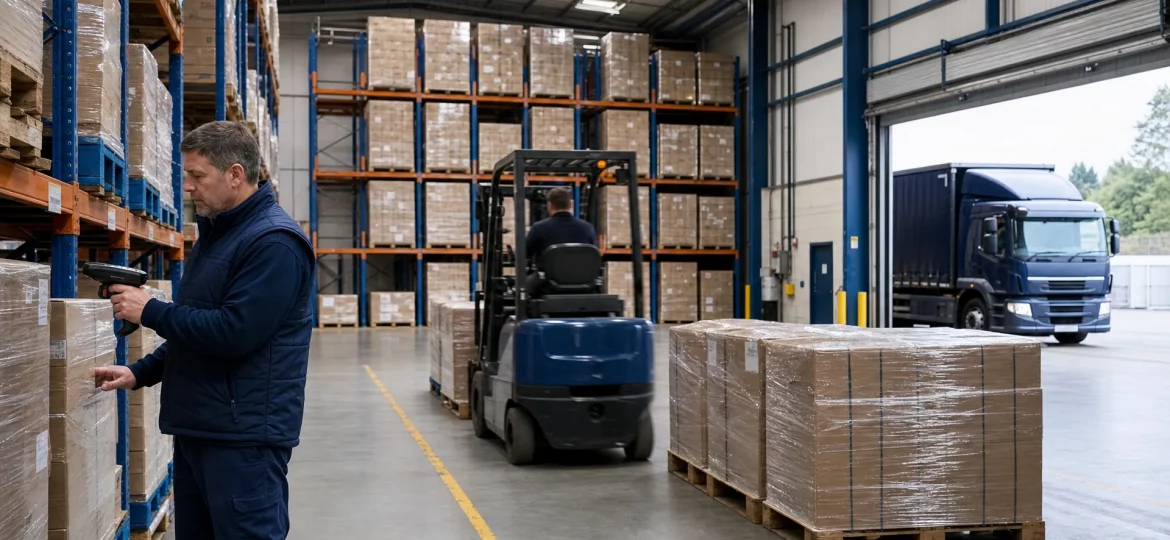
How eCommerce Fulfilment Services Support Faster Growth
Growth in eCommerce rarely fails because a brand has too many customers. More often, it slows because the operation behind the brand cannot keep up. Orders take longer to leave the building, stock records become unreliable, customer service spends more time chasing parcels, and the owner or operations manager ends up fixing warehouse problems instead of planning the next stage of growth.
That is where eCommerce fulfilment services can make a real difference. A good fulfilment partner does more than pick, pack and post orders. It gives your business the space, systems, people and transport links needed to sell more without building a full logistics operation from scratch.
For growing product businesses, the question is not simply whether outsourcing saves time. The bigger question is whether fulfilment can remove the operational ceiling that is stopping you from scaling.
The hidden growth ceiling in in-house fulfilment
In-house fulfilment often starts sensibly. You store stock in a spare room, small unit or back office. You print labels, pack orders, book courier collections and keep an eye on stock in a spreadsheet. At low volumes, that can work well enough.
The pressure builds when order volume rises, SKU ranges expand, marketplaces are added, and customers expect faster delivery. Each order now involves more decisions. Is the stock available? Is it in the right location? Which sales channel did the order come from? Which carrier should handle it? Does the product need special packing? Is the delivery promise still achievable today?
This is why fulfilment becomes a growth issue, not just an admin task. If every extra sale creates more manual work, growth becomes harder to sustain. Outsourcing to a specialist can bring receiving, storage, pick and pack, dispatch and returns into one controlled flow. For online retailers that need a more scalable setup, professional order fulfilment services can help turn a manual operation into a repeatable process.
Faster dispatch gives you more room to sell
Customers do not usually see your warehouse. They see delivery speed, tracking updates, packaging quality and whether the right product arrives on time. If your fulfilment operation is slow, it limits what your business can confidently promise at checkout.
Faster dispatch supports growth in several practical ways. It allows you to offer stronger delivery options, handle promotional spikes more smoothly, and reduce the number of customer service queries asking where an order is. It also helps when selling through marketplaces, where late dispatch and delivery issues can affect account performance and customer feedback.
The real benefit is confidence. When you know orders can be processed quickly and accurately, you can run campaigns, launch new products, accept larger order volumes and push seasonal sales without worrying that the warehouse will become the bottleneck.
Better stock control supports better decisions
Fast growth can expose weak stock control very quickly. You may sell products that are not actually available, miss opportunities because bestsellers are out of stock, or tie up cash in slow-moving items because stock reports are not reliable.
A fulfilment partner should give you a clearer picture of what is in stock, where it is stored and what is moving. This matters because growth depends on decisions. You need to know when to reorder, when to slow down advertising on low-stock items, and which products are worth expanding.
For brands holding larger quantities, flexible pallet and bulk storage can sit alongside order fulfilment so stock does not have to be split between disconnected locations. When storage and fulfilment work together, it becomes easier to replenish picking stock, manage peaks and keep operations organised.
| Growth pressure | Risk if handled manually | How fulfilment services help |
|---|---|---|
| Sudden order spikes | Late dispatch, overtime and packing errors | More structured processes and extra operational capacity |
| More SKUs | Misplaced stock and wrong items picked | Clear stock locations and better warehouse controls |
| Multiple sales channels | Orders copied between systems by hand | Platform integrations reduce manual admin |
| Seasonal demand | Temporary chaos and poor customer experience | Scalable storage, picking and dispatch support |
| Returns | Products sit unchecked and unavailable for resale | A defined returns process helps stock move back into use |
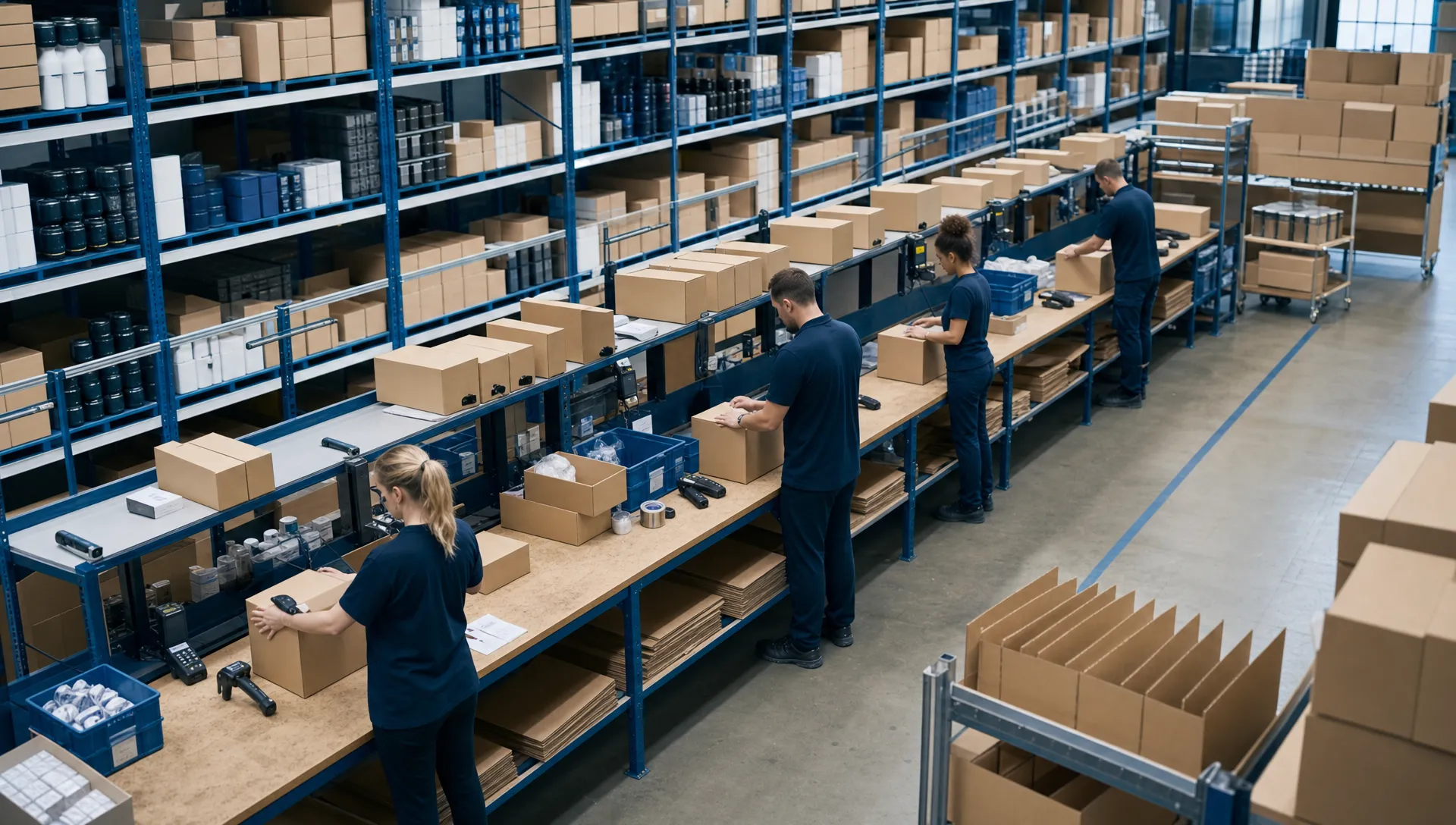
Integrations stop admin becoming the bottleneck
Manual order processing can quietly hold back growth. Copying orders from Shopify, Amazon, eBay, WooCommerce or Magento into spreadsheets and courier systems may be manageable at first, but it becomes risky as volume increases.
Every manual step creates a chance for error. An address can be copied incorrectly. A product option can be missed. A label can be printed for the wrong service. These mistakes cost time, create customer frustration and make growth feel messy.
Modern eCommerce fulfilment services reduce this admin by connecting sales channels to the fulfilment operation. Orders flow into the warehouse process, stock updates can be reflected more quickly, and the team has the information needed to pick, pack and dispatch without waiting for someone in the office to move data around.
This is especially valuable when a business sells through several channels at once. Instead of treating each platform as a separate workload, integrated fulfilment brings them into one operational process.
Transport capacity helps growth beyond parcel delivery
Not every growth opportunity is a single parcel order. Many eCommerce brands eventually need to move cartons, pallets, wholesale orders, retail replenishment stock, event stock or urgent replacement consignments.
If your fulfilment and transport are disconnected, these jobs can become time-consuming to arrange. You may need one supplier for parcels, another for pallets, and another for urgent same-day work. That can make planning harder and slow down opportunities.
A fulfilment provider with strong transport capability can support a broader range of growth needs. For example, access to same-day and next-day transport services can help when stock needs to move quickly between sites, retailers, customers or fulfilment locations. This gives growing businesses more flexibility than relying on parcel carriers alone.
Scalable fulfilment protects cash and focus
Building your own warehouse operation can involve fixed costs before you know exactly how demand will develop. You may need more space, racking, equipment, systems, insurance, recruitment and management time. During busy periods, that space may still feel too small. During quieter periods, you may be paying for capacity you do not need.
Outsourced fulfilment gives businesses a different route. Rather than investing heavily in infrastructure, you can use an established operation and scale support as demand changes. This is useful for brands with seasonal peaks, product launches, wholesale opportunities or uncertain growth forecasts.
There is also a management benefit. When the owner or operations manager is not spending each day solving packing, stock and courier problems, they can focus on higher-value work. That might include product development, marketing, supplier negotiation, retail partnerships, customer retention or improving margins.
In other words, fulfilment services support faster growth not only by moving parcels quickly, but by giving leadership teams time back.
Signs your business may be ready to outsource fulfilment
There is no single order volume that proves it is time to outsource. The right time depends on your product type, team size, storage needs, delivery promises and growth plans. However, there are clear signs that fulfilment may be starting to restrict the business.
- Orders regularly take evenings, weekends or extra temporary labour to clear.
- Stock records do not always match what is physically available.
- Promotions create backlogs that take days to recover from.
- You are running out of space for stock, packing materials or returns.
- Customer service is spending too much time chasing delivery updates.
- You want to add marketplaces, wholesale orders or new product ranges.
- You are avoiding marketing activity because you are unsure the operation can cope.
If several of these sound familiar, the issue may not be demand. It may be operational capacity.
How to choose the right eCommerce fulfilment company
Choosing an eCommerce fulfilment company should not be based on the lowest pick fee alone. Cheap fulfilment can become expensive if it leads to slow dispatch, poor communication, inaccurate stock records or limited support when something goes wrong.
A better approach is to look at the whole operation. Ask how orders are received, how stock is tracked, what delivery services are available, how returns are handled, and who you speak to when there is an urgent issue. The answers will tell you whether the provider can support growth or simply process today’s orders.
Key questions to ask include:
- Which eCommerce platforms and marketplaces can be integrated?
- What dispatch cut-off times are available?
- How will I see stock levels and order progress?
- Can storage scale up during peak periods?
- Are there minimum order volumes or long commitments?
- How are returns received, checked and made available for resale?
- Can the provider support parcels, pallets and urgent transport if needed?
The right partner should make your operation feel clearer, not more complicated.
How Gus Logistics supports growth-focused eCommerce brands
Gus Logistics is a family-run 3PL provider based in Nantwich, Cheshire, supporting eCommerce brands, manufacturers and product businesses across the UK. For growing businesses, its value lies in combining fulfilment, warehousing and transport under one practical logistics operation.
For order fulfilment, Gus Logistics integrates with 60+ platforms including Shopify, Amazon, eBay, WooCommerce and Magento. Late cut-offs up to 10pm and next-day dispatch are available, helping brands keep pace with customer expectations and campaign peaks.
For storage, Gus Logistics offers racked and floor storage with real-time WMS tracking through a client portal. Batch, serial number and best-before date tracking are also available where products require tighter stock control.
For transport, Gus Logistics operates its own fleet of vans, 7.5t, 18t and 26t rigids, artics and Moffetts, with access to 5,000+ vehicles UK and Europe-wide. Its location near the M6, M56 and M62 supports fast movement across the North West and wider UK.
Just as importantly, Gus Logistics has no minimum volume requirements, provides same-day quotes as standard, and has no call centres. Customers speak directly to the people handling their freight and fulfilment. For SMEs that want practical UK logistics services without unnecessary complexity, that direct approach can make scaling feel much more manageable.
Frequently Asked Questions
How do eCommerce fulfilment services support faster growth? They remove operational bottlenecks by handling storage, picking, packing, dispatch, stock visibility and returns in a more structured way. This helps businesses sell more without every extra order creating more manual work.
When should an eCommerce business outsource fulfilment? It is worth considering when order processing is taking too much time, stock accuracy is becoming difficult, delivery promises are harder to keep, or growth plans are being delayed because the current setup cannot cope.
Will outsourcing fulfilment mean losing control? Not if you choose the right provider. Good fulfilment partners offer clear communication, stock visibility and agreed processes so you can keep oversight while removing the day-to-day handling burden.
Can fulfilment services help with seasonal peaks? Yes. A scalable fulfilment setup can provide extra operational capacity during busy periods, such as product launches, Black Friday, Christmas trading or promotional campaigns.
Do small eCommerce brands need a fulfilment partner? Not always, but many small brands benefit once fulfilment starts taking time away from sales, product development or customer service. A provider with no minimum volume requirements can be useful for brands that want support before they become large.
If growth is being slowed by packing, stock control, storage limits or delivery pressure, it may be time to review your fulfilment setup. Gus Logistics can help you understand your options and build a practical plan for the next stage of growth. Call 01270 335014 or get in touch through the Gus Logistics contact page.
Looking for a Logistics Partner You Can Trust?
From warehousing and order fulfilment to transport and FSDU design - Gus Logistics handles it all from our base in Nantwich, Cheshire. Over 10 years experience, no minimum volumes, no long contracts.
