
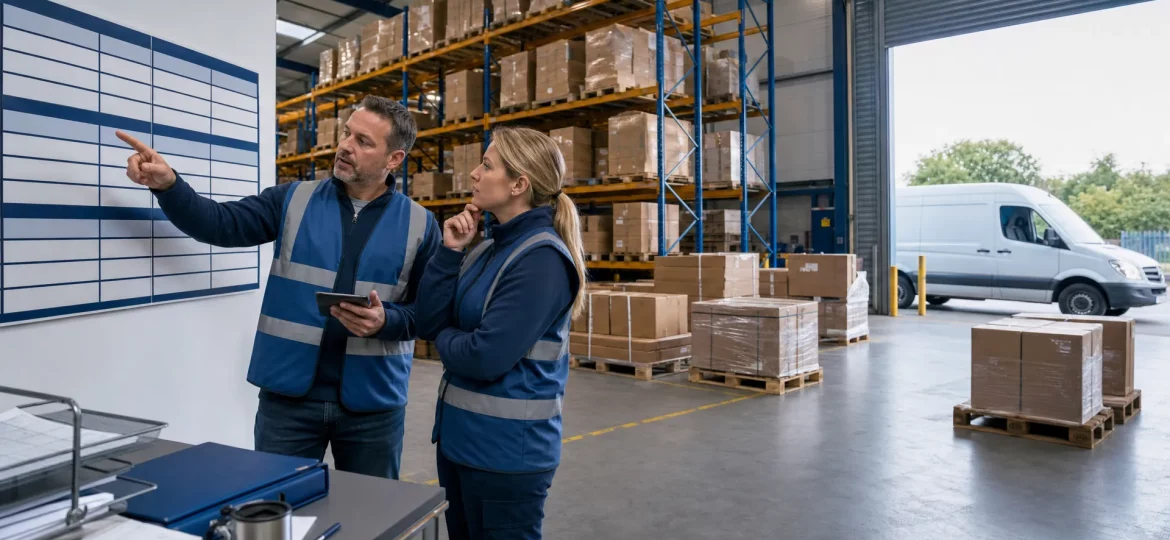
What Third Party Logistics Companies Do Day to Day
If you are thinking about outsourcing logistics, the big question is not just what a 3PL can offer. It is what actually happens to your stock, orders and deliveries once another company is handling them every day.
Good third party logistics companies do far more than store pallets in a warehouse. Their day is a constant mix of planning, receiving, checking, picking, packing, dispatching, problem-solving and keeping clients informed. When it works well, your customers simply receive the right items on time. Behind the scenes, there is a lot of coordination making that happen.
This guide explains what third party logistics companies do day to day, in practical terms, so you know what to expect before you outsource.
A 3PL is an operational partner, not just a storage provider
A third party logistics company, often called a 3PL, manages logistics tasks on behalf of another business. For an eCommerce brand, that might mean storing products, picking online orders, packing parcels and handing them to couriers. For a manufacturer, it might mean pallet storage, inbound handling, stock control and onward transport. For a retail brand, it might include co-packing, FSDU preparation and timed deliveries into retail networks.
The key point is that a 3PL sits between your stock and your customer. That position makes accuracy, communication and process discipline essential. A small stock error in the warehouse can become a customer complaint, a missed retail booking or a delayed production schedule.
The daily rhythm inside a 3PL operation
Every 3PL works slightly differently, but most follow a similar daily pattern. The pace changes depending on order volume, inbound deliveries, courier collection times and client priorities.
| Daily activity | What the 3PL is doing | Why it matters to your business |
|---|---|---|
| Planning the day | Reviewing inbound deliveries, orders, staffing, vehicles and collection cut-offs | Prevents bottlenecks before they affect customers |
| Goods in | Receiving, checking and booking stock into the system | Keeps inventory accurate from the start |
| Storage management | Putting stock into the right locations and monitoring availability | Makes picking faster and reduces errors |
| Order fulfilment | Picking, packing, labelling and preparing orders for dispatch | Ensures customers receive the right products on time |
| Transport coordination | Booking courier collections, routing vehicles and managing delivery updates | Keeps goods moving through the network |
| Exceptions and returns | Handling damaged stock, shortages, failed deliveries and returns | Protects service levels when things do not go to plan |
| Reporting and communication | Updating stock records, order statuses and client queries | Gives you visibility without needing to be on site |
The best 3PLs spend as much time preventing issues as they do reacting to them. That means checking stock, asking questions early and keeping systems updated throughout the day.
Goods in: receiving stock properly
A typical warehouse day often starts with incoming stock. This could be pallets from a UK supplier, containers from overseas, cartons from a manufacturer or returns coming back from customers.
The receiving team will usually check what has arrived against the information provided by the client. That might include a purchase order, delivery note, SKU list or advance shipping notice. They will look for visible damage, count cartons or pallets, confirm product codes and flag anything unexpected.
This step is easy to underestimate. If stock is booked in incorrectly, every later stage becomes harder. Orders may be accepted for products that are not actually available. The wrong batch may be picked. Pallets may sit in the wrong location. A good goods-in process reduces these risks before stock enters the live operation.
For businesses with traceability requirements, the 3PL may also record batch numbers, serial numbers or best-before dates. This is particularly important for products where rotation, compliance or recall control matters.
Once checked, stock is booked into the warehouse management system and made available for storage, fulfilment or onward transport.
Storage: keeping stock organised and available
Warehousing is not just about finding empty space. Day to day, a 3PL needs to know exactly where stock is, how much is available, whether any items are reserved, and which products need special handling.
That means stock is assigned to specific warehouse locations, such as pallet racking, bulk floor storage, pick faces or packing areas. The system should reflect the physical layout, so the warehouse team can find products quickly and clients can see accurate stock information.
For businesses that need flexible space, outsourced warehouse storage can be more practical than taking on a larger unit, hiring staff and managing equipment in-house. It also helps when stock levels rise and fall through the year.
On a normal day, warehouse teams may be moving pallets, replenishing pick locations, rotating stock, completing cycle counts and investigating discrepancies. These tasks are not always visible to the end customer, but they are what keep the operation stable.
Order fulfilment: turning orders into dispatched parcels
For eCommerce businesses, order fulfilment is often the most visible part of a 3PL relationship. Orders arrive from sales channels, the warehouse picks the products, packs them correctly, applies labels and hands them to the right carrier.
A well-run order fulfilment process depends on clean order data. The 3PL needs accurate customer addresses, SKU codes, shipping rules, packaging instructions and any special requirements such as gift notes, inserts or fragile handling.
The daily fulfilment workflow usually includes order import, pick list creation, picking, checking, packing, labelling and dispatch confirmation. In a busy operation, orders may be grouped into waves so the warehouse can pick efficiently while still meeting carrier cut-offs.
Accuracy matters at every stage. Picking the wrong product costs money twice. First, there is the cost of the incorrect dispatch. Then there is the return, replacement, customer service time and possible damage to the customer relationship.
A practical 3PL will build checks into the process, especially where products look similar, bundles are involved or orders include multiple SKUs.
Transport: getting goods where they need to go
Not every 3PL stops at warehouse fulfilment. Many also manage transport, from parcel carrier handovers to dedicated vehicle movements.
Day to day, transport work can include planning routes, allocating vehicles, booking collections, preparing paperwork, sending delivery updates and resolving issues such as access problems or failed delivery attempts. For palletised goods, retail deliveries or urgent stock movements, this can be just as important as the warehouse work itself.
Businesses often turn to same-day and next-day transport when they need more control than a standard parcel network can provide. That might be a time-sensitive delivery to a customer, a pallet movement between sites or stock that needs to reach a retailer before a booking window closes.
The operational skill is in matching the job to the right transport option. A small parcel, a pallet, a full load and an urgent retail delivery all need different planning.
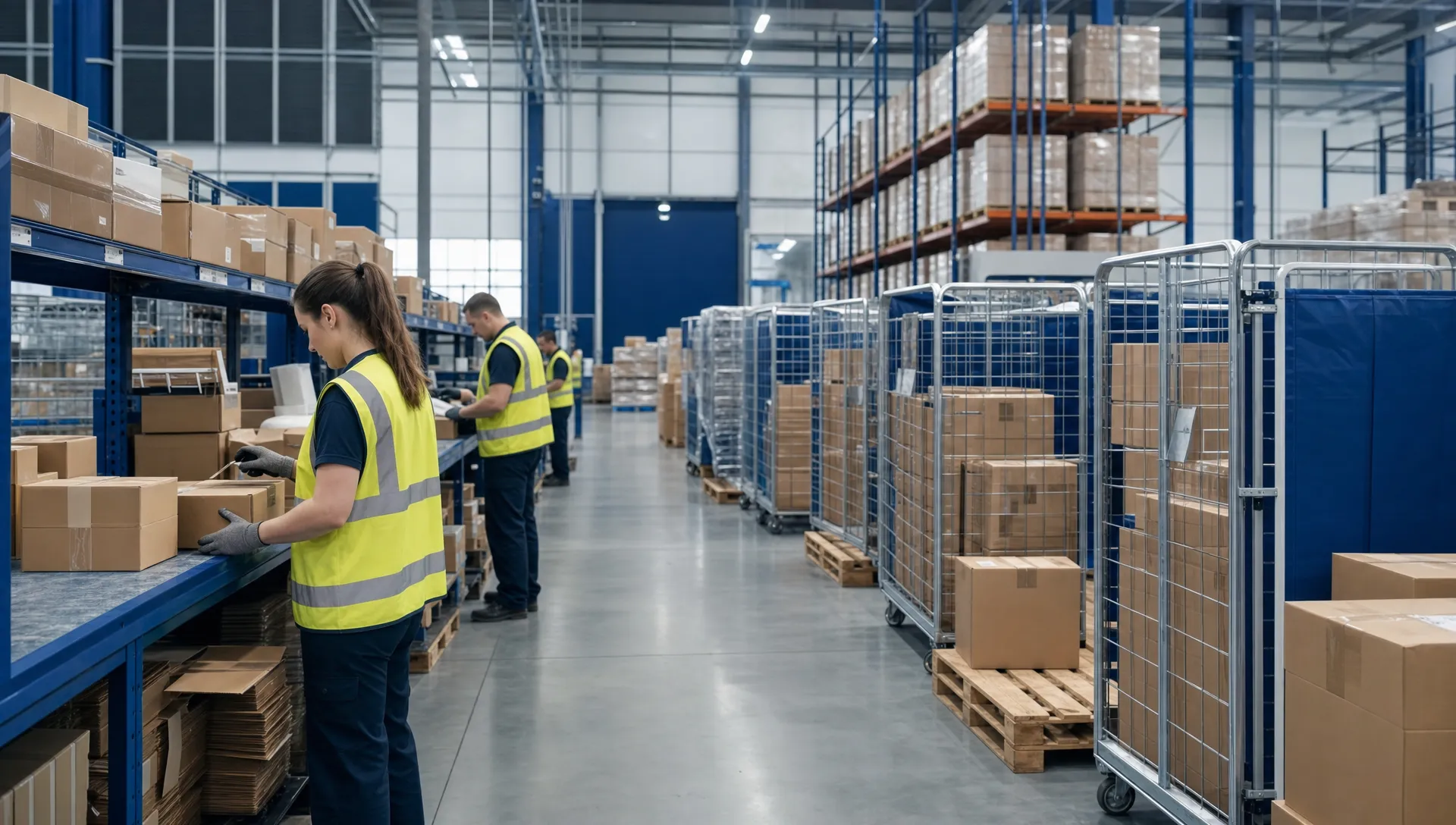
Returns, exceptions and daily problem-solving
Even the best logistics operation has exceptions. A supplier sends the wrong quantity. A customer enters an incomplete address. A courier misses a scan. A product arrives damaged. A retailer changes a booking slot.
A strong 3PL earns its value in how it handles these moments. The daily work is not only the standard process, but also the judgement needed when something does not fit the standard process.
Returns are a good example. Depending on the agreed process, the 3PL may receive the returned item, inspect its condition, update the system, return it to stock, quarantine it or prepare it for disposal. If the item is resaleable, speed and accuracy matter because that stock may need to become available again quickly.
Communication is central here. If an issue affects stock availability, dispatch timing or delivery status, the client needs to know early enough to act. Silent logistics problems tend to become customer service problems.
Co-packing, kitting and retail display preparation
Many third party logistics companies also carry out value-added warehouse work. This can include kitting, re-packing, labelling, promotional assembly, point of sale preparation and retail display handling.
For retail brands, FSDUs are a good example. A free-standing display unit may need to be assembled, filled with stock, checked, protected for transport and delivered into a retailer network. That requires more coordination than simply sending out cartons.
If your products are sold through supermarkets, high street retailers or promotional campaigns, FSDU support can sit naturally alongside warehousing and transport. It means the same logistics partner can help prepare stock for the shop floor as well as move it through the supply chain.
Day to day, this type of work is often planned around campaign deadlines. The 3PL may need to allocate space, brief the warehouse team, prepare components, check quantities and make sure finished units are ready for dispatch on time.
Reporting and stock visibility
A 3PL should not feel like a black box. If your stock is off site, you need confidence that you can still see what is happening.
Daily reporting may include stock levels, order statuses, dispatch confirmations, proof of delivery, returns updates and exception notes. The level of detail depends on the service and systems in place, but the principle is simple: the client should not have to chase constantly to understand their operation.
For growing businesses, this visibility helps with purchasing, customer service and cash flow. If stock is running low, you can reorder sooner. If orders are delayed, you can inform customers. If a product line is moving quickly, you can plan promotions or replenishment more confidently.
Warehouse systems also help the 3PL team work consistently. They reduce reliance on memory, spreadsheets and manual checks, especially when several clients, product types and delivery methods are being handled at the same time.
How the work changes by business type
The day-to-day work of a 3PL depends heavily on the client.
For an eCommerce brand, the focus is usually fast order processing, parcel dispatch, returns handling and stock visibility across sales channels. The pressure often comes from customer expectations, courier cut-offs and seasonal peaks.
For a manufacturer, the focus may be pallet storage, bulk handling, stock movement between sites and reliable transport. The pressure often comes from production schedules, space limits and the need to avoid delays elsewhere in the business.
For a retail brand, the focus may be display preparation, co-packing, stock consolidation and timed deliveries. The pressure often comes from retailer deadlines, promotional launches and strict delivery requirements.
This is why choosing a 3PL is not only about price. It is about whether the provider understands your type of operation and can handle the practical details that matter each day.
When should you speak to a 3PL?
You do not need to wait until logistics is completely out of control. In fact, it is usually better to speak to a 3PL before you reach that point.
Common signs include running out of storage space, spending too much time packing orders, struggling to meet dispatch cut-offs, dealing with frequent stock errors, needing more flexible transport, or preparing for a retail campaign that your current setup cannot support.
Location can also matter. If your business is based in Cheshire, Warrington, Manchester, Liverpool or the wider North West, working with a provider close to key motorway links can make inbound and outbound movements easier. For businesses looking specifically for warehousing and fulfilment in Warrington, a nearby 3PL can provide practical support without placing your stock too far from your team, suppliers or customers.
Where Gus Logistics fits in
Gus Logistics is a family-run 3PL provider based in Nantwich, Cheshire, supporting eCommerce brands, manufacturers and product businesses across the UK.
The day-to-day work described above is exactly where a hands-on logistics partner can make a difference. Gus Logistics provides order fulfilment and pick and pack, pallet and bulk warehousing, same-day and next-day transport, FSDU services, co-packing and contract packing. Its systems integrate with 60+ platforms including Shopify, Amazon, eBay, WooCommerce and Magento, with real-time WMS tracking available through a client portal.
For businesses comparing UK logistics services, the practical details matter: who answers the phone, how stock is tracked, how quickly issues are raised, and whether the provider can support you as order volumes change. Gus Logistics has no minimum volume requirements and customers speak directly to the people handling their freight.
Frequently Asked Questions
What do third party logistics companies do every day? They receive stock, store it, manage inventory, pick and pack orders, coordinate transport, handle returns, update systems and solve delivery or stock issues as they arise.
Do 3PL companies only work with large businesses? No. Some 3PL providers work with SMEs and growing brands as well as larger operations. The important point is whether the provider can match your current volume, service needs and growth plans.
How does a 3PL keep stock accurate? A 3PL uses warehouse locations, stock records, barcode scanning or warehouse management systems, regular checks and clear goods-in processes to reduce errors and keep stock information up to date.
Can a 3PL handle both storage and delivery? Yes, many providers can manage warehousing, fulfilment and transport together. This can make communication easier because fewer handovers are involved.
What should I ask before choosing a 3PL? Ask how they receive stock, how they track inventory, which systems they integrate with, how they handle errors, what transport options they offer, and who you contact when something needs attention.
Need practical support with your logistics?
If you want to understand whether outsourcing could make your day-to-day operation easier, speak to Gus Logistics. The team can talk through your stock, order volumes, storage needs, transport requirements or retail display plans and explain what a suitable 3PL setup could look like.
Call 01270 335014 or get in touch via the contact page to discuss your logistics requirements.
Looking for a Logistics Partner You Can Trust?
From warehousing and order fulfilment to transport and FSDU design - Gus Logistics handles it all from our base in Nantwich, Cheshire. Over 10 years experience, no minimum volumes, no long contracts.
