
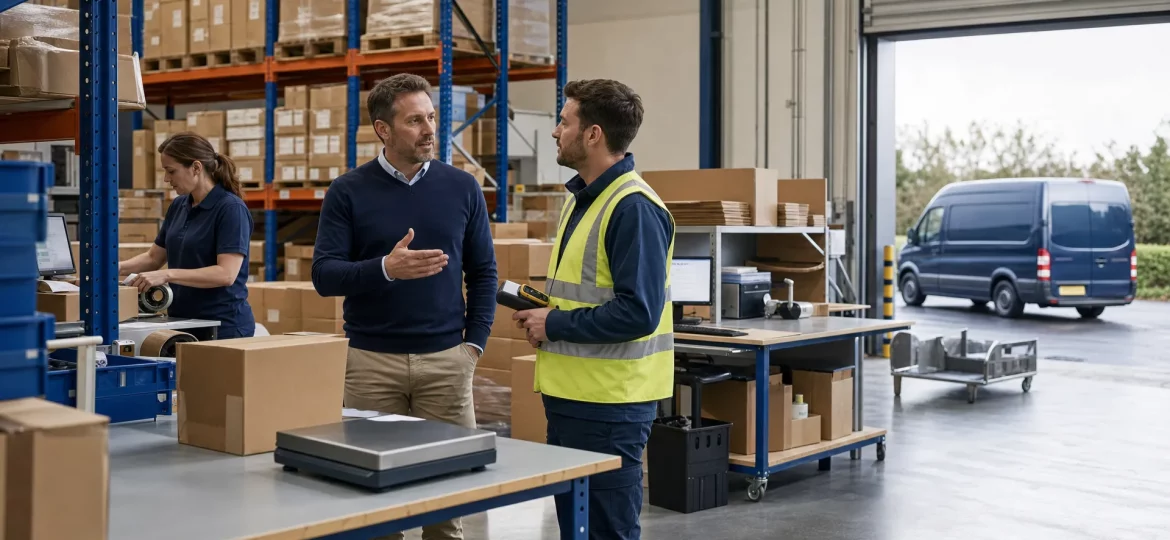
Signs Your In-House Fulfilment Is Holding Your Business Back
If your team is still packing orders late in the evening, stock is spilling into every spare corner, or customer service is spending too much time chasing parcels, your in-house fulfilment may no longer be the lean, low-cost option it once was.
For many growing product businesses, handling fulfilment internally makes sense at the start. You know every SKU, you can check each parcel yourself, and you feel close to the customer experience. But as order volumes rise, that same setup can quietly become a brake on growth.
The issue is not usually one dramatic failure. It is a steady build-up of small problems: missed cut-offs, inaccurate stock, packing errors, rising labour costs, and senior people pulled away from sales, buying, marketing or product development. This article will help you spot the signs that in-house fulfilment is holding your business back, and decide whether it is time to change the way you manage eCommerce fulfilment.
Why in-house fulfilment starts to strain as you grow
In-house fulfilment often grows informally. A spare office becomes a packing area. A garage becomes overflow storage. A spreadsheet becomes the stock system. Extra hands are brought in during busy periods, and everyone pulls together to get orders out.
That flexibility is useful in the early days, but it can become fragile. The more orders you process, the more your operation depends on consistent systems rather than individual effort. If only one or two people know where stock is stored, how orders are prioritised, or which carrier to use for each parcel, the business carries more risk than it may realise.
The key question is not simply, “Can we still get orders out?” It is, “Can we do this accurately, profitably and reliably while the business grows?”
1. Dispatch is becoming unpredictable
A clear sign of fulfilment pressure is inconsistency. Some days every order leaves on time. Other days, a late delivery, a stock issue, staff absence or a sudden order spike throws the whole operation off course.
This matters because customers judge your brand on the delivery promise you make at checkout. If your website says next-day dispatch but the warehouse cannot always keep up, the gap between marketing and operations will quickly show in emails, reviews and repeat purchase rates.
Watch for patterns such as orders missing cut-off times, staff staying late to clear backlogs, weekend catch-up sessions becoming normal, or customer service manually upgrading delivery to make up for delays. If dispatch depends on heroic effort rather than a repeatable process, your fulfilment model is under strain.
2. Stock is taking over valuable space
At first, storing stock in-house can feel efficient. You avoid external storage costs and keep products close to hand. But as the range grows, space pressure can start to shape business decisions.
You may find yourself delaying bulk purchases because there is nowhere to put stock, turning down wholesale opportunities because palletised goods are difficult to handle, or losing time moving products around just to reach the right items. Poor storage also increases the risk of damage, mis-picks and inaccurate stock counts.
This is especially common for brands with seasonal ranges, bulky products, retail display materials or imported containers arriving in large quantities. If your storage setup is restricting purchasing, promotions or range expansion, the problem is no longer just operational. It is commercial.
3. Picking and packing errors are creeping up
Mistakes happen in every fulfilment operation, but the trend matters. If wrong items, missing items, damaged parcels or incorrect shipping labels are becoming more common, your process may not be robust enough for current volumes.
Errors are expensive in more ways than one. You may pay for replacement products, extra postage, return labels and staff time to resolve the issue. More importantly, the customer may not order again.
Common causes include similar SKUs stored too close together, no barcode scanning, unclear packing instructions, rushed pick waves, temporary staff without enough training, and manual copying of order details between systems. If the same type of mistake keeps returning, it is a system problem, not just a people problem.
4. Your team is spending too much time on “where is my order?”
Customer service time is a useful warning sign. If your team is regularly checking tracking numbers, confirming dispatch dates, searching for missing parcels, or explaining delays, fulfilment is creating noise across the business.
Good logistics should reduce customer contact, not create more of it. Customers should receive clear tracking, accurate delivery updates and prompt answers when something goes wrong. If your team has to investigate every query manually, the operation lacks visibility.
This is where system integration becomes important. When orders, stock levels and tracking updates are connected, fewer questions need manual handling. When they are not connected, your team becomes the bridge between disconnected systems.
5. Your systems are not keeping up with your sales channels
Many eCommerce businesses start on one platform, then expand into marketplaces, retail, wholesale or social selling. Each channel adds complexity. Orders may arrive in different formats, stock needs to stay aligned, and customers expect quick updates regardless of where they bought from.
If your team is downloading CSV files, copying addresses, manually updating stock, or checking multiple dashboards before dispatching orders, your systems are creating unnecessary risk. Manual work can be manageable at low volume, but it becomes a bottleneck as orders rise.
A good fulfilment process should connect sales channels to warehouse activity with as little manual intervention as possible. That does not mean you need a complex enterprise system, but it does mean your operation should not depend on copying and pasting order data every day.
6. Peaks and promotions cause operational stress
Promotions are meant to drive growth, not panic. If every successful campaign creates a fulfilment backlog, you may be limiting your own marketing ambition.
This is particularly relevant for product businesses with seasonal demand, launch events, gifting periods, sports seasons or retail campaigns. Businesses selling apparel, accessories and sports equipment, such as specialist sportswear retailers, often have to manage changing ranges, stock surges and time-sensitive customer expectations. The same challenge applies to many UK eCommerce brands, even at a smaller scale.
If your team hesitates before running a promotion because the warehouse might not cope, fulfilment is influencing revenue decisions. That is a strong sign the operation needs more capacity or a more flexible model.
7. Returns are slow, unclear or inconsistent
Returns are part of the customer experience. If returned items sit unprocessed for days, stock availability becomes inaccurate and customers wait longer for refunds or exchanges.
In-house returns often become messy because they are treated as a secondary task after outbound orders. The problem is that slow returns affect cash flow, stock accuracy and customer trust. For fashion, consumer goods, homeware, sportswear and other product categories with regular returns, this can become a serious drag on performance.
Ask whether your returns process is documented, whether returned items are checked consistently, and how quickly saleable stock goes back into availability. If the answer depends on who is working that day, the process needs tightening.
8. Senior people are still involved in day-to-day packing decisions
One of the clearest signs that fulfilment is holding you back is the way it uses management time. If founders, directors, operations managers or sales staff are regularly stepping into the warehouse to pick orders, solve stock issues or chase couriers, the hidden cost is significant.
The question is not whether they can help. Of course they can. The question is whether that is the best use of their time. Every hour spent firefighting fulfilment is an hour not spent improving margins, negotiating with suppliers, developing products, winning retail accounts or growing the brand.
Quick diagnostic: is fulfilment becoming a growth constraint?
Use the table below as a practical check. If several of these feel familiar, your in-house setup may be reaching its limit.
| Sign | What it looks like | Business impact |
|---|---|---|
| Missed dispatch times | Orders roll into the next day or need late-night packing | Lower customer confidence and more support queries |
| Space pressure | Stock stored in walkways, offices or unsuitable areas | More handling, more damage risk and less buying flexibility |
| Rising errors | Wrong items, missing items or incorrect labels | Extra cost, replacement orders and poor reviews |
| Manual systems | Copying order data between platforms | Slower processing and more human error |
| Peak stress | Promotions create backlogs | Marketing is limited by operational capacity |
| Slow returns | Returned stock waits to be checked back in | Inaccurate stock and delayed refunds |
| Management firefighting | Senior staff solving warehouse issues daily | Less focus on growth and strategy |
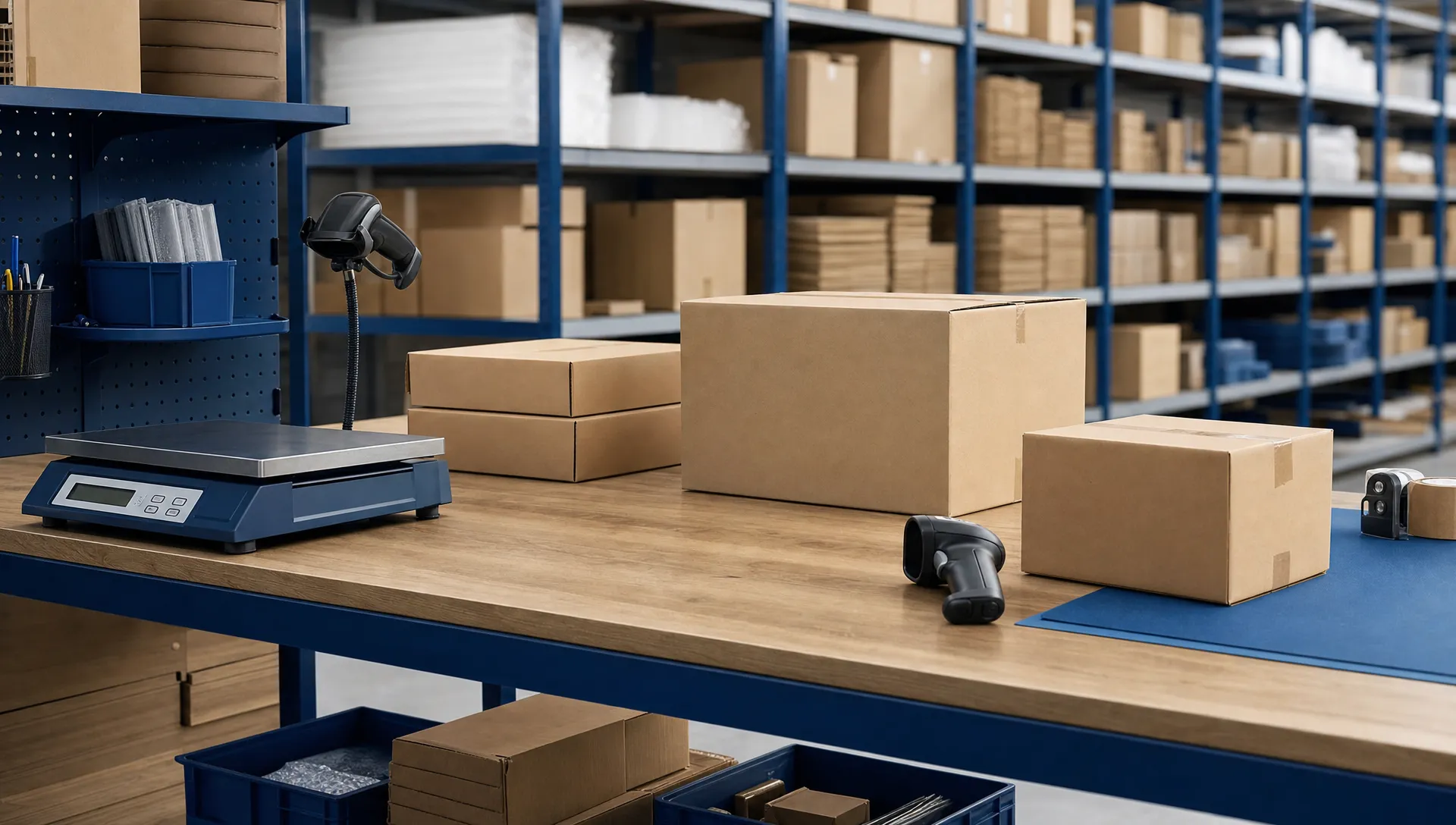
The hidden cost of “cheaper” in-house fulfilment
In-house fulfilment can look cheaper because you do not see a single invoice for the full service. Costs are spread across rent, staff time, packaging, software, mistakes, storage, utilities, equipment and management attention.
To compare fairly, you need to include the whole picture. Labour is not just the person packing the parcel. It includes training, cover for absence, recruitment, supervision and time spent fixing errors. Space is not just the room where stock sits. It includes the opportunity cost of using that space for warehousing rather than sales, production or office functions.
There is also the cost of capacity you cannot use. If your team can only process a certain number of orders per day, that limit shapes your marketing, promotions and customer promises. When fulfilment becomes the ceiling on growth, the cheapest option on paper can become expensive in practice.
Should you improve in-house processes or outsource?
Outsourcing is not always the immediate answer. Some businesses can solve fulfilment problems by improving layout, adding barcode scanning, training staff, changing packaging, tightening stock control or introducing better software.
However, if your growth plans require more space, later cut-offs, better carrier options, faster dispatch, more accurate stock visibility or support for multiple sales channels, it may be time to compare in-house fulfilment with a third party logistics provider.
| Situation | Improve in-house | Consider outsourcing |
|---|---|---|
| Order volume | Low and predictable | Growing, seasonal or promotion-led |
| Space | Plenty of suitable storage | Stock is restricting operations |
| Systems | Orders and stock are easy to manage | Multiple channels need integration |
| Labour | Stable team with spare capacity | Frequent overtime, temp staff or bottlenecks |
| Service promise | Dispatch targets are consistently met | Cut-offs are missed or difficult to maintain |
| Growth plans | Modest and operationally simple | New channels, retail, wholesale or UK-wide growth |
The right choice depends on your margins, product type, order profile and growth plans. The important point is to make the decision before fulfilment problems start damaging customer experience.
What good outsourced eCommerce fulfilment should provide
A strong fulfilment partner should do more than store boxes and post parcels. They should give you a reliable operational base that supports growth without removing visibility.
For eCommerce brands, that often means integrated order processing, accurate pick and pack, clear stock control, reliable dispatch and tracking updates. Gus Logistics provides order fulfilment and pick and pack services that integrate with 60+ platforms, including Shopify, Amazon, eBay, WooCommerce and Magento. That helps reduce manual work and keeps orders moving through the warehouse efficiently.
Storage matters too. If you hold pallets, bulk stock, retail materials or imported goods, you need a setup that can manage both volume and visibility. Gus Logistics offers pallet and bulk storage in Cheshire with racked and floor storage, plus real-time warehouse management system tracking through a client portal. Batch, serial number and best-before date tracking are also available where needed.
Delivery capacity is another factor. As your business grows, you may need more than parcel dispatch. You may need same-day transport, next-day delivery, pallet movements or retail distribution. Gus Logistics supports this through same-day and next-day transport services using its own fleet and wider vehicle network across the UK and Europe.
How to prepare before speaking to a 3PL
Before approaching a fulfilment provider, gather enough information to make the conversation useful. You do not need perfect data, but the more detail you can provide, the easier it is to understand what support you need.
Useful details include:
- Average orders per day and expected peak volumes
- Number of SKUs and product types
- Current sales channels and platforms
- Packaging requirements and any branded inserts
- Storage needs, including pallets, cartons or oversized stock
- Current dispatch targets and delivery services
- Returns volumes and how returns are handled now
- Any batch, serial number or best-before tracking requirements
This information helps a provider design a practical solution rather than a generic quote. It also helps you compare providers properly, because you can judge how well each one understands your actual operation.
Why location still matters for UK fulfilment
Even with modern systems, warehouse location can affect speed, cost and flexibility. A fulfilment partner based near strong transport links can support faster movement of goods across the UK and make inbound stock deliveries easier to manage.
Gus Logistics is based in Nantwich, Cheshire, close to the M6, M56 and M62. For businesses in Cheshire, the North West and across the UK, that location can support efficient distribution while still giving you access to a family-run team. There are no call centres, so customers speak directly to the people handling their freight.
This can be especially valuable for growing SMEs that want the professionalism of an outsourced logistics service without feeling like a small account in a large, impersonal network.
Frequently Asked Questions
When should a business stop doing fulfilment in-house? A business should review in-house fulfilment when dispatch becomes inconsistent, stock accuracy drops, errors increase, storage space becomes tight, or senior staff spend too much time solving warehouse problems. The right time is before these issues start affecting customers regularly.
Is outsourced eCommerce fulfilment only for large brands? No. Some fulfilment providers work with growing SMEs as well as larger businesses. Gus Logistics has no minimum volume requirements, which can make outsourcing more accessible for brands that need support but are not yet shipping huge volumes.
Will I lose control if I outsource fulfilment? You should not lose control if the provider has good systems and clear communication. Look for stock visibility, order tracking, clear processes and direct access to the team handling your goods.
Can a 3PL handle seasonal peaks? A suitable 3PL should be able to support seasonal peaks, promotions and changing order volumes more flexibly than many small in-house operations. You should still share forecasts early so labour, storage and carrier planning can be managed properly.
What information will a fulfilment provider need to quote? They will usually need order volumes, SKU count, product sizes, storage requirements, sales channels, packaging needs, dispatch expectations and returns information. Accurate details help produce a more useful quote.
Ready to remove fulfilment bottlenecks?
If in-house fulfilment is taking up too much time, space and management attention, it may be time to look at a more scalable approach. Gus Logistics supports growing eCommerce brands, manufacturers and product businesses with fulfilment, storage, transport and wider UK logistics services from its base in Nantwich, Cheshire.
To talk through your current setup and find out what would work best for your business, call Gus Logistics on 01270 335014 or get in touch via the contact page.
Looking for a Logistics Partner You Can Trust?
From warehousing and order fulfilment to transport and FSDU design - Gus Logistics handles it all from our base in Nantwich, Cheshire. Over 10 years experience, no minimum volumes, no long contracts.
