
What Is Returns Management?
Returns are part of selling products online and through retail. Even with accurate product pages, careful picking, strong packaging and reliable delivery, some customers will send items back. The question is not whether returns will happen. The question is whether your business has a controlled process for handling them.
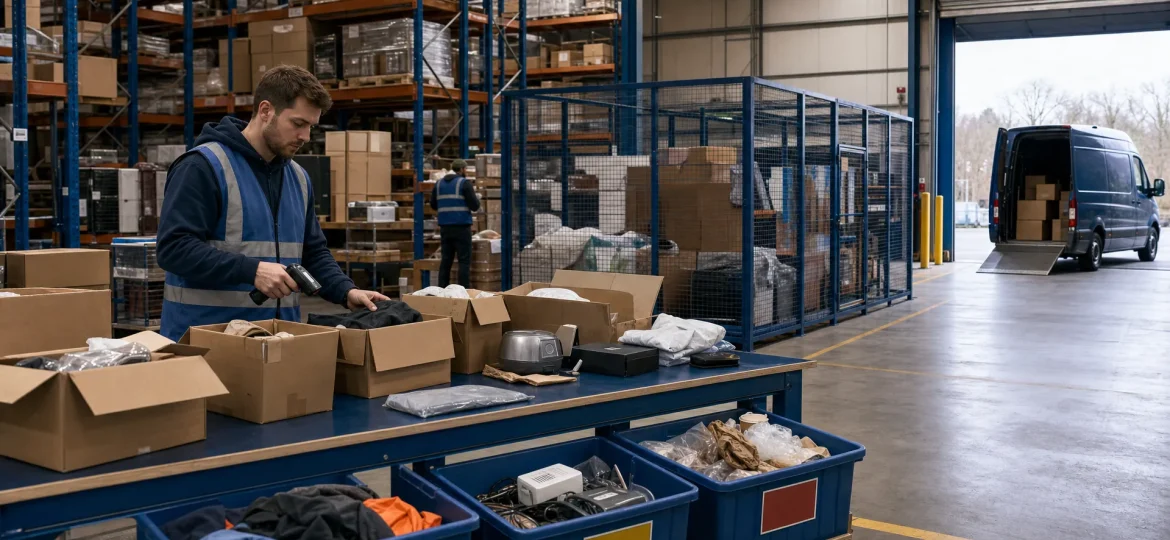
Returns management is the process of receiving, checking, recording and resolving returned products. It covers everything that happens after a customer decides to return an item, from the return request through to refund, exchange, restocking, repair, disposal or supplier return.
For eCommerce brands, manufacturers and growing product businesses, returns management can have a direct impact on cash flow, stock accuracy, customer service and warehouse efficiency. When it is handled badly, returns become a hidden drain on time and margin. When it is handled well, it helps protect profit and keeps customers confident in your brand.
What does returns management mean?
Returns management is the operational process used to control products coming back into a business after sale or dispatch. It is sometimes called reverse logistics because the goods are moving back from the customer, retailer or delivery network into your warehouse, fulfilment centre or supplier chain.
A complete returns management process usually includes:
- Accepting and authorising return requests
- Issuing return instructions or labels
- Receiving returned stock into the warehouse
- Inspecting product condition
- Updating inventory records
- Processing refunds, exchanges or replacements
- Repacking items suitable for resale
- Separating damaged, faulty or unsellable goods
- Reporting on return reasons and costs
The aim is simple: make sure every returned item is dealt with quickly, accurately and consistently.
Returns management is not just a customer service task. It involves warehouse teams, stock control, finance, customer support, transport partners and sometimes suppliers. If those areas are not joined up, returned stock can go missing, refunds can be delayed and products that should be back on sale can sit untouched for weeks.
Why returns management matters
Returns are often viewed as a cost, but the bigger risk is lack of control. A few unmanaged returns may seem harmless at first. As order volumes grow, they can quickly create operational problems.
The most common issues include poor stock visibility, delayed refunds, customer complaints, unnecessary write-offs and warehouse clutter. Returned items can also distort your inventory figures if they are not checked back into stock correctly.
For example, if a returned item is physically back in your warehouse but not updated in your system, it cannot be sold. If it is added back to available stock before inspection, a damaged or incomplete product could be sent to another customer. Both outcomes cost money and damage trust.
UK sellers also need to understand their legal responsibilities. For many online purchases, customers have cancellation and return rights under UK consumer rules. Your returns process should support compliance while still protecting your business from avoidable loss.
Good returns management helps you:
- Keep stock records accurate
- Resell suitable products faster
- Reduce customer service workload
- Spot recurring product or fulfilment issues
- Avoid unnecessary storage pressure
- Improve customer confidence
- Protect margins on returned goods
If your business is already outsourcing dispatch, it often makes sense to connect returns with your wider order fulfilment process so orders, returns and stock movements are handled in one joined-up system.
Returns management vs returns policy
A returns policy and returns management are related, but they are not the same thing.
Your returns policy is the customer-facing set of rules. It explains who can return products, how long they have, what condition items must be in and whether refunds, exchanges or store credit are available.
Returns management is the behind-the-scenes process that makes the policy work. It is what your team actually does when goods arrive back.
| Area | What it covers | Example |
|---|---|---|
| Returns policy | Customer rules and expectations | Return within 30 days in unused condition |
| Returns management | Internal handling process | Inspect item, update stock, process refund |
| Reverse logistics | Movement of goods back through the supply chain | Customer sends parcel back to warehouse |
| Returns reporting | Data used to improve operations | Size issue, damaged in transit, wrong item sent |
A clear policy without a reliable process will still create problems. Equally, a strong warehouse process will be undermined if customers are confused about how to return items.
The best approach is to make your returns policy easy to understand and then build an internal process that can deliver it consistently. Clear communication matters in every service environment. For example, organisations such as Ons Plekske show how useful it is when key information is presented plainly and accessibly, a principle that also applies to return instructions, contact details and next steps for customers.
The main stages of a returns management process
Returns management does not need to be complicated, but it does need structure. A practical process usually follows these stages.
1. Return request
The process starts when a customer asks to return an item. This might happen through your website, customer service inbox, marketplace account or retailer portal.
At this stage, you need to capture the order number, customer details, SKU, quantity, reason for return and preferred resolution. The reason code is important because it helps you identify patterns later. If many customers are returning the same product because it does not fit, looks different from the photos or arrives damaged, you have useful evidence for improvement.
2. Return authorisation
Some businesses allow automatic returns. Others review each request before approval. The right approach depends on your product type, value, sales channels and fraud risk.
A return authorisation step helps you confirm whether the order is eligible and what the customer should do next. This is where you can issue a return reference, label or instructions.
3. Transport back to the warehouse
The product then needs to move back to your warehouse, fulfilment centre or nominated returns address. For some businesses, this may be a postal return. For bulkier or B2B products, it may require courier collection, pallet transport or scheduled delivery.
If your returns involve larger stock movements, damaged consignments or retailer returns, linking returns handling with wider UK logistics services can make the process easier to control.
4. Goods-in and inspection
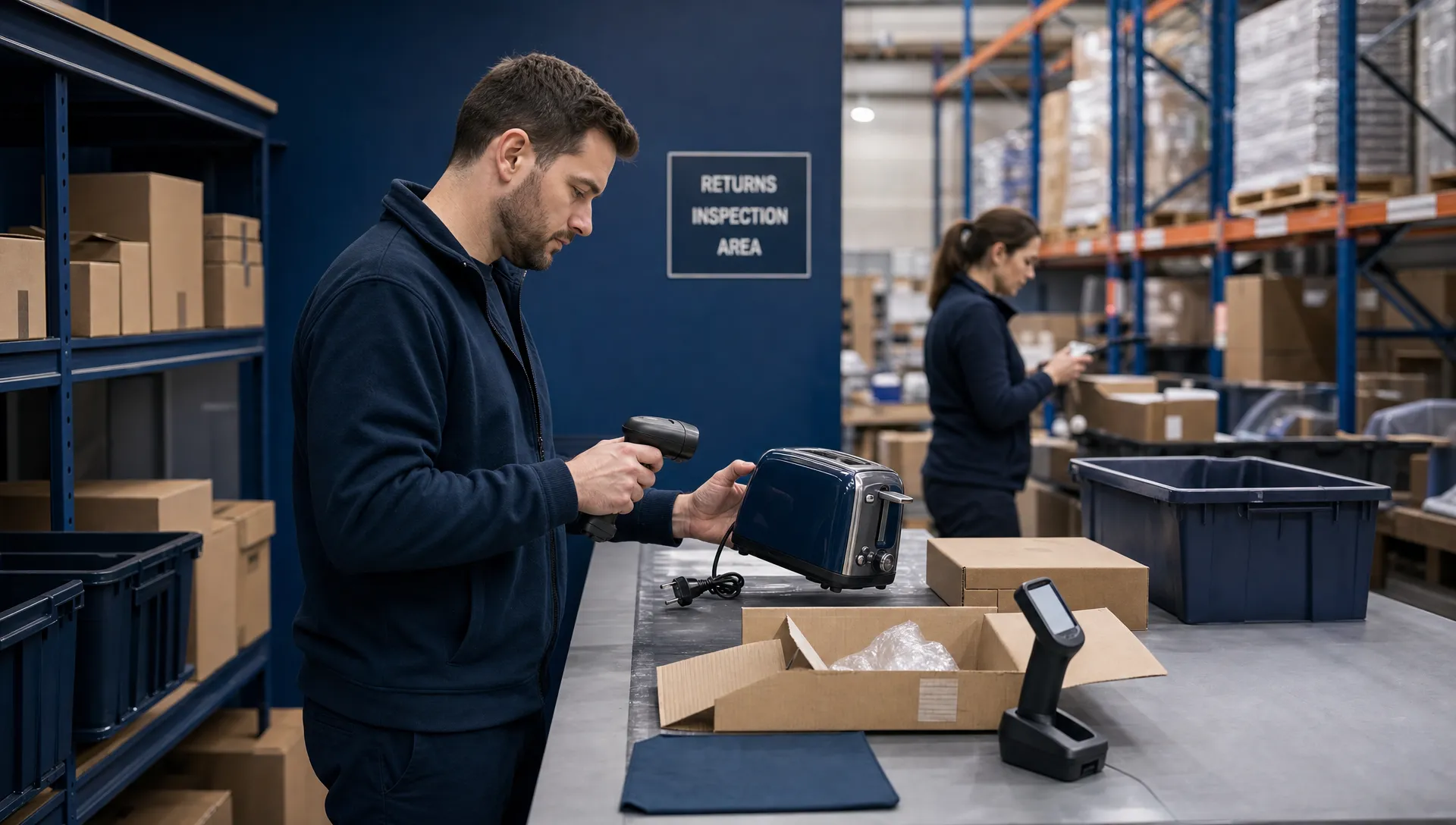
When returned goods arrive, they should be logged promptly. The warehouse team needs to identify the order, check the returned quantity and inspect the item condition.
This is one of the most important stages. A returned item might be unopened and ready for resale. It might need repacking. It might be faulty, incomplete, damaged, expired or unsuitable for resale. The decision made at inspection determines what happens next.
5. Stock update
Once inspection is complete, the item should be recorded correctly in your stock system. This might mean returning it to available stock, placing it in quarantine, moving it to damaged stock or setting it aside for supplier review.
This is where warehouse discipline matters. If returns are not updated accurately, your sales channels may show incorrect availability. That can lead to overselling, missed sales or avoidable customer frustration.
Businesses using outsourced warehousing should check how returned stock is tracked. Real-time visibility, batch tracking, serial number tracking or best-before date tracking may be important depending on the product category. For brands with growing stock volumes, a structured warehousing and storage setup can make returned goods much easier to manage.
6. Customer resolution
After the return is received and assessed, the customer needs the agreed outcome. That might be a refund, exchange, replacement, repair or store credit.
Speed matters here. Customers often judge a brand by how well it handles problems, not just by how quickly the original order arrived. A slow or unclear returns process can damage repeat purchase rates even if the first delivery was successful.
7. Reporting and improvement
Returns data should not sit unused. It can tell you where margin is leaking and where the customer experience is breaking down.
Useful return reason categories include wrong size, changed mind, damaged in transit, faulty product, incorrect item sent, late delivery, not as described and duplicate order. Over time, these reasons help you separate unavoidable returns from preventable ones.
If you want practical ways to reduce avoidable returns, Gus Logistics has also covered how to reduce eCommerce return rates in more detail.
Common returns management mistakes
Many businesses only notice returns as a problem when order volumes increase. What worked at 20 orders a day may not work at 200. The most common mistakes are usually process problems rather than people problems.
One frequent issue is letting returns sit in a corner of the warehouse until someone has time to sort them. This ties up cash and space. It also means sellable products are not available for purchase.
Another common mistake is using vague return reason codes. If your system only records “returned” or “customer request”, you lose the chance to understand what is really happening. A better reason code structure helps identify whether the issue is product quality, fulfilment accuracy, sizing, packaging or delivery.
Poor communication is another problem. If customers do not know whether their return has arrived or when they will receive a refund, they contact your team for updates. This increases customer service workload and makes the experience feel slower than it may actually be.
Finally, many businesses fail to separate returned stock properly. Sellable, damaged, incomplete and quarantined stock should not be mixed together. Clear locations and statuses help prevent mistakes.
What should a good returns management system include?
A good returns management process should be clear, repeatable and visible. It does not have to be over-engineered, but it should be strong enough to handle growth.
Key features to look for include:
- A clear returns address and instructions
- Return references linked to the original order
- Defined inspection standards
- Accurate stock status updates
- Fast communication between warehouse and customer service
- Reporting by SKU, return reason and channel
- A process for damaged, faulty or unsellable items
- Agreed timeframes for inspection and resolution
For multi-channel eCommerce brands, integration is particularly important. If you sell through Shopify, Amazon, eBay, WooCommerce, Magento or other platforms, your returns process should support accurate order matching and stock updates.
The goal is not simply to get parcels back into the building. The goal is to make the right decision on every returned product and reflect that decision in your systems.
Should you manage returns in-house or outsource them?
Some businesses handle returns in-house, especially when volumes are low or products need specialist technical inspection. That can work well if you have the space, people and systems to manage it properly.
However, returns can become difficult when order volumes grow, sales channels multiply or stock storage becomes stretched. At that point, outsourcing returns to a 3PL can reduce pressure on your team and bring returns into the same operational flow as fulfilment and warehousing.
Outsourcing may be worth considering if:
- Your team is spending too much time processing returns manually
- Returned stock is not being checked back into inventory quickly
- You are running out of warehouse space
- Customer service is chasing warehouse updates
- You sell across multiple online marketplaces or retail channels
- You need a more consistent process for inspections and reporting
A 3PL returns service can be especially useful when it sits alongside pick and pack, storage and transport. Instead of treating returns as a separate admin burden, you can manage them as part of the full product journey.
How Gus Logistics supports returns management
Gus Logistics is a family-run 3PL provider based in Nantwich, Cheshire, supporting eCommerce brands, manufacturers and product businesses across the UK. For businesses that need a more controlled way to handle returned goods, Gus Logistics can support returns as part of a wider fulfilment and warehousing operation.
The team can help with receiving returned stock, checking items back into the warehouse process and supporting accurate stock control through cloud-based logistics systems. Because Gus Logistics also provides order fulfilment, pallet and bulk warehousing, transport, co-packing and FSDU services, returns can be managed alongside the wider movement of goods.
For businesses in Cheshire, the North West and across the UK, this can be a practical way to reduce internal workload while keeping stock visible and moving. You can learn more about Gus Logistics' dedicated returns management in Cheshire service if you are looking for support with returned goods.
Frequently asked questions
What is returns management in simple terms? Returns management is the process of handling products that customers send back after purchase. It includes receiving the item, checking its condition, updating stock and arranging the right customer outcome, such as a refund, exchange or replacement.
Is returns management the same as reverse logistics? Not exactly. Reverse logistics refers to the movement of goods back through the supply chain. Returns management is broader because it also includes customer communication, inspection, stock updates, reporting and refund or exchange processes.
Why is returns management important for eCommerce businesses? It helps protect stock accuracy, cash flow and customer satisfaction. Without a clear process, sellable stock can be delayed, refunds can be slow and customer service teams can spend too much time chasing updates.
Can a 3PL handle returns as well as fulfilment? Yes, many 3PL providers can handle returns alongside order fulfilment and storage. This can make the process more efficient because outbound orders, returned goods and stock updates are managed in one operational setup.
How can I reduce the number of returns? Start by tracking return reasons. Common improvements include clearer product descriptions, better images, accurate sizing information, improved packaging, fewer picking errors and better stock control.
Need help managing returns more efficiently?
Returns do not have to slow your business down or tie up your team. With the right process, returned goods can be checked, recorded and resolved quickly, while sellable stock gets back into circulation faster.
If you are reviewing your returns process or looking for a 3PL partner to support fulfilment, storage and returns, speak to Gus Logistics. Call 01270 335014 or get in touch through the contact page to discuss what your business needs.
Looking for a Logistics Partner You Can Trust?
From warehousing and order fulfilment to transport and FSDU design - Gus Logistics handles it all from our base in Nantwich, Cheshire. Over 10 years experience, no minimum volumes, no long contracts.
