
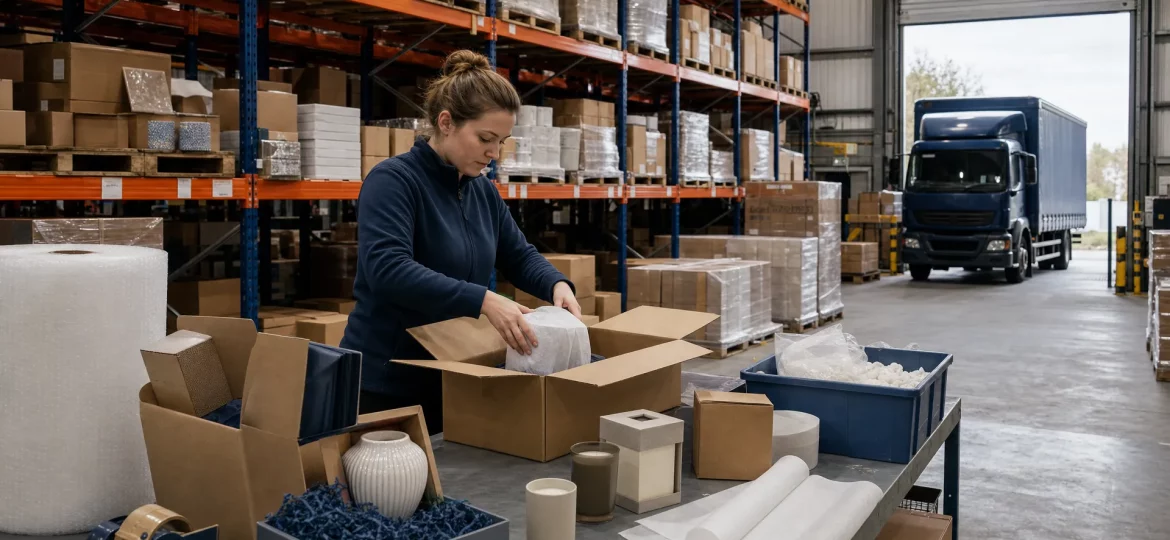
Fulfilment for Gift and Homeware Brands
Gift and homeware orders can look simple from the outside. A customer chooses a candle, cushion, vase, framed print or gift set, then expects it to arrive quickly, intact and nicely presented.
Behind the scenes, it is rarely that simple.
Gift and homeware fulfilment often involves fragile products, awkward shapes, seasonal peaks, mixed-SKU bundles, high presentation standards and customers buying for specific dates. A delayed birthday gift or broken ceramic item does not just create a refund request. It can damage trust in your brand.
If you are packing orders in-house, you may already be feeling the strain. Stock is taking over the office. Packaging decisions are slowing the team down. Peak periods are stretching staff. Returns and replacements are eating into your margin.
This guide explains what gift and homeware brands need from a fulfilment process, when outsourcing starts to make sense, and how to choose a 3PL partner that can protect both your products and your customer experience.
Why gift and homeware fulfilment needs extra care
Gift and homeware products sit in a tricky middle ground. They are often more delicate than fashion items, more varied than standard FMCG products, and more presentation-led than many B2B goods.
A single product range might include glassware, ceramics, candles, diffusers, textiles, framed items, lampshades, decorative accessories and seasonal gift boxes. Each may need a different storage, picking and packing approach.
The main challenge is consistency. Your fulfilment operation needs to send out hundreds or thousands of orders without losing attention to detail. That means the right item, in the right condition, with the right packaging, shipped on time.
| Fulfilment challenge | Why it matters for gift and homeware brands | What to plan for |
|---|---|---|
| Fragile products | Breakages create replacement costs and unhappy customers | Protective packaging, careful handling and clear packing rules |
| Awkward product sizes | Some items are light but bulky, while others are small and heavy | Flexible storage, carton choices and carrier selection |
| High presentation expectations | Many orders are bought as gifts, not just personal purchases | Neat packing, inserts, tissue, gift notes or branded packaging where required |
| Seasonal demand | Christmas, Mother's Day, Valentine's Day and sale periods can create order spikes | Scalable labour, stock visibility and reliable dispatch cut-offs |
| Product variations | Colours, scents, sizes, bundles and limited editions increase picking risk | Clear SKU structure and accurate stock management |
A good fulfilment process reduces errors before they happen. It should not rely on memory, guesswork or one person knowing where everything is kept.
What a strong gift and homeware fulfilment process should include
The best fulfilment setup is not just about getting parcels out of the door. It starts when stock arrives and continues through storage, picking, packing, dispatch, tracking and returns.
For gift and homeware brands, these areas matter most.
Accurate goods-in and stock control
When stock arrives from suppliers, it needs to be checked, counted and booked in correctly. If this stage is rushed, problems show up later as overselling, missing stock or incorrect orders.
Good stock control is especially important if you sell across multiple channels such as Shopify, Amazon, eBay, WooCommerce or wholesale platforms. Your stock position needs to stay accurate so customers are not buying items you cannot dispatch.
For products with batch numbers, best-before dates or serial numbers, stock tracking becomes even more important. This can apply to candles, diffusers, scented products, electrical homeware or product lines with compliance requirements.
Careful storage for mixed product types
Gift and homeware ranges often include a mix of small items, boxed products, cartons and palletised stock. Some products can be stored in pick bins. Others need racked pallet storage or floor space because of their size or shape.
If stock is stored poorly, the warehouse becomes slower and more error-prone. Fast-moving products should be easy to access. Fragile items should be stored in a way that reduces unnecessary handling. Oversized items should not block picking routes or create avoidable movement.
If you are running out of space or searching for practical warehouse space near you, it is worth looking beyond square footage alone. The right storage partner should also offer systems, stock visibility and a layout that suits how your products actually move.
Clear pick and pack instructions
Gift and homeware fulfilment depends on detail. A customer may order two mugs in different colours, a candle in a specific scent and a gift message for the recipient. A small picking error can turn a positive customer moment into a complaint.
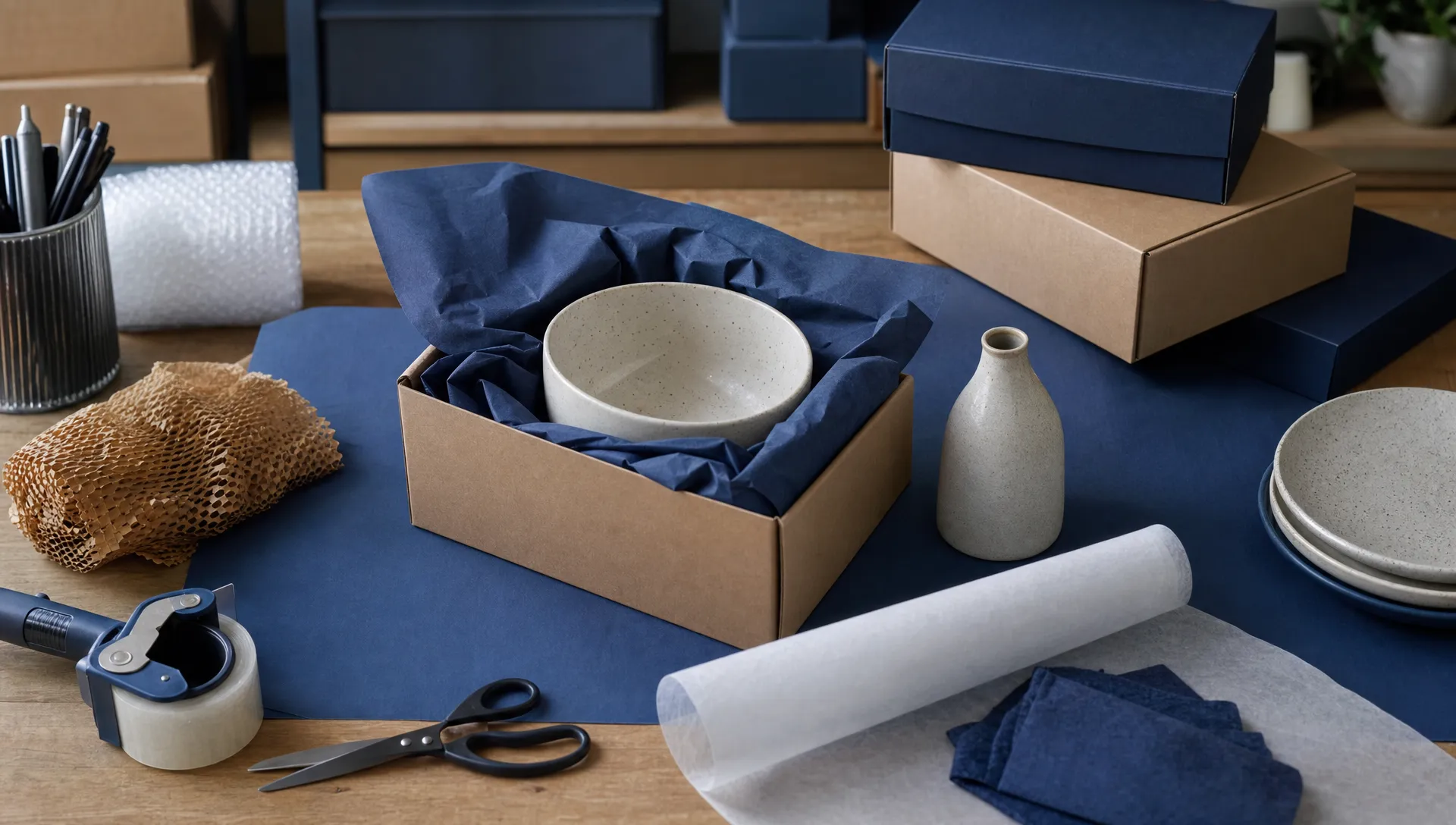
Clear packing instructions help the fulfilment team handle each product correctly. These may cover which box size to use, when to add void fill, how to protect glass items, where to place inserts, and how to handle gift-ready packaging.
A specialist order fulfilment service can help turn these instructions into repeatable processes, so orders are not dependent on ad hoc judgement during busy periods.
Packaging that protects the product and the brand
Packaging has two jobs. It needs to protect the product in transit, and it needs to support the customer experience when the parcel is opened.
For homeware brands, this balance can be difficult. Too little packaging increases breakage risk. Too much packaging increases cost, slows down packing and may frustrate customers. If you sell premium gift items, the parcel also needs to feel considered rather than thrown together.
You should define packaging rules by product type rather than using the same approach for everything. A boxed cushion, a ceramic diffuser and a glass bauble all need different treatment.
It is also worth keeping an eye on packaging obligations. UK businesses that handle or place packaging on the market may need to understand current rules around packaging data and waste responsibilities. The UK Government guidance on extended producer responsibility for packaging is a useful starting point, although you should take specific advice for your own circumstances.
When in-house fulfilment starts holding a brand back
Many gift and homeware businesses start by packing orders themselves. That makes sense in the early days because it gives you control and keeps costs simple.
The problem is that in-house fulfilment often becomes harder gradually. You may not notice the operational drag until it is already affecting growth.
Common signs include:
- Orders are still being packed late in the evening by owners or senior staff.
- Stock is spread across multiple rooms, units or temporary storage spaces.
- The team is making more picking errors as the SKU range grows.
- Fragile items are being overpacked to avoid breakages, increasing cost and packing time.
- Peak periods require temporary staff who need constant supervision.
- Customer service time is being spent on tracking updates, delays and replacement orders.
- You are turning down wholesale, retail or marketplace opportunities because fulfilment cannot keep up.
At this point, the question is not only whether you can keep packing orders yourself. It is whether fulfilment is the best use of your time, your space and your team.
Outsourcing does not mean losing control. A good 3PL should give you better visibility, clearer processes and more room to focus on product development, marketing, sales and customer relationships.
What to look for in a 3PL for gift and homeware fulfilment
Not every 3PL is suited to gift and homeware products. Some operations are built for simple, high-volume, uniform items. Others are more flexible and can handle varied SKUs, mixed packaging needs and retail-style presentation.
When comparing providers, ask practical questions about the way your orders will actually be handled.
| What to check | Why it matters | Useful question to ask |
|---|---|---|
| Experience with varied products | Gift and homeware ranges are rarely uniform | How would you store and pack fragile, bulky and small items in the same range? |
| Integration capability | Manual order uploads create delays and errors | Which platforms can you connect to, and how quickly? |
| Cut-off times | Later cut-offs can improve customer delivery promises | What is the latest order cut-off you can support? |
| Stock visibility | You need confidence in available stock across channels | Can I view stock, orders and dispatch status online? |
| Packaging flexibility | Different products need different packing rules | Can you follow product-specific packing instructions? |
| Returns handling | Damaged, unwanted or exchanged items need clear processing | How are returns checked, reported and restocked? |
| Transport options | Some products need parcel delivery, others may need pallet or dedicated transport | What delivery services can you offer for different order types? |
The right partner should be willing to understand your range before suggesting a process. If every answer sounds generic, the fulfilment setup may not be tailored enough for your products.
The role of warehousing in gift and homeware growth
Fulfilment and warehousing are closely linked. If the warehouse setup is weak, pick and pack performance suffers.
For gift and homeware brands, warehousing needs to allow for changing stock profiles. You may have core year-round products, limited edition ranges, seasonal lines and wholesale stock all in the same operation.
Good warehousing should help you answer basic but vital questions quickly:
- How many units are available to sell?
- Which products are moving fastest?
- Where is each SKU stored?
- Which products need replenishing soon?
- Are any items held, damaged or awaiting inspection?
Gus Logistics provides pallet and bulk storage with racked and floor storage options, supported by real-time WMS tracking through a client portal. For brands with batch, serial number or best-before tracking needs, those details can also be managed.
This matters because growth creates complexity. The more channels, SKUs and order types you add, the more important it becomes to have reliable systems behind the scenes.
Planning for seasonal peaks
Gift and homeware brands are often heavily affected by seasonal demand. Christmas is the obvious example, but there may also be spikes around wedding season, Mother's Day, Father's Day, Valentine's Day, Black Friday, product launches, home renovation trends and retailer promotions.
Peak periods put pressure on every part of fulfilment. Goods-in gets busier. Stock needs to be replenished faster. Packing benches fill up. Carriers are under strain. Customers become less forgiving because many orders are time-sensitive gifts.
The best time to plan for peak is before you are in it.
Useful preparation includes setting clear order cut-offs, forecasting best-selling lines, agreeing packaging rules in advance, checking stock levels early, and making sure your fulfilment partner understands promotional calendars.
For larger wholesale or retail orders, parcel fulfilment may not be enough. You may need pallets, dedicated vehicles or timed deliveries. Gus Logistics can support same-day and next-day transport through its own fleet and wider vehicle network, helping brands manage both customer orders and larger stock movements.
Returns, replacements and damaged goods
Returns are part of retail, but for gift and homeware brands they need careful handling.
Some products can be inspected and returned to stock. Others may be unsuitable for resale once opened, damaged or used. Fragile items may need photo evidence, quality checks or supplier feedback if damage becomes a repeated issue.
A clear returns process should define what happens when an item arrives back, who decides whether it can be resold, how quickly stock is updated, and how customer service is informed.
Replacement orders also need attention. If a customer receives a damaged gift, speed matters. A good fulfilment process should help you get the replacement moving quickly while capturing enough detail to identify whether the problem was product packaging, warehouse handling or carrier damage.
How Gus Logistics supports gift and homeware brands
Gus Logistics is a family-run 3PL provider based in Nantwich, Cheshire, supporting eCommerce brands, manufacturers and product businesses across the UK.
For gift and homeware brands, the main advantage is having fulfilment, storage, packing and transport support under one roof. That means you are not trying to coordinate separate suppliers for warehousing, pick and pack, and delivery.
Gus Logistics offers order fulfilment and pick and pack with integrations for 60+ platforms, including Shopify, Amazon, eBay, WooCommerce and Magento. Late cut-offs up to 10pm and next-day dispatch are available, helping growing brands keep pace with customer expectations.
The business also provides warehousing for pallet and bulk stock, co-packing and contract packing, container de-stuffing, and transport support for same-day and next-day requirements. There are no minimum volume requirements, and customers speak directly to the people handling their freight rather than a call centre.
The location in Nantwich, close to the M6, M56 and M62, also makes Gus Logistics well placed for North West businesses and UK-wide distribution.
How to prepare before outsourcing fulfilment
Before approaching a 3PL, you do not need to have everything perfect. However, the more clearly you can explain your products and order profile, the easier it is to design the right process.
Prepare the basics first. You should know your SKU count, average monthly order volume, peak order volume, sales channels, packaging requirements, product dimensions where possible, and any fragile or high-value lines that need special handling.
It also helps to share your current pain points. Are you struggling with space, speed, breakages, staff time, stock accuracy, carrier issues or returns? A good logistics partner will use that information to recommend a practical setup, not a one-size-fits-all answer.
If you are not ready to outsource every order, ask whether the provider can support part of the operation first. For example, some brands start with overflow storage, wholesale orders or peak season support before moving more fulfilment across.
Frequently Asked Questions
What is gift and homeware fulfilment? Gift and homeware fulfilment is the process of storing products, picking customer orders, packing them safely and dispatching them to customers, retailers or other destinations. It often requires extra care because products may be fragile, bulky, seasonal or bought as gifts.
When should a gift or homeware brand outsource fulfilment? It is usually time to consider outsourcing when packing orders is taking too much internal time, storage space is becoming a problem, dispatch errors are increasing, or peak periods are difficult to manage without temporary fixes.
Can a 3PL handle fragile homeware products? Yes, the right 3PL can handle fragile products, provided there are clear packing rules, suitable storage, careful goods-in checks and appropriate packaging materials. It is important to discuss your product range in detail before moving stock.
Do I need high order volumes to work with Gus Logistics? No. Gus Logistics has no minimum volume requirements, which means smaller and growing brands can discuss fulfilment, storage or transport support without needing to commit to large volumes from the start.
Can gift and homeware fulfilment integrate with my online store? Yes. Gus Logistics integrates with 60+ platforms, including Shopify, Amazon, eBay, WooCommerce and Magento, helping orders flow from your sales channels into the fulfilment process.
Need a fulfilment partner for gift and homeware orders?
If gift and homeware fulfilment is taking up too much space, time or attention in your business, Gus Logistics can help you build a more reliable setup for storage, pick and pack, dispatch and transport.
To talk through your products, order volumes and current challenges, call Gus Logistics on 01270 335014 or get in touch via the contact page.
Looking for a Logistics Partner You Can Trust?
From warehousing and order fulfilment to transport and FSDU design - Gus Logistics handles it all from our base in Nantwich, Cheshire. Over 10 years experience, no minimum volumes, no long contracts.
