
Amazon FBA vs 3PL: What’s the Difference?
If you sell products on Amazon, Fulfilment by Amazon can feel like the obvious way to handle storage and delivery. It gives you access to Amazon's fulfilment network and helps you meet the expectations of Amazon customers. But as your business grows, the question becomes more practical: should you keep using FBA, move stock to a 3PL, or use both?
The Amazon FBA vs 3PL decision is not about which option is always better. It is about which model gives your business the right mix of speed, control, cost visibility and flexibility.
For some brands, FBA is the right fit because Amazon is their main sales channel. For others, a third-party logistics provider is a better long-term option because they need to fulfil orders from multiple platforms, manage stock more closely, send wholesale or retail orders, or build a stronger customer experience outside Amazon.
The simple difference between Amazon FBA and a 3PL
Amazon FBA stands for Fulfilment by Amazon. You send eligible stock into Amazon's fulfilment network, and Amazon stores it, picks it, packs it, dispatches it and handles much of the customer-facing delivery process for Amazon orders.
A 3PL, or third-party logistics provider, is an external logistics partner that stores and manages your stock, then fulfils orders on your behalf. A 3PL can support sales from your own website, marketplaces, retail customers, trade orders and other channels, depending on its systems and services.
In plain English, FBA is a fulfilment service inside the Amazon ecosystem. A 3PL is a logistics partner for your wider business.
| Area | Amazon FBA | 3PL |
|---|---|---|
| Main purpose | Fulfil Amazon orders through Amazon's network | Manage storage, fulfilment and logistics across one or more sales channels |
| Best suited to | Sellers heavily focused on Amazon | Brands selling through Shopify, Amazon, eBay, wholesale, retail or multiple channels |
| Stock control | Managed through Amazon's systems and rules | Managed through the 3PL's warehouse systems and agreed processes |
| Packaging control | Limited, with Amazon's standard processes applying | More scope for branded packing, inserts, bundles or special handling if agreed |
| Delivery control | Amazon controls the delivery experience for FBA orders | You and your 3PL agree carrier services, cut-offs and dispatch rules |
| Storage approach | Designed around Amazon fulfilment | Can include pallet storage, bulk warehousing, pick faces and wider stock management |
What Amazon FBA is good at
FBA is popular for a reason. If Amazon is your main sales channel, it can simplify a lot of operational work. Rather than storing stock yourself, printing labels, booking couriers and dealing with daily dispatch, you send stock to Amazon and let its network handle the fulfilment process.
For Amazon-first sellers, the biggest advantage is convenience. Your stock sits close to the marketplace where customers are buying, and Amazon manages the end-to-end delivery process for eligible orders. That can be valuable when you want to focus on listings, advertising, reviews and product range rather than warehouse operations.
FBA can also make sense for smaller sellers who do not yet want to build their own fulfilment setup or manage carrier relationships. If you have a small product range, stable demand and most of your sales come from Amazon, FBA may be the simplest route.
The trade-off is that your stock and fulfilment process sit inside Amazon's rules. Products must meet Amazon's preparation, labelling and inbound requirements. Storage charges, fulfilment fees, stock limits and removal processes are controlled by Amazon. For a growing brand, that can start to feel restrictive.
What a 3PL is good at
A 3PL is designed to support your wider logistics operation, not just one marketplace. That usually includes receiving goods in, storing products, picking and packing orders, dispatching parcels or pallets, managing returns and providing stock visibility.
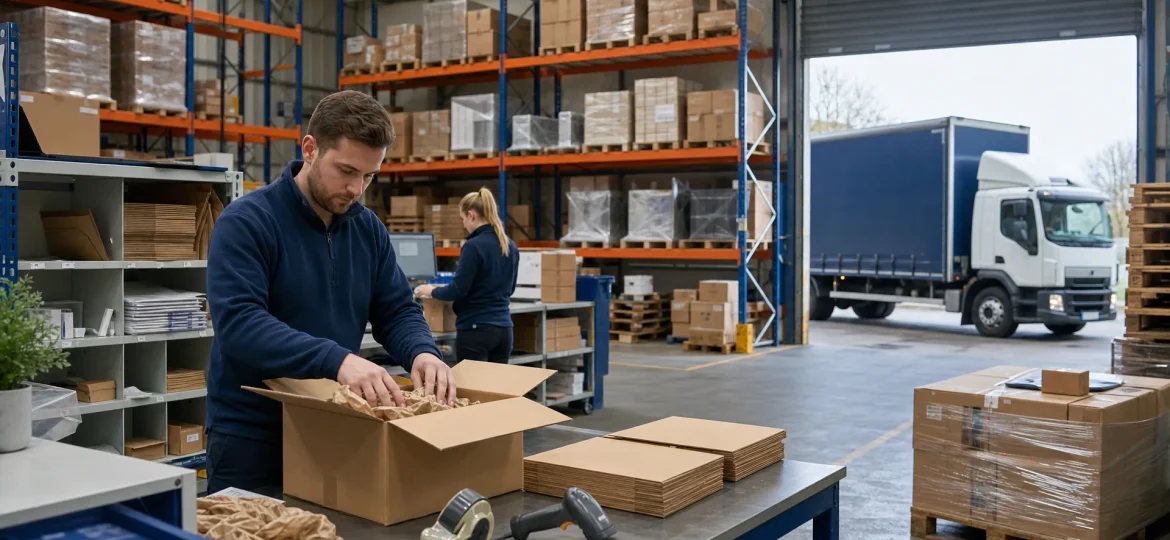
For eCommerce brands, outsourced order fulfilment and pick and pack can remove the daily pressure of getting orders out accurately and on time. Instead of your team spending hours packing boxes, chasing courier collections and checking stock levels, your 3PL handles the operational routine.
A 3PL is especially useful when you sell through more than one channel. For example, you might take orders through Shopify, Amazon, eBay, WooCommerce, Magento, retail customers and trade accounts. A good 3PL can help centralise stock so you are not constantly splitting inventory across different locations without a clear view of what is available.
If the main issue is space, location or stock overflow, it is also worth understanding what to look for in warehouses near you before you commit to a storage partner. The right warehouse is not just a place to put pallets. It should support receiving, stock control, picking, dispatch and future growth.
Key differences that matter in real business decisions
The practical differences between Amazon FBA and a 3PL become clearer when you look at how your business actually operates day to day.
Sales channel flexibility
FBA is strongest when Amazon is the main route to market. If most of your orders come from Amazon and you are comfortable operating within Amazon's rules, it can be efficient.
A 3PL is usually more flexible when you sell across several channels. Instead of holding separate pools of stock for different platforms, you can use one logistics partner to fulfil orders from multiple sources, depending on integrations and stock rules. That matters if you are building your own website, expanding into new marketplaces or supplying retailers.
Channel flexibility also affects cash flow. If too much stock is tied up in one fulfilment network, it may not be available for other opportunities. A 3PL can help you think about stock as one business-wide asset rather than a set of disconnected inventory pots.
Control over customer experience
With FBA, Amazon controls much of the customer experience. That can be useful because customers know what to expect from Amazon deliveries. However, it can limit how much personality your own brand can add to the parcel.
With a 3PL, there is often more scope to agree how products are packed and presented. This could include specific packaging instructions, product bundles, printed inserts, barcoded stock control, retailer packing requirements or separate rules for different sales channels.
That extra control is valuable for brands that want customers to remember the business they bought from, not just the marketplace that delivered the parcel.
Storage and stock visibility
Amazon's storage is built to support Amazon fulfilment. It is not necessarily designed to act as your full warehousing solution across every part of your business.
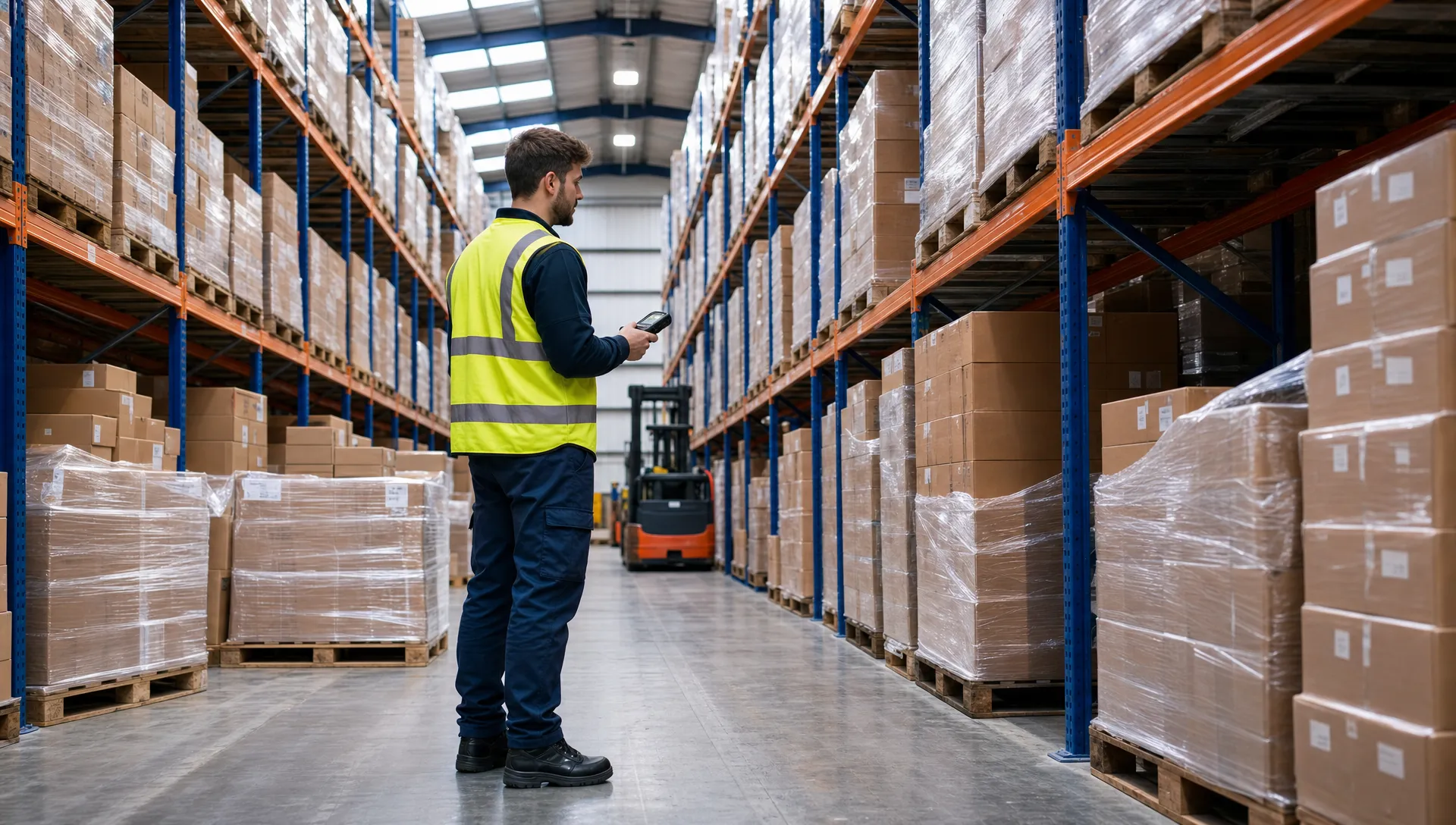
A 3PL can provide a broader storage setup. This might include racked pallet storage, floor storage, pick locations, batch tracking, serial number tracking or best-before date tracking, depending on the provider and product type. For businesses carrying larger quantities, seasonal stock or mixed B2C and B2B inventory, flexible pallet and bulk storage can be a major advantage.
Stock visibility is another important point. If you regularly need to know what is available, what is committed, what is ageing and what is ready to dispatch, you should ask how the provider's warehouse management system works and what you will be able to see.
Cost structure
FBA and 3PL pricing work differently, so comparing them is not always straightforward.
FBA fees are set by Amazon and can include fulfilment, storage, preparation, returns, removals and other charges depending on your products and account activity. For some sellers, the convenience is worth the cost. For others, fees become harder to manage as product size, storage time or complexity increases.
A 3PL usually charges across separate areas such as goods in, storage, pick and pack, packaging, shipping and returns. That can look more detailed at first, but it often gives you a clearer view of what each part of your logistics operation costs.
| Cost question | Why it matters |
|---|---|
| How long does stock sit before it sells? | Slow-moving stock can make storage costs more important |
| Do products need labelling, bundling or preparation? | Extra handling can affect total cost in either model |
| Are you shipping orders from multiple platforms? | Splitting stock can create hidden admin and replenishment costs |
| Do you send parcels, pallets or both? | A parcel-only setup may not suit wholesale or retail growth |
| How often do customers return products? | Returns handling can affect margin and operational workload |
The best comparison is not the cheapest single fee. It is the total cost of storing, preparing, dispatching, returning and managing stock in a way that supports your business.
Delivery and transport options
FBA is built around Amazon's delivery promise. That is helpful for Amazon orders, but it may not cover every type of shipment your business needs.
A 3PL can give you more options for how orders move. You may need parcel dispatch for eCommerce orders, pallet deliveries to trade customers, urgent replenishment, same-day transport, timed deliveries or larger vehicle support. If your logistics needs go beyond standard marketplace parcels, working with a provider that also offers same-day and next-day transport can simplify the operation.
This is particularly important for product businesses supplying both consumers and business customers. Your website customer might need a small parcel. Your retailer might need a pallet. Your sales team might need urgent stock moved the same day. One fulfilment model will not always suit every delivery requirement.
Returns and exceptions
Returns are easy to underestimate when comparing FBA and 3PL options. The question is not just who receives the returned parcel. It is what happens next.
With FBA, returned goods are processed within Amazon's framework. With a 3PL, you can usually agree a returns process that matches your products and commercial needs. For example, items may need to be inspected, repacked, quarantined, written off or returned to available stock.
The same applies to exceptions. Damaged inbound stock, short deliveries, mislabelled cartons, urgent rework and retailer-specific requirements all need clear handling rules. A 3PL relationship can be more adaptable when these situations are part of normal business life.
When Amazon FBA is likely to be the better fit
FBA may be the right choice if your business is mainly focused on Amazon and your products are well suited to Amazon's fulfilment rules.
It is often a good fit when:
- Amazon is your primary sales channel.
- Your product range is simple and easy to replenish.
- You do not need much control over packaging or presentation.
- You want Amazon to manage the delivery experience for Amazon customers.
- You are not yet ready to build a wider logistics operation.
For many Amazon sellers, FBA is a sensible starting point. It reduces operational friction and lets you test products without immediately needing your own warehouse or a separate fulfilment partner.
When a 3PL is likely to be the better fit
A 3PL becomes more attractive when logistics is no longer just about sending Amazon orders. If your business has multiple channels, larger stockholding needs, B2B orders, retailer requirements or more complex products, a 3PL can give you more room to grow.
It is often a better fit when:
- You sell through your own website as well as Amazon.
- You also sell through eBay, wholesale, retail or trade accounts.
- You need more control over packaging, inserts or order presentation.
- You want clearer stock visibility across all channels.
- You need pallet storage, bulk warehousing or mixed parcel and pallet dispatch.
- You want a logistics partner you can speak to directly when issues arise.
The value of a 3PL is not only that someone else packs the orders. It is that your logistics operation can be built around your business, your stock profile and your customers.
Can you use Amazon FBA and a 3PL together?
Yes. For many growing businesses, the best answer is not Amazon FBA or 3PL. It is both, used carefully.
A hybrid approach can work well if Amazon remains an important sales channel but you also want to grow outside Amazon. You might keep fast-moving Amazon stock in FBA while holding wider inventory with a 3PL for Shopify orders, wholesale customers, retailer replenishment or overflow storage.
This can reduce dependency on one fulfilment route and give you more flexibility when demand changes. It can also help with stock planning, because not every product needs to sit in the same place or be fulfilled in the same way.
The key is to avoid creating confusion. Before using both models, decide which stock sits where, how replenishment will work, how orders will be routed and who is responsible for resolving issues.
How to choose between Amazon FBA and a 3PL
Before making a decision, step back from the fulfilment labels and look at your operation as a whole. The right choice should support your sales strategy, not just today's dispatch workload.
Ask yourself these questions:
| Question | What your answer may suggest |
|---|---|
| Where do most orders come from? | Amazon-heavy businesses may suit FBA, while multi-channel brands often need a 3PL |
| Do you need branded or custom packing? | More control usually points towards a 3PL |
| Are you running out of storage space? | A 3PL with warehousing can support stock growth |
| Do you sell to retailers or trade customers? | Pallet delivery and special requirements often suit a 3PL better |
| Do you need direct support from your logistics partner? | A 3PL relationship may provide more personal communication |
| Are you planning to grow beyond Amazon? | A 3PL can help build a wider logistics foundation |
If your answer to most questions points towards Amazon, FBA may continue to be a strong fit. If your answers point towards wider channel growth, more stock control and greater operational flexibility, it is worth speaking to a 3PL.
Where Gus Logistics fits
Gus Logistics is a family-run 3PL provider based in Nantwich, Cheshire, supporting eCommerce brands, manufacturers and product businesses across the UK.
For businesses comparing Amazon FBA vs 3PL, Gus Logistics can help with the practical side of outsourced logistics. Services include order fulfilment and pick and pack, pallet and bulk warehousing, same-day and next-day transport, co-packing, contract packing and FSDU support.
For eCommerce brands, Gus Logistics integrates with 60+ platforms including Shopify, Amazon, eBay, WooCommerce and Magento. The team also offers late cut-offs up to 10pm and next-day dispatch, plus real-time warehouse management system tracking through a client portal.
Because Gus Logistics has no minimum volume requirements, smaller and growing businesses can have a sensible conversation before they are shipping thousands of orders a month. Customers also speak directly to the people handling their freight, rather than going through a call centre.
Frequently Asked Questions
Is Amazon FBA the same as a 3PL? No. Amazon FBA handles fulfilment within Amazon's network, mainly for Amazon sellers. A 3PL is a wider logistics partner that can support storage, fulfilment, transport and stock management across multiple channels.
Is a 3PL cheaper than Amazon FBA? It depends on your products, order volume, storage time, handling needs and sales channels. FBA can be efficient for Amazon-focused sellers, while a 3PL can be more suitable when you need flexibility, stock control and fulfilment across several platforms.
Can I use both Amazon FBA and a 3PL? Yes. Many businesses use FBA for Amazon demand and a 3PL for website orders, wholesale orders, overflow storage or non-Amazon channels. The important part is having a clear stock and replenishment process.
Does a 3PL integrate with Amazon? Some 3PL providers do. Gus Logistics integrates with Amazon as part of its wider platform integrations, alongside systems such as Shopify, eBay, WooCommerce and Magento.
When should I consider moving from FBA to a 3PL? You should consider a 3PL when you are selling through multiple channels, need more control over stock and packaging, are running out of space, want direct logistics support or need services beyond standard Amazon parcel fulfilment.
Need help deciding which fulfilment route is right?
If you are weighing up Amazon FBA vs 3PL, Gus Logistics can help you compare the options around your products, stock levels, sales channels and delivery needs.
To discuss outsourced fulfilment, storage or transport support, call 01270 335014 or get in touch via the Gus Logistics contact page.
Looking for a Logistics Partner You Can Trust?
From warehousing and order fulfilment to transport and FSDU design - Gus Logistics handles it all from our base in Nantwich, Cheshire. Over 10 years experience, no minimum volumes, no long contracts.
