
What an FSDU Campaign Needs to Run Smoothly
An FSDU campaign can be an excellent way to get a product noticed in-store, but it only runs smoothly when the operational details are planned as carefully as the display itself.
A strong design matters, but it is only one part of the job. The campaign also needs the right stock levels, retailer approvals, assembly instructions, packing method, delivery schedule, store allocation plan and quality checks. If any of these are left until the last minute, the result can be missed launch dates, damaged displays, incorrect store quantities or extra handling costs.
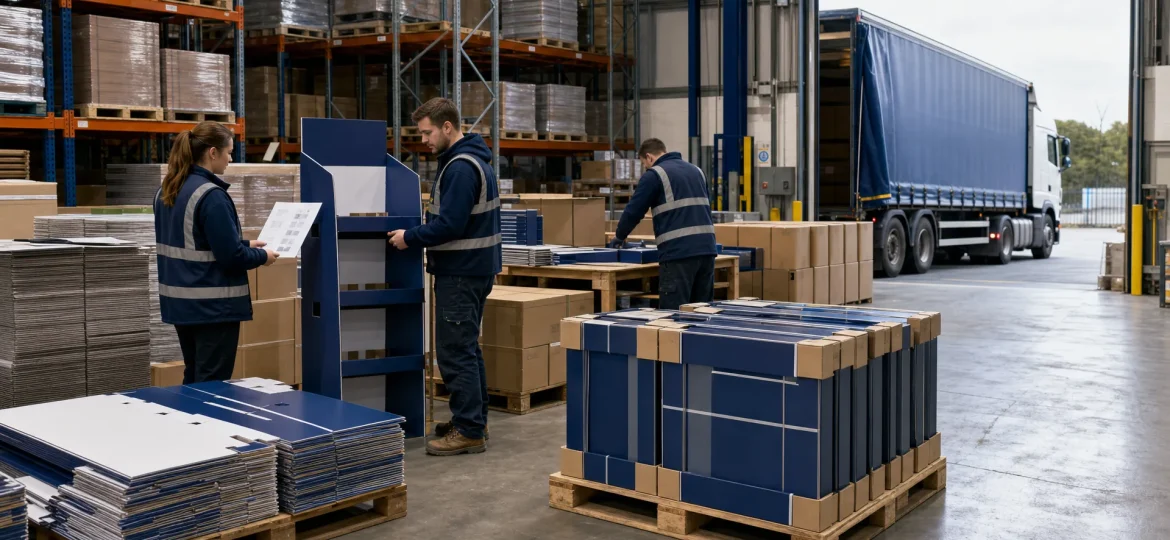
For brand owners and operations managers, the best approach is to treat an FSDU campaign as a mini supply chain project. The display has to be designed, produced, filled, checked, stored, transported and received by stores in the right condition, at the right time.
Start with the campaign objective
Before choosing materials, artwork or unit size, be clear on what the campaign needs to achieve. An FSDU for a product launch may need bold visibility and enough capacity for fast stock movement. A seasonal promotion may need tighter delivery timing and careful store allocation. A premium product display may need a higher quality finish and extra protection in transit.
The objective affects almost every decision that follows, including:
- How much stock each unit should hold
- Whether the unit should arrive flat-packed or pre-filled
- Which stores should receive the display
- How long the display is expected to remain in-store
- Whether replenishment stock is needed during the campaign
- What retailer compliance rules apply
This is where many campaigns become difficult. If the commercial team, design team, warehouse team and transport partner are working from different assumptions, problems appear late in the process. A clear brief at the start prevents rework and gives everyone the same target.
Confirm retailer requirements early
Retailers often have specific requirements for display size, weight, materials, artwork placement, safety, barcodes, delivery windows and booking procedures. These requirements should be checked before design sign-off, not after the units have been manufactured.
If the FSDU is too tall, too wide, too heavy or difficult for store staff to move, it may be rejected or placed somewhere less effective. If delivery paperwork is wrong, goods may be delayed at the retailer's distribution centre. If stock is not packed in the expected format, stores may have to spend extra time preparing the display.
The practical answer is simple: ask for the retailer's display and delivery specification as early as possible. Share it with every supplier involved, including the designer, manufacturer, co-packer, warehouse and transport provider.
If you are still deciding what format is right for the product, this guide to choosing the right FSDU for your product is a useful starting point before committing to a final structure.
Build a joined-up operational plan
A smooth FSDU campaign needs more than a design file and a delivery date. It needs a joined-up plan covering how the display and product will physically move through the process.
| Campaign area | What to confirm | Why it matters |
|---|---|---|
| Retailer brief | Size, weight, compliance rules and delivery requirements | Prevents rejection or delays at store or distribution centre level |
| Product supply | Stock quantities, carton sizes, batch details and arrival dates | Helps the warehouse plan space, labour and assembly work |
| FSDU production | Unit dimensions, materials, artwork approval and delivery date | Keeps manufacture aligned with the campaign launch date |
| Assembly method | Flat-packed, part-assembled or pre-filled | Affects labour, packaging, transport and store handling |
| Store allocation | Which stores receive which quantities | Reduces the risk of over-supplying or under-supplying locations |
| Transport plan | Collection points, delivery windows, vehicle type and proof of delivery | Helps ensure displays arrive safely and on time |
| Quality control | Checkpoints for print, structure, stock and labelling | Catches issues before units leave the warehouse |
This table may look basic, but it covers the points that cause most avoidable issues. The earlier these details are agreed, the easier it is to control cost, timing and quality.
Make stock planning part of the display plan
FSDU campaigns can fail when the display is ready but the product is not. Stock delays, wrong case quantities or unclear allocation instructions can quickly disrupt assembly and dispatch.
The product plan should answer three questions. How much stock is needed for the full campaign? How much should go into each display? How much reserve stock should be held back for damages, store requests or replenishment?
For products with batch numbers, serial numbers or best-before dates, stock control becomes even more important. The warehouse needs to know whether units should be filled using first-in, first-out stock rotation, whether specific batches are being sent to specific retailers, and whether any items need recording at unit level.
This is one reason many brands use a logistics partner with warehousing and stock tracking capability. Gus Logistics provides pallet and bulk storage with real-time WMS tracking via a client portal, as well as batch, serial number and best-before date tracking where required. For an FSDU campaign, that visibility can make the difference between guessing what is available and knowing exactly what can be assembled and dispatched.
Decide whether units should be pre-filled
One of the biggest operational decisions is whether the FSDUs should be delivered empty, part-filled or fully pre-filled.
Flat-packed units can reduce transport volume, but they push more work onto store staff or the retailer's distribution network. Pre-filled units can save time in-store and help make presentation more consistent, but they need careful assembly, stronger protective packaging and a transport plan that accounts for the finished unit's size and weight.
A pre-filled campaign works best when the warehouse has clear instructions for product placement, facing, shelf loading, inserts, labels and outer protection. It should not be left to interpretation on the packing bench. A simple photo guide or approved sample unit can remove doubt and keep every display consistent.
For a more detailed breakdown of this stage, Gus Logistics has a guide on FSDU pre-fill and dispatch that explains how the process can save brands time when retail deadlines are tight.
Protect the display for real-world handling
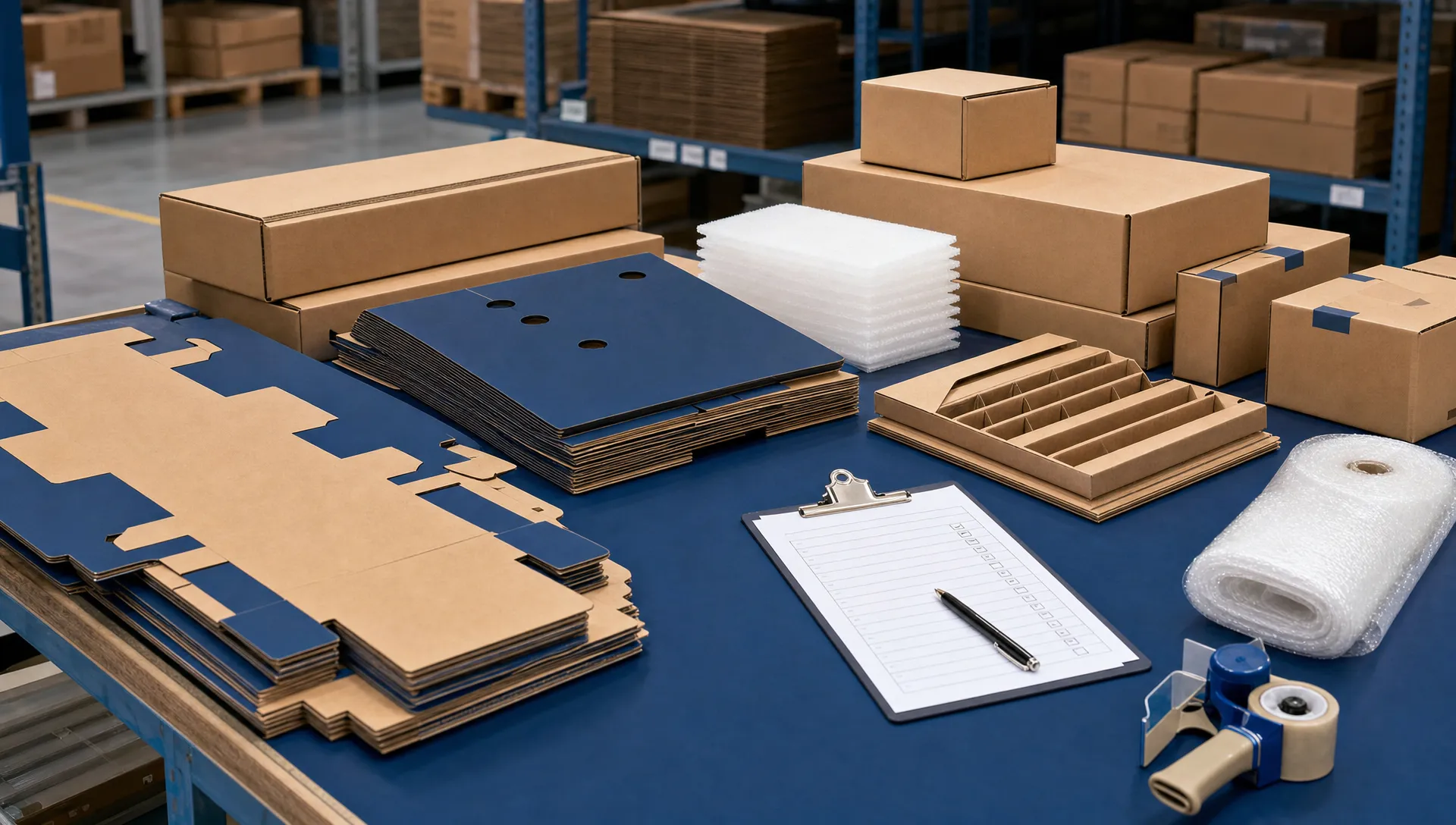
An FSDU might look strong in a sample room, but the real test is the journey from manufacture to warehouse, warehouse to vehicle, vehicle to retailer, and retailer to shop floor. Displays may be handled several times before customers ever see them.
Packaging should be designed around that reality. Edges, corners and printed panels need protection. Heavy products should not place too much strain on shelves or fixing points. If the display is pre-filled, the packing method must stop stock moving around in transit.
Labelling also matters. Each outer pack or completed display should be easy to identify, with the correct store, retailer or campaign reference where required. Any documents included with the unit should match the retailer's process and be kept free from confusion.
The aim is not to overcomplicate the packing process. It is to make sure that when a unit arrives, store teams can understand what it is, where it should go and how it should be handled.
Plan transport before the final week
Transport should not be treated as the final admin task. It affects how displays are packed, how many units can move at once, what vehicles are needed and whether delivery windows can be met.
For example, a small batch of flat-packed displays may be suitable for parcel or pallet movement. Larger pre-filled displays may need more careful vehicle planning, especially if they cannot be stacked or need tail-lift delivery. Retailer distribution centres may also require timed bookings or specific delivery documentation.
A good transport plan should confirm:
- The final packed dimensions and weight of each unit
- Whether units can be stacked or must travel upright
- The number of delivery points and their booking rules
- Whether proof of delivery is required at store or depot level
- What happens if a delivery is refused or rescheduled
Gus Logistics supports same-day and next-day transport using its own fleet and wider vehicle access across the UK and Europe. For FSDU campaigns, that can be particularly useful when launch dates are fixed and delays need to be handled quickly.
Keep quality control practical
Quality control does not need to be complicated, but it does need to be consistent. The key is to check the things that would cause a real problem in-store.
A practical FSDU quality check might cover the print finish, structure, shelf strength, product count, product placement, barcode visibility, outer packaging, store label and delivery paperwork. If the campaign includes multiple SKUs, checks should also confirm the correct product mix.
It is worth agreeing quality standards before assembly begins. For example, what level of print scuffing is acceptable? Should every unit be photographed? Who approves the first completed unit? What happens if product damage is found during packing?
These decisions are much easier to make before there are hundreds of units waiting to leave the warehouse.
Build in time for exceptions
Even well-planned campaigns can face issues. Stock can arrive late. A retailer may change the delivery date. A display component may need replacing. A store list may be updated after assembly has started.
The safest campaigns include a small amount of operational breathing room. That means avoiding a plan where stock arrives in the morning, units are assembled in the afternoon and delivery happens the same evening unless there is no alternative.
It also means having one clear point of contact for decisions. If a packing team finds a mismatch between the stock and the allocation file, they need to know who can approve the correction. If a delivery window changes, the transport team needs to know who should be informed.
Smooth campaigns are not the ones where nothing changes. They are the ones where changes are handled quickly because roles, information and communication lines are clear.
Align FSDUs with the wider point of sale campaign
An FSDU rarely works in isolation. It may sit alongside shelf strips, posters, counter displays, promotional packaging, QR codes or digital activity. If those elements are not aligned, the in-store experience can feel disjointed.
The display artwork, stock presentation and supporting point of sale materials should all match the same campaign message. If stores receive extra POS items, the packing process should make it obvious which items go with which display and where they should be placed.
Brands planning wider retail activity may find it useful to review how point of sale displays can support product visibility alongside FSDUs. The operational principle is the same: make the campaign easy for stores to receive, understand and put in place.
When to involve a logistics partner
The best time to involve a logistics partner is before the campaign is locked down. If the warehouse and transport team only see the project after design, manufacture and retailer timelines are fixed, they have less room to prevent problems.
A capable partner can help sense-check the practical details: how the unit will be assembled, how stock will be tracked, how much space is needed, how the finished displays will be protected and what delivery method makes sense.
Gus Logistics provides FSDU design, manufacture, pre-fill and dispatch support for retail brands that need an end-to-end approach. For businesses in the region, its Cheshire FSDU design service is also well placed for brands that want practical support from a North West logistics partner.
Because Gus Logistics is family-run, customers speak directly to the people handling their freight and projects, rather than being passed through a call centre. The business also supports co-packing, contract packing, container de-stuffing, order fulfilment, warehousing and UK-wide transport, which can be useful when an FSDU campaign is part of a wider product launch.
Frequently Asked Questions
What does an FSDU campaign involve? An FSDU campaign usually involves designing or sourcing the display, producing the units, receiving product stock, assembling or pre-filling displays, checking quality, packing for transport and delivering to stores or retailer distribution centres.
When should I start planning an FSDU campaign? Start as early as possible, ideally before the display design is signed off. Retailer requirements, stock availability, assembly method and transport needs can all affect the final design and campaign timeline.
Is it better to send FSDUs flat-packed or pre-filled? It depends on the product, retailer and campaign deadline. Flat-packed units can reduce transport space, while pre-filled units can save store teams time and improve consistency. The best option is the one that matches retailer requirements and operational practicalities.
What causes delays in FSDU campaigns? Common causes include late stock, unclear retailer specifications, artwork changes, missing store allocation data, poor packaging, incorrect labelling and transport bookings being left too late.
Can Gus Logistics handle the full FSDU process? Gus Logistics can support FSDU design, manufacture, pre-fill, dispatch, co-packing, warehousing and transport, helping brands manage the practical steps needed to get displays into stores.
Plan your next FSDU campaign with confidence
A successful FSDU campaign is built on clear planning, good stock control, practical assembly, reliable transport and strong communication. Get those details right early, and the display has a much better chance of arriving on time, looking right and being easy for stores to use.
If you are planning an FSDU campaign and want practical support from a family-run logistics partner, call Gus Logistics on 01270 335014 or get in touch via the contact page.
Looking for a Logistics Partner You Can Trust?
From warehousing and order fulfilment to transport and FSDU design - Gus Logistics handles it all from our base in Nantwich, Cheshire. Over 10 years experience, no minimum volumes, no long contracts.
