
Can I Store My Products in a UK Warehouse If My Business Is Based Abroad?
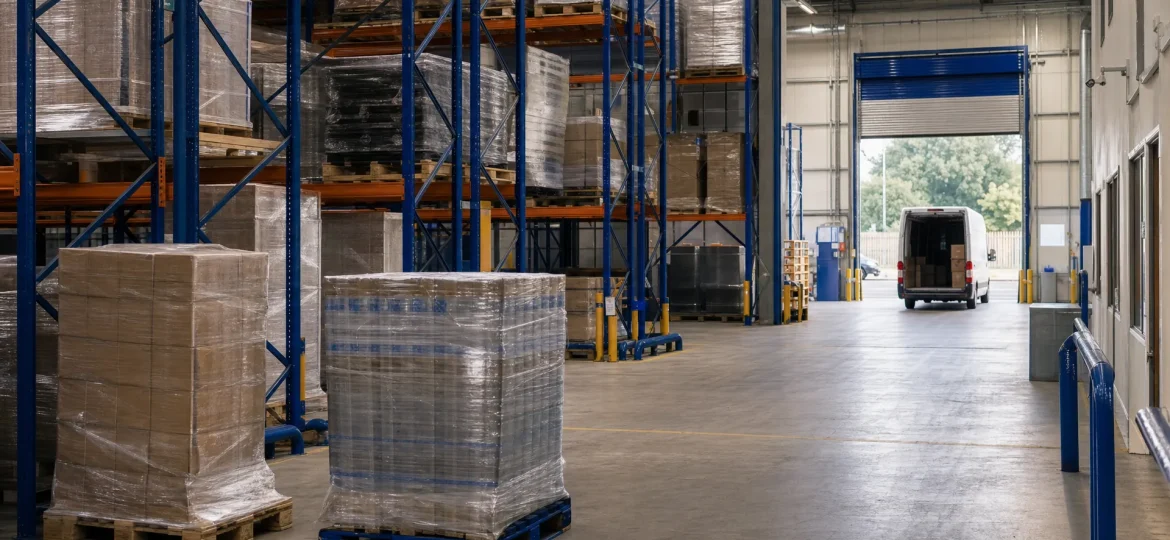
Yes. You can store your products in the UK while your business remains based abroad. A UK warehouse for overseas sellers can receive your stock, hold it and dispatch orders without you renting your own premises or employing a local warehouse team.
You do not automatically need to form a UK limited company to use this arrangement. However, storing goods, importing them and selling them are separate activities with different responsibilities. Before sending stock, you need to agree who handles customs, check your VAT position and confirm that the warehouse can accept your products.
What you can do without your own UK premises
An overseas business can appoint a third-party logistics provider, often called a 3PL, to handle physical stock on its behalf. Depending on the agreement, that can include pallet storage, individual order picking, deliveries to retailers and returns processing.
You remain responsible for running your business and meeting the obligations attached to your goods. The warehouse performs the services you have contracted it to provide. It does not automatically become your importer, tax representative or product compliance adviser.
A warehouse address is not the same as a registered office or virtual business address. A mailing service may receive correspondence but cannot necessarily accept pallets, count products or dispatch customer orders. Equally, permission to store goods does not mean you can use the warehouse address for company registration, VAT registration or marketplace verification. Check each use separately.
Is a UK warehouse for overseas sellers better than direct shipping?
Holding stock locally can shorten the distance between your products and UK customers. That may support faster deliveries, simpler returns and easier replenishment for retail customers. It also creates storage costs and ties up money in inventory before sales happen.
| Decision factor | Shipping individual orders from abroad | Holding stock in the UK |
|---|---|---|
| Delivery journey | Each order travels internationally | Customer orders leave from local stock |
| Stock commitment | Products remain at the overseas location | Inventory must be allocated to the UK |
| Cost structure | International shipping on individual orders | Bulk inbound freight plus storage, handling and domestic delivery |
| Returns | May require international return shipping | Can be received and assessed locally if agreed |
| Demand uncertainty | Useful for testing a market | Requires a replenishment and stockholding plan |
Compare the total cost per completed order, not just the storage rate. Include inbound freight, customs clearance, any duty, receiving, storage, picking, packaging, delivery and returns. Separate recoverable import VAT from permanent costs, while allowing for its cash flow effect.
For low or unpredictable demand, direct shipping may remain sensible. For repeat UK orders, a modest local stockholding can be worth testing before committing your full range.
What must you arrange before sending stock?
Importer responsibilities and customs clearance
Before booking freight to a UK warehouse for overseas sellers, identify who will act as importer and who will submit the customs declaration. Do not put the warehouse down as importer simply because it is the delivery destination.
For imports into Great Britain, check the government's EORI requirements. A GB EORI number is generally needed for the party carrying out relevant customs activities, but an overseas business should confirm the correct arrangement with its customs representative. If your business is not UK-established, ask what form of customs representation is available.
Your freight forwarder or customs agent will also need accurate product descriptions, commodity codes, values and origin information. Agree who pays duty, import VAT and clearance charges before the shipment leaves.
Ordinary warehouse storage is not automatically customs warehousing. Unless a suitable customs procedure and authorised facility are specifically arranged, do not assume that putting goods into storage defers import charges.
VAT registration and marketplace rules
Using a UK warehouse for overseas sellers does not, by itself, settle your VAT position. Where the goods are located when sold, who buys them and whether a marketplace facilitates the sale all matter.
A business that is not established in the UK generally cannot rely on the domestic VAT registration threshold when it makes taxable UK supplies. Check HMRC's guidance on overseas goods sold directly to UK customers before launching sales from local stock.
Different rules can apply to overseas goods sold through online marketplaces. A marketplace may account for VAT on qualifying consumer sales, but that does not automatically remove every registration, record-keeping or import VAT responsibility.
Ask a UK VAT adviser to review your actual sales model. Also check current marketplace requirements, rather than assuming that acceptance by a warehouse makes your seller account compliant.
Product acceptance and compliance
Send the warehouse a product list before arranging transport. Include dimensions, weights, packaging, storage conditions, shelf life and any safety information. Food, cosmetics, batteries, liquids and dangerous goods can require additional checks or specialist facilities.
The business's location or sector does not tell the warehouse enough. For example, WM Painting & Decorating provides painting and decorating services in Australia's Illawarra and South Coast. If a business of that type separately launched a UK accessories range, the warehouse requirements would depend on the actual goods, not its service-business description. Brushes and solvent-based coatings would need different acceptance checks.
Confirm product labelling, safety and market-access requirements separately. A warehouse agreeing to receive a carton is not confirmation that its contents can legally be sold in the UK.
How stock and orders can be managed from abroad
A UK warehouse for overseas sellers needs clear instructions before the first delivery. Provide product codes, quantities, carton or pallet details and an expected arrival date. Agree how discrepancies, damaged cartons and unexpected deliveries will be handled.
If your manufacturer is shipping straight to the facility, these arrangements for sending stock directly from a supplier to a warehouse help prevent receiving problems. The supplier, freight forwarder and warehouse should all work from consistent shipment information.
Once goods are received, you need a reliable way to see available stock and send orders. Ask how the warehouse system connects with your sales channels and how quickly stock changes become visible. If your products require batch, serial number or best-before tracking, specify that before onboarding.
Returns also need written instructions. Decide which items can be restocked, which require inspection and who authorises disposal or return to the supplier. Otherwise, returned products can sit unresolved while you are operating in another time zone.

How to assess a warehouse partner when you cannot visit regularly
Location matters, but operational clarity matters more. A convenient motorway connection cannot compensate for unclear charges or poor stock records.
When comparing a UK warehouse for overseas sellers, ask for written answers to these questions:
- What does the quote include? Check receiving, storage units, picking, packaging, dispatch, returns, account charges and minimum commitments.
- What service levels will apply? Agree receiving times, order cut-offs, dispatch targets and how exceptions are reported.
- How is stock accuracy checked? Ask about stock counts, discrepancy investigations and access to inventory records.
- Who insures the goods? Clarify your own cover, the provider's liability limits and the process for loss or damage claims.
- Who handles problems? Establish a named contact, communication hours and an escalation route that works across time zones.
- How can you leave? Understand notice periods, stock release procedures, transfer charges and access to your data.
For businesses selling individual products online, the practical checks in choosing a UK pick and pack partner are particularly relevant. Storage capacity alone does not establish whether a provider can process your daily order mix.
Ask providers to quote against the same example month, using your expected stock levels, order numbers, items per order and returns. That produces a more useful comparison than headline rates based on different assumptions.
Start with a controlled launch
You do not have to transfer every product at once. A smaller opening shipment lets you test receiving, stock visibility, order transmission and delivery performance before increasing your commitment.
Choose products with enough demand history to support a sensible opening quantity. Allow for manufacturing, international transport, customs clearance and warehouse receiving when setting replenishment dates. Stock already on order is not the same as stock available to sell.
A UK warehouse for overseas sellers should also have an agreed process for exceptions. Test what happens when an address is incomplete, an item is unavailable or an order needs cancelling. These situations are easier to resolve before a busy trading period.
Review the trial against actual costs, delivery outcomes and the time your team spends managing it. Then decide whether to add products, increase stock or keep some slower-selling lines overseas.
Frequently asked questions
Do I need a UK company to use a warehouse? Not necessarily. An overseas company can contract for UK warehousing. Company formation, VAT registration, customs arrangements and marketplace verification are separate matters that should be checked for your circumstances.
Can the warehouse act as my importer? Only if it explicitly agrees and can legally provide that service. Receiving your shipment does not automatically make the warehouse the importer. Confirm the arrangement before dispatching goods.
Can UK stock serve EU customers too? Yes, but shipments from Great Britain to the EU cross a customs border. UK stockholding does not remove EU import VAT, customs or product obligations. Northern Ireland has different arrangements that require separate consideration.
Is there a minimum order volume? Requirements vary between providers. Some impose minimum monthly charges or volumes, so compare the full agreement rather than assuming that low order numbers will be accepted on the same terms everywhere.
Discuss UK storage with Gus Logistics
If you are assessing a UK warehouse for overseas sellers, Gus Logistics can discuss your products, shipment plans and handling requirements before you commit stock.
Gus Logistics is a family-run provider based in Nantwich, Cheshire, with over 10 years of experience. Its warehouse storage services include racked and floor storage, with real-time warehouse management system tracking through a client portal. Batch, serial number and best-before tracking are available.
The business also provides order fulfilment, returns management and transport, with no minimum volume requirements. Customers speak directly to the people handling their freight, which is useful when coordinating stock movements from abroad.
Have your product details, expected stockholding, sales channels and likely order volumes ready. Call Gus Logistics on 01270 335014 to discuss a practical UK storage and fulfilment arrangement for your business.
Looking for a Logistics Partner You Can Trust?
From warehousing and order fulfilment to transport and FSDU design - Gus Logistics handles it all from our base in Nantwich, Cheshire. Over 10 years experience, no minimum volumes, no long contracts.
