
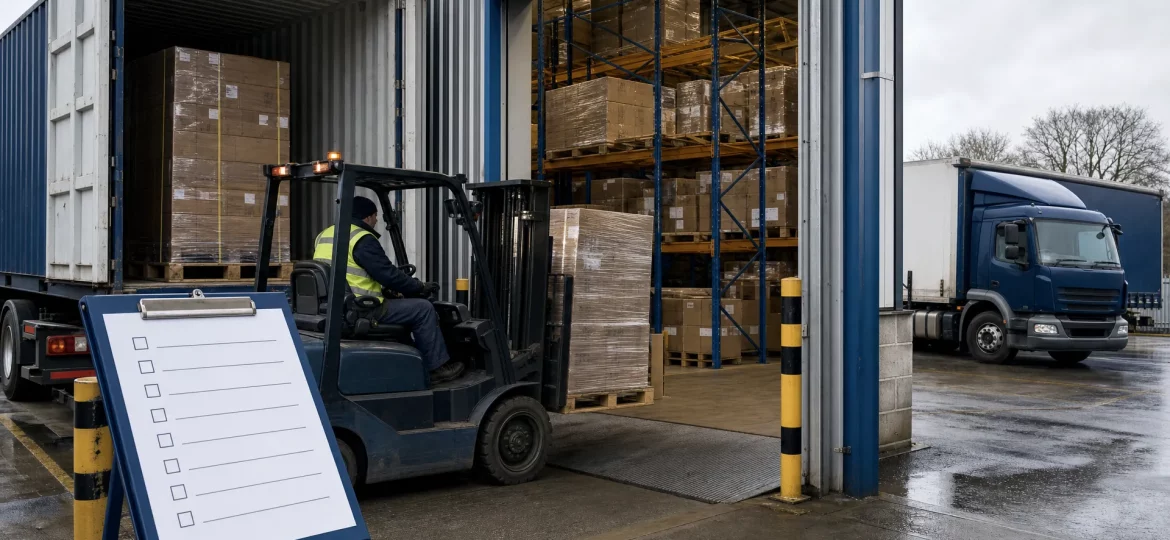
Freight Forwarder Companies vs 3PLs: What’s the Difference?
If you are moving stock, arranging imports, dispatching customer orders or looking for warehouse space, you will quickly come across two similar sounding options: freight forwarder companies and third-party logistics providers, usually called 3PLs.
They both help goods move through a supply chain. They both deal with carriers, delivery timings and operational headaches. But they are not the same thing, and choosing the wrong type of partner can leave you paying for a service that does not actually solve your problem.
In plain English, a freight forwarder is usually focused on arranging the movement of goods, often across borders or through several transport stages. A 3PL is usually focused on running the day-to-day logistics operation for your stock, such as receiving goods, storing products, picking and packing orders, managing returns and arranging onward delivery.
The difference matters because your business might need one, the other or both.
The short answer
If your main problem is getting goods from a supplier, factory, port or overseas location to another destination, a freight forwarder may be the right fit.
If your main problem is storing stock, dispatching orders, managing inventory, handling returns or outsourcing your warehouse operation, a 3PL is usually the better fit.
If your goods are imported, stored in the UK and then sold to customers, retailers or wholesalers, you may need a freight forwarder for the inbound movement and a 3PL for the UK warehousing and fulfilment operation.
| Your requirement | Usually the better fit | Why |
|---|---|---|
| Importing goods from overseas | Freight forwarder | They arrange international movement, carrier bookings and shipping paperwork |
| Exporting pallets or containers | Freight forwarder | They manage routing, documentation and cross-border transport coordination |
| Storing stock in the UK | 3PL | They manage warehouse space, inventory and stock control |
| Picking and packing online orders | 3PL | They handle daily fulfilment activity and dispatch |
| Sending pallets to retailers | 3PL or transport provider | A 3PL with transport capability can manage storage and outbound delivery |
| Managing a full stock-to-customer operation | 3PL | They support warehousing, fulfilment, returns and delivery workflows |
What freight forwarder companies usually do
Freight forwarder companies act as organisers for the movement of freight. They do not always own the ships, aircraft, lorries or containers involved. Instead, they coordinate the different parties needed to move goods from origin to destination.
A freight forwarder might arrange sea freight, air freight, road freight or a combination of transport modes. They may book cargo space, prepare or check shipping documents, coordinate customs processes through the relevant parties, arrange collection from a supplier and manage delivery to a warehouse, port or final destination.
For example, if you are importing pallets of products from a manufacturer overseas, a freight forwarder can help get that shipment from the factory to the port, onto a vessel, through arrival processes and then onward to your chosen UK warehouse.
Their value is strongest when freight is complex. That could mean international shipping, customs paperwork, multiple carriers, port handling, consolidation, unusual cargo, tight routing requirements or regular supplier collections from overseas.
However, a freight forwarder is not always set up to run your daily stock operation. Some have warehousing divisions, and some offer added services, but their core role is usually shipment movement rather than ongoing order fulfilment.
What a 3PL usually does
A 3PL, or third-party logistics provider, takes on outsourced logistics activity for your business. Instead of holding stock in your own unit, hiring warehouse staff and managing dispatch yourself, you use a logistics partner to handle some or all of that operation.
A 3PL may receive inbound stock, check goods in, store it by SKU, manage inventory in a warehouse management system, pick customer orders, pack parcels, print carrier labels, dispatch goods, process returns and provide transport support.
For an eCommerce brand, that might mean orders flowing from Shopify, Amazon, eBay, WooCommerce or another platform into the 3PL’s system, then being picked, packed and dispatched from the warehouse. For a manufacturer or B2B product business, it might mean storing pallets, sending stock to wholesalers, delivering to retailers or preparing goods for seasonal promotions.
Gus Logistics supports businesses with order fulfilment and pick and pack services, warehousing and storage and transport and delivery support from its base in Nantwich, Cheshire. That type of setup is different from a pure freight forwarding model because it is built around stock handling, dispatch and day-to-day operational support.
A 3PL can be especially useful when your internal team is spending too much time dealing with warehouse tasks instead of sales, purchasing, customer service or product development.
The biggest practical differences
The easiest way to separate freight forwarder companies from 3PLs is to look at the job they are being asked to do.
| Area | Freight forwarder companies | 3PL providers |
|---|---|---|
| Core role | Arrange freight movement | Manage outsourced logistics operations |
| Typical focus | Imports, exports, carrier coordination and documents | Warehousing, stock control, fulfilment, returns and delivery |
| Relationship type | Often shipment-by-shipment or route-based | Usually ongoing operational support |
| Stock handling | May be limited to transit, consolidation or short-term handling | Usually includes receiving, storing, picking and dispatching stock |
| Systems | Shipment tracking and freight documentation | WMS, order integrations, stock visibility and fulfilment reporting |
| Best suited to | Moving goods between locations, especially internationally | Running the stock-to-customer process |
| Key questions | Can they move this shipment efficiently and compliantly? | Can they manage my stock accurately and dispatch orders reliably? |
The names can overlap, which is why it is important not to rely on the label alone. Some freight forwarders offer warehousing. Some 3PLs arrange transport. Some larger providers do both. The real question is whether the company has the systems, people, space and process to handle your specific requirement.
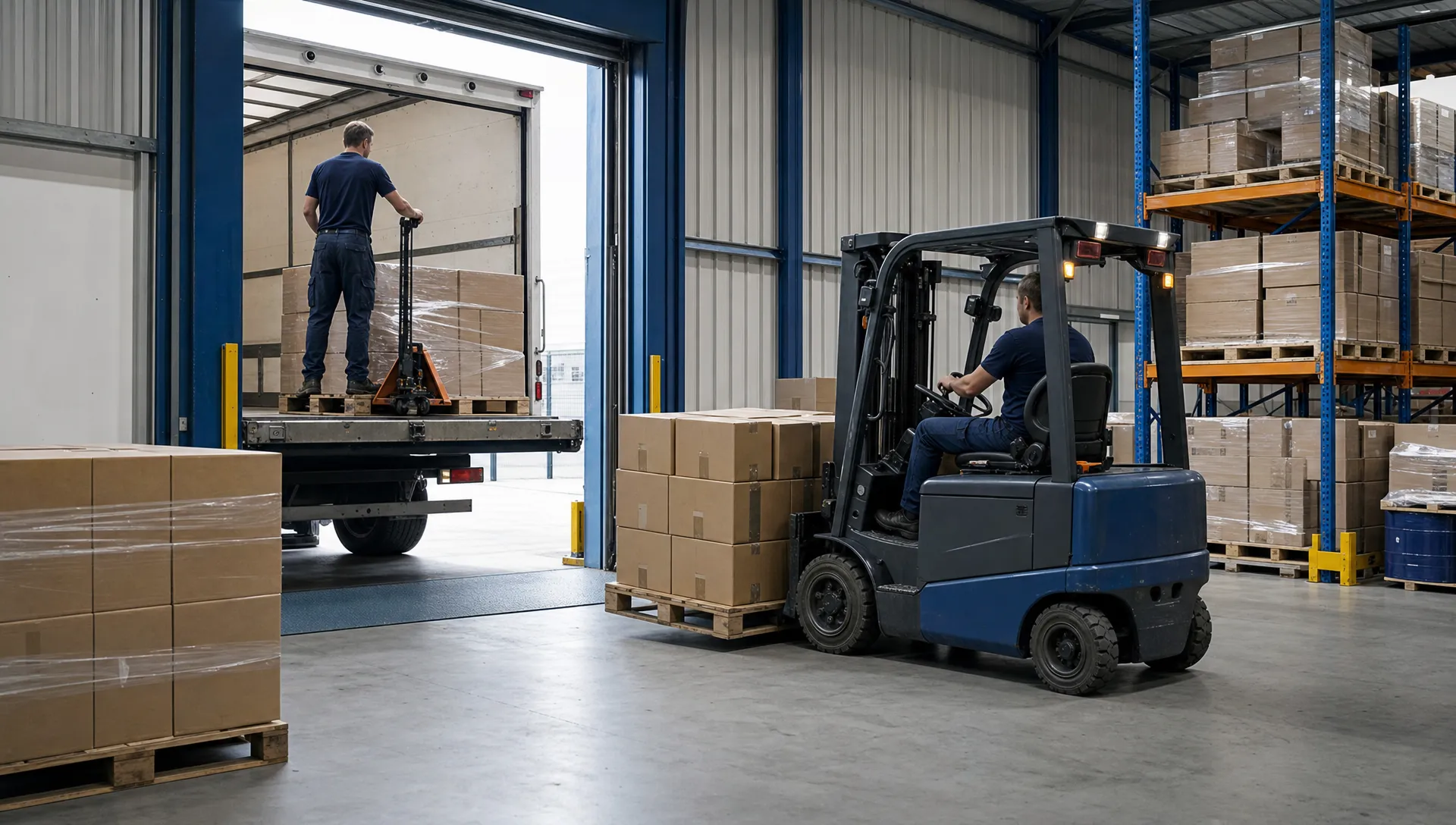
Where the overlap can cause confusion
The confusion often starts when a business asks for logistics support but has not yet separated inbound freight from ongoing fulfilment.
For example, bringing a container of stock into the UK is not the same as storing that stock, splitting it into individual SKUs, connecting it to your online store and dispatching hundreds of orders a week. The first part may be a freight forwarding job. The second part is normally a 3PL job.
Likewise, a 3PL may be able to arrange same-day or next-day transport, but that does not automatically mean it is the right partner for complex international freight forwarding, customs documentation or overseas port coordination.
There are also cases where container planning sits alongside both services. For example, a business with overseas sites or US operations might look at suppliers of shipping containers for sale as part of its storage or container strategy, while still using a freight forwarder to move goods and a UK 3PL to fulfil customer orders.
The cleanest setup is often a joined-up one. Your freight forwarder gets goods to the warehouse. Your 3PL receives them, stores them, tracks them, fulfils orders and arranges delivery to customers, retailers or other business locations.
When to choose a freight forwarder
Choose a freight forwarder when the main challenge is transport coordination, especially if goods are crossing borders or moving through ports, airports or several carriers.
This is usually the right route if you are importing from overseas suppliers, exporting to customers in other countries, consolidating shipments, booking sea or air freight, or dealing with paperwork that your team is not confident handling internally.
A freight forwarder can also be useful when you already have your own warehouse or 3PL, but need a specialist to manage the inbound journey before the stock reaches that facility.
The key point is that a freight forwarder helps you move goods to a point in the chain. They may not be the right partner to manage what happens to every SKU after it arrives.
When to choose a 3PL
Choose a 3PL when your pain point is operational capacity. That might mean you are running out of warehouse space, struggling to keep up with order volumes, losing time on pick and pack, dealing with inaccurate stock counts or needing a more reliable dispatch process.
A 3PL is also a good fit if your business needs flexibility. For many SMEs, taking on a larger warehouse, recruiting staff, buying equipment and building systems can be a big commitment. Outsourcing to a 3PL can give you access to warehouse space, processes and transport support without building everything in-house.
This is particularly relevant for growing eCommerce brands, product businesses, manufacturers and retail suppliers. If orders are increasing, retailers are asking for more structured deliveries or your team is spending evenings packing parcels, it is usually time to look at 3PL support.
For businesses that want one partner across several operational areas, it is worth reviewing a provider’s wider UK logistics services rather than comparing storage, fulfilment and transport in isolation.
When you might need both
Many product businesses use both a freight forwarder and a 3PL. They simply use them for different stages of the journey.
A typical setup might look like this: your supplier prepares goods overseas, a freight forwarder arranges the international movement, the shipment arrives in the UK, the stock is delivered to your 3PL, and the 3PL handles storage, fulfilment, retailer deliveries or returns.
This can work well because each provider is focused on what it does best. The freight forwarder manages the movement into the country. The 3PL manages the stock once it is in the warehouse.
The important part is communication. Your 3PL needs to know what is arriving, when it is arriving, how it is packed, how many SKUs are included and whether there are any handling requirements. Your freight forwarder needs accurate delivery details, booking instructions and any warehouse receiving requirements.
If those handovers are unclear, delays and extra costs can appear even when both providers are doing their own jobs properly.
Questions to ask before choosing a provider
Before you decide between a freight forwarder and a 3PL, ask practical questions about what will actually happen to your stock.
- Will you physically store and handle my goods, or only arrange transport?
- Can you receive inbound stock, check it and update inventory records?
- Can you pick and pack individual customer orders as well as pallets or cases?
- Which sales channels, marketplaces or systems can you integrate with?
- Do you manage returns, relabelling, re-packing or co-packing if needed?
- Which parts of the service are handled in-house and which are subcontracted?
- What cut-off times, reporting and stock visibility will I receive?
- How do you communicate when something goes wrong?
These questions quickly reveal whether you are talking to a shipment coordinator, an operational logistics partner or a company that can offer both.
It is also worth asking about volume requirements, contract length, pricing structure and support during onboarding. A provider may look suitable on paper, but the day-to-day relationship matters. If your business needs quick answers, flexible problem solving and direct communication, make sure the provider’s service model matches that expectation.
How pricing usually differs
Freight forwarding and 3PL pricing are structured differently because the work is different.
Freight forwarding is often priced around a specific shipment, route or movement. Costs can include collection, freight charges, carrier costs, handling, documentation, port or terminal charges, delivery and other shipment-related fees. The exact cost can change depending on route, timing, cargo type, transport mode and market conditions.
3PL pricing is usually linked to ongoing operational activity. Common cost areas include goods-in, storage, pick and pack, packaging, carrier charges, returns processing, stock checks and any additional work such as relabelling or re-packing.
Neither model is automatically cheaper or more expensive. What matters is whether the pricing matches the job you need done. A low freight rate does not help if you still have no warehouse process. A low storage rate does not help if inbound shipments are delayed because nobody has managed the freight correctly.
For a fair comparison, map the full journey of your stock from supplier to end customer. Then identify which provider is responsible for each stage.
The common mistake: choosing by label instead of capability
The biggest mistake is assuming that any company with logistics in its description can handle every logistics requirement.
A freight forwarder may be excellent at moving containers but not set up for high-volume eCommerce fulfilment. A 3PL may be excellent at warehousing and dispatch but not the right specialist for international freight paperwork. A transport company may be reliable for same-day deliveries but not offer long-term pallet storage or WMS stock visibility.
Instead of asking whether a company is a freight forwarder or a 3PL, ask what problem you need solved first.
If the problem is movement between countries, ports or carriers, start with freight forwarding. If the problem is stock management, order dispatch, warehousing or returns, start with a 3PL. If the problem covers the full journey, build a process where both roles are clearly defined.
Frequently Asked Questions
Can a freight forwarder also be a 3PL? Yes, some companies offer both freight forwarding and 3PL services. The important thing is to check what they actually handle in-house, what is subcontracted and whether their systems support your day-to-day requirements.
Do I need a freight forwarder if I only sell in the UK? Not usually, unless you are importing goods, exporting goods or arranging more complex freight movements. If your stock is already in the UK and your main need is storage, fulfilment or delivery, a 3PL is usually more relevant.
Is a 3PL better for eCommerce fulfilment? In most cases, yes. eCommerce fulfilment requires stock control, order integrations, pick and pack, packaging, carrier labels, dispatch processes and returns handling. Those are core 3PL activities rather than traditional freight forwarding tasks.
Can a 3PL arrange transport as well as warehousing? Many 3PLs can arrange transport, especially for domestic distribution, pallet movements and same-day or next-day deliveries. Always check whether transport is handled using their own fleet, partner carriers or a mix of both.
What should I do if I import stock and sell it online? You may need both. A freight forwarder can manage the inbound shipment, while a 3PL can receive the stock, store it, connect to your sales channels and dispatch orders to customers.
Speak to Gus Logistics about the right logistics setup
If you are comparing freight forwarder companies with 3PL providers, start by looking at where the pressure is in your operation. If the challenge is moving goods internationally, a freight forwarder may be the right first call. If the challenge is warehousing, fulfilment, stock control, UK transport or returns, a 3PL is likely to be the better fit.
Gus Logistics is a family-run 3PL provider based in Nantwich, Cheshire, supporting eCommerce brands, manufacturers and product businesses across the UK. The team provides practical logistics support across order fulfilment, pallet storage, same-day and next-day transport, FSDUs and co-packing, with direct communication and no call centres.
To discuss what your business needs, call 01270 335014 or get in touch through the contact page.
Looking for a Logistics Partner You Can Trust?
From warehousing and order fulfilment to transport and FSDU design - Gus Logistics handles it all from our base in Nantwich, Cheshire. Over 10 years experience, no minimum volumes, no long contracts.
