
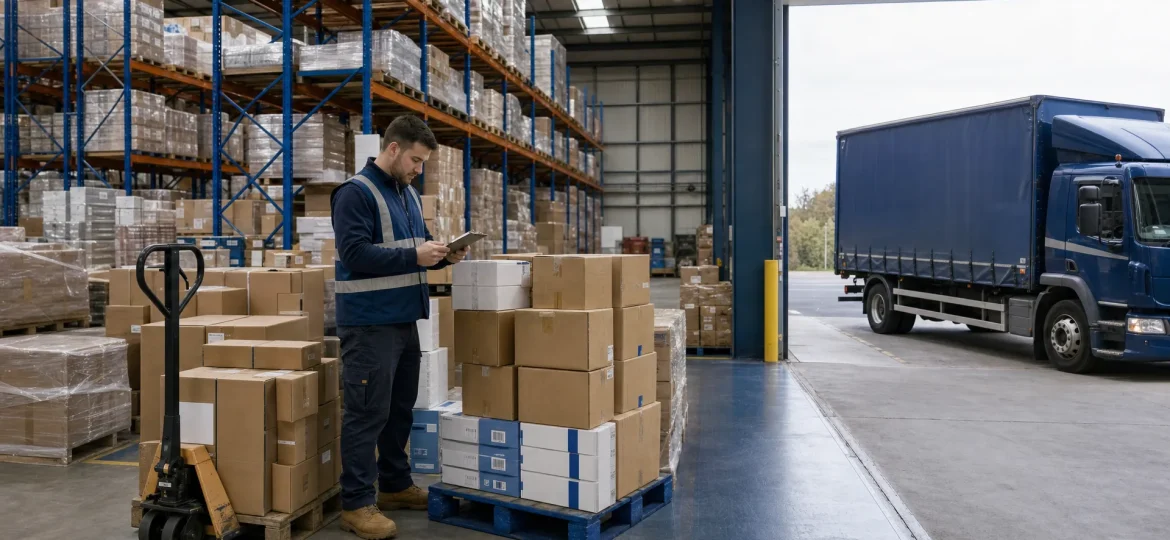
Fulfilment for Wholesale and B2B Orders
Wholesale and B2B orders can be a sign that your business is growing in the right direction. Larger trade customers, repeat purchase orders and retailer relationships can all improve revenue. They can also put serious pressure on your warehouse, stock control and delivery process.
A direct-to-consumer order might be one item going to one home address. A wholesale order could be several cartons, mixed SKUs, palletised stock, delivery paperwork and a strict booking window at a retailer or distribution centre. If the order is late, short-picked or poorly packed, the impact can be bigger than one unhappy customer. It can affect a trade account you have spent months building.
That is why fulfilment for wholesale and B2B orders needs to be planned properly. Whether you are selling to independent retailers, distributors, trade customers, marketplaces or larger retail chains, the right fulfilment setup helps you protect margin, service levels and customer relationships.
Why wholesale and B2B fulfilment is different
Wholesale and B2B fulfilment is not just standard parcel fulfilment with bigger boxes. The whole process needs to account for higher order values, larger quantities, different delivery expectations and tighter stock accuracy.
In B2B eCommerce fulfilment, the buyer is often ordering for resale, production, installation or internal business use. That means the order may need to arrive in a specific format, with the right documentation and at the right time. A missing carton or incorrect SKU can cause a delay further down their own supply chain.
The main differences usually sit in four areas: order size, stock handling, packing requirements and transport planning.
| Area | B2C order fulfilment | Wholesale and B2B fulfilment |
|---|---|---|
| Typical order size | Single items or small parcels | Cartons, cases, bulk orders or pallets |
| Delivery address | Home address or parcel collection point | Business premises, warehouse, retailer or distribution centre |
| Stock control | SKU-level accuracy | SKU, batch, serial number or best-before tracking may be needed |
| Packing | Branded parcel packaging or protective mailers | Outer cartons, pallet wrapping, labelling and delivery paperwork |
| Delivery expectations | Fast and convenient delivery | Timed delivery, booking slots, proof of delivery and trade compliance |
For businesses selling through several channels, the challenge becomes even bigger. You might have individual website orders going out each day, Amazon or eBay orders needing fast dispatch, and wholesale orders that must be picked by carton, case or pallet. A good fulfilment operation should be able to support all of these without mixing stock, missing cut-offs or losing visibility.
What a good wholesale fulfilment process should include
The best fulfilment process for wholesale and B2B orders is structured, repeatable and visible. It should give you confidence that every order is received, picked, checked, packed and dispatched correctly.
Accurate stock visibility
Wholesale orders can remove large quantities of stock at once. If your stock records are not up to date, you risk overselling to other customers or accepting trade orders you cannot fulfil.
A warehouse management system, often shortened to WMS, helps keep stock movements visible. For B2B orders, this can be especially useful when you need to track batches, serial numbers, expiry dates or stock held for different sales channels.
If you are running out of space or relying on spreadsheets, a structured pallet and bulk storage solution can make stock easier to manage before fulfilment even begins.
Picking that matches the order type
B2B orders are often picked differently from individual consumer orders. Some are picked as full pallets. Others are picked by case, carton, inner pack or single unit. If the process is not clear, errors can quickly appear.
A fulfilment team should understand your SKU structure, pack sizes and trade customer requirements. For example, one retailer may order in cases of 12, while another may order mixed cartons across multiple product lines. Clear product data and warehouse processes reduce the chance of short picks, substitutions or incorrect quantities.
Packing that protects the goods and the relationship
For wholesale customers, packaging is not only about avoiding damage. It also needs to make the goods easy to receive, count, store and resell.
This might include strong outer cartons, clear carton labels, pallet wrapping, packing notes and careful separation of product lines. If your products are fragile, heavy, seasonal or high value, packing standards become even more important.
The key question is simple: can the customer receive the order quickly and confidently when it arrives?
Delivery planning, not just shipping labels
Wholesale and B2B delivery can involve more than booking a courier. Some customers need pallet delivery. Others may require a vehicle type, timed delivery, tail lift, booking reference or proof of delivery.
For larger consignments, access to the right transport matters. That might mean vans for urgent smaller loads, rigid vehicles for regional deliveries, artics for larger consignments or specialist handling where needed. A fulfilment provider with its own transport capability can often give you more control than a warehouse that relies only on parcel networks.
For businesses that need UK-wide delivery support, it is worth looking at providers that can combine fulfilment with same-day and next-day transport rather than treating delivery as an afterthought.
Common signs your B2B fulfilment needs improving
Many product businesses start by handling wholesale orders themselves. That can work well while volumes are low and orders are predictable. Problems usually appear when order volume, SKU count or customer expectations increase.
You may need to review your fulfilment setup if you are seeing regular stock discrepancies, warehouse space running out, late trade orders, packing errors, missed retailer requirements or too much management time spent chasing dispatch updates.
Another warning sign is when your team is constantly switching between retail parcels and wholesale picks without a clear process. That can lead to mistakes because the two types of orders need different handling.
A growing B2B channel should not make your operation feel less controlled. If it does, the issue is usually not the sales growth itself. It is the fulfilment setup behind it.
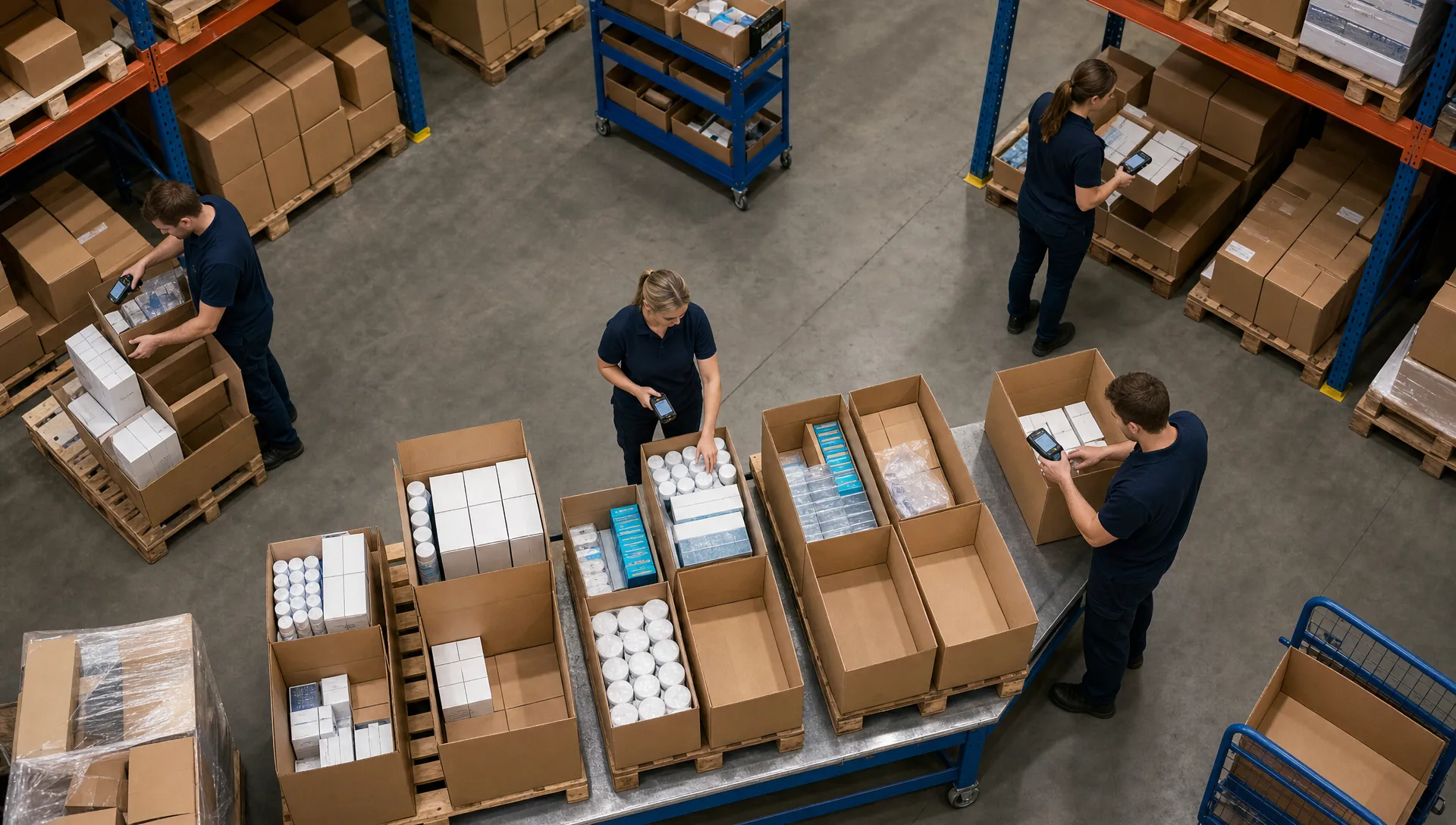
How B2B eCommerce fulfilment supports growing product businesses
B2B buying has become more digital. Many trade customers now expect the convenience of online ordering, while still needing the reliability of traditional wholesale supply. That creates a hybrid requirement: your ordering process may be digital, but the physical fulfilment still needs to handle cartons, pallets and business delivery rules.
This is where B2B eCommerce fulfilment can support growth. If your online store, marketplace or order management system connects with your fulfilment partner, orders can move from sale to dispatch more quickly and with fewer manual steps.
A strong setup should support:
- Clear stock availability across sales channels
- Fast order import from your selling platform
- Accurate picking by unit, carton, case or pallet
- Packing standards agreed in advance
- Delivery options suited to business customers
- Proof of delivery and order status updates
The aim is not to make B2B orders feel identical to consumer parcels. It is to create a fulfilment process that matches the way trade customers actually buy, receive and replenish stock.
If you need support with pick, pack and dispatch as your order mix becomes more complex, dedicated order fulfilment services can help you scale without building a larger in-house warehouse team.
Questions to ask before choosing a 3PL for wholesale orders
Not every third-party logistics provider is set up for B2B fulfilment. Some are built mainly for small parcel eCommerce. Others focus on bulk storage but may not have the systems or team structure needed for mixed SKU order fulfilment.
Before choosing a 3PL, ask practical questions that reflect the way your business actually sells.
| Question | Why it matters |
|---|---|
| Can you handle both parcel and pallet orders? | Many growing brands need support for D2C, wholesale and marketplace orders at the same time. |
| Can you track stock by batch, serial number or best-before date? | This is important for regulated, dated or traceable products. |
| Which platforms can you integrate with? | Faster system integration reduces manual order entry and admin. |
| What are your cut-off times? | Later cut-offs can help you offer faster dispatch to customers. |
| Do you offer transport as well as warehousing? | B2B orders often need more delivery control than small parcels. |
| Who will I speak to when there is an issue? | Direct communication matters when trade orders are time-sensitive. |
It is also worth asking whether there are minimum volume requirements. Some businesses delay outsourcing because they assume they are too small for a 3PL. In reality, the right partner should understand where you are now and where you are trying to grow.
Location also matters for wholesale distribution
For UK businesses, fulfilment location can affect delivery speed, transport cost and access to major road networks. A warehouse that is well placed for the North West, Midlands and wider UK can make stock movement more efficient, especially when you are supplying business customers across multiple regions.
Cheshire and the wider North West are strong locations for businesses that need access to routes such as the M6, M56 and M62. If you are based around Warrington, Manchester, Liverpool, Cheshire or the surrounding area, working with a regional logistics partner can make site visits, stock reviews and day-to-day communication easier.
For companies in and around Warrington looking for connected storage and order handling, Gus Logistics offers warehousing and fulfilment support near Warrington from its base in Nantwich, Cheshire.
When should you outsource wholesale and B2B fulfilment?
There is no single point where every business should outsource. The right time is usually when fulfilment is starting to limit growth or pull too much attention away from sales, product development and customer management.
Outsourcing may make sense when your warehouse is full, your team is regularly working late to dispatch orders, you are turning down larger trade opportunities, or you cannot get reliable stock data quickly enough. It can also help when you need better delivery options for larger consignments but do not want to invest in vehicles, warehouse systems or extra staff.
The decision should be based on control, not just cost. A good 3PL should give you better visibility, clearer processes and more confidence in every order leaving the warehouse.
How Gus Logistics supports wholesale and B2B orders
Gus Logistics is a family-run 3PL provider based in Nantwich, Cheshire, supporting eCommerce brands, manufacturers and product businesses across the UK.
For wholesale and B2B fulfilment, Gus Logistics can support order fulfilment and pick and pack, pallet and bulk warehousing, same-day and next-day transport, and stock tracking through cloud-based logistics systems. The team can integrate with 60+ platforms including Shopify, Amazon, eBay, WooCommerce and Magento, with late cut-offs up to 10pm and next-day dispatch available.
For stock control, Gus Logistics offers racked and floor storage with real-time WMS tracking through a client portal. Batch, serial number and best-before date tracking are available where required. For delivery, Gus Logistics operates its own fleet including vans, 7.5t, 18t and 26t rigids, artics and Moffetts, with access to 5,000+ vehicles across the UK and Europe.
Just as importantly, Gus Logistics is family-run with no call centres. Customers speak directly to the people handling their freight, which matters when wholesale orders are urgent, high value or tied to key customer relationships.
Frequently Asked Questions
What is wholesale and B2B fulfilment? Wholesale and B2B fulfilment is the process of storing, picking, packing and dispatching orders for business customers, retailers, distributors or trade buyers. Orders are often larger than consumer orders and may involve cartons, cases, pallets, delivery paperwork and specific delivery instructions.
How is B2B eCommerce fulfilment different from normal eCommerce fulfilment? B2B eCommerce fulfilment usually involves larger quantities, repeat trade orders, business delivery addresses and stricter stock accuracy. It may also require batch tracking, carton labelling, pallet delivery or timed delivery slots.
Can one 3PL handle both wholesale and direct-to-consumer orders? Yes, if the 3PL has the right systems, warehouse processes and delivery options. Many growing product businesses need a partner that can handle individual online orders alongside bulk wholesale and palletised orders.
Do I need a high order volume to outsource B2B fulfilment? Not always. Gus Logistics has no minimum volume requirements, so businesses can discuss a fulfilment setup that reflects their current needs and growth plans.
What information should I prepare before speaking to a fulfilment provider? It helps to know your SKU count, average order volumes, typical order sizes, storage requirements, sales channels, delivery destinations and any special handling needs such as batch tracking, fragile goods or retailer delivery requirements.
Speak to Gus Logistics about wholesale and B2B fulfilment
If wholesale and B2B orders are becoming harder to manage in-house, the right fulfilment partner can help you protect service levels while freeing up time and warehouse space.
To discuss your order volumes, storage needs and delivery requirements, call Gus Logistics on 01270 335014 or get in touch via the contact page.
Looking for a Logistics Partner You Can Trust?
From warehousing and order fulfilment to transport and FSDU design - Gus Logistics handles it all from our base in Nantwich, Cheshire. Over 10 years experience, no minimum volumes, no long contracts.
