
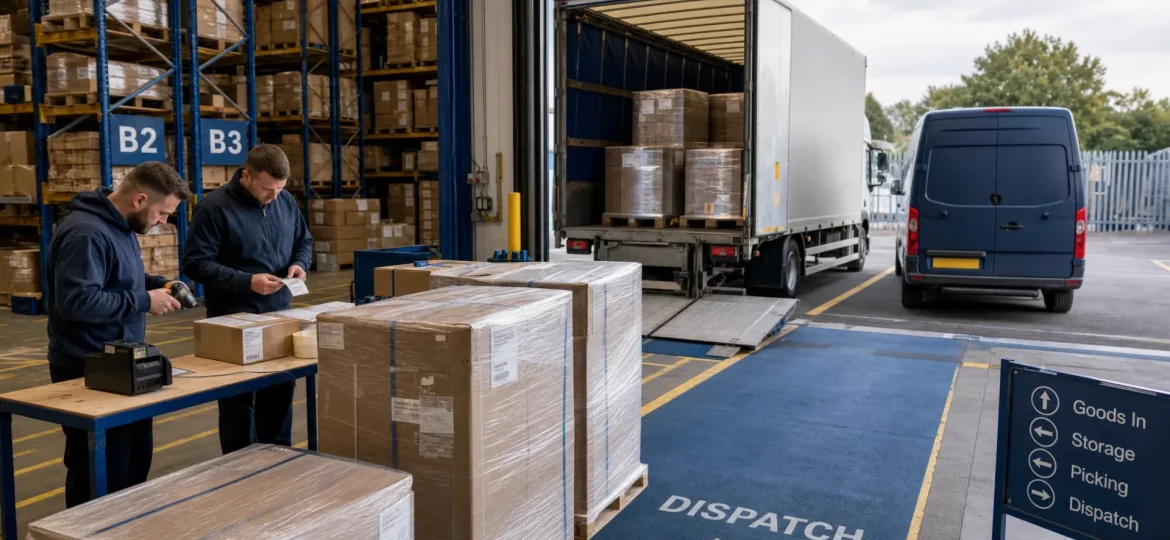
How Logistics Transportation Affects Delivery Speed
If your customers are waiting too long for orders, it is tempting to blame the courier. Sometimes that is fair. But in many cases, delivery speed is decided much earlier, before the goods ever reach the road.
Logistics transportation affects delivery speed at every stage of the journey: where stock is stored, how quickly orders are picked, when vehicles collect, which routes are used, what proof of delivery is captured, and how well disruptions are handled. For a growing business, getting these details right can be the difference between reliable next-day delivery and a stream of delayed orders, customer emails and avoidable costs.
In UK logistics, the term "transportation" usually means the movement of goods between locations. That could be pallets moving from a manufacturer to a warehouse, parcels leaving a fulfilment centre, retail display units going into stores, or urgent stock travelling same-day to a customer site. The faster and cleaner that movement is, the more dependable your delivery promise becomes.
Delivery speed starts before the vehicle leaves
Fast delivery is not just about choosing a quick carrier. The transport leg only works well when the warehouse, stock system and order process are aligned.
For example, a next-day service can still fail if stock is in the wrong location, order data arrives late, labels are printed incorrectly, goods are not staged for collection, or the collection window is missed. On the other hand, a well-planned operation can make even complex deliveries feel straightforward because the work has been prepared before the driver arrives.
This is why businesses should look at delivery speed as a full logistics process, not a standalone transport issue. Transport is the visible part, but warehousing, fulfilment, stock control and communication all feed into the final result.
The main ways logistics transportation affects delivery speed
1. Warehouse location changes the delivery window
Where your stock is stored has a direct impact on how quickly it can reach customers. A warehouse with strong access to major road networks gives transport teams more options for same-day, next-day and regional delivery routes.
For businesses selling across the UK, this does not always mean being in the biggest city. It often means being close to key motorway links, with enough space for efficient loading and unloading. A well-positioned warehouse can reduce wasted time at the start of the journey and improve access to carriers, trunk routes and final-mile networks.
Location also matters for inbound goods. If supplier deliveries, imported containers or manufacturing runs are slow to reach storage, outbound orders are delayed before the customer order is even placed.
2. Vehicle choice affects speed, cost and access
Not every delivery should move on the same type of vehicle. A small urgent delivery may need a van. A larger load may need a rigid vehicle. A site with limited unloading facilities may need specialist equipment such as a Moffett. Choosing the wrong option can cause delays, failed deliveries or unnecessary handling.
A good transport plan matches the load, access requirements and delivery deadline to the right vehicle. This is especially important for bulky products, palletised goods, store deliveries and business-to-business consignments where delivery sites may have specific booking slots or unloading rules.
| Transport requirement | Why it affects speed | Practical consideration |
|---|---|---|
| Small urgent consignment | Can often move quickly with fewer handling points | Check collection time, distance and direct delivery availability |
| Palletised goods | Needs suitable vehicle space and safe loading | Confirm pallet dimensions, weight and tail-lift or forklift needs |
| Retail or store delivery | May require delivery booking and timed arrival | Share store instructions and delivery windows early |
| Heavy or awkward freight | Needs the right vehicle and loading equipment | Confirm site access before dispatch |
| Multi-drop route | Can reduce cost but may add time | Balance delivery speed against route efficiency |
The fastest option is not always the most expensive one, but the cheapest option can become costly if it causes missed delivery slots or re-delivery charges.
3. Cut-off times decide whether an order moves today or tomorrow
For eCommerce and product businesses, cut-off times are one of the biggest influences on delivery speed. If an order misses the warehouse or carrier cut-off, it may not leave until the next working day.
This is why the timing of order import, picking, packing, labelling and collection matters. A late cut-off can support faster customer delivery, but only if the fulfilment process can keep up. If orders are stuck in manual processing, waiting for stock checks or delayed by packaging issues, a late carrier collection will not solve the problem.
Businesses should review where time is being lost. Is it order approval? Stock availability? Picking? Packing? Label generation? Carrier collection? The answer will show whether the transport plan, warehouse process or technology needs attention.
For more detail on the warehouse side of this, Gus Logistics has covered practical ways to improve accuracy and speed in pick and pack best practices.
4. Route planning keeps deliveries moving
Good route planning reduces avoidable mileage, improves vehicle use and helps drivers meet delivery windows. Poor routing does the opposite. It can create late arrivals, longer driving time, higher fuel costs and more pressure on customer service teams.
For same-day and next-day work, route planning needs to account for more than distance. Delivery teams also need to consider traffic patterns, vehicle restrictions, loading times, customer opening hours, driver availability and whether the delivery must be direct or can be consolidated with other loads.
A direct vehicle can be faster for urgent freight because it reduces handling and waiting time. A consolidated route can be more cost-effective, but it may add time because the vehicle is serving multiple deliveries. Neither is automatically right or wrong. The best choice depends on the delivery promise, customer expectation and value of the goods.
Warehouse and transport handovers are a common delay point
One of the most overlooked causes of slow delivery is the handover between the warehouse and transport team. If goods are not ready, labelled, checked and staged correctly, drivers wait. If documentation is missing, the load may be delayed. If the wrong goods are loaded, speed becomes irrelevant because the delivery will still fail.
The best operations treat this handover as a controlled process. Orders are picked accurately, checked against the system, packed securely, labelled clearly and placed in the right collection area before the vehicle arrives. For palletised freight, this may also include checking pallet condition, wrapping, weight, delivery notes and booking references.
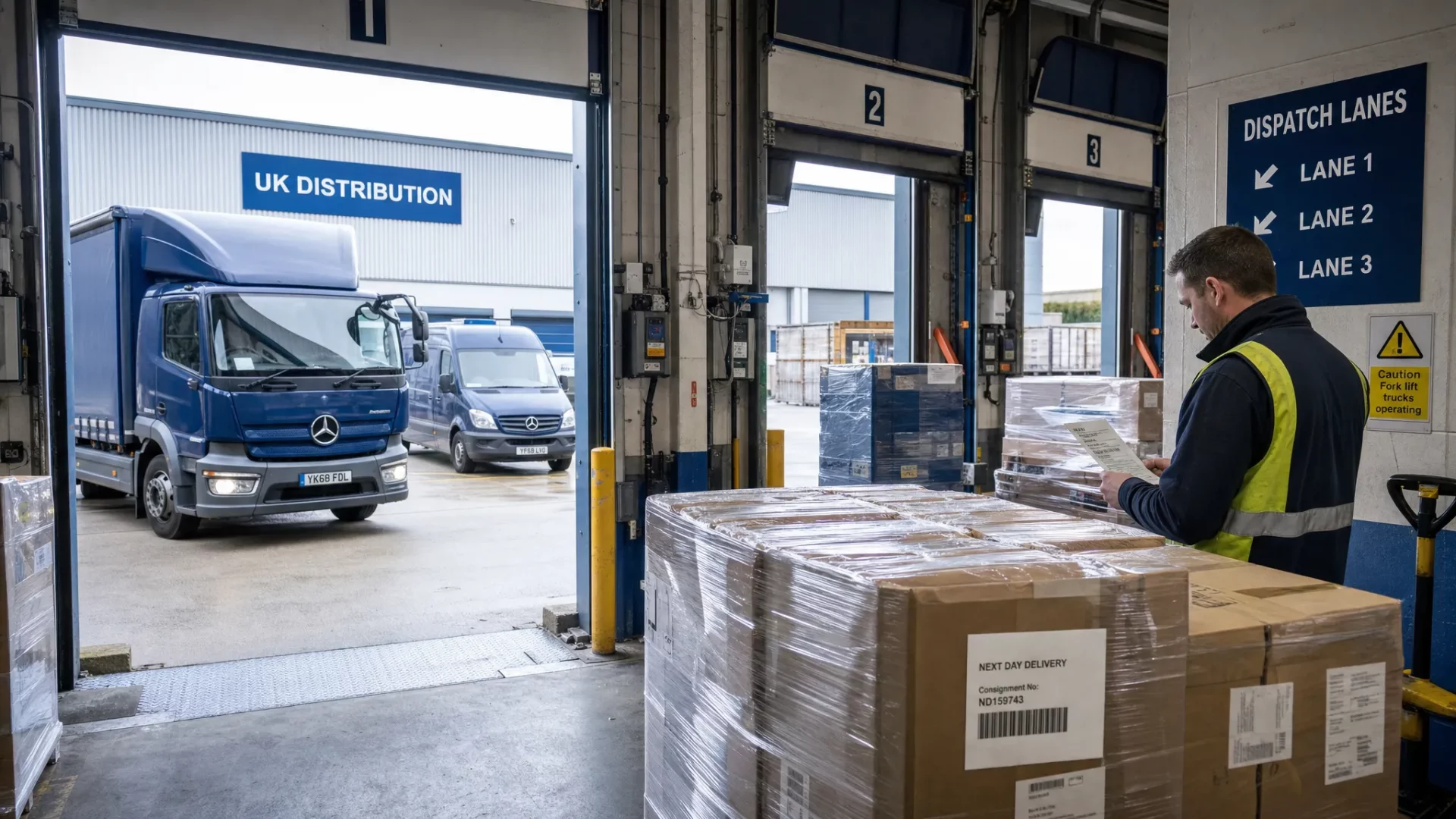
This is where logistics transportation and warehousing need to work together. A transport provider can only move goods quickly if the warehouse gives them the right goods, in the right condition, at the right time.
Stock visibility prevents avoidable delivery delays
Delivery speed depends on knowing what stock you have and where it is. If your system shows stock as available but the warehouse cannot find it, the order will not leave on time. If batch numbers, serial numbers or best-before dates are not tracked properly, extra checks may be needed before dispatch.
Real-time stock visibility helps operations teams make faster decisions. It reduces the need for manual checks, lowers the risk of overselling and gives customer service teams clearer answers when customers ask where their order is.
For businesses with multiple SKUs, seasonal peaks or products with shelf-life requirements, stock visibility is not just a reporting feature. It directly affects whether orders can be picked and transported without delay.
Communication affects perceived speed too
Actual delivery speed matters, but so does communication. Customers are more patient when they know what is happening. They are less forgiving when they receive no update, unclear tracking or conflicting delivery information.
In business-to-business logistics, communication is just as important. A retailer, site manager or receiving team may need to know when a vehicle is arriving so they can make space, allocate staff or prepare unloading equipment. If that information is missing, the vehicle may arrive on time but still be delayed at the point of delivery.
Digital proof of delivery, live order tracking and clear transport updates help reduce uncertainty. They also give businesses a record of what happened if there is a query after delivery.
Disruption planning protects your delivery promise
Even the best transport plan can be affected by disruption. Traffic, weather, vehicle issues, supplier delays, seasonal peaks and last-minute customer changes can all affect speed.
The goal is not to pretend disruption will never happen. The goal is to build enough flexibility into your logistics operation so you can respond quickly. That may mean having access to additional vehicles, using alternative routes, adjusting collection times, prioritising urgent orders or moving stock earlier in the day.
This is particularly important during busy periods. If your order volumes rise sharply but transport capacity stays the same, delivery speed will suffer. Planning ahead for peak trading periods, product launches and retail promotions gives your logistics partner time to secure the right resources.
Gus Logistics has also written about wider operational planning in how efficient logistics can drive business growth, including how better logistics can reduce lead times and support more reliable service.
How to assess whether your transport setup is slowing you down
If delivery speed is becoming a problem, start by looking at the full journey rather than only the courier label. The following questions can help identify the bottleneck:
- Are orders ready before the carrier or vehicle collection time?
- Is stock stored close enough to your main customer base or transport routes?
- Do you have the right vehicle options for urgent, palletised and bulky deliveries?
- Are warehouse teams picking and staging goods in time for dispatch?
- Can you see live stock information without relying on manual checks?
- Are customers receiving clear tracking or delivery updates?
- Do you have a backup plan when order volumes or transport demand increase?
If the answer to several of these is no, your delivery speed issue may not be caused by one weak link. It may be a sign that fulfilment, warehousing and transport need to be managed together.
What to look for in a logistics transportation partner
A good logistics partner should help you move goods quickly, but they should also help you understand what is realistic. Delivery promises need to be ambitious enough to satisfy customers, but practical enough to achieve consistently.
Look for a provider that can explain collection times, storage options, vehicle availability, order processing, tracking and proof of delivery in plain English. You should know who is handling your goods, how orders are prioritised and what happens when something changes.
For growing UK businesses, flexibility is often as important as scale. You may not need a huge national contract or a rigid minimum volume commitment. You may need a partner that can support changing order volumes, urgent deliveries, pallet storage, eCommerce dispatch and retail distribution without forcing you into a one-size-fits-all process.
If you are comparing providers locally, this guide to logistics companies in Cheshire explains why location, service range and direct communication matter when choosing a partner.
How Gus Logistics supports faster delivery
Gus Logistics is a family-run 3PL provider based in Nantwich, Cheshire, supporting eCommerce brands, manufacturers and product businesses across the UK. Because the business combines warehousing, order fulfilment and transport, customers can manage more of the delivery journey through one joined-up operation.
For order fulfilment, Gus Logistics integrates with more than 60 platforms including Shopify, Amazon, eBay, WooCommerce and Magento. The team supports pick and pack, late cut-offs up to 10pm and next-day dispatch, helping businesses move orders quickly once they are placed.
For warehousing, Gus Logistics offers pallet and bulk storage with real-time WMS tracking through a client portal. Batch, serial number and best-before date tracking are available where required, helping businesses maintain better stock visibility before dispatch.
For transport, Gus Logistics operates its own fleet of vans, 7.5t, 18t and 26t rigids, artics and Moffetts, with access to more than 5,000 vehicles across the UK and Europe. This gives businesses options for same-day and next-day transport, urgent movements, palletised deliveries and more complex site requirements.
The company is also positioned near the M6, M56 and M62, giving strong access to major UK road routes. Just as importantly, customers speak directly to the people handling their freight, with no call centres. For many business owners and operations managers, that direct communication can make a real difference when timing matters.
Frequently Asked Questions
What is logistics transportation? Logistics transportation is the movement of goods between locations as part of a wider supply chain. It can include inbound stock movements, warehouse-to-customer delivery, pallet transport, same-day delivery, retail distribution and final-mile delivery.
How does transport affect delivery speed? Transport affects delivery speed through vehicle availability, route planning, collection times, delivery distance, traffic, site access and the number of handling points between dispatch and final delivery.
Is delivery speed only the courier's responsibility? No. Couriers and transport providers play a major role, but delivery speed also depends on stock availability, warehouse picking, packing, labelling, order cut-offs and communication between teams.
Can a 3PL improve delivery speed? A 3PL can improve delivery speed when it connects fulfilment, warehousing and transport in one efficient process. This can reduce handover delays, improve stock visibility and make it easier to choose the right delivery option for each order.
What should I check if my orders are regularly late? Check whether orders are processed before cut-off, whether stock is accurate, whether goods are ready for collection, whether the right vehicle is being used and whether customers are receiving clear delivery updates.
Need faster, more reliable delivery?
Delivery speed is built from the whole logistics process: accurate stock, efficient picking, clear handovers, suitable vehicles and dependable communication. If one part slows down, the customer feels it.
If you are looking for a practical logistics transportation partner for order fulfilment, warehousing, same-day transport or UK-wide delivery support, Gus Logistics can help. Call 01270 335014 or get in touch via the contact page to discuss your requirements.
Looking for a Logistics Partner You Can Trust?
From warehousing and order fulfilment to transport and FSDU design - Gus Logistics handles it all from our base in Nantwich, Cheshire. Over 10 years experience, no minimum volumes, no long contracts.
