

How to Reduce Stockouts During Busy Periods
Busy periods put stock control under pressure. Orders rise, promotions pull demand forward, suppliers get stretched and warehouse teams have less time to fix mistakes. If your stock data is even slightly out of date, the problem can turn into overselling, cancelled orders and unhappy customers very quickly.
The aim is not to hold endless stock. That ties up cash and creates its own storage problem. The aim is to reduce stockouts by knowing which products matter most, when they need replenishing and how quickly you can move them through your warehouse or fulfilment operation.
Below is a practical approach for eCommerce brands, manufacturers and product businesses preparing for Black Friday, Christmas, seasonal launches, retailer promotions or any other high-demand trading period.
Why stockouts happen during busy periods
A stockout rarely comes from one single mistake. It usually happens when several small weaknesses meet a sudden rise in demand.
You might have bought enough stock based on last month’s average sales, but not enough for an upcoming promotion. Your supplier might have shipped late. Your website, marketplace and stock spreadsheet might all show different numbers. Goods might be sitting in the warehouse but not yet booked in, which means they cannot be sold or picked.
The most common causes include:
- Demand rising faster than expected
- Supplier lead times increasing at the worst moment
- Stock being sold across multiple channels without live inventory updates
- Goods arriving late, unlabelled or without clear booking information
- Slow put-away, meaning stock is physically present but not available to sell
- Picking errors, damaged stock or returns not being processed quickly
- Too much warehouse space being taken up by slow-moving products
The good news is that most of these risks can be reduced before the busy period begins.
Start with a SKU-level demand forecast
A broad forecast such as “we expect sales to double in December” is useful for high-level planning, but it is not enough to prevent stockouts. You need to look at individual SKUs, especially your bestsellers and promotional lines.
Start by reviewing sales history, planned campaigns, retailer orders, marketplace activity and any upcoming product launches. If your business has grown since last year, do not simply copy last year’s order volumes. Add context.
For example, a product that sold steadily last year may spike this year if it is included in an email campaign, featured in a retail display or promoted by an influencer. On the other hand, a product that performed well in the past may now be losing demand because a newer version has launched.
| Forecast input | Why it matters | Practical action |
|---|---|---|
| Previous busy-period sales | Shows seasonal demand patterns | Compare by SKU, not just total revenue |
| Current sales velocity | Shows what is already accelerating | Review weekly in the run-up to peak |
| Promotions and campaigns | Creates short demand spikes | Ring-fence stock for planned activity |
| Supplier lead times | Determines when stock must be ordered | Add extra time for peak congestion |
| Retailer or wholesale commitments | Protects contractual or high-value orders | Reserve stock before opening general sale |
The more specific your forecast, the easier it is to spot which products need attention first.
Set reorder points and safety stock before the rush
A reorder point tells you when to buy more stock. During quiet periods, many businesses manage this informally. During busy periods, informal stock control becomes risky.
A simple reorder point can be worked out like this:
Expected demand during supplier lead time + safety stock = reorder point
If you sell 20 units per day and your supplier usually takes 10 days, you need 200 units just to cover normal demand during that lead time. If demand is likely to rise, or the supplier is less reliable during peak periods, you need extra safety stock.
Safety stock is not a guess. It should reflect how important the SKU is, how variable demand is and how hard it is to replenish. A bestseller with a long supplier lead time needs more protection than a slow seller that can be replaced in two days.
For products with batch numbers, serial numbers or best-before dates, reorder planning also needs to consider stock rotation. You do not want to avoid a stockout by overordering goods that later become difficult to sell.
Prioritise the stock that drives the business
Not every SKU deserves the same level of attention. Busy periods are won or lost on your most important products, so prioritise them clearly.
A simple way to do this is to group SKUs into three categories:
- Priority A: Bestsellers, high-margin products, retailer commitments and advertised promotional lines
- Priority B: Regular sellers that matter but are not business-critical
- Priority C: Slow-moving stock, clearance items and products that can be allowed to run low if necessary
Priority A products should have clear reorder points, extra safety stock and daily checks during the busy period. Priority C products should not be allowed to take warehouse space, cash and management time away from stock that actually drives sales.
This is also a good moment to review slow-moving inventory. Holding too much unwanted stock can make stockouts more likely because it limits your space for the products customers are actively buying. If this is a recurring issue, Gus Logistics has a useful guide on what dead stock is and how to reduce it.
Improve stock visibility across every sales channel
If you sell through Shopify, Amazon, eBay, WooCommerce, Magento or wholesale channels, stock visibility becomes one of the biggest stockout risks. The more places you sell, the easier it is for one channel to oversell while another still shows stock available.
Your inventory system should act as the single source of truth. When an order is placed, stock should be allocated quickly. When goods are received, they should be booked in promptly. When returns come back, they should not be made available for resale until they have been checked.
For busy periods, check that:
- All active sales channels are connected to the correct stock feed
- Bundles, kits and multipacks are linked to the right component stock
- Marketplace stock buffers are set where overselling risk is high
- Out-of-stock products are removed from campaigns and paid ads quickly
- Pre-orders are clearly separated from available stock
If your in-house setup is struggling to keep systems aligned, outsourced order fulfilment with integrated sales channels can help keep order processing and stock updates moving in one place. Gus Logistics integrates with more than 60 platforms, including Shopify, Amazon, eBay, WooCommerce and Magento.
Plan inbound stock as carefully as outbound orders
Many stockouts happen even though replacement stock has technically arrived. The issue is that it has not been unloaded, checked, labelled, counted and moved into a pickable location.
During busy periods, inbound deliveries need structure. Your warehouse or 3PL should know what is arriving, when it is arriving, what SKUs are included and which products need to be prioritised for sale.
A clear inbound process should include advance delivery information, agreed booking slots, correct product labelling and fast escalation when a delivery is short, damaged or incorrect. If a shipment contains a bestselling product that is close to selling out, that stock should not sit behind lower-priority goods.
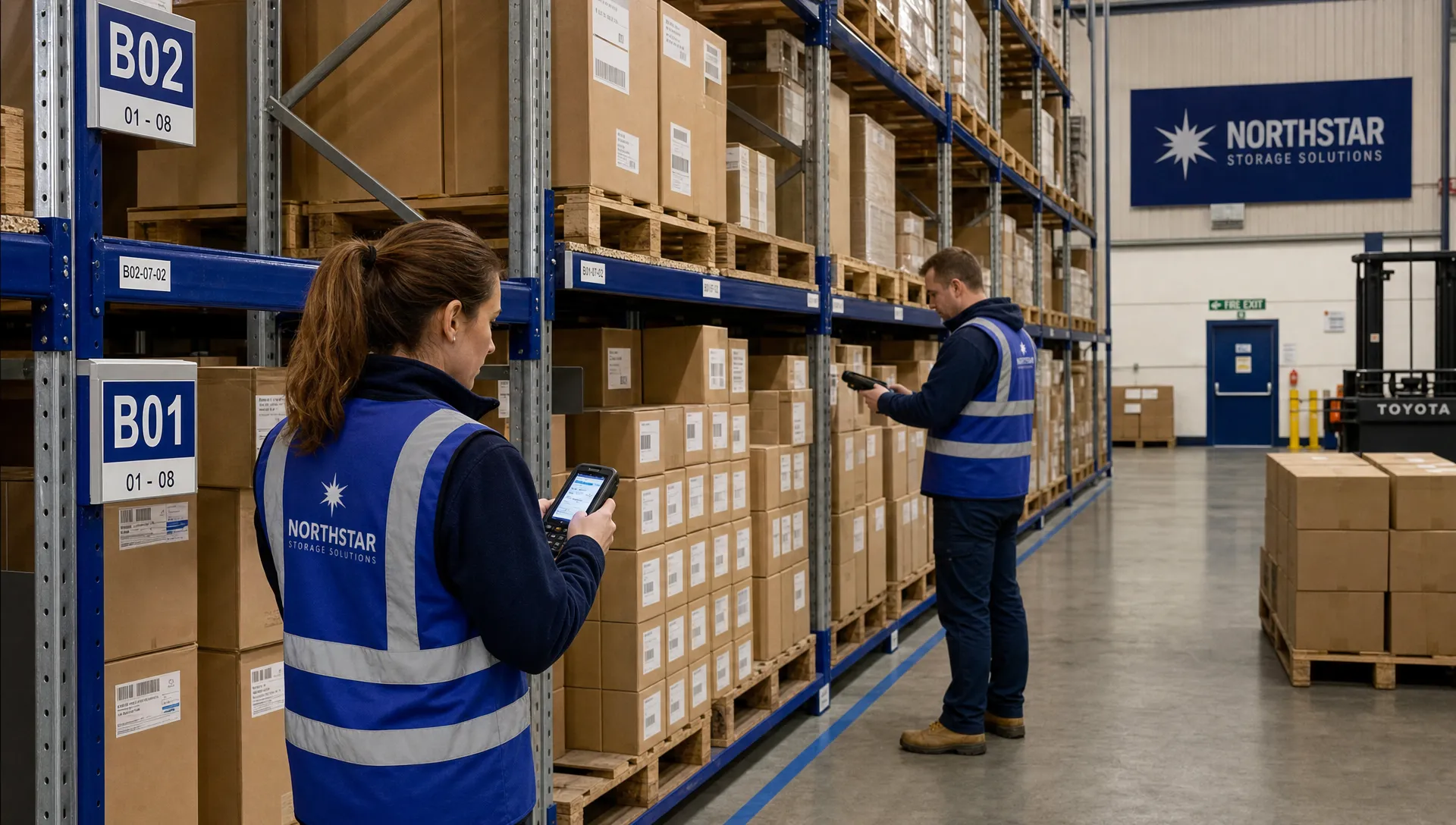
This is where warehouse capacity matters. If your current premises are full, new stock can become slow to process because there is nowhere sensible to put it. Flexible pallet storage and bulk warehousing can give growing businesses room to hold buffer stock, manage seasonal inventory and track goods more accurately through a warehouse management system.
Reduce picking errors that create false stockouts
A stockout is not always caused by having no stock. Sometimes the system says stock is available, but the warehouse cannot find it. That can happen when products are in the wrong location, stock counts are inaccurate or similar SKUs have been mixed together.
Picking errors create a hidden stock problem. If the wrong item is sent, you may have to replace it, process a return and correct the stock record. If the item cannot be found, customer service may have to cancel the order even though the goods are somewhere in the building.
To reduce this risk, focus on simple warehouse discipline:
- Give every SKU a clear location
- Separate similar-looking products where possible
- Use barcode scanning if available
- Run cycle counts on high-risk SKUs before and during busy periods
- Check returned goods before putting them back into saleable stock
- Keep packing areas clear so orders do not get mixed up
Accuracy matters more than speed if poor speed creates rework. A fast dispatch operation that sends the wrong product will still damage customer trust.
Do not leave transport planning until the last minute
Stock availability depends on transport as well as warehouse stock control. If inbound goods are delayed, your website may sell out. If urgent replenishment cannot move quickly between sites, stores or customers, you lose options.
Before a busy period, confirm how you will handle urgent stock movements. This might include supplier collections, warehouse-to-warehouse transfers, direct-to-retailer deliveries or same-day delivery for critical consignments.
For businesses that need more flexibility than standard courier services can provide, same-day and next-day transport support can help move goods quickly across the UK. Gus Logistics operates its own fleet and also has access to a wider UK and Europe-wide vehicle network for additional coverage.
Transport planning is especially important for retail launches and FSDU campaigns, where stock needs to arrive at the right place in the right window. The best stock control plan can still fail if the final delivery stage is not planned properly.
Build a daily stockout risk dashboard
You do not need a complicated dashboard to reduce stockouts. You need a small number of figures that are checked regularly and acted on quickly.
During a busy trading period, daily checks are often more useful than weekly reports. By the time a weekly report shows a problem, the sales opportunity may already have gone.
| Stockout signal | What it tells you | Action to take |
|---|---|---|
| Days of cover | How long current stock will last | Reorder, slow promotions or reserve stock |
| Open purchase orders | What stock is due to arrive | Chase suppliers and confirm delivery dates |
| Backorders | Which customers are already waiting | Communicate clearly and prioritise fulfilment |
| Unprocessed returns | Possible stock not yet available | Inspect and restock saleable items quickly |
| Picking exceptions | SKUs that cannot be found | Investigate locations and run cycle counts |
| Channel stock discrepancies | Risk of overselling | Pause affected listings until corrected |
The key is ownership. Someone should be responsible for checking the dashboard, making decisions and escalating issues before they become customer complaints.
What to do when a stockout is already likely
Even with good planning, some stockouts will still happen. A supplier may miss a shipment, a product may sell faster than expected or a large wholesale order may arrive late in the process.
When a stockout is likely, act early. Do not wait until the product reaches zero.
First, slow demand where you can. Pause paid ads, remove the product from email campaigns and reduce marketplace exposure if overselling is likely. If stock is needed for a retailer or key account, reserve it before general online sales consume it.
Next, communicate clearly. If you take backorders, make the expected dispatch date obvious. If you cannot fulfil an order, tell customers quickly and offer a suitable alternative where possible. Silence creates more frustration than an honest update.
Finally, review substitution options. For some products, a different size, colour, bundle or equivalent item may save the sale. For others, substitution is not appropriate and cancelling early is better than sending the wrong product.
Use returns management to recover stock faster
Returns often increase after busy sales periods. If returned goods are left unprocessed, saleable stock remains trapped in boxes and your system may show lower availability than you really have.
A good returns process checks the item, confirms whether it can be resold, updates the stock record and moves it back to the correct location. This is particularly important for products with short buying windows, such as seasonal ranges or campaign-led items.
If returns are slow, stockouts can continue even after customer demand starts to settle. Processing returns quickly helps recover cash, improve availability and reduce unnecessary reordering.
When a 3PL can help reduce stockouts
A 3PL cannot make poor forecasting disappear overnight, and it cannot force a supplier to ship on time. What it can do is give your business better operational control, more space and clearer stock visibility.
For growing product businesses, outsourcing logistics can help when:
- Your own premises are too full to hold buffer stock
- Staff are spending too much time picking, packing and chasing orders
- Stock counts are unreliable
- Multiple channels are increasing overselling risk
- You need faster inbound processing during peak periods
- You need transport options for urgent replenishment or retailer deliveries
Gus Logistics is a family-run 3PL provider based in Nantwich, Cheshire, supporting eCommerce brands, manufacturers and product businesses across the UK. Its UK logistics services include order fulfilment, warehousing, same-day and next-day transport, FSDU support, co-packing and returns management.
For businesses in Cheshire, the North West and beyond, the combination of storage, fulfilment and transport support can make busy periods easier to control. You still need to plan demand carefully, but you are not trying to manage every moving part alone.
Frequently Asked Questions
How can I reduce stockouts quickly before a busy period? Start with your bestsellers. Check current stock, supplier lead times, open purchase orders and expected promotional demand. Set reorder points, reserve stock for key channels and make sure your inventory system is updating all sales channels accurately.
How much safety stock should I hold? Safety stock depends on demand variability, supplier reliability, lead times and how important the product is to your business. High-demand products with long lead times usually need more safety stock than slow-moving products that are easy to replace.
Can outsourcing fulfilment prevent stockouts? Outsourcing fulfilment can reduce stockout risk by improving stock visibility, warehouse organisation, inbound processing and dispatch control. It does not replace accurate buying or forecasting, but it can make the operational side much stronger.
What is the difference between a stockout and dead stock? A stockout means you do not have enough available stock to meet demand. Dead stock is the opposite problem: stock that is not selling and is taking up space, cash and operational attention.
How often should stock be checked during peak trading? For priority SKUs, stock should usually be checked daily during busy periods. Fast-moving products, promotional lines and retailer commitments need closer attention than slow-moving products.
Need help reducing stockouts during your next busy period?
If busy periods are putting pressure on your stock control, warehousing, fulfilment or transport, Gus Logistics can help you build a more reliable operation. From pallet storage and order fulfilment to same-day transport and returns management, the team supports growing businesses across Cheshire, the North West and the wider UK.
Call 01270 335014 to discuss your requirements, or get in touch via the contact page and the team will be happy to help.
Looking for a Logistics Partner You Can Trust?
From warehousing and order fulfilment to transport and FSDU design - Gus Logistics handles it all from our base in Nantwich, Cheshire. Over 10 years experience, no minimum volumes, no long contracts.
