
Pick and Pack or In-House? Which Is Best for Your Brand
If your team is spending evenings packing parcels, correcting stock errors or hunting for extra space during busy periods, the question becomes hard to ignore: should you keep fulfilment in-house or move to a pick and pack partner?
There is no single right answer for every brand. In-house fulfilment can be a smart choice when volumes are low, products are simple and your team wants hands-on control. Outsourced pick and pack can make more sense when orders are growing, sales channels are multiplying and fulfilment is starting to distract you from buying, selling and serving customers.
The best decision is not just about today’s order volume. It is about control, cost, capacity, accuracy and how much operational pressure your business can realistically absorb.
What does pick and pack actually involve?
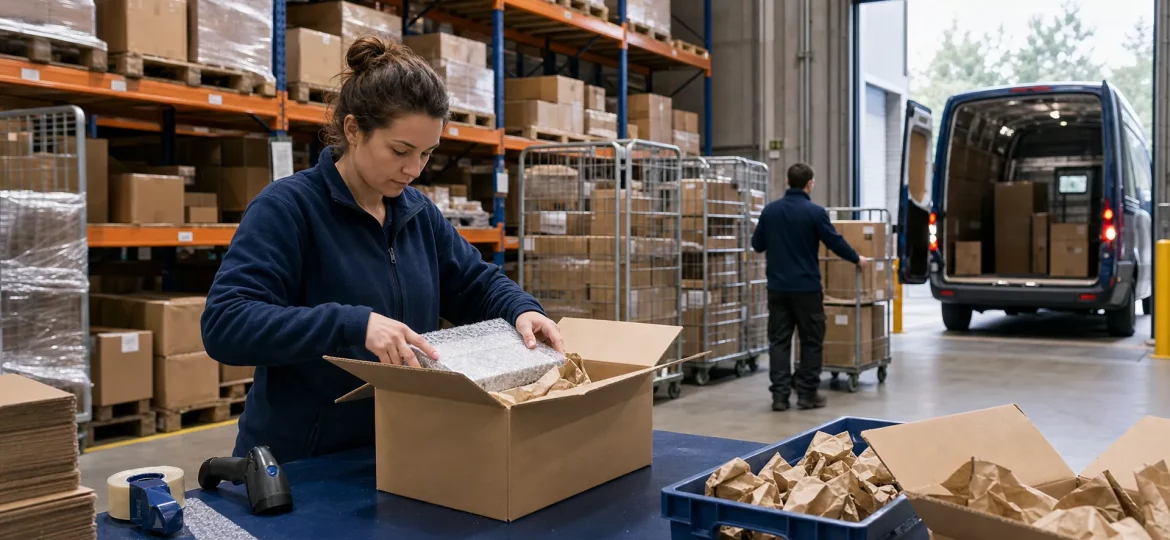
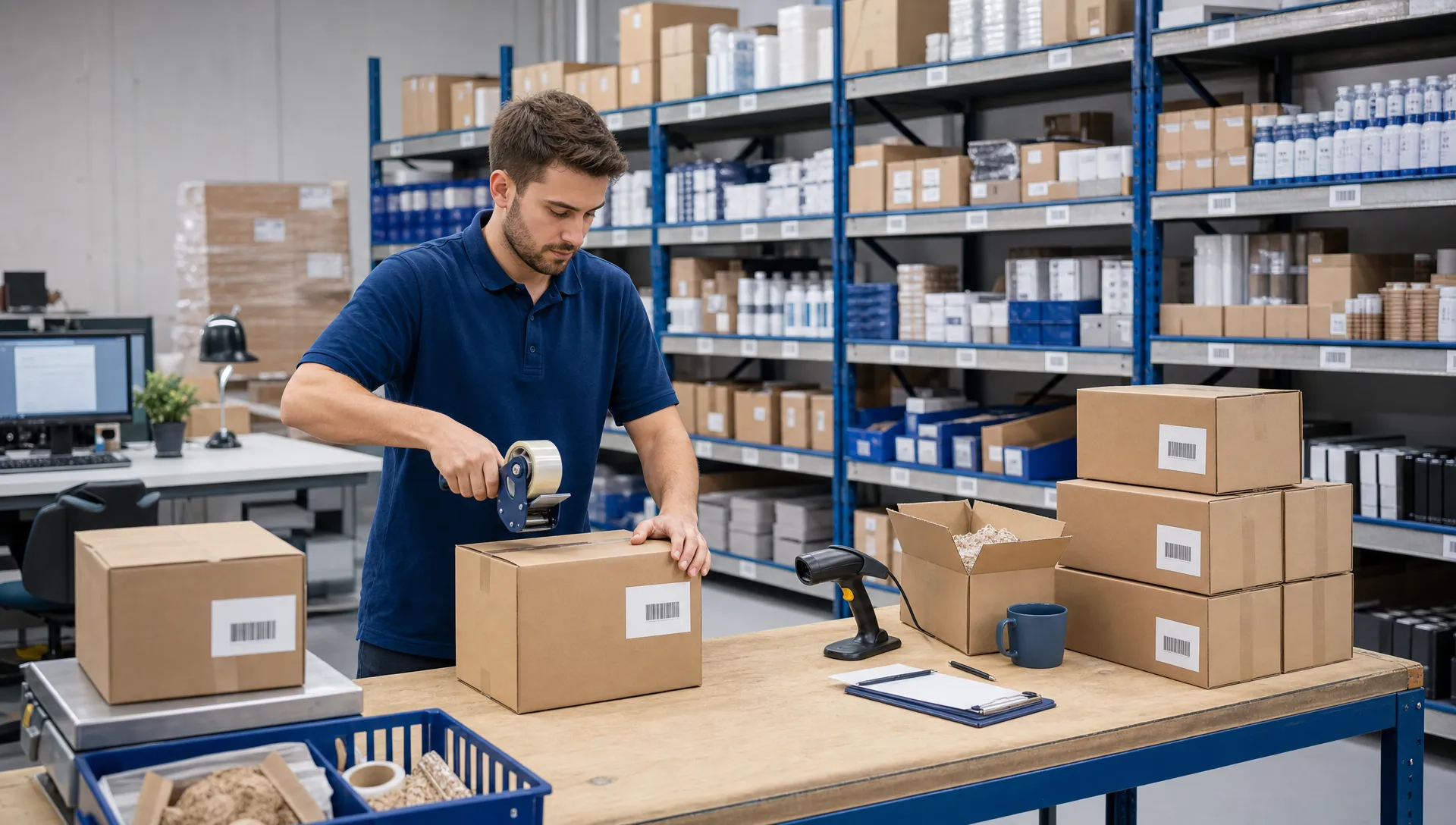
Pick and pack is the process of receiving an order, finding the correct stock, packing it safely and preparing it for dispatch. In a simple in-house setup, that might mean a team member picking products from shelves in your unit, adding a packing slip, sealing the parcel and booking a courier label.
In a third-party logistics setup, the process is handled by an external warehouse team. Stock is stored, orders flow into the warehouse system, items are picked, packed and dispatched according to agreed rules. For growing online brands, this often sits within a wider order fulfilment service that connects stock storage, order processing, dispatch and delivery tracking.
The process sounds straightforward, but small problems can quickly become expensive. A missing item, wrong size, damaged parcel or delayed dispatch can lead to customer complaints, refunds, replacements and extra admin. That is why the choice between in-house and outsourced fulfilment matters.
The case for keeping fulfilment in-house
In-house fulfilment gives you direct control. Your stock is on-site, your team can see every order and you can make quick decisions without needing to speak to a partner.
For early-stage brands, that closeness can be valuable. You learn which products sell together, which packaging works best and where customers ask questions. If you are still testing your product range, refining your unboxing experience or handling a small number of orders each week, it can be practical to keep fulfilment close.
In-house can work especially well when:
- Order volumes are low and predictable
- Products need highly personal packing or handwritten additions
- You already have enough clean, secure storage space
- Your team has spare time to process orders without affecting other work
- Dispatch deadlines are easy to meet with your current setup
It can also feel cheaper at first because you are not paying an external fulfilment fee. But that does not always mean it is truly cheaper. You still need to account for staff time, rent, shelving, packing materials, systems, insurance, mistakes, courier admin and management attention.
Where in-house fulfilment starts to struggle
The warning signs usually appear gradually. At first, packing a few extra orders feels manageable. Then one busy weekend turns into a backlog. A product launch takes over the office. Stock gets stored in corridors. Staff who should be working on sales, customer service or purchasing are pulled into packing boxes.
Common pressure points include stock accuracy, space, staffing and cut-off times. If your team is picking from spreadsheets or manual counts, it becomes harder to trust what is available to sell. If your stock is split across rooms or units, picking takes longer. If you rely on one or two people who know the system, holidays and sickness become a risk.
Customer expectations also increase as your brand grows. Buyers may expect fast dispatch, clear tracking and reliable delivery updates. Missing those expectations can damage repeat sales, even if the product itself is strong.
The key question is not whether your team can pack orders. It is whether fulfilment is still the best use of their time.
What outsourced pick and pack gives your brand
Outsourced pick and pack moves the day-to-day fulfilment workload to a specialist provider. Your stock is stored in their warehouse, orders are processed through connected systems and parcels are prepared for dispatch by a fulfilment team.
For many brands, the main benefit is not just saving time. It is gaining a more structured process. A good partner should help you create clear rules for goods-in, storage, picking, packing, labelling, dispatch and reporting.
This can be particularly useful if you sell through multiple platforms. For example, Gus Logistics supports integrations with 60+ platforms, including Shopify, Amazon, eBay, WooCommerce and Magento. That helps orders move from sales channel to fulfilment process without your team manually rekeying information.
Outsourcing can also unlock later dispatch options. Gus Logistics offers late cut-offs up to 10pm and next-day dispatch, which may be difficult to achieve in-house unless you have the right staffing, systems and carrier processes already in place.
Comparing the real costs
A fair comparison should look beyond the visible invoice. In-house fulfilment often hides costs inside wages, rent, overtime and management time. Outsourced pick and pack makes many of those costs more visible because you receive a service charge.
| Cost area | In-house fulfilment | Outsourced pick and pack |
|---|---|---|
| Staff time | Often spread across existing team members | Built into fulfilment handling costs |
| Storage | Paid through rent, rates or use of your own premises | Charged through agreed storage arrangements |
| Systems | May require stock software, label tools and manual checks | Usually supported by warehouse and order systems |
| Packing materials | Bought and managed by your team | Can often be managed within the fulfilment process |
| Errors and rework | Handled internally, often as hidden admin time | Should be reduced through structured warehouse processes |
| Peak periods | May require overtime or temporary staff | Can be easier to scale if agreed in advance |
The cheaper option depends on your order profile. A brand sending a handful of parcels a week may not need outsourced support yet. A brand sending regular daily orders, handling seasonal peaks or selling across multiple channels may find the internal cost of fulfilment is higher than it first appears.
Control: do you lose it when you outsource?
This is one of the biggest concerns for business owners, and it is a fair one. Your products, customers and reputation are involved. Handing fulfilment to another company should not mean losing visibility.
The right partner should give you clear processes and regular communication. You should know what stock has arrived, what is available, what has been dispatched and where problems are being resolved. If you need batch, serial number or best-before date tracking, make sure that is discussed before you move stock.
Gus Logistics provides pallet and bulk warehousing with real-time WMS tracking through a client portal, plus batch, serial number and best-before date tracking where required. If storage is part of your fulfilment challenge, it is worth looking at how pallet and bulk warehousing can support stock visibility as well as space.
Outsourcing works best when expectations are documented. That includes packaging requirements, dispatch priorities, returns handling, stock checks, carrier preferences and escalation routes. The more precise the setup, the easier it is to keep control while removing the daily workload.
A practical decision framework
If you are weighing up in-house fulfilment against outsourced pick and pack, use your current operation as the starting point. Do not base the decision only on ambition or frustration. Look at what is actually happening each week.
| Question | If the answer is yes | What it may mean |
|---|---|---|
| Are orders taking time away from sales or customer service? | Your team is being pulled into warehouse work | Outsourcing may free up higher-value time |
| Do you regularly run out of packing space? | Your premises are under pressure | External storage and fulfilment may help |
| Are stock errors becoming more common? | Manual processes may be stretched | A structured warehouse system may be needed |
| Do busy periods create backlogs? | Capacity is not flexible enough | Pick and pack can support growth and peaks |
| Are you selling on several platforms? | Order admin may become fragmented | Integration-led fulfilment may reduce manual work |
| Is your dispatch promise hard to maintain? | Customer experience may be at risk | A later cut-off or dedicated fulfilment team may help |
This framework is useful because it separates discomfort from operational risk. A busy packing bench is not always a reason to outsource. But recurring errors, delayed dispatch, stock confusion and management distraction are stronger signals that your fulfilment model needs to change.
When in-house is probably still the right choice
You may not need a pick and pack partner yet if your order volume is small, your product range is simple and your team can fulfil orders without affecting other priorities.
In-house can also be sensible if your brand experience depends on highly personalised packing that changes from order to order. Some small premium brands deliberately keep fulfilment close because every parcel includes individual touches that are difficult to standardise.
It may also suit businesses with large, underused premises and existing warehouse staff. If you already have the space, systems and people, outsourcing might not be urgent. The important point is to keep reviewing the decision as volumes change.
When outsourced pick and pack is likely to make sense
Outsourcing becomes more attractive when fulfilment is no longer a small operational task and starts becoming a barrier to growth.
For an eCommerce brand, that might happen when daily order volumes become inconsistent, marketplaces add complexity or your team needs more reliable cut-off times. If you are selling through Shopify, for example, a connected fulfilment process can help reduce manual order handling. Gus Logistics has a dedicated page on Shopify fulfilment in Cheshire if that is one of your main channels.
Outsourced pick and pack can also help if you are preparing for seasonal campaigns, wholesale growth or retail expansion. You may need storage, fulfilment, transport and occasional packing support to work together rather than relying on separate suppliers.
This is where a broader 3PL relationship can be useful. Gus Logistics is based in Nantwich, Cheshire, close to the M6, M56 and M62, and supports businesses across the UK with fulfilment, storage and transport. If you want one provider to support more than parcel dispatch, their UK logistics services cover order fulfilment, warehousing, same-day and next-day transport, FSDUs and co-packing.
Do you have to choose one model completely?
Not always. Some brands use a hybrid approach before making a full move.
You might keep certain products in-house while outsourcing your fastest-moving lines. You might use a 3PL during peak periods, product launches or promotional campaigns. You might outsource storage first, then move to full pick and pack once order volumes justify it.
A hybrid model can reduce risk because it lets you test processes, communication and service levels before committing more stock. It also helps you identify which products are best suited to external fulfilment.
However, hybrid fulfilment needs careful stock management. If stock is split across locations, your systems must stay accurate. Otherwise, you risk overselling, duplicated work or confusion over which team is responsible for which orders.
Questions to ask before choosing a pick and pack partner
If you decide outsourcing may be right, the next step is choosing the right partner. Do not focus only on price per order. Look at operational fit.
Ask potential providers:
- Which sales platforms can you integrate with?
- How quickly can integrations be set up?
- What dispatch cut-off times are available?
- How is stock tracked and reported?
- Can you support batch, serial number or best-before date tracking if needed?
- What happens when an order is incorrect, damaged or delayed?
- Are there minimum order volumes?
- Who will we speak to day to day?
That final question matters. When something goes wrong, you need clear communication with people who understand your stock and your customers. Gus Logistics is family-run and does not use call centres, so customers speak directly to the people handling their freight and fulfilment.
It is also worth asking how the provider supports growth. A partner that works well at 50 orders a week should also be able to explain what happens at 500, seasonal peaks or sudden promotional spikes.
So, which is best for your brand?
Choose in-house fulfilment if your volumes are manageable, your space is suitable and your team can process orders accurately without sacrificing higher-value work.
Choose outsourced pick and pack if fulfilment is slowing growth, creating errors, taking up too much space or making it harder to meet customer expectations. It can also be the better option if you need stronger systems, later cut-offs, multi-channel integrations or a more scalable operation.
The decision should not be emotional. It should be based on the true cost of your current setup, the time your team is spending and the level of service your customers expect.
For many growing brands, the tipping point is simple: when fulfilment stops being a manageable task and becomes a daily operational burden, it is time to consider a specialist partner.
Frequently Asked Questions
Is pick and pack only for large businesses? No. Pick and pack can support smaller brands as well as larger operations, especially if the provider has no minimum volume requirements. The key is whether outsourcing solves a real operational problem for your business.
Will outsourcing pick and pack make my brand feel less personal? Not if your packing requirements are set up properly. You can agree packaging rules, inserts and handling instructions with your fulfilment partner so the customer experience remains consistent.
Is in-house fulfilment always cheaper? Not always. It may look cheaper because staff time, space and admin are already inside the business. A proper comparison should include wages, rent, systems, packing materials, errors, overtime and management time.
When should an eCommerce brand move from in-house to outsourced fulfilment? Consider moving when order volumes are rising, stock accuracy is slipping, dispatch is becoming inconsistent or your team is spending too much time packing parcels instead of growing the business.
Can a pick and pack provider integrate with my online store? Many providers can integrate with common platforms, but you should always check before committing. Gus Logistics integrates with 60+ platforms, including Shopify, Amazon, eBay, WooCommerce and Magento.
Ready to compare your options?
If you are unsure whether in-house fulfilment or outsourced pick and pack is the better fit, speak to Gus Logistics. The team can help you look at your current setup, order volumes, storage needs and dispatch requirements without pushing you into a one-size-fits-all answer.
Call 01270 335014 or get in touch via the contact page to discuss your fulfilment needs.
Looking for a Logistics Partner You Can Trust?
From warehousing and order fulfilment to transport and FSDU design - Gus Logistics handles it all from our base in Nantwich, Cheshire. Over 10 years experience, no minimum volumes, no long contracts.
