
What Is Batch Tracking and Which Businesses Actually Need It?
If you sell products that are made, packed or received in groups, batch tracking is the difference between knowing you have stock and knowing exactly which stock you have. For many growing businesses, that level of control only becomes urgent when something goes wrong: a supplier flags a faulty lot, a retailer asks for traceability records or a customer complaint needs investigating quickly.
The tricky part is knowing whether you genuinely need it. Some businesses can manage perfectly well with basic SKU-level stock control. Others need tighter records from day one because their products are dated, regulated, safety-sensitive or sold through retail channels that expect clear audit trails.
What is batch tracking in plain English?
A batch is a group of products made, packed or received together under the same batch code, lot number or production reference. Instead of treating every unit of the same SKU as identical, you separate stock by the group it came from.
For example, a skincare brand may sell one 100ml moisturiser SKU, but that product could exist across several production runs. Each run may have a different batch code and best-before date. If one production run has a packaging defect, the brand does not want to withdraw every moisturiser in the warehouse. It wants to identify the affected group only.
This is where stock records become more useful than a simple quantity count. Done properly, batch tracking connects the product, supplier, receipt date, warehouse location, customer order and dispatch record.
| Stock control term | What it tells you | Typical use |
|---|---|---|
| SKU | Which product the item is | General stock availability and sales reporting |
| Batch or lot code | Which production or received group the item belongs to | Recalls, quality checks and supplier investigations |
| Serial number | The individual item identity | High-value goods, warranty handling and repairs |
| Best-before or expiry date | How long the item should stay in saleable stock | Food, drink, supplements, cosmetics and dated goods |
How the process works once stock reaches the warehouse
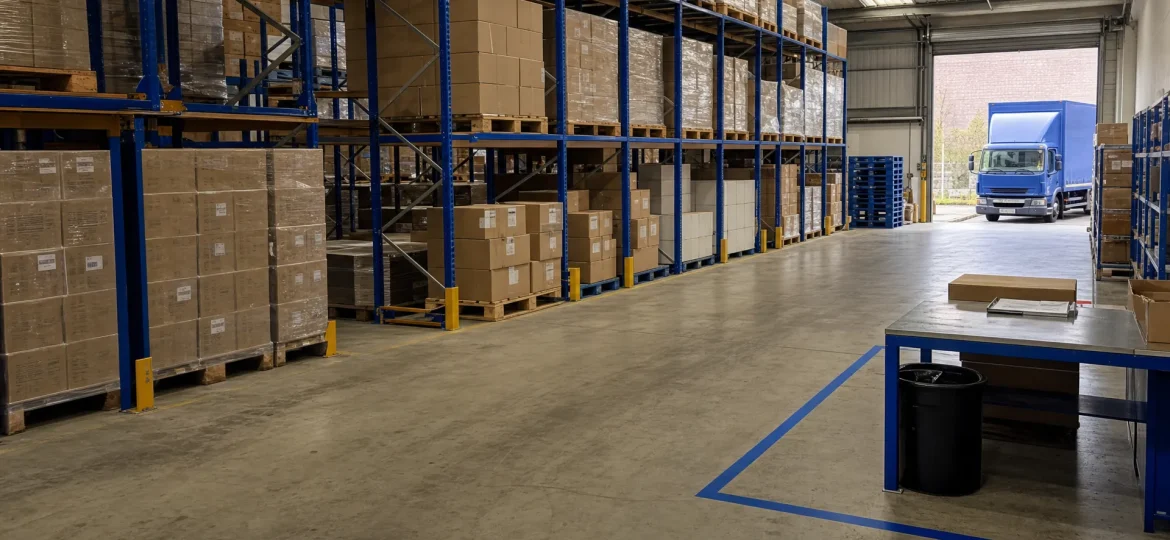
In a warehouse, batch tracking only works if the information is captured at the right points. It cannot be added accurately later if goods arrive unlabelled, mixed together or booked into stock without the right data.
A practical process usually includes:
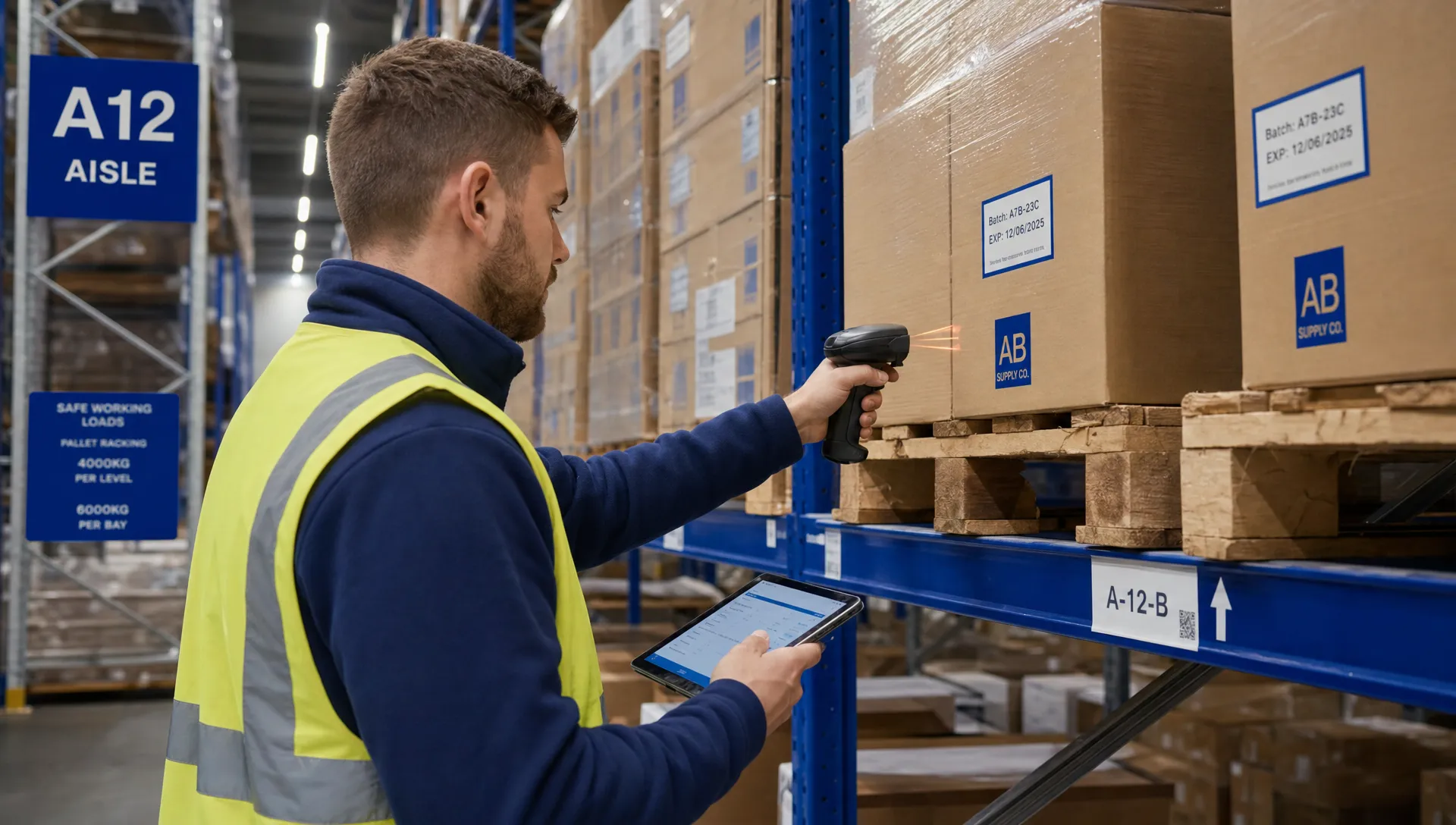
- Recording batch codes, dates and quantities at goods-in
- Storing different batches in clearly identified locations
- Using a warehouse management system to link stock records to physical stock
- Picking stock using agreed rotation rules, such as FIFO or FEFO
- Showing batch details on order, dispatch or audit records where needed
- Quarantining returned or suspect stock until it has been checked
FIFO means first in, first out. FEFO means first expired, first out, which matters when products have shelf-life dates. Neither approach is complicated in principle, but both depend on clean receiving processes, warehouse discipline and systems that staff actually use.
For businesses storing mixed pallets, bulk stock or dated products, a warehouse partner with proper system visibility is usually more reliable than spreadsheets. Gus Logistics offers pallet and bulk warehousing in Cheshire with real-time WMS tracking through a client portal, including batch, serial number and best-before date tracking where required.
Which businesses actually need controlled batches?
Not every product business needs full traceability by lot number. However, some sectors should treat it as a core operating requirement rather than an optional extra.
For these businesses, batch tracking protects customers, supports retailer requirements and makes problems easier to contain. It also gives business owners better answers when suppliers, marketplaces or wholesale customers ask where stock came from and where it went.
Food, drink and pet products
If a product is consumed by people or animals, traceability matters. This includes ambient food, drinks, confectionery, pet food, treats and supplements. Batch codes and best-before dates help you rotate stock correctly and identify affected goods if a quality issue appears.
The Food Standards Agency guidance on traceability records explains that food businesses need to know where food has come from and who it has been supplied to. For smaller brands, this is often where a more structured warehouse process becomes essential.
Cosmetics, skincare and supplements
Beauty, wellbeing and supplement brands often deal with production runs, date codes, ingredient changes and packaging revisions. If a customer reports irritation, leakage or incorrect labelling, you need to know which batch they received.
This is also useful when selling through larger retailers. Retail buyers may ask for clearer traceability, especially where products are packed into display units, promotional bundles or mixed cases.
Manufacturers and component suppliers
Manufacturers may need to trace raw materials, finished goods or components by supplier delivery. A faulty component can affect a finished product months later, so linking incoming batches to outgoing orders helps with quality investigations.
This is not only relevant to large factories. Small and medium-sized manufacturers that supply wholesalers, trades or retailers can face the same need for clean records, especially when repeat orders are fulfilled from several production runs.
eCommerce and wholesale brands with recall risk
Some online sellers start with simple storage, then discover that marketplaces, wholesale buyers or insurers expect stronger product records. Batch tracking becomes more valuable once order volumes grow, because manual investigation becomes slower and less reliable.
If you sell through multiple channels, such as Shopify, Amazon, eBay or wholesale portals, your fulfilment operation also needs to prevent stock from becoming blurred across platforms. Gus Logistics provides order fulfilment and pick and pack support for growing businesses, with integrations across more than 60 platforms.
When basic SKU stock control may be enough
You may not need full batch tracking if your products are low-risk, non-perishable and do not vary between production runs. Examples might include plain stationery, simple home accessories, non-dated packaging supplies or items where a recall would not require isolating one production group from another.
In those cases, SKU-level stock control can be perfectly sensible. You still need accurate quantities, clear locations, good receiving checks and dependable dispatch records. The difference is that you may not need to know which specific production lot each customer received.
The decision should be based on risk, not business size. A small food brand may need strict batch control from its first few pallets. A larger seller of generic plastic storage boxes may not need the same level of traceability unless its customers or suppliers require it.
A good rule is simple: if a product issue would force you to ask, "Which customers received that specific group of stock?", then you probably need a process that can answer that question quickly.
Signs your current warehouse process is not enough
Many businesses do not set out to build a traceability problem. It usually happens gradually as more suppliers, sales channels, SKUs and product versions are added.
Watch for these warning signs:
- Staff need to open boxes to work out which batch or date they are handling
- Stock with different best-before dates is stored together without clear separation
- You rely on one person who "just knows" where certain goods are kept
- Retailers or wholesale customers are asking for more detailed records
- Returns are going back into saleable stock without batch or condition checks
- Supplier issues take hours to investigate because dispatch records are incomplete
If several of these sound familiar, the problem is not just admin. It is operational risk. Once order volumes increase, unclear stock records can affect service levels, customer confidence and your ability to respond to product issues.
This is also where technology matters. If you are comparing warehouse partners, it is worth reading about what to look for in a 3PL's technology and reporting so you can ask the right questions before moving stock.
Questions to ask a 3PL about batch tracking
If you are outsourcing storage or fulfilment, do not assume every 3PL can handle traceable stock in the same way. Ask for specifics, not vague promises.
Useful questions include:
- Can you record batch codes, serial numbers and best-before dates at goods-in?
- Can your WMS show stock by SKU, batch, location and quantity?
- Can you pick using FIFO or FEFO rules where needed?
- How are damaged, expired or returned goods quarantined?
- Can I see stock records through a client portal?
- How quickly can you identify which orders received a specific batch?
- Can your team handle both B2C parcels and B2B pallet or case orders?
The answers will tell you whether the provider has a real process or is relying on manual workarounds. Manual workarounds may cope at low volume, but they are rarely robust enough when a retailer asks for proof or a supplier issue needs a fast response.
If transport is part of the same operation, ask how dispatch information is linked to delivery records. Gus Logistics provides same-day and next-day transport using its own fleet plus wider vehicle access across the UK and Europe, which can help when storage, fulfilment and delivery need to work together.
How Gus Logistics supports traceable stock
If batch tracking is already on your requirements list, Gus Logistics can support it as part of a wider warehousing and fulfilment setup. The business is family-run, based in Nantwich, Cheshire and supports eCommerce brands, manufacturers and product businesses across the UK.
For storage customers, Gus Logistics offers racked and floor storage, real-time WMS visibility through a client portal and the ability to track batch codes, serial numbers and best-before dates. For fulfilment customers, the team can also support pick and pack, next-day dispatch, returns handling and platform integrations.
The practical benefit is that you speak to people close to the operation, not a call centre. If stock needs separating, a batch needs investigating or a retailer requirement needs discussing, that direct communication can be as important as the system itself.
There are no minimum volume requirements, which makes this suitable for smaller product businesses as well as growing brands that need more control without committing to a large fixed warehouse footprint.
Frequently Asked Questions
Is it the same as serial number tracking? No. A batch code identifies a group of products, while a serial number identifies one individual item. Some businesses need both, especially if products are high value, regulated or covered by warranties.
Do small businesses need batch control? Some do. Size is less important than product risk. A small brand selling dated food, supplements or skincare may need stronger traceability than a larger business selling low-risk household items.
Can batches be tracked for both storage and order fulfilment? Yes, provided the warehouse system captures the right information at goods-in and uses it during picking, packing and dispatch. The process needs to be agreed before stock arrives.
What happens if products arrive without batch codes? The warehouse can only record what is available. If goods arrive with missing or unclear codes, they may need to be checked, relabelled or quarantined before being added to saleable stock.
Is best-before date tracking always separate from batch control? Not always. Some products use a batch code and date together, while others need separate fields for lot number and expiry or best-before date. The right setup depends on the product and customer requirements.
Need clearer control over your stock?
If your products need batch, serial number or best-before date control, the right warehouse partner can make stock management far easier to trust. Gus Logistics can help with warehousing, fulfilment, transport and returns from its Cheshire base, supporting businesses across the UK.
To discuss your storage or fulfilment requirements, call 01270 335014 or get in touch with Gus Logistics via the contact page.
Looking for a Logistics Partner You Can Trust?
From warehousing and order fulfilment to transport and FSDU design - Gus Logistics handles it all from our base in Nantwich, Cheshire. Over 10 years experience, no minimum volumes, no long contracts.
