
What Is FBA Prep?
If you sell through Amazon FBA, getting stock into Amazon's network is not as simple as putting products in a box and booking a courier. Amazon has specific requirements for how products must be packaged, labelled, grouped, protected and shipped before they arrive at its fulfilment centres.
That preparation work is known as FBA prep.
For a growing eCommerce brand, FBA prep matters because mistakes can slow down check-in, create extra charges, leave stock unavailable for sale, or cause avoidable customer issues later. The good news is that the process is straightforward once you understand what is expected and where the risks are.
What does FBA prep mean?
FBA stands for Fulfilment by Amazon. It is Amazon's service where sellers send inventory into Amazon fulfilment centres, then Amazon stores the stock and handles picking, packing, dispatch and some customer service once orders are placed.
FBA prep is everything that needs to happen before your stock arrives at Amazon. It is the process of making your products ready for Amazon to receive, identify, store and dispatch correctly.
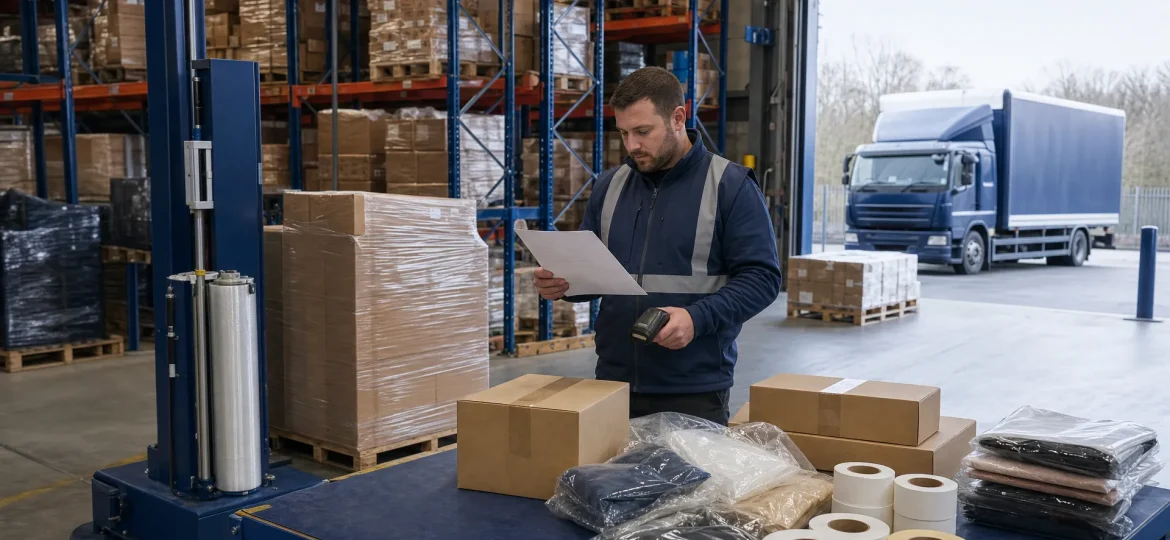
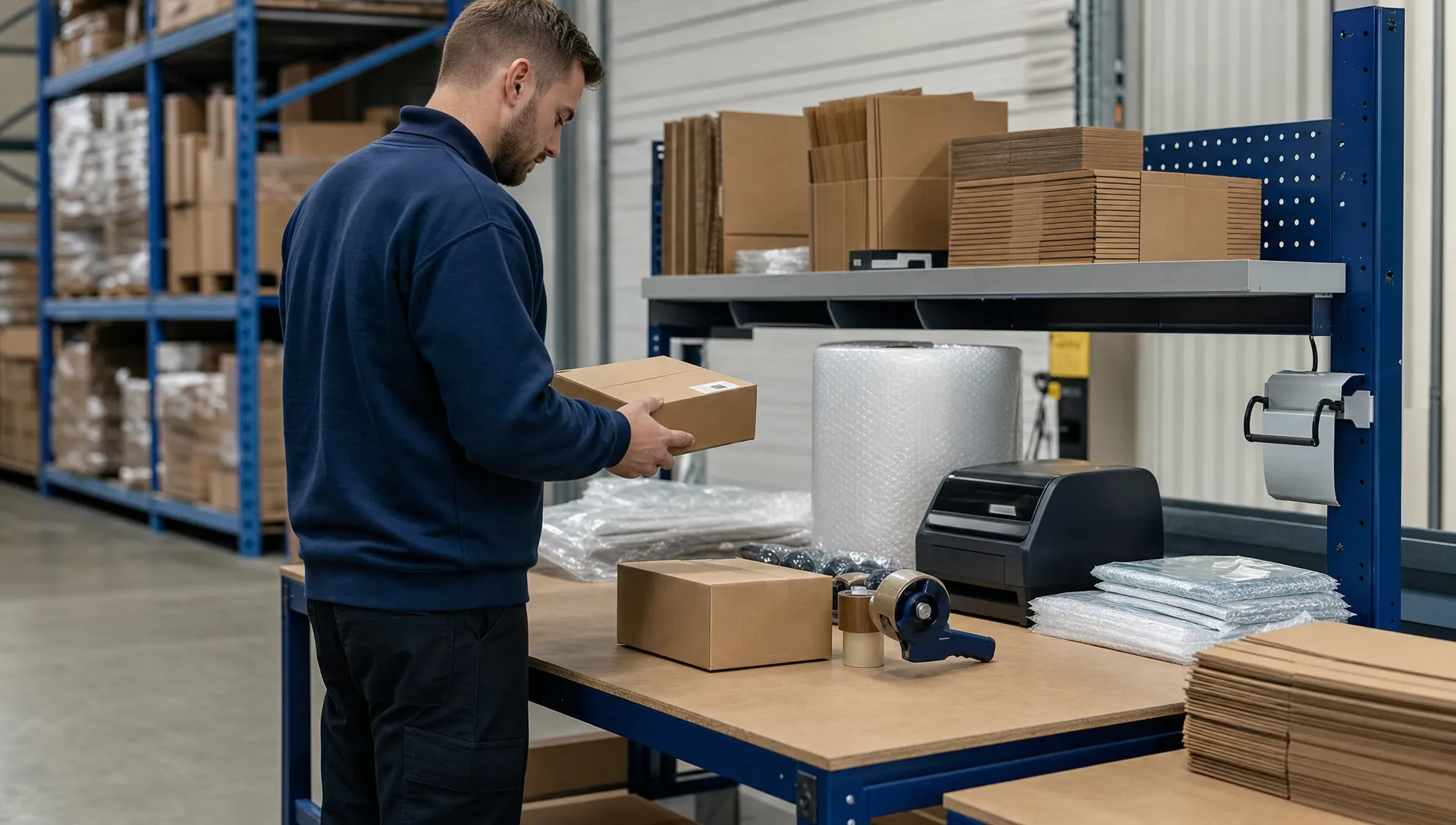
In practical terms, FBA prep can include checking goods in, applying the right product labels, poly bagging, bubble wrapping, bundling multi-packs, preparing cartons, creating shipment paperwork and arranging transport into Amazon's network.
Amazon has its own rules, and these can vary by product type, category, destination and marketplace. Sellers should always check the latest requirements in Seller Central or Amazon's own guidance on Fulfilment by Amazon before sending stock.
Why FBA prep matters
FBA prep is not just an admin step. It directly affects whether your stock becomes available to sell quickly and whether your customers receive the right item in good condition.
If a barcode cannot be scanned, Amazon may not be able to identify the product. If a fragile item is not protected properly, it may be damaged before it reaches the customer. If a bundle is not clearly packaged as one sellable unit, it could be split apart during handling. If cartons do not match the shipment plan, inbound processing can become slower and more complicated.
For small sellers, these issues are frustrating. For growing brands moving hundreds or thousands of units, they can become a serious operational problem.
FBA prep is especially important during busy trading periods, product launches and seasonal campaigns, when delays in stock becoming available can mean lost sales.
What does FBA prep include?
The exact work depends on your products, but most FBA prep projects involve a combination of checking, labelling, packaging and shipment preparation.
| FBA prep task | What it means | Why it matters |
|---|---|---|
| Goods-in check | Confirming stock has arrived in the expected quantity and condition | Helps catch shortages, damages or supplier issues early |
| Product labelling | Applying the correct Amazon product barcode or FNSKU where required | Allows Amazon to identify each sellable unit accurately |
| Barcode checking | Making sure labels are visible, scannable and not duplicated incorrectly | Reduces the risk of stock being misread or delayed |
| Poly bagging | Placing items in clear bags where required, often for loose, textile or hygiene-sensitive goods | Keeps products contained, clean and protected |
| Bubble wrapping | Protecting fragile, glass or damage-prone items | Reduces breakage during storage and handling |
| Bundling and multi-packs | Grouping products together as one sellable unit | Prevents Amazon from splitting a set into individual items |
| Expiry date handling | Ensuring dated products are clearly marked and managed correctly | Important for food, supplements, cosmetics and other time-sensitive stock |
| Carton preparation | Packing units into cartons that match the shipment plan | Helps inbound teams receive and process goods efficiently |
| Pallet preparation | Building, wrapping and labelling pallets where palletised inbound freight is used | Makes larger shipments safer and easier to move |
| Transport arrangement | Moving prepared stock to the correct destination | Keeps the handover from warehouse to Amazon controlled |
Not every product will need every step. A simple boxed item with a scannable manufacturer barcode may need very little extra prep. A fragile gift set, liquid product, multi-pack or expiry-dated item will usually need more attention.
Which products usually need extra FBA prep?
Some products are more likely to need additional preparation because of how they are packaged, handled or sold. These often include fragile items, liquids, sharp products, loose accessories, textile goods, products sold as bundles and products with best-before or expiry dates.
For example, a glass bottle may need protective wrapping. A pack of three items sold under one listing may need to be sealed together and clearly treated as one unit. A cosmetic product with a best-before date may need accurate date visibility and careful stock rotation before it ever reaches Amazon.
The key point is simple: do not assume that your supplier's outbound packaging is automatically suitable for FBA. Supplier cartons are often designed for bulk movement, not Amazon's unit-level receiving and fulfilment process.
FBA prep vs standard order fulfilment
FBA prep and standard eCommerce order fulfilment are related, but they are not the same thing.
With FBA prep, the immediate customer is Amazon's inbound operation. You are preparing bulk stock so it can be received and stored by Amazon. With standard order fulfilment, the customer is the person who placed the order on your website, marketplace or retail channel.
| Area | FBA prep | Standard eCommerce fulfilment |
|---|---|---|
| Main purpose | Prepare stock for Amazon inbound receiving | Pick, pack and dispatch individual customer orders |
| Destination | Amazon fulfilment centres | End customers, retailers or business customers |
| Key focus | Compliance, labelling, carton accuracy and inbound readiness | Speed, accuracy, presentation and delivery experience |
| Typical timing | Before products go live or become available through FBA | After a customer order is placed |
| Operational risk | Stock delays, unplanned prep, inbound errors | Late dispatch, wrong items, poor customer experience |
Many growing brands need both. You may send part of your inventory to Amazon FBA, hold some stock for wholesale customers, and fulfil direct website orders from a separate 3PL warehouse. If you need direct-to-consumer support alongside marketplace stock management, a reliable order fulfilment service can help you keep those channels running without relying on one route to market.
Common FBA prep mistakes to avoid
Most FBA prep problems come from assumptions. Sellers assume the product barcode is fine, the carton label is enough, the supplier has followed the right rules, or the same prep method works for every SKU.
The most common mistakes include:
- Sending products with missing, covered or unscannable barcodes
- Using the wrong label type for the listing or marketplace
- Mixing SKUs in cartons without clear shipment accuracy
- Failing to seal bundles or multi-packs as one sellable unit
- Forgetting expiry date rules for dated products
- Under-protecting fragile or liquid items
- Creating shipment plans that do not match the physical goods
- Leaving prep until the last minute before a launch or seasonal sales period
A simple way to reduce risk is to build a repeatable prep process for every SKU. Record how each product should be labelled, packed, checked and shipped. If suppliers change, packaging changes or Amazon updates a requirement, review the process before the next inbound shipment.
Should you do FBA prep yourself or outsource it?
Doing FBA prep in-house can work well when volumes are low, product ranges are simple and you have enough space, labour and time to manage the process properly. If you are sending a few cartons each month, it may be practical to prepare them yourself.
Outsourcing becomes more attractive when prep starts taking attention away from growth. If you are spending evenings applying labels, dealing with cartons in an office, chasing couriers, or trying to manage stock across Amazon, your website and wholesale customers, a logistics partner can remove a lot of operational pressure.
When comparing in-house prep with outsourcing, look beyond the obvious cost per unit. Factor in storage space, labour time, packaging materials, transport coordination, error correction, management time and the cost of delayed stock.
A 3PL can be particularly useful if you also need UK warehousing, direct order fulfilment or regular transport. Rather than treating FBA prep as a standalone task, many businesses use it as part of a wider logistics setup.
What to look for in an FBA prep or logistics partner
Not every logistics provider will be the right fit for FBA-related work. You need a partner that is comfortable handling detail, not just moving boxes.
Look for clear processes around goods-in, stock identification, packaging, carton accuracy and dispatch. If your products have batch numbers, serial numbers or best-before dates, ask how those are tracked. If you sell across multiple channels, ask how stock visibility is managed so you do not lose control of inventory.
It is also worth considering location. A well-placed logistics partner can make inbound and outbound transport simpler, especially if your goods arrive by container, pallet network or supplier delivery before being stored, prepped and moved onwards. Businesses looking for a practical regional base often benefit from working with a North West logistics company with access to major UK routes.
Good communication matters too. When something goes wrong with inbound stock, you need to speak to someone who understands the goods, the warehouse process and the urgency. For many SMEs, that is just as valuable as the physical warehouse space.
Where warehousing fits into FBA prep
FBA prep often starts with storage. Stock may arrive weeks before you want to send it into Amazon, or you may want to hold back part of your inventory for other sales channels. Without organised storage, it becomes much harder to control what is available, what has been prepped and what still needs work.
Using a 3PL warehouse can help you separate bulk stock, prepped stock and dispatch-ready stock. It can also make it easier to manage replenishment into Amazon in smaller, planned batches rather than sending everything at once.
For product businesses that need overflow space, pallet storage or bulk stock control, professional warehouse storage can support both FBA-related activity and wider distribution.
Transport is another part of the process that should not be overlooked. Once stock has been prepared, it still needs to reach the correct destination reliably. If you regularly move pallets, cartons or time-sensitive stock, access to same-day and next-day transport can make the overall operation more flexible.
How Gus Logistics can support growing product businesses
Gus Logistics is a family-run 3PL provider based in Nantwich, Cheshire, supporting eCommerce brands, manufacturers and product businesses across the UK.
For businesses using Amazon alongside other sales channels, the main challenge is often not just FBA prep itself. It is the wider question of where stock is held, how it is tracked, how orders are fulfilled, and how goods move between suppliers, warehouses, marketplaces, retailers and customers.
Gus Logistics supports that wider operation through order fulfilment and pick and pack, pallet and bulk warehousing, co-packing and contract packing, and same-day and next-day transport. Its systems integrate with more than 60 platforms, including Shopify, Amazon, eBay, WooCommerce and Magento, and its warehouse services include real-time WMS tracking through a client portal.
Because Gus Logistics has no minimum volume requirements, it can be a practical option for growing brands that need logistics support before they are ready for large-scale contracts. Customers also speak directly to the people handling their freight, rather than going through a call centre.
Frequently Asked Questions
Is FBA prep the same as Amazon FBA? No. Amazon FBA is the fulfilment service Amazon provides after your stock has been received into its network. FBA prep is the work done before that point to make sure your goods are packaged, labelled and shipped correctly.
Can Amazon do FBA prep for me? Amazon may offer some prep services for eligible products, but fees, rules and availability can vary. Many sellers prefer to prepare stock before it reaches Amazon so they have more control over timing, cost and accuracy.
Do I need FBA prep if my supplier already labels my products? Possibly. Supplier labels are not always the same as Amazon-required labels. You still need to confirm whether your products need an Amazon barcode, extra packaging, expiry date handling, bundling or other prep before shipment.
Can a 3PL handle FBA stock and website orders? Yes, many businesses use a 3PL to manage stock for multiple channels. This can include holding bulk inventory, fulfilling website orders and preparing stock for onward movement to marketplaces or retailers, depending on the provider's services.
When should I outsource FBA prep? Outsourcing usually makes sense when prep takes too much internal time, you are running out of space, mistakes are becoming costly, or you need a more joined-up approach to warehousing, fulfilment and transport.
FBA prep is about getting the detail right before stock reaches Amazon. When it is done properly, it helps products move into saleable inventory more smoothly and gives your team more time to focus on sales, product development and customer service.
If you need practical logistics support for Amazon stock, direct-to-consumer orders, warehousing or UK distribution, call Gus Logistics on 01270 335014 or get in touch via the contact page to discuss your requirements.
Looking for a Logistics Partner You Can Trust?
From warehousing and order fulfilment to transport and FSDU design - Gus Logistics handles it all from our base in Nantwich, Cheshire. Over 10 years experience, no minimum volumes, no long contracts.
