
What Makes a Good Logistics Warehouse for UK Distribution
Choosing a logistics warehouse is not just about finding space for stock. For a UK business, the right warehouse can improve delivery speed, reduce errors, protect cash flow and make growth easier to manage. The wrong one can create delays, poor stock visibility, customer complaints and extra admin for your team.
A good logistics warehouse should do more than store pallets. It should connect storage, stock control, fulfilment and transport into one reliable operation. That matters whether you sell through Shopify, Amazon, wholesale channels, supermarkets or direct to trade customers.
If you are comparing warehouse options, here is what to look for before you commit.
A good logistics warehouse starts with the right location
Location affects almost every part of distribution. A warehouse that is cheap but badly placed can cost more in the long run through slower delivery, higher transport costs and missed cut-off times.
For UK distribution, look at how the site connects to major road networks, not just its postcode. A warehouse close to key motorway routes can serve more of the country efficiently, support next-day delivery and make inbound deliveries easier for suppliers.
For businesses distributing across the North West, Midlands, Wales and the rest of the UK, Cheshire is a strong location because of its access to routes such as the M6, M56 and M62. That is one reason many businesses look for a North West logistics company rather than placing stock further away from their customer base or supplier routes.
Good location also helps with resilience. If your warehouse is close to strong transport links, it is easier to respond when orders spike, retailers request urgent stock or a same-day delivery becomes necessary.
Storage should match your products, not force your products to fit
Not every product needs the same kind of warehouse storage. Palletised goods, cartons, high SKU eCommerce stock, seasonal promotional units and bulk stock all need different handling.
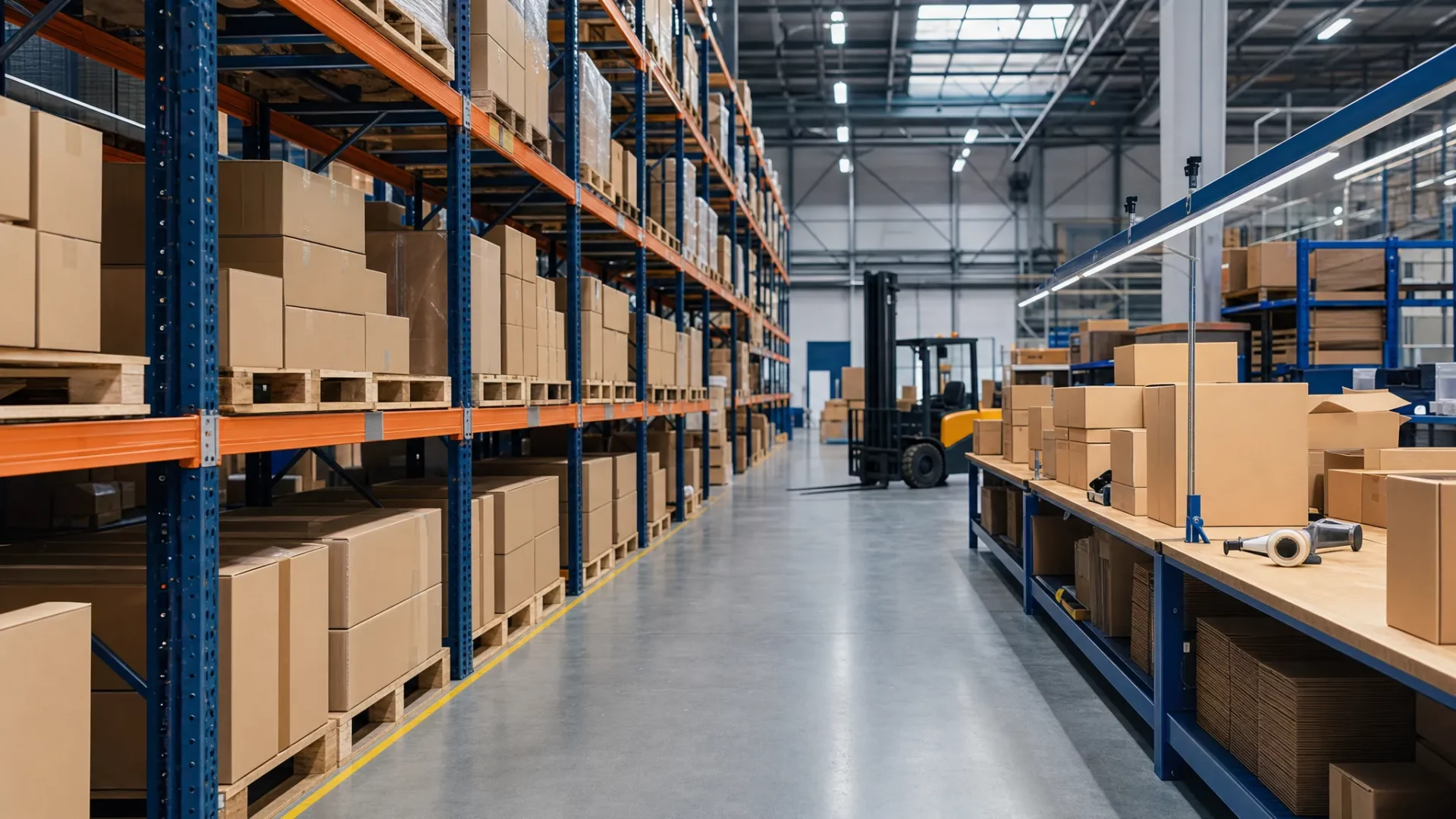
A good logistics warehouse should offer storage methods that match your operation, such as racked pallet storage, floor storage, bulk storage or dedicated pick locations. It should also be able to handle your stock profile safely, including size, weight, fragility, expiry dates or batch requirements.
For example, a food and drink brand may need best-before date tracking. A manufacturer may need serial number control. An eCommerce brand may need fast access to individual SKUs for pick and pack. A retail supplier may need space for pre-filled display units before delivery into stores.
If you need flexible storage rather than a fixed long-term warehouse lease, a provider offering pallet and bulk warehouse storage can help you scale space up or down without taking on the full cost of running your own site.
| Business need | What to look for in a logistics warehouse |
|---|---|
| Growing eCommerce stock | Pick locations, clear SKU control and fulfilment integration |
| Palletised wholesale goods | Racked storage, safe handling and reliable pallet movements |
| Seasonal peaks | Flexible space and short-notice capacity where available |
| Regulated or traceable products | Batch, serial number or best-before date tracking |
| Retail display stock | Space for assembly, pre-filling and dispatch coordination |
Stock visibility is just as important as floor space
Warehouse space is only useful if you know what is in it. Poor stock visibility leads to overselling, delayed orders, unnecessary reordering and difficult conversations with customers.
A good logistics warehouse should use a warehouse management system, often called a WMS, to track stock movements accurately. This should cover goods in, putaway, picking, packing, dispatch and stock adjustments. Ideally, you should have access to stock information through a client portal or regular reporting, rather than waiting for manual updates.
For eCommerce and multi-channel sellers, system integration is especially important. If your warehouse can connect with your sales platforms, orders can flow into the warehouse automatically and tracking details can be passed back without manual copying.
When comparing providers, ask practical questions:
- Can I see stock levels in real time or near real time?
- Can the warehouse track batches, serial numbers or best-before dates if needed?
- How are stock discrepancies investigated?
- Can the system integrate with my sales channels?
- How quickly can new integrations be set up?
This is where a warehouse becomes part of your operating system, not just a building with racking.
Fulfilment capability matters if orders leave daily
If your business sends customer orders from the warehouse, fulfilment quality is critical. A storage provider may be able to hold stock, but that does not always mean they are set up for accurate, high-volume picking and packing.
For eCommerce brands, a good logistics warehouse should be able to receive orders, pick the correct items, pack them consistently and dispatch them on time. Cut-off times matter too. A later cut-off gives your customers more time to order while still qualifying for next-day delivery.
You should also look at how the warehouse handles packaging, returns, order changes and exceptions. The best providers have clear processes for when an item is missing, damaged, substituted or delayed. That prevents small warehouse issues from becoming customer service problems.
Businesses selling online should consider whether their warehouse can support eCommerce order fulfilment as part of the same operation. This reduces handovers between separate storage, fulfilment and transport providers.
Transport links and delivery options should be built in
A warehouse does not finish its job when an order is packed. Distribution depends on what happens next. If transport is slow, unreliable or poorly coordinated, even the best warehouse operation will struggle.
A good logistics warehouse should have strong relationships with carriers or its own transport options. For some businesses, parcel carriers are enough. For others, pallet networks, dedicated vehicles, rigid vehicles, artics, Moffetts or same-day courier support may be needed.
The key is matching the delivery method to the order. A single online order, a pallet to a wholesaler and an urgent delivery to a retailer all need different transport planning.
If your business needs urgent movement of goods, look for a provider that can support same-day and next-day transport alongside warehousing. Keeping storage and transport close together can reduce delays and improve accountability, because fewer parties are involved.
A good warehouse protects stock and people
Safety and stock protection should never be treated as background details. A good logistics warehouse needs clear standards for vehicle movement, racking, manual handling, fire safety, housekeeping and staff training.
The Health and Safety Executive's warehousing guidance highlights common risks around workplace transport, storage systems, slips, trips and manual handling. You do not need to become a safety expert as a customer, but you should expect your warehouse provider to take these areas seriously.
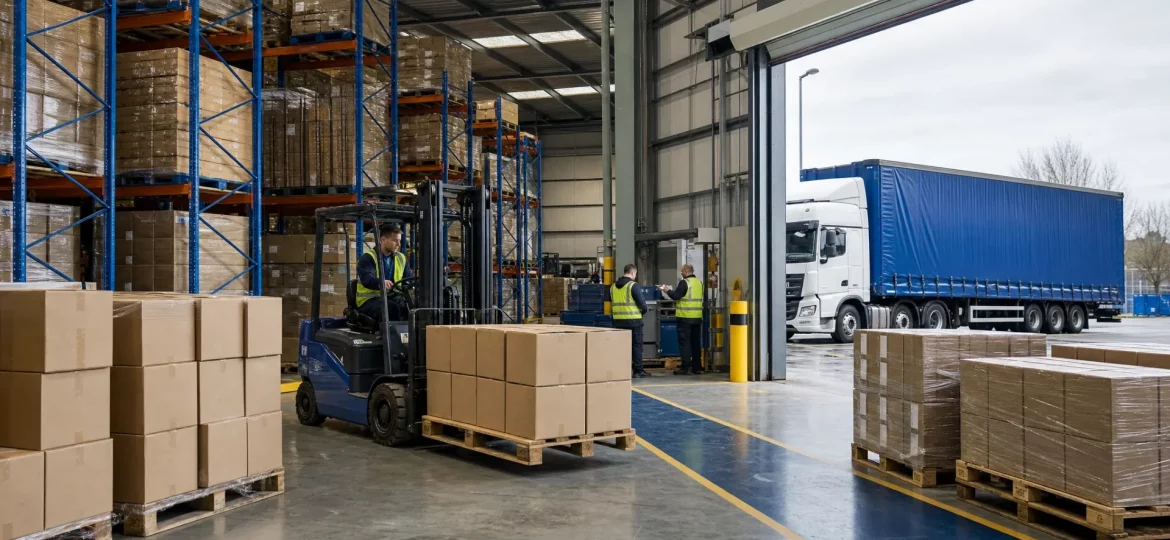
Practical signs of a well-run warehouse include clean aisles, organised stock locations, trained forklift operators, controlled loading areas and clear processes for damaged goods. If you visit a site and it feels chaotic, that is a warning sign.
Security is another important factor. Ask how access is controlled, how stock is checked in and out, and how discrepancies are recorded. If you sell high-value goods, security processes become even more important.
The warehouse team should communicate clearly
Systems matter, but people still make logistics work. When something changes, such as a late inbound delivery, an urgent retailer booking or a stock discrepancy, you need a warehouse team that responds quickly and explains what is happening.
Good communication is one of the most underrated signs of a strong logistics warehouse. You should know who to contact, how quickly you can expect a response and whether you will speak to someone who understands your account.
For SMEs, this can be the difference between feeling in control and feeling like a small customer inside a large network. A provider that offers direct communication with the people handling your freight can often resolve issues faster than a call centre model.
Before choosing a warehouse, ask how day-to-day communication works. Will you have a named contact? Can you speak to operations when needed? How are urgent issues escalated? These questions reveal a lot about how the relationship will work after the sales process is finished.
Scalability is essential for growing businesses
Your warehouse needs today may not be your warehouse needs in six months. A product launch, retailer listing, seasonal peak or marketing campaign can change volumes quickly.
A good logistics warehouse should be able to support growth without forcing you into unnecessary complexity too early. For SMEs, that often means avoiding high minimum volumes, rigid contracts or systems designed only for large enterprises.
Scalability is not only about adding more space. It also means adding services when they are needed. You may start with pallet storage, then add pick and pack, then require co-packing, returns handling or dedicated transport. If your provider can support more of the logistics chain, you can grow without moving stock between multiple partners.
This is especially useful for businesses that want to outsource logistics gradually rather than making one large operational change all at once.
Cost should be clear, not just cheap
The cheapest warehouse quote is not always the best value. Low storage rates can be outweighed by pick fees, admin charges, minimum volumes, transport costs or poor service that creates customer issues.
When comparing quotes, make sure you understand what is included and what is charged separately. Ask about storage, goods in, picking, packing, packaging materials, stock checks, returns, system integrations and transport.
A good logistics warehouse should be able to explain its pricing clearly. You should be able to see how costs will change as your order volume, pallet count or SKU range grows.
It is also worth asking how quickly quotes are provided. Slow quoting during the sales process can be a sign that urgent operational requests may also take time later.
The right warehouse fits your sales channels
A B2B manufacturer, a D2C eCommerce brand and a retail display supplier all use warehouses differently. A good warehouse for one may not be right for another.
If you sell through online marketplaces, you need order integrations, fast picking and reliable dispatch. If you supply retailers, you may need booking-in support, pallet preparation, labelling and delivery coordination. If you use in-store displays, you may need space for assembly, pre-fill and onward distribution.
This is why it helps to choose a provider that understands your route to market. A general storage warehouse may be enough for slow-moving stock, but a growing product business usually needs a logistics warehouse that can support the full journey from goods in to final delivery.
For businesses that want a joined-up partner, UK logistics services can combine warehousing, fulfilment, transport and value-added services under one roof.
Questions to ask before choosing a logistics warehouse
Use these questions when comparing warehouse providers:
- Where is the warehouse located in relation to my customers, suppliers and transport routes?
- What types of storage are available for my products?
- Can the warehouse support my current order volume and future growth?
- What warehouse management system is used?
- Can I access stock information through a portal or regular reporting?
- Which sales platforms or order systems can be integrated?
- What are the dispatch cut-off times?
- How are returns, damages and stock discrepancies handled?
- What transport options are available from the warehouse?
- Who will I speak to when I need help?
- Are there minimum volumes or contract restrictions?
- Can the provider support extra services such as co-packing, POS assembly or retail display dispatch?
A good provider should be comfortable answering these questions in plain English. If the answers are vague, inconsistent or overly complicated, keep looking.
How Gus Logistics supports UK distribution
Gus Logistics is a family-run 3PL provider based in Nantwich, Cheshire. The business supports eCommerce brands, manufacturers and product businesses across the UK with warehousing, order fulfilment, transport, FSDU services and co-packing.
Its location near the M6, M56 and M62 makes it well placed for UK-wide distribution, particularly for businesses in Cheshire, the North West and surrounding regions. The team provides pallet and bulk warehousing, real-time WMS tracking through a client portal, batch, serial number and best-before date tracking where required, and order fulfilment with integrations across more than 60 platforms including Shopify, Amazon, eBay, WooCommerce and Magento.
Gus Logistics also supports same-day and next-day transport using its own fleet and wider vehicle access, with no minimum volume requirements and same-day quotes as standard. For businesses that want practical support without call centres, customers speak directly to the people handling their freight.
Frequently Asked Questions
What is a logistics warehouse? A logistics warehouse is a warehouse that does more than store goods. It supports stock control, picking, packing, dispatch, transport coordination and sometimes returns, co-packing or retail preparation.
What makes a warehouse good for UK distribution? A good UK distribution warehouse has a strong location, reliable stock systems, suitable storage, efficient fulfilment processes, clear communication and access to the right transport options.
Is warehouse location still important if I sell online? Yes. Even if orders are placed online, stock still has to move physically. A well-located warehouse can improve delivery speed, reduce transport complexity and support later dispatch cut-offs.
Should I choose a local warehouse or a national 3PL? It depends on your needs. A local or regional 3PL can offer closer communication and strong access to key routes, while still supporting UK-wide distribution if it has the right systems and transport network.
When should a business outsource to a logistics warehouse? Outsourcing is worth considering when storage, picking, packing, dispatch or transport are taking too much internal time, limiting growth or causing service issues for customers.
Need a logistics warehouse for UK distribution?
If you are reviewing warehouse options, Gus Logistics can help you assess the right mix of storage, fulfilment and transport for your business. Whether you need pallet storage, eCommerce fulfilment, same-day transport or a joined-up 3PL partner in Cheshire, the team can provide practical guidance.
Call Gus Logistics on 01270 335014 or get in touch via the contact page to discuss your warehouse and distribution needs.
Looking for a Logistics Partner You Can Trust?
From warehousing and order fulfilment to transport and FSDU design - Gus Logistics handles it all from our base in Nantwich, Cheshire. Over 10 years experience, no minimum volumes, no long contracts.
