
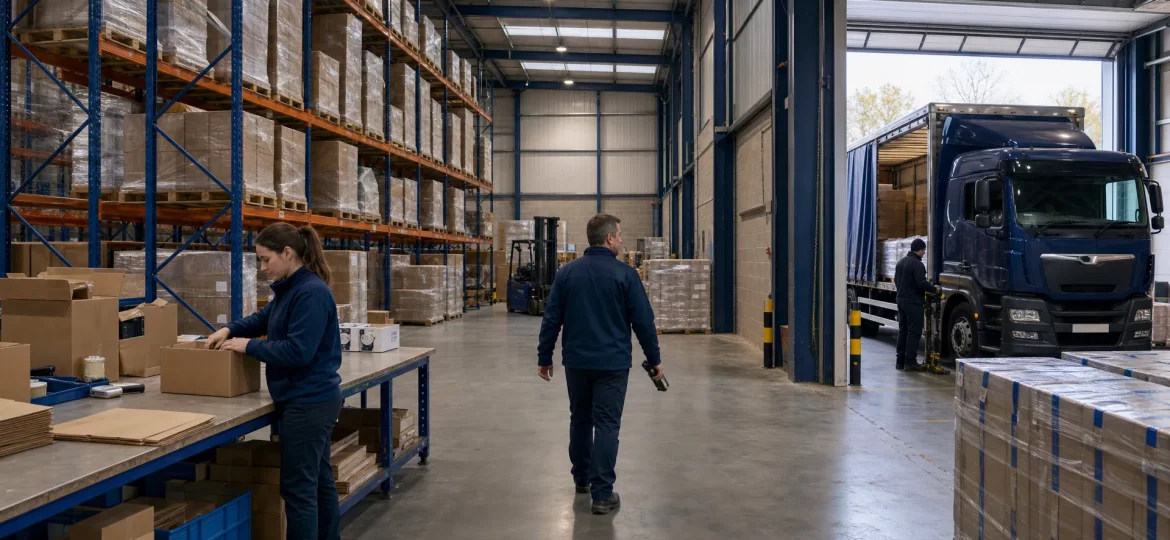
Which 3PL Services Should You Outsource First?
Outsourcing logistics rarely needs to be an all-or-nothing decision. For many growing businesses, the better question is not "should we use a 3PL?" but "which 3PL services should we outsource first?"
That distinction matters. Move too quickly and you may hand over processes that are not ready. Move too slowly and your team can end up spending evenings packing orders, chasing couriers, reorganising stock and fixing avoidable mistakes.
The right starting point depends on where the pressure is greatest in your operation. For some businesses, that is daily eCommerce order fulfilment. For others, it is pallet storage, retail display assembly, same-day transport or seasonal overflow. This guide will help you prioritise the first service to outsource, then build from there in a practical way.
Start with the bottleneck, not the service list
A 3PL provider can usually support several areas of logistics, including storage, order fulfilment, transport, returns, co-packing and retail display work. But that does not mean you need to outsource every part on day one.
The best place to start is the bottleneck that is causing the most damage to your time, cash flow, customer experience or growth plans.
Ask yourself these questions:
- Are staff spending too much time picking, packing and dispatching orders?
- Is stock taking over your office, warehouse, unit or spare space?
- Are missed dispatch deadlines leading to customer complaints?
- Are urgent deliveries disrupting the working day?
- Are retail projects, FSDUs or promotional builds stretching your team?
- Are you avoiding new sales channels because the operation cannot cope?
If one of those problems stands out, that is usually your starting point. If several apply, you need to think about dependency. For example, outsourced fulfilment often works best when storage is also managed by the same provider, because stock accuracy and dispatch speed are closely linked.
1. Outsource order fulfilment first if daily orders are slowing you down
For eCommerce brands, order fulfilment is often the first 3PL service worth outsourcing. It is also one of the easiest areas to measure because the impact is visible every day: orders go out on time, packing accuracy improves, and your team gets time back.
If you sell through Shopify, Amazon, eBay, WooCommerce, Magento or similar platforms, the workload can build quickly. A few orders a day may be manageable in-house. Dozens or hundreds of orders, with different SKUs, bundles, delivery services and customer expectations, soon become a full-time operation.
Signs fulfilment should be your first outsourced service include late dispatches, regular packing mistakes, staff pulled away from sales or customer service, and peak periods that create chaos. If your team is packing orders at the end of the day just to keep up, your growth is being limited by your back office.
A good fulfilment partner receives your stock, stores it, picks orders, packs them correctly and dispatches them through agreed delivery services. Gus Logistics provides outsourced order fulfilment and pick and pack services with integrations for 60+ platforms, late cut-offs up to 10pm and next-day dispatch options.
The main benefit is not just saving time. It is creating a more reliable customer experience. When fulfilment is handled properly, customers receive the right product, packed in the right way, with dispatch information they can trust.
2. Outsource warehousing if space, stock control or pallet storage is the problem
Sometimes the issue is not the number of orders. It is the stock itself.
You may have pallets arriving before you have space for them. You may be storing products across multiple rooms, containers or temporary units. You may be struggling to know what is available, what is reserved, and what is due to expire. In that case, warehousing should move to the top of the list.
Outsourcing warehousing makes sense when stock is becoming difficult to manage safely or accurately. It is particularly useful for businesses with bulk stock, palletised goods, seasonal ranges, batch-controlled products or a growing number of SKUs.
Professional warehousing gives you more than a place to put boxes. It gives you structure. That can include racked or floor storage, goods-in processes, stock rotation, real-time stock visibility and clearer reporting. Gus Logistics offers pallet and bulk warehousing in Cheshire with racked and floor storage, client portal access and tracking options for batches, serial numbers and best-before dates where required.
If your business is growing, warehousing can also protect you from signing a lease before you are ready. Instead of committing to your own building, staff, equipment and systems, you can use a 3PL to create flexible capacity around your actual stock levels.
3. Outsource transport when delivery demands are becoming unpredictable
Transport is often the next service to outsource when deliveries are time-sensitive, irregular or too varied for your existing courier setup.
Parcel carriers are suitable for many standard eCommerce orders, but not every job fits neatly into that model. You may need same-day delivery, pallet transport, retail deliveries, urgent stock transfers, Moffett deliveries, or larger vehicles for bulky freight. When those requests are handled reactively, they can interrupt the whole business.
Outsourced transport is especially useful for manufacturers, wholesalers, retailers and product businesses that need reliable movement of goods without building their own fleet. It can also support eCommerce businesses during peak periods, product launches or stock relocations.
Gus Logistics provides same-day and next-day transport services using its own fleet of vans, 7.5t, 18t and 26t rigids, artics and Moffetts, with access to 5,000+ vehicles across the UK and Europe when needed.
If transport is your first outsourced service, make sure you agree the basics clearly: collection points, delivery windows, vehicle type, loading requirements, proof of delivery, contact process and contingency plans. The value of transport outsourcing comes from reliability, not just availability.
4. Outsource FSDUs and co-packing when retail execution becomes too complex
Retail projects can look simple on paper, then become complicated very quickly. A display unit may need to be designed, manufactured, filled, checked, packed, labelled and delivered into a retailer network within a fixed launch window.
For brands selling through supermarkets, high street retailers or promotional channels, FSDUs and point of sale displays often need specialist handling. The same applies to co-packing work such as re-packing, POS assembly, promotional kits, mixed cases and container de-stuffing.
This is usually not the first 3PL service for a pure eCommerce start-up. But for retail brands, it may be the most urgent area to outsource because the deadline is fixed and the cost of errors can be high.
Gus Logistics supports FSDU design, manufacture, pre-fill and dispatch for retail brands that need an end-to-end service. This can remove a large operational burden from internal teams, especially when multiple retailers, store formats or campaign deadlines are involved.
A quick decision table for choosing your first 3PL service
Use the table below as a practical starting point. It is not a rulebook, but it should help you identify the area with the clearest business case.
| If your biggest problem is… | Outsource this first | Why it usually comes first |
|---|---|---|
| Staff are spending too much time packing orders | Order fulfilment | It directly affects dispatch speed, accuracy and customer experience |
| Stock is taking over your space or becoming hard to track | Warehousing and storage | Stock accuracy is the foundation for fulfilment, sales planning and purchasing |
| Deliveries are urgent, bulky, irregular or difficult to schedule | Transport | It gives you flexible capacity without running your own fleet |
| Retail campaigns need display builds, POS assembly or re-packing | FSDUs and co-packing | It protects launch deadlines and keeps specialist work away from core staff |
| You are scaling across multiple channels and losing visibility | Integrated 3PL support | Joined-up systems reduce manual work and improve operational control |
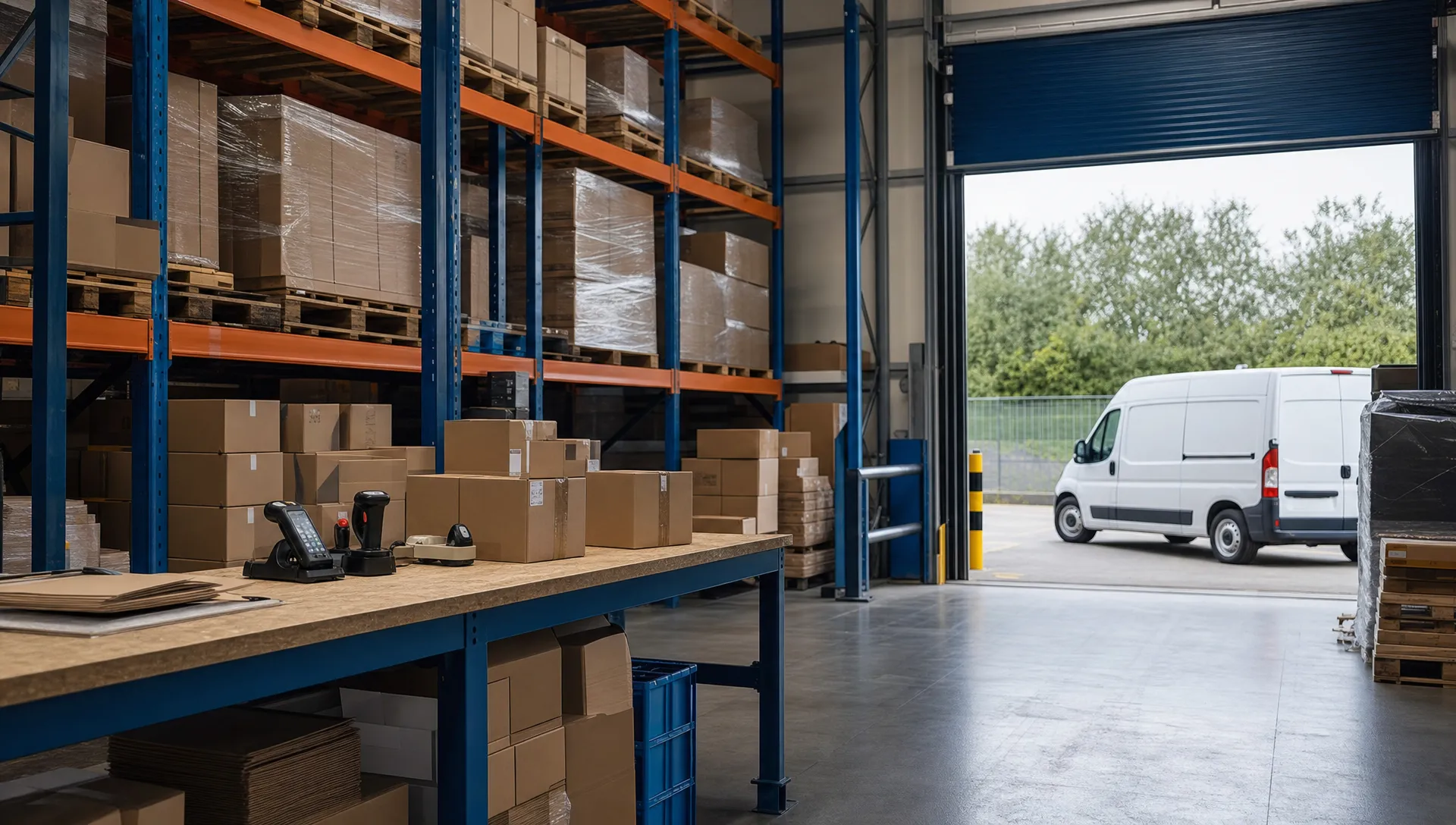
Should you outsource one service at a time or move several together?
In many cases, a staged approach is sensible. You might begin with warehousing, then add pick and pack once the stock is settled. Or you may start with order fulfilment and add transport support for larger or urgent deliveries later.
However, some services are closely connected. Warehousing and fulfilment are the clearest example. If your 3PL is picking and packing orders, they usually need to hold and manage the stock too. Splitting storage and fulfilment between two parties can create extra stock movements, duplicated admin and more room for error.
The same applies to retail display projects. If one provider can manufacture, fill, store and dispatch FSDUs, the process is usually simpler than coordinating separate suppliers for each stage.
A practical staged roadmap might look like this:
- Stabilise stock and fulfilment: Move stock into a managed warehouse, connect your sales channels and agree pick, pack and dispatch rules.
- Add transport support: Bring in same-day, next-day, pallet or specialist delivery options once outbound volumes or delivery types require it.
- Introduce value-added services: Add co-packing, re-packing, POS assembly or FSDU work when campaigns, retail listings or promotions demand it.
- Review and optimise: Use stock data, order patterns and customer feedback to refine cut-offs, carrier choices, packing rules and storage levels.
The key is to avoid outsourcing in a way that simply moves confusion from your building to someone else's warehouse. Before handing over any process, document how it should work.
What information should be ready before you outsource?
You do not need a perfect logistics operation before speaking to a 3PL. In fact, many businesses look for support precisely because their current process is under pressure. But the more detail you can provide, the easier it is to get accurate advice and a realistic quote.
At a minimum, prepare your average order volumes, peak order volumes, number of SKUs, product sizes and weights, storage requirements, sales channels, packaging needs, delivery expectations and any special handling rules. If you need batch tracking, serial number tracking, best-before date control or retail compliance, raise that early.
For transport, include collection and delivery postcodes, typical shipment sizes, loading equipment, delivery windows and vehicle requirements. For FSDUs or co-packing, share product details, display specifications, quantities, deadlines and retailer requirements.
This preparation helps a 3PL recommend the right starting point. It also prevents you from comparing quotes that are based on different assumptions.
What should stay in-house at first?
Outsourcing logistics does not mean handing over responsibility for your brand. The 3PL can manage the physical movement, storage and handling of goods, but you should still own the customer promise, product range, sales strategy and service standards.
Keep control of decisions such as which delivery options you offer, how you position your returns policy, what packaging experience you want customers to receive, and how much stock you need to hold. A good 3PL can advise on the operational impact of those choices, but the commercial direction should remain yours.
You should also keep communication open. The best 3PL relationships are not silent supplier relationships. They work best when both sides share forecasts, campaign plans, stock changes and known issues before they become urgent.
How to prioritise if you are an SME with limited time and budget
If you run a small or medium-sized business, you may not have the time or budget to redesign your whole operation at once. That is normal. The goal is to remove the constraint that is stopping the business from moving forward.
For an eCommerce brand, that might mean outsourcing order fulfilment so the team can focus on product, marketing and customer retention. For a manufacturer, it may mean using external warehousing and transport to avoid hiring drivers or taking more space. For a retail brand, it may mean outsourcing FSDU preparation so a major promotion launches on time.
A useful rule is this: outsource the task that is operationally repetitive, time-sensitive and easy to define. Keep closer control of the areas that require brand judgement, commercial decision-making or frequent changes.
If your process is repetitive but chaotic, a 3PL can help make it more structured. If it changes every day because the business model is still unclear, you may need to refine the process before outsourcing it fully.
Where Gus Logistics can help
Gus Logistics is a family-run 3PL provider based in Nantwich, Cheshire, supporting eCommerce brands, manufacturers and product businesses across the UK. The business provides order fulfilment, pallet and bulk warehousing, same-day and next-day transport, FSDU services, co-packing and contract packing.
Because Gus Logistics is based near the M6, M56 and M62, it is well placed for businesses in Cheshire, the North West and wider UK distribution networks. Customers also speak directly to the people handling their freight, with no call centres.
For businesses looking for flexible 3PL logistics services in the UK, Gus Logistics can support both individual service requirements and more joined-up outsourced logistics operations. There are no minimum volume requirements, which can make outsourcing more accessible for growing businesses that are not yet ready for a large fixed commitment.
Frequently Asked Questions
Which 3PL service should an eCommerce business outsource first? Most eCommerce businesses should consider outsourcing order fulfilment first if picking, packing and dispatch are taking too much time or causing errors. It is usually the most visible operational pressure because it directly affects customers.
Should I outsource warehousing before fulfilment? If stock control or space is your biggest issue, warehousing may need to come first. In many cases, warehousing and fulfilment are best handled together because accurate stock management is essential for reliable dispatch.
Is 3PL only suitable for high-volume businesses? Not always. Some providers work only with higher volumes, but others support smaller and growing businesses. Gus Logistics has no minimum volume requirements, which allows businesses to outsource at a stage that suits their operation.
Can I outsource transport without outsourcing storage? Yes. Transport can be outsourced as a standalone service if you need same-day, next-day, pallet or specialist delivery support. This can be useful for manufacturers, wholesalers and businesses with irregular delivery needs.
When should a retail brand outsource FSDUs or co-packing? Retail brands should consider outsourcing FSDUs or co-packing when internal teams do not have the space, time, equipment or process control to prepare displays or promotional stock reliably within retailer deadlines.
Ready to decide what to outsource first?
If you are unsure which 3PL services to outsource first, start with the area causing the most pressure: fulfilment, storage, transport, FSDUs or co-packing. Gus Logistics can help you work through the options and build a practical plan around your stock, orders and delivery requirements.
Call 01270 335014 to speak to the team, or get in touch via the contact page to discuss the right next step for your business.
Looking for a Logistics Partner You Can Trust?
From warehousing and order fulfilment to transport and FSDU design - Gus Logistics handles it all from our base in Nantwich, Cheshire. Over 10 years experience, no minimum volumes, no long contracts.
