
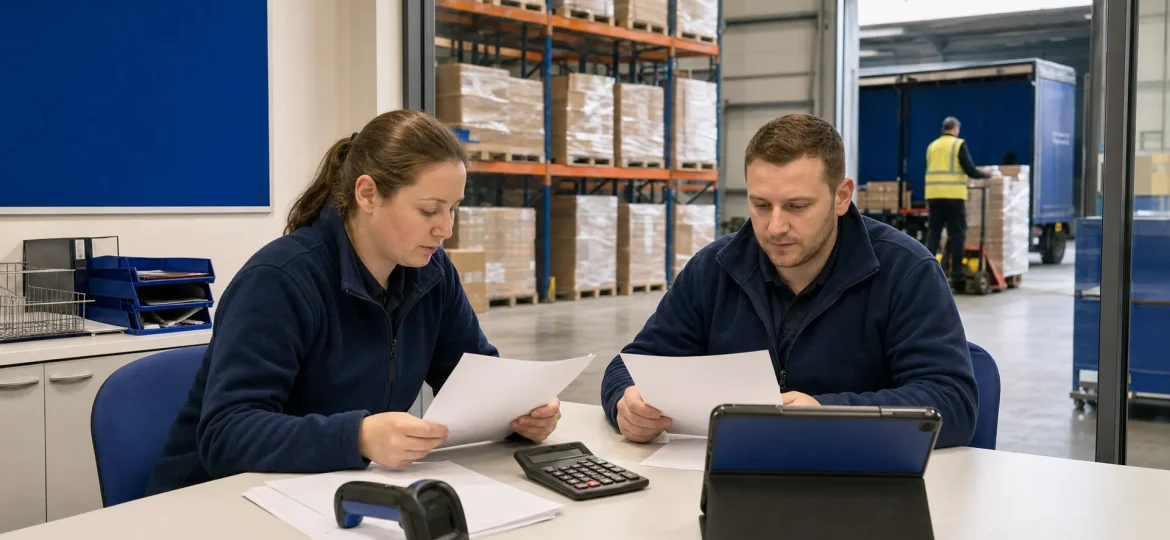
Why North West Manufacturers Are Outsourcing B2B Fulfilment to a Cheshire 3PL
For many North West manufacturers, fulfilment used to be a back-office task handled in spare warehouse space by whoever was available. That worked when order volumes were predictable, customers were flexible and stock lines were simple.
That is not the reality for many manufacturers now. Wholesale customers expect accurate stock, clear delivery dates, compliant paperwork and fast turnaround. Sales teams are winning more mixed pallet, carton and repeat B2B orders. Production teams need floor space for making goods, not storing finished stock for weeks.
This is why more manufacturers are looking at outsourced B2B fulfilment. For a growing product business, the question is no longer just "can we dispatch this ourselves?" It is "is fulfilment taking time, space and focus away from manufacturing?"
What B2B fulfilment means for manufacturers
B2B fulfilment is the process of storing, picking, packing and dispatching orders to business customers. For manufacturers, that usually means trade buyers, wholesalers, retailers, installers, distributors or branch networks rather than individual consumers.
It is different from standard eCommerce fulfilment because the orders are often larger, more structured and more sensitive to stock accuracy. A consumer order might be one or two items in a parcel. A B2B order might involve multiple SKUs, full cartons, mixed pallets, batch-specific stock, customer delivery windows, carrier requirements and paperwork that must match the order exactly.
For anyone comparing B2B order fulfilment UK options, the priority should not be the lowest price per pick. It should be whether the provider can protect customer relationships, keep stock visible and handle the practical complexity of business-to-business supply.
A strong B2B fulfilment setup usually covers:
- Receiving manufactured goods or imported stock into storage
- Recording stock accurately through a warehouse management system
- Picking orders by SKU, batch, serial number or best-before date where required
- Packing cartons, pallets or mixed loads safely for onward delivery
- Managing same-day, next-day or scheduled transport
- Processing returns, restocking and exceptions clearly
When this is handled well, the manufacturer keeps control of stock and customer service without having to run the warehouse operation in-house.
Why North West manufacturers are outsourcing now
Manufacturers across Cheshire, Greater Manchester, Merseyside, Lancashire and North Wales sit close to major customers, suppliers and transport routes. That makes the region a strong base for production, but it also creates pressure. Goods need to move quickly across the UK and warehouse space is not always available where businesses need it.
The move towards outsourcing is being driven by practical operational problems rather than trend chasing.
Manufacturing space is too valuable to use as overflow storage
Factory and production space should support output. When finished goods start filling aisles, loading areas or temporary units, it affects productivity. Staff spend time moving pallets around rather than producing, checking quality or preparing for the next job.
Outsourcing storage and dispatch to a 3PL gives manufacturers a separate hub for finished goods. Production can focus on making products while the fulfilment partner manages stock holding, picking and distribution.
This is particularly useful when product demand is seasonal, sales are growing or stock arrives in bulk before being called off gradually by customers.
B2B customers expect better visibility
Business buyers are under pressure too. They need reliable delivery information so they can plan labour, store availability, installations or onward sales. A late pallet does not just inconvenience one person. It can delay a team, a retail launch or a customer project.
Manufacturers that rely on spreadsheets, manual stock checks or ad hoc courier bookings can struggle to give quick answers. Outsourced fulfilment with real-time stock visibility and clear dispatch processes helps teams respond faster and avoid preventable errors.
Peaks are harder to manage in-house
Many manufacturers can cope with average demand. Problems start when a large retail order lands, a new contract begins or seasonal demand spikes. Hiring temporary staff, finding extra warehouse space and arranging additional vehicles at short notice can be difficult.
A 3PL already has the systems, warehouse processes and transport contacts in place. That flexibility is one of the biggest reasons manufacturers outsource, especially when they do not want to commit to a larger premises or permanent headcount.
Dispatch admin can distract experienced staff
In many SMEs, experienced team members end up solving fulfilment problems because they know the products and customers best. That might be manageable at first, but it becomes expensive when skilled people are repeatedly pulled away from production planning, sales support or account management.
Outsourcing does not remove the need for communication, but it can remove much of the day-to-day picking, packing, booking-in and chasing.
Why a Cheshire 3PL makes sense for North West manufacturers
Location still matters in logistics. A 3PL based in Cheshire offers a practical middle ground for manufacturers across the North West. It is close enough for site visits, stock reviews and operational conversations, while also being well placed for national distribution.
Cheshire has access to key motorway routes including the M6, M56 and M62. For manufacturers sending goods to retailers, wholesalers, trade customers or regional distribution centres, that connectivity can make fulfilment more efficient without moving stock too far from the production base.
A local 3PL can also be easier to work with than a distant national warehouse. If you need to inspect stock, agree new packing requirements or discuss a customer issue, it helps when the people handling your goods are accessible and understand the local business landscape.
Manufacturers considering B2B fulfilment in Cheshire are often looking for that balance: professional systems and UK-wide reach, but with direct communication and a warehouse close enough to visit when needed.
What manufacturers can outsource to a 3PL
Not every manufacturer outsources the same parts of fulfilment. Some need overflow pallet storage only. Others want the full process handled from goods-in to final delivery. The right model depends on your order profile, customer requirements and internal capacity.
| Fulfilment task | Why manufacturers outsource it | What to check with a 3PL |
|---|---|---|
| Pallet storage | Frees up production space and avoids extra premises | Racked and floor storage options, stock visibility and access rules |
| Pick and pack | Reduces manual dispatch work for cartons and mixed orders | SKU accuracy, packing standards and order cut-off times |
| B2B pallet dispatch | Supports wholesale, retail and distributor orders | Carrier options, delivery booking process and proof of delivery |
| Batch or serial tracking | Helps manage controlled, dated or traceable stock | WMS capability and reporting access |
| Returns handling | Speeds up inspection, restocking or quarantine | Returns process, condition checks and communication |
| Co-packing or rework | Handles relabelling, kitting, bundling or display preparation | Quality checks, materials handling and project capacity |
For manufacturers with growing storage needs, outsourcing warehousing and storage can be the first step. Once stock is already with a 3PL, adding pick, pack and delivery can be a natural next move.
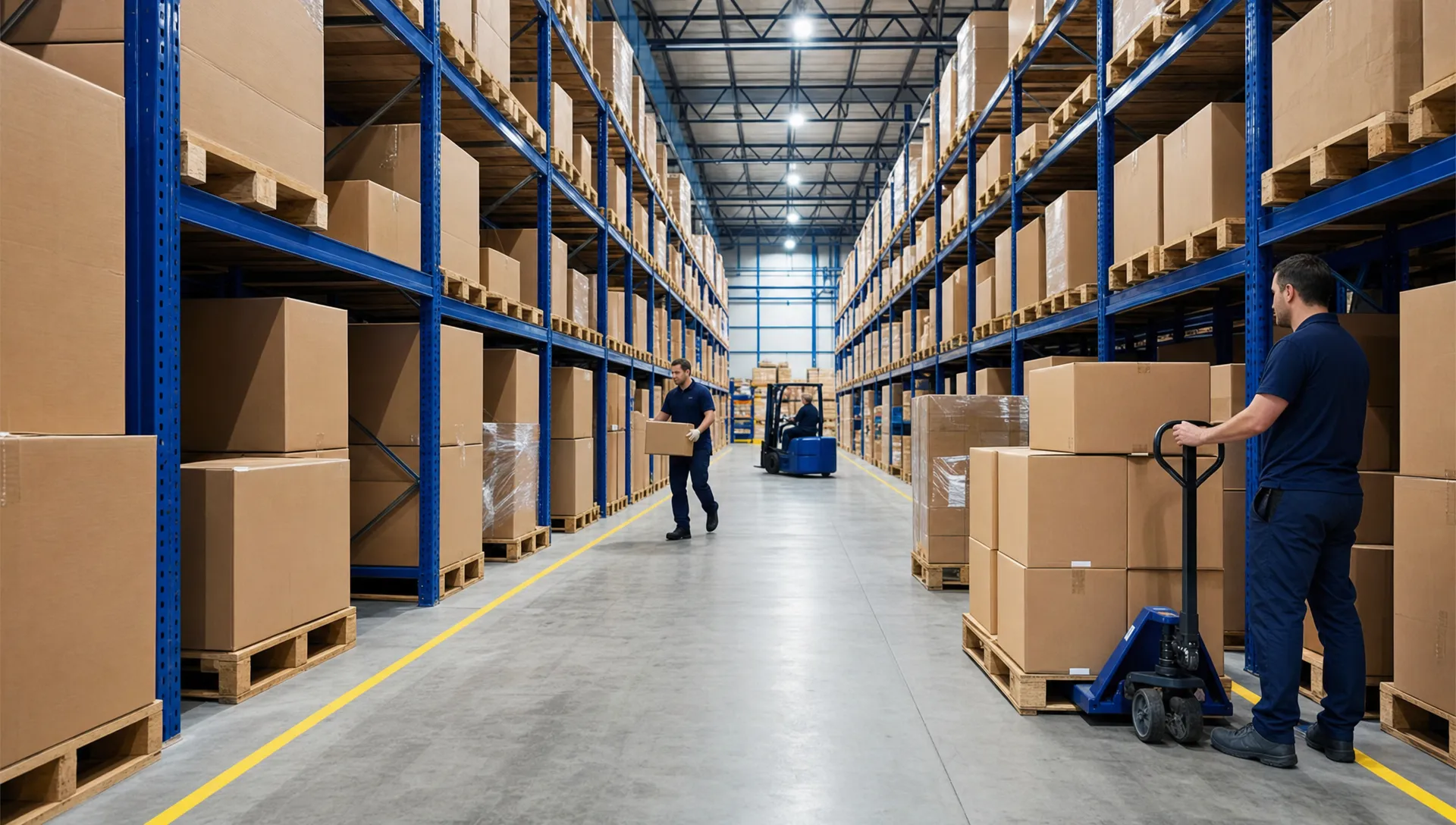
What good B2B fulfilment looks like in practice
Outsourced fulfilment should make operations easier, not harder. Before moving stock to a 3PL, manufacturers should be clear about what a good service needs to include.
Accurate stock control
B2B customers do not want to hear that stock shown as available cannot be found. A fulfilment partner should be able to record goods-in properly, update stock levels and provide visibility through a warehouse management system or client portal.
For manufacturers dealing with dated goods, technical products or regulated items, batch, serial number and best-before tracking may also be needed. This is not a nice extra if your customers rely on traceability. It is central to protecting order accuracy.
Flexible storage for different product types
Manufactured goods do not all fit neatly into standard parcel fulfilment. Some products sit on pallets, some require bulk floor storage and some need careful handling due to size, weight or packaging format.
A suitable 3PL should be able to explain how your stock will be stored, identified, accessed and protected. If your business handles both palletised goods and carton picks, check that the provider can manage both without forcing your operation into a one-size-fits-all model.
Clear dispatch and transport options
B2B fulfilment often depends on more than a parcel label. Orders may need same-day movement, next-day delivery, scheduled pallet transport or vehicles suitable for specific unloading conditions.
A 3PL with access to a wider transport network can help when orders vary from small consignments to larger loads. The important point is clarity. You need to know how orders are booked, what cut-offs apply, how proof of delivery is captured and who deals with delivery exceptions.
Direct communication
For manufacturers, fulfilment mistakes can damage long-standing customer relationships. Direct communication matters because issues need to be solved quickly. If every query goes through a generic call centre, small problems can take too long to fix.
A good fulfilment partner should make it clear who your contacts are, how exceptions are handled and how quickly quotes or operational changes can be reviewed.
When outsourcing makes commercial sense
Outsourcing B2B fulfilment is not only for large manufacturers. In fact, it can be most useful for SMEs that are growing but not ready to take on more warehouse space, more equipment and more staff.
It may be time to consider a 3PL if:
- Finished goods are regularly taking up production or loading space
- Orders are being delayed because staff are stretched
- Stock accuracy depends on manual checks or spreadsheets
- You are turning down opportunities because fulfilment capacity is limited
- Customer delivery requirements are becoming more complex
- You need more storage but do not want a long property commitment
- Returns, rework or repacking are taking up too much internal time
Outsourcing should not mean losing control. It should mean gaining a more structured operation, with clearer visibility and more capacity to grow.
How to reduce risk when moving fulfilment to a 3PL
A poor handover can create avoidable disruption, so the transition needs proper planning. Manufacturers should treat the move as an operational project, not just a warehouse booking.
Start by mapping your current order process. Identify who sends orders, how stock is labelled, what packing rules apply, which customers have special requirements and how delivery issues are handled. This gives the 3PL a clear picture before stock arrives.
It is also sensible to start with a defined stock range, customer group or order type if your operation is complex. Once the process is working, you can expand the scope.
The best transitions usually include four basics: clean stock data, agreed packaging standards, named contacts and clear rules for exceptions. If those are in place, the move becomes far easier for both sides.
Manufacturers can also benefit from reading more about fulfilment for wholesale and B2B orders before comparing providers, especially if they currently handle all dispatch in-house.
Where Gus Logistics fits for North West manufacturers
Gus Logistics is a family-run 3PL provider based in Nantwich, Cheshire, supporting eCommerce brands, manufacturers and product businesses across the UK. For North West manufacturers, the location offers practical access to major routes while keeping the fulfilment operation close enough for direct conversations and site visits.
The service is built around the core requirements manufacturers often need from an outsourced logistics partner: order fulfilment, pallet and bulk storage, same-day and next-day transport, returns management, co-packing and contract packing.
Gus Logistics can support pick and pack operations, integrations with more than 60 platforms including Shopify, Amazon, eBay, WooCommerce and Magento, late cut-offs up to 10pm and next-day dispatch. For warehousing, clients can use racked and floor storage with real-time WMS tracking through a client portal, with batch, serial number and best-before date tracking available.
Transport is also part of the offer, with an own fleet including vans, 7.5t, 18t and 26t rigids, artics and Moffetts, plus access to more than 5,000 vehicles across the UK and Europe. For manufacturers moving a mix of cartons, pallets and larger consignments, that range can be useful when order profiles change.
The key difference for many SMEs is the working relationship. Gus Logistics is family-run, does not use call centres and has no minimum volume requirements. Customers speak directly to the people handling their freight, which can make day-to-day problem solving much simpler.
Questions to ask before choosing a Cheshire 3PL
Before outsourcing, manufacturers should compare providers carefully. Price matters, but it should not be the only deciding factor. A cheaper pick rate is not helpful if orders are delayed, stock is unclear or customer requirements are missed.
Ask potential providers:
- Can you handle B2B orders, not just consumer parcels?
- What storage options do you offer for pallets, cartons and bulk stock?
- How will I see live stock levels and order progress?
- Can you track batch numbers, serial numbers or best-before dates if needed?
- What are your order cut-offs and delivery options?
- Who will I speak to when there is a problem?
- Are there minimum volume requirements or long commitments?
- Can you support returns, rework, co-packing or relabelling if required?
The answers will show whether the provider understands manufacturing fulfilment or is simply offering spare warehouse space.
Frequently Asked Questions
Why are manufacturers outsourcing B2B fulfilment? Manufacturers are outsourcing because fulfilment can take up valuable space, staff time and management attention. A 3PL can provide storage, stock control, picking, packing and delivery support so the manufacturer can focus on production and customer growth.
Is B2B fulfilment different from eCommerce fulfilment? Yes. B2B fulfilment often involves larger orders, pallets, trade customers, specific delivery requirements, batch tracking and more detailed paperwork. eCommerce fulfilment is usually focused on individual consumer parcels, although some providers can handle both.
Why choose a Cheshire 3PL for North West distribution? Cheshire is well placed for North West manufacturers because it offers access to major routes including the M6, M56 and M62. A Cheshire 3PL can support UK-wide distribution while remaining close enough for practical communication and site visits.
Can small manufacturers use a 3PL? Yes. Outsourcing can suit small and medium-sized manufacturers, especially when order volumes fluctuate or storage space is limited. Gus Logistics has no minimum volume requirements, which can make outsourcing more accessible for growing businesses.
What should I prepare before moving stock to a 3PL? Prepare accurate stock data, product details, packaging rules, customer delivery requirements and current order processes. Clear information at the start helps the 3PL set up storage, picking and dispatch correctly.
Ready to discuss B2B fulfilment in Cheshire?
If your manufacturing business is running out of space, struggling with dispatch capacity or looking for a more reliable way to serve B2B customers, outsourcing fulfilment could be a practical next step.
Gus Logistics can help with B2B fulfilment, warehousing, transport, returns and related logistics support from its base in Nantwich, Cheshire. To talk through your requirements, call 01270 335014 or get in touch via the Gus Logistics contact page.
Looking for a Logistics Partner You Can Trust?
From warehousing and order fulfilment to transport and FSDU design - Gus Logistics handles it all from our base in Nantwich, Cheshire. Over 10 years experience, no minimum volumes, no long contracts.
