
How Does Shopify Fulfilment Work When You Use a 3PL?
If you have searched for “shopify 3pl fulfilment”, you are probably trying to work out what actually happens after your Shopify store is connected to a logistics partner. You may understand the idea in principle: a 3PL stores your products and sends out orders. The harder question is how the day-to-day process works, how much control you keep and what needs to be in place before you hand over stock.
For a growing Shopify brand, fulfilment usually becomes painful gradually. First, the spare room becomes a stock room. Then weekend packing becomes normal. Then you miss a carrier collection, run out of space or struggle to keep up after a promotion. A 3PL should remove that operational pressure without making your order process feel remote or out of sight.
What “shopify 3pl fulfilment” means in practice
In practice, Shopify 3PL fulfilment means your Shopify store sends order and stock information to a third-party logistics provider, which then stores, picks, packs and dispatches your products for you. The customer still buys from your website. Your brand still owns the sale, the customer relationship and the commercial decisions. The 3PL handles the physical work behind the scenes.
The main moving parts are the Shopify integration, the warehouse management system, the stock receiving process, the pick and pack operation, carrier dispatch and the return of tracking details to Shopify. When this is set up well, your fulfilment partner should not need you to forward orders manually or send spreadsheets every day.
For UK Shopify sellers, the key is not just whether a 3PL can “connect to Shopify”. It is whether the provider can receive orders reliably, keep stock records accurate, dispatch on time and give you clear visibility when something needs attention.
Step 1: Your Shopify store connects to the 3PL system
A reliable Shopify 3PL fulfilment process starts with the integration. Your 3PL will connect Shopify to its warehouse management system, often called a WMS. This allows new orders, product details and stock updates to move between the two systems.
The exact setup will vary by provider, but the aim is simple: when a customer places an order on Shopify, the warehouse sees the order without you re-keying anything. Once the parcel is dispatched, tracking information should flow back into Shopify so the customer can be updated.
Before go-live, your 3PL should check practical details such as SKU codes, product names, barcodes, bundle rules, shipping methods and cut-off times. This setup stage matters because many fulfilment problems start with small data mismatches. If the SKU in Shopify does not match the SKU in the warehouse, the system cannot reliably pick the right item.
Gus Logistics supports Shopify sellers through its dedicated Shopify fulfilment service for UK brands, with integrations across 60+ platforms including Shopify, Amazon, eBay, WooCommerce and Magento.
Step 2: You send stock into the warehouse
Once the system is ready, you send your products to the 3PL warehouse. This is often called goods in or inbound stock. Your supplier, manufacturer or existing storage location sends cartons, pallets or containers to the warehouse, where the stock is checked and booked into the system.
Good receiving is about more than unloading boxes. The warehouse team needs to confirm what has arrived, identify any shortages or damage, label stock if needed and place products in the right storage locations. If you sell products with batch numbers, serial numbers or best-before dates, those details should also be captured at this stage.
For many Shopify brands, this is where Shopify 3PL fulfilment starts to feel different from packing orders in-house. Instead of knowing stock by looking at shelves yourself, you rely on accurate warehouse records. That is why real-time stock visibility, disciplined booking-in and clear exception reporting are so important.
If your business carries bulk stock or seasonal inventory, it may also need flexible pallet and bulk storage alongside day-to-day pick faces for fast-moving products.
Step 3: Orders flow from Shopify to the warehouse
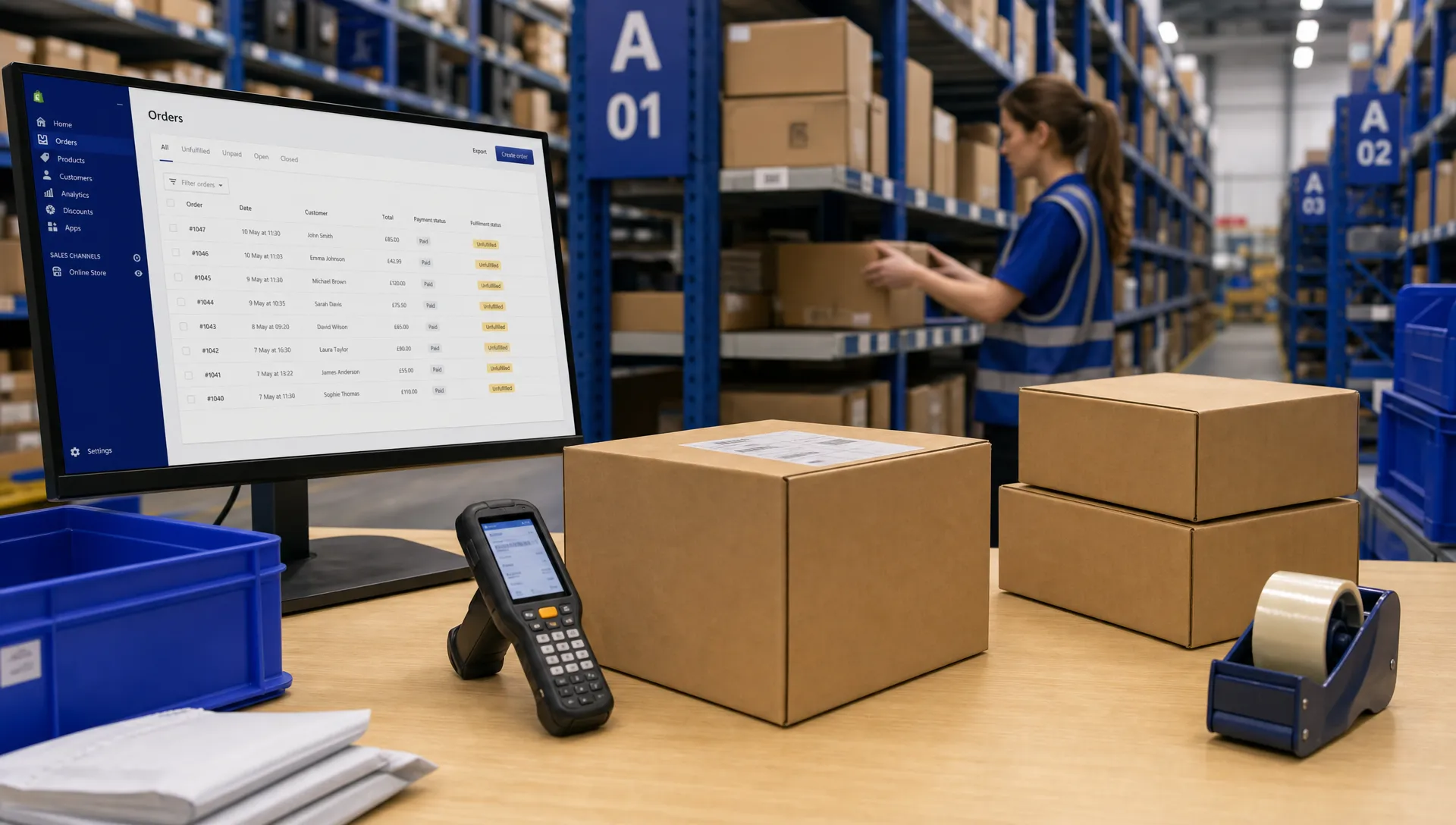
After the stock is live, customer orders can begin moving from Shopify to the 3PL. When an order is paid for and ready to fulfil, the system passes the order details to the warehouse. This normally includes the customer name, delivery address, products ordered, quantities, shipping method and any relevant notes.
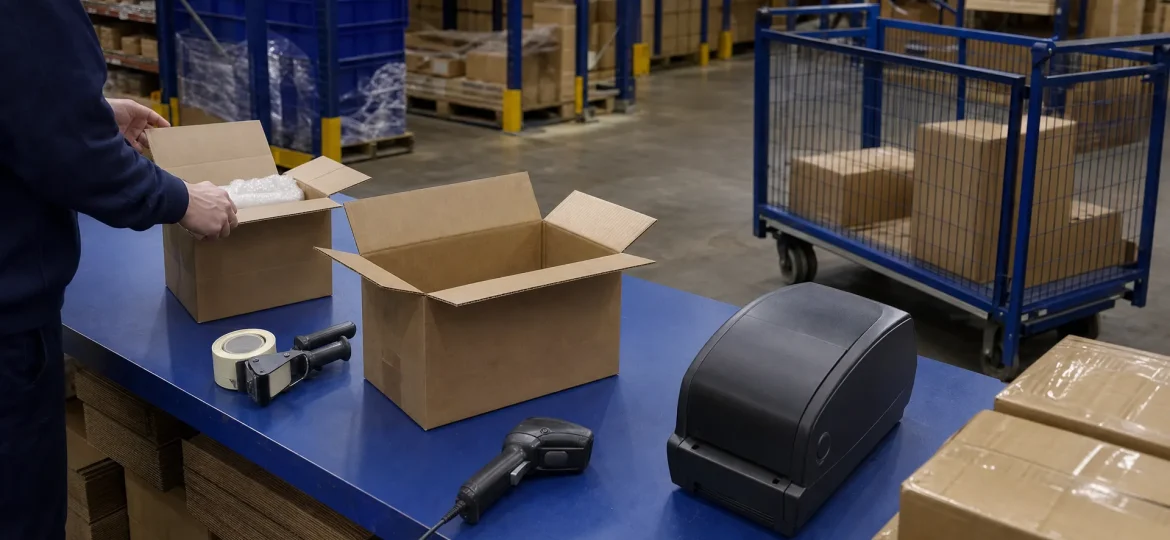
The 3PL then turns that order into warehouse tasks. Staff pick the correct items, check them against the order, pack them to the agreed specification and apply the correct carrier label. If you have agreed custom packaging, inserts or particular packing rules, these need to be documented clearly before dispatch starts.
| Stage | What happens | What to check before launch |
|---|---|---|
| Order import | Shopify sends order details to the 3PL system | SKUs, shipping methods and payment status rules |
| Picking | Warehouse staff pick the products from storage | Barcode checks, stock locations and bundle logic |
| Packing | Items are packed using agreed materials and rules | Packaging sizes, inserts and fragile item instructions |
| Dispatch | Carrier label is applied and parcel leaves the warehouse | Cut-off times, delivery services and tracking updates |
| Stock update | Inventory adjusts after dispatch | Sync frequency and low-stock visibility |
Step 4: Tracking and stock updates go back into Shopify
The biggest operational benefit of Shopify 3PL fulfilment is that the loop should close automatically. Once an order has been packed and dispatched, the tracking number is sent back to Shopify. From there, your store can update the customer using your normal notification settings.
Stock levels should also update so you do not oversell products that are no longer available. This is especially important if Shopify is not your only sales channel. Many brands sell through Shopify, marketplaces, wholesale accounts and retail orders at the same time. If all channels draw from the same stock pool, your fulfilment setup needs to be accurate enough to prevent avoidable stock conflicts.
This is also where service levels come into play. If your 3PL offers late cut-offs and next-day dispatch, you need to understand exactly which orders qualify, which carriers are used and what happens when orders arrive after the cut-off. Gus Logistics offers late cut-offs up to 10pm and next-day dispatch for suitable fulfilment operations, supported by its order fulfilment and pick and pack services.
What do you still control as the Shopify brand?
Using a 3PL does not mean handing over your whole customer experience. You still control your product range, pricing, website, customer service tone, returns policy and brand presentation. The 3PL controls the physical handling of stock and the dispatch process you have agreed with them.
A clear split of responsibility helps avoid confusion:
| You control | Your 3PL controls |
|---|---|
| Product data in Shopify | Stock receiving and warehouse locations |
| Website checkout and customer promises | Picking, packing and dispatch execution |
| Brand packaging requirements | Carrier label generation and handover |
| Customer service decisions | Returns processing instructions |
| Stock purchasing and replenishment | Warehouse stock records and reporting |
Before you move to Shopify 3PL fulfilment, decide what you want your customer experience to look like. Do you need branded packaging? Do you sell bundles? Are some items fragile, high value or date-sensitive? Are returns restocked, inspected, quarantined or disposed of? These decisions should be turned into written processes so the warehouse team can follow them consistently.
Returns, exchanges and problem orders
Returns are often the part of fulfilment that exposes weak processes. A customer may send back the wrong item, return a used product or forget to include their order details. If your 3PL is handling returns, you need a simple process for identifying the order, checking the product and deciding whether it can go back into stock.
The same applies to problem orders. Address errors, out-of-stock items, damaged goods and carrier exceptions should not sit unnoticed. Your 3PL should have a practical way to flag issues so your team can make decisions quickly.
For Shopify brands, returns management should connect with your customer service workflow. The warehouse can process the physical item, but your team may still decide whether to refund, replace or contact the customer. The more clearly you define those rules, the smoother the customer experience will be.
How to know if your Shopify store is ready for a 3PL
Shopify 3PL fulfilment is usually worth considering when fulfilment is taking time away from sales, product development or customer service. It can also make sense when your order volumes are inconsistent, your storage space is limited or your team is struggling to maintain dispatch standards during busy periods.
You do not need to be a large retailer before speaking to a 3PL. In fact, waiting too long can make the move harder because your processes may already be under strain. What matters is whether you have enough operational pressure to justify outsourcing and whether your product data is tidy enough for a clean integration.
Before approaching providers, prepare a basic picture of your operation. Useful details include your average monthly order volume, number of SKUs, storage requirements, current dispatch promise, packaging needs, returns volume and any sales channels beyond Shopify. If you sell on multiple platforms, this guide to choosing a 3PL that integrates with Shopify, Amazon and eBay may also help you compare options.
What to ask a 3PL before you connect Shopify
Not all 3PL providers work in the same way. Some are designed for high-volume enterprise retailers. Others are better suited to SMEs that need flexibility, direct communication and support as volumes change.
Ask practical questions before you commit:
- How long does the Shopify integration usually take?
- Will orders be imported automatically or manually?
- How are SKUs, barcodes and bundles checked before launch?
- What dispatch cut-offs are available?
- How do I view stock levels and order progress?
- Can you handle batch numbers, serial numbers or best-before dates if needed?
- What happens when an order cannot be fulfilled?
- How are returns received, inspected and reported?
- Are there minimum order volumes or storage commitments?
Gus Logistics is a family-run 3PL based in Nantwich, Cheshire, with no call centres, no minimum volume requirements and direct access to the people handling your stock and freight. Its location near the M6, M56 and M62 also supports fast UK-wide distribution, including same-day and next-day transport where required.
Common mistakes to avoid
The most common mistake is treating the integration as the whole project. Connecting Shopify is only one part of the work. Your product data, packaging instructions, stock receiving process and returns rules need just as much attention.
Another mistake is leaving exceptions undefined. For example, what should happen if an order contains an out-of-stock item? Should the available items ship first, or should the whole order wait? What if a customer enters an incomplete address? These decisions can slow dispatch if they are not agreed in advance.
It is also worth being realistic about launch timing. A good 3PL will want to test the integration, check stock records and confirm warehouse processes before switching on live order fulfilment. That preparation protects your customers and reduces avoidable disruption.
Frequently Asked Questions
Does Shopify have to be my only sales channel to use a 3PL? No. Many businesses use Shopify alongside Amazon, eBay, wholesale or retail channels. The important thing is making sure orders and stock are managed clearly across every channel.
Will I lose control of my customer experience? No, not if the setup is handled properly. You still control your website, brand, customer communication and service policies. The 3PL handles the physical fulfilment process according to agreed rules.
How quickly can Shopify be connected to a 3PL? Timelines depend on the provider, your product data and the complexity of your operation. Gus Logistics offers 24-hour integration turnaround where the setup is suitable and the required information is available.
Is Shopify 3PL fulfilment only for high-volume brands? No. Some 3PL providers require minimum volumes, but others work with smaller and growing brands. Gus Logistics has no minimum volume requirements, which can make outsourcing more accessible for SMEs.
What should I prepare before speaking to a 3PL? Prepare your SKU list, order volumes, packaging needs, storage requirements, current carriers, returns process and any special handling rules. This helps the 3PL give useful advice and a more accurate quote.
Ready to make Shopify fulfilment easier?
If you are spending too much time packing orders, running out of storage space or trying to improve dispatch reliability, Shopify 3PL fulfilment could give your business the operational support it needs without losing control of your customer experience.
Gus Logistics can help with Shopify order fulfilment, warehousing, pick and pack, returns and transport from its Nantwich base in Cheshire. To discuss your current setup, call 01270 335014 or get in touch via the contact page on the Gus Logistics website.
Looking for a Logistics Partner You Can Trust?
From warehousing and order fulfilment to transport and FSDU design - Gus Logistics handles it all from our base in Nantwich, Cheshire. Over 10 years experience, no minimum volumes, no long contracts.
