
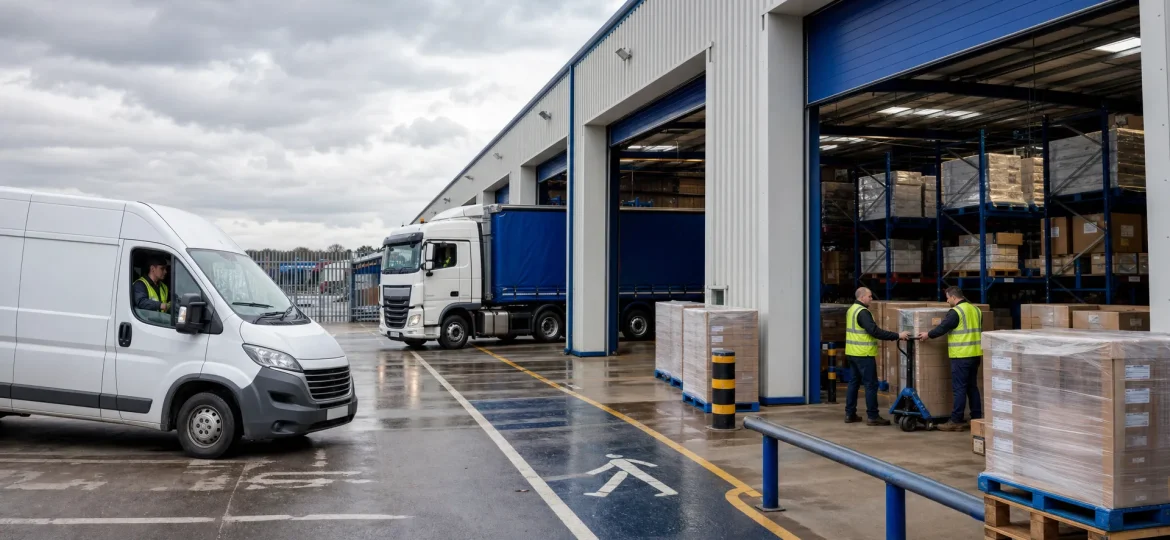
What Is Two-Man Delivery and Which Products Actually Need It?
A bulky product does not automatically need two man delivery, and a heavy product does not always need carrying by hand. The right service depends on the item’s size, shape and handling requirements, the delivery address and where the customer expects it to be left. Getting that decision wrong can mean damaged goods, unsafe handling or a failed delivery. This guide explains which products need a two-person crew, when equipment is a better solution and what to confirm before booking.
What does a two-person delivery service include?
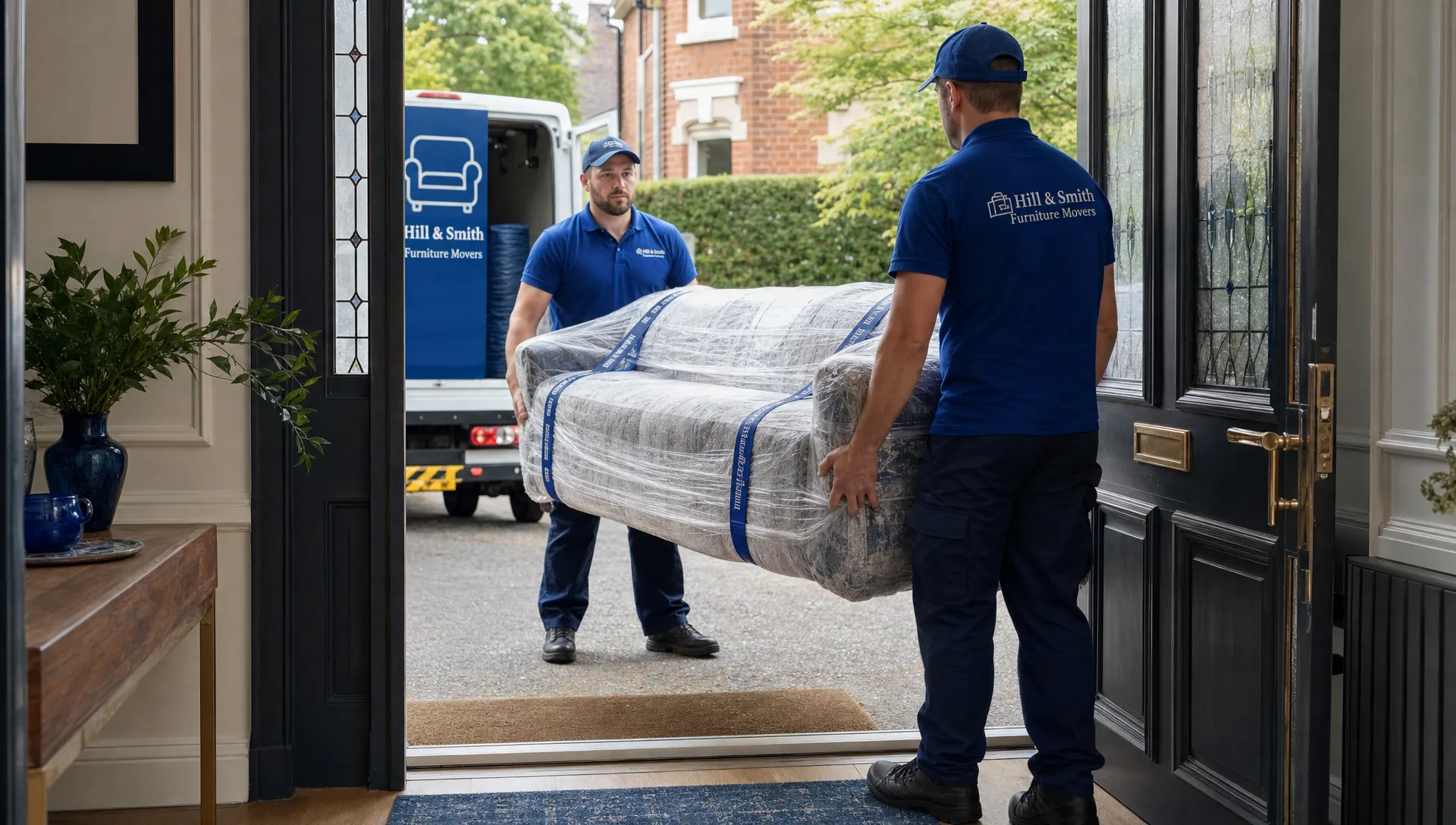
A two-person delivery service uses two crew members to transport and handle an item. It is useful when a product cannot be safely controlled by one person, particularly through doorways, along internal routes or into an agreed room.
However, two crew members do not automatically mean a full installation service. Depending on the booking, delivery might stop at the doorstep or include carrying the item into a specified room. Unpacking, assembly, appliance connection and packaging removal are separate tasks unless expressly included.
For business owners, the key distinction is between the staffing arrangement and the customer promise. You need both defined before advertising the service at checkout.
Also confirm whether the provider means two people travelling together throughout the delivery or another agreed arrangement. What matters is that the required crew and equipment are available when unloading and handling take place.
Which products actually need two man delivery?
Products most likely to need two man delivery are those that combine awkward dimensions, difficult handling and a requirement to be carried beyond the vehicle. Weight matters, but it is only one part of the decision.
| Product type | Why two people may be appropriate | What to check first |
|---|---|---|
| Sofas and large upholstered furniture | Wide dimensions and awkward grip points make controlled carrying difficult | Door widths, corners, stairs and removable sections |
| Large mattresses | Flexible construction can make them difficult to control | Packaged dimensions, stair access and whether they arrive compressed |
| Assembled wardrobes and cabinets | Bulk, weight and vulnerable edges increase handling difficulty | Whether the item can be dismantled and whether the route is suitable |
| Large appliances | Weight and restricted access may require coordinated handling | Room placement, suitable handling equipment and any separate connection service |
| Fitness equipment | Heavy bases or uneven weight distribution can complicate movement | Delivery configuration, access and whether assembly is required |
| Fragile, oversized items | Size and damage risk may require more controlled handling | Packaging, specialist equipment and trained handling requirements |
These are assessment prompts, not automatic service rules. A compact, securely packaged flat-pack item may fit an ordinary parcel service. A large cabinet delivered to a loading bay may be better handled mechanically. Pianos, safes and unusually heavy machinery can require specialist movers rather than a standard two-person crew.
Why weight alone is not enough
There is no universal weight at which every UK delivery must switch to two people. The Health and Safety Executive’s manual handling guidance sets out the approach: avoid hazardous manual handling where reasonably practicable, assess unavoidable handling and reduce the risk.
A proper assessment considers the task, the load, the people doing the work and the environment. A long, awkward item can be difficult to handle even if it weighs less than a compact box. Poor grip points, a shifting centre of gravity or restricted visibility can add risk.
The decision to use two man delivery should therefore follow a handling assessment, not a rule such as “anything over 25 kg needs two people”. Adding a second person does not simply double a safe lifting capacity.
Stairs, wet surfaces, narrow passages and the distance from the vehicle all affect the task. If safe movement requires lifting equipment or a specialist team, two people alone are not the answer.
Two people, a tail-lift or a forklift: choose the right method
Booking two man delivery is not a substitute for choosing the correct unloading equipment. Each option solves a different problem.
A tail-lift lowers suitable goods from the vehicle to ground level. It does not, by itself, move an appliance up stairs or a sofa into a living room. A pallet truck can move suitable palletised goods across an appropriate surface, but gravel, steps and uneven ground can make that unsuitable.
A forklift or vehicle-mounted forklift may be appropriate for heavier palletised loads where the site and access allow it. That is different from carrying individual products into a property.
Some deliveries need a combination: equipment to unload safely, followed by a suitably assessed two-person handling task. Others need no manual carrying at all.
When comparing transport and delivery services, explain both the load and its final destination. “Deliver a pallet to a warehouse loading area” and “carry a fridge into a first-floor kitchen” are very different jobs, even if the goods weigh the same.
What to confirm before accepting the order
Before booking two man delivery, collect enough information to establish whether the customer’s requested service is achievable. A postcode and product name are not enough.
Your booking information should include:
- Packed dimensions and weight: include every separate package, not just the assembled product specifications.
- Handling characteristics: identify fragile surfaces, uneven weight distribution and any manufacturer handling instructions.
- Delivery position: specify kerbside, doorstep, ground-floor room or another agreed location.
- Access details: record stairs, lift dimensions, narrow doorways, tight turns and external steps.
- Parking and approach: check restrictions and the distance between the vehicle and the entrance.
- Extra work: state whether unpacking, assembly, connection or packaging removal is requested.
- Customer availability: confirm who will receive the goods and the appropriate contact number.
For awkward deliveries, photographs or measurements can help the provider assess access. Do not treat “there is a lift” as sufficient confirmation: the packaged item must fit through its doors and inside it.
Accurate access information is also part of reducing failed deliveries. Confirm restrictions before dispatch rather than leaving the crew to discover them at the address.
Packaging and warehouse preparation still matter
A second crew member cannot compensate for unsuitable packaging. Protect corners, edges and vulnerable surfaces, and make sure the packaging will withstand the planned handling method. Any straps, handles or lifting points used must be suitable for that purpose.
Two man delivery also needs clear preparation at the dispatch end. Warehouse staff should know which packages belong together, which orders require special handling and whether delivery involves an appointment or an access restriction.
If you work with a warehousing and storage partner, agree how those instructions will pass from order booking to the people preparing the load. Product-level handling information is more reliable than a general note saying “large item”.
Plan returns with the same care. A bulky item collected from an upstairs room may need a different arrangement from its original delivery, especially if the customer has removed the packaging or assembled the product.
How to compare quotes without missing the real cost
A useful quote covers the job you actually need, not just a vehicle and a destination. Crew time, route, handling requirements, equipment and additional tasks can all affect the price.
Ask where the service ends, what access assumptions the quote uses and whether upper-floor carrying is included. Confirm how the provider handles waiting time, unsuccessful attempts, changed access information and work requested on arrival. These terms vary, so get them agreed in writing.
Compare the full cost of delivering successfully. A lower transport price may not be better value if the service cannot fulfil the placement promise you have made to customers.
Equally, avoid specifying two man delivery for every bulky product without checking whether it is needed. Separating products into parcel, pallet, two-person handling and specialist delivery requirements can help you match the service to the task rather than buying the same arrangement for everything.
Frequently asked questions
Does two man delivery always include delivery to a room of choice? No. Two crew members and room-of-choice delivery are separate parts of the service. Confirm the placement location, access requirements and any exclusions before booking.
Can the customer help a single driver instead? Do not build your delivery promise around the customer providing labour. Their availability, ability and willingness are uncertain. The provider should assess the task and supply the agreed crew and equipment.
Is assembly or appliance installation included? Not automatically. Assembly, connection and installation require explicit agreement and, where applicable, suitably competent personnel. Carrying an appliance into a kitchen does not mean it will be connected.
What happens if the item will not fit through the entrance? Agree the procedure beforehand. Depending on the provider’s terms, the outcome may be an alternative safe delivery position, a return or a rebooking. Do not assume the crew can dismantle furniture or remove doors on arrival.
Category: Logistics
Discuss the right delivery arrangement with Gus Logistics
Gus Logistics is a family-run logistics provider based in Nantwich, Cheshire, supporting businesses across the UK. Its transport services include an own fleet and access to a wider vehicle network, allowing you to discuss the load, access and unloading requirements directly.
If your products need additional handling, explain the requirement before booking and ask Gus Logistics to confirm the suitable crew, equipment and service scope. Call 01270 335014 or contact Gus Logistics about your delivery requirements with the packed dimensions, weight, destination and intended delivery position.
Looking for a Logistics Partner You Can Trust?
From warehousing and order fulfilment to transport and FSDU design - Gus Logistics handles it all from our base in Nantwich, Cheshire. Over 10 years experience, no minimum volumes, no long contracts.
