
How Can I Get Promotional Displays Filled and Delivered to Shops?
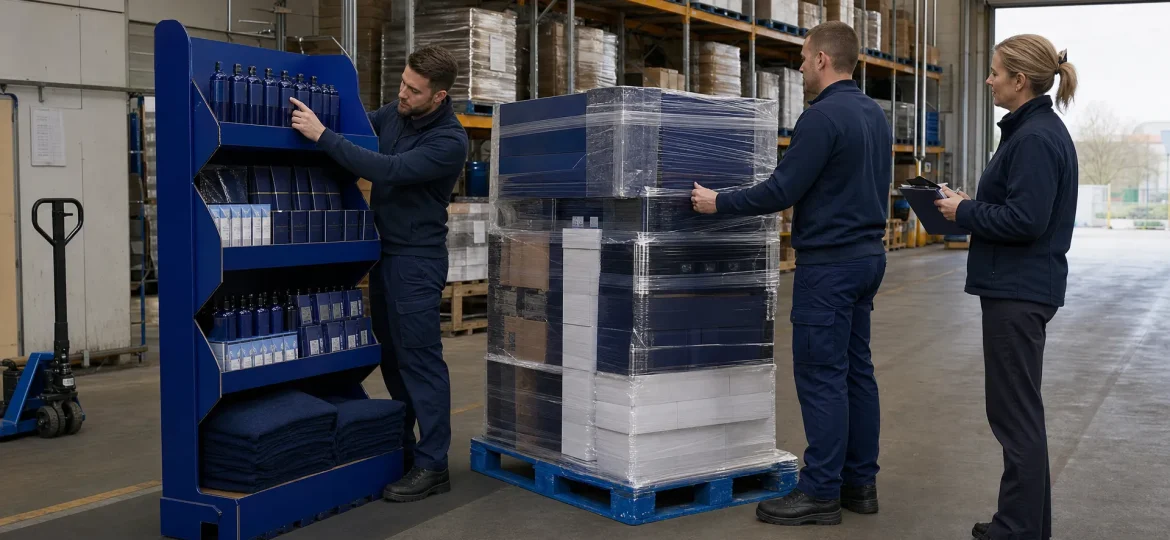
Getting a promotional display into a shop involves more than booking a delivery. Someone needs to assemble it, load the right products, protect it in transit and make sure the shop can accept it. FSDU filling and distribution brings these tasks together, either through one logistics partner or through suppliers working to an agreed brief.
The practical starting point is to confirm what the retailer expects to receive: a flat-packed display, an assembled empty unit or a display already filled with stock. That decision shapes the packing work, transport requirements and cost.
Decide what you want the supplier to handle
FSDU stands for free-standing display unit, a standalone retail display used to present products away from standard shelving. Your display manufacturer may supply only the printed components, so do not assume assembly, filling or delivery is included.
You can appoint a logistics partner to receive the displays and products, assemble each unit, fill it to an approved layout and prepare it for dispatch. Alternatively, your manufacturer may arrange some of those stages and hand over completed units for transport.
Ask who owns the job from stock receipt to delivery confirmation. With FSDU filling and distribution, an unclear handover can leave completed displays waiting for transport or vehicles arriving before the stock is ready.
Also distinguish delivery from installation. Taking a wrapped unit to a shop's goods-in area does not necessarily include unpacking it, moving it onto the sales floor or removing packaging. Agree those tasks separately.
Choose between flat-packed and pre-filled displays
Sending every display fully assembled is not automatically the best option. Compare the whole job, including the work left for shop staff.
| Supply format | When it can suit the campaign | What needs checking |
|---|---|---|
| Flat-packed display with separate products | The retailer has agreed to assemble and stock units | Staff availability, clear instructions and matching arrival dates |
| Assembled empty display with separate products | Assembly is difficult but shop staff can fill the unit | Transport space and accurate allocation of products to each shop |
| Assembled and pre-filled display | The retailer wants a unit requiring minimal preparation | Loaded strength, protective packaging, access and handling arrangements |
A lightweight cardboard display may behave differently once loaded with bottles, jars or other heavy products. Test the actual display with the intended stock, rather than judging an empty sample.
Transporting flat components can reduce the space occupied by displays, but products still need delivering and someone must complete the assembly. Pre-filling can reduce store-level handling while increasing the volume being transported. Compare vehicle use, packaging and potential damage across the complete supply chain before deciding which approach costs less or has a lower environmental impact.
Prepare a clear brief for FSDU filling and distribution
A useful enquiry gives the supplier enough information to plan labour, storage and transport without guessing. Send the retailer's current delivery instructions alongside your own campaign brief.
Include:
- Display details: Dimensions when assembled and packed, empty and loaded weight, materials and assembly instructions.
- Product allocation: Product codes, quantities per display, shelf positions and any batch or best-before requirements.
- Campaign quantities: Number of displays, number of destinations and any different versions for different shops.
- Delivery information: Full addresses, shop references, receiving hours, access restrictions and booking requirements.
- Dates and responsibilities: Stock arrival dates, approval deadlines, required delivery dates and the person authorised to approve changes.
For example, a campaign covering 80 shops with 24 products per display requires 1,920 products before allowing for separately agreed spares. If two product lines share the display, specify the quantity of each rather than supplying only the total.
Plan backwards from the retailer's required receipt date. Allow time for incoming stock checks, sample approval, assembly, filling and transport bookings. Do not treat the promotional launch date as the dispatch date.
Approve a filled sample before the main production run
Before the full batch is assembled, approve one complete unit using the intended products and protective packaging. Photographs can support the approval, but physical checks are needed for strength and stability.
Check that shelves hold the loaded weight, products stay in position and promotional information remains visible. Confirm that protective wrapping does not crush the unit or make it difficult for shop staff to unpack safely.
For FSDU filling and distribution, that approved sample should become the reference for the rest of the job. Record the product layout, quantities and agreed packing method so that different operators produce consistent results.
Reconcile stock before assembly begins. Separate damaged goods, record shortages and agree how discrepancies will be resolved. If products arrive well ahead of the campaign, suitable pallet and bulk storage can provide a holding stage before filling, with stock records kept aligned to the campaign allocation.
Confirm how each shop will receive its display
Direct-to-shop delivery and delivery through a retailer's distribution centre need different plans. A distribution centre may require booked slots, particular labels or pallet configurations. Individual shops may have restricted receiving hours, limited unloading space or no equipment for handling pallets.
Confirm the requirements for each destination before choosing the transport method. A pallet delivery that works at a warehouse may be unsuitable for a small high-street shop with a narrow entrance and no pallet truck.
Ask the retailer to confirm:
- Receiving arrangements: Delivery point, authorised recipient and opening hours for goods-in.
- Handling requirements: Whether the delivery needs a tail-lift, unloading equipment or an agreed alternative.
- Booking and identification: Appointment references, purchase order details and required labels.
- Handover scope: Whether the driver is leaving a packed unit at goods-in or providing any separately agreed additional service.
Check loaded dimensions, including the pallet and protective packaging, against access limits. Keep removable headers or fragile components protected, with clear instructions for whoever finishes the setup.
A delivery plan for FSDU filling and distribution should also state what happens if the shop is closed, refuses the goods or cannot safely receive the unit.
Ask for an itemised quote, not just a delivery price
The cheapest transport rate does not necessarily produce the lowest campaign cost. Compare suppliers against the same scope, including work completed before dispatch and charges that apply when plans change.
| Cost component | What to clarify |
|---|---|
| Incoming goods | Unloading, counting, inspection and recording discrepancies |
| Assembly and filling | Work per unit, product complexity and sample approval |
| Protective materials | Pallets, wrapping, corner protection or outer packaging |
| Storage | Space used, charging period and treatment of campaign delays |
| Distribution | Destinations, vehicle requirements and delivery bookings |
| Exceptions | Waiting time, failed deliveries, rework and redelivery |
| Remaining stock | Storage, return or disposal arrangements after the campaign |
Ask which costs are fixed and which depend on actual time, space or activity. A change to the product mix, display design or destination list may alter the quote even if the number of displays stays the same.
Display manufacture is another cost to separate from filling and transport. Understanding what affects the price of an FSDU helps you compare the physical unit with the operational work needed to get it into shops.
Request assumptions and exclusions in writing. This makes competing proposals easier to compare and reduces disputes over tasks neither party included.
Agree how shortages, damage and delays will be handled
Build a simple exception process before assembly starts. Name one person who can approve substitutions, revised quantities or delivery changes, with a deputy available when needed.
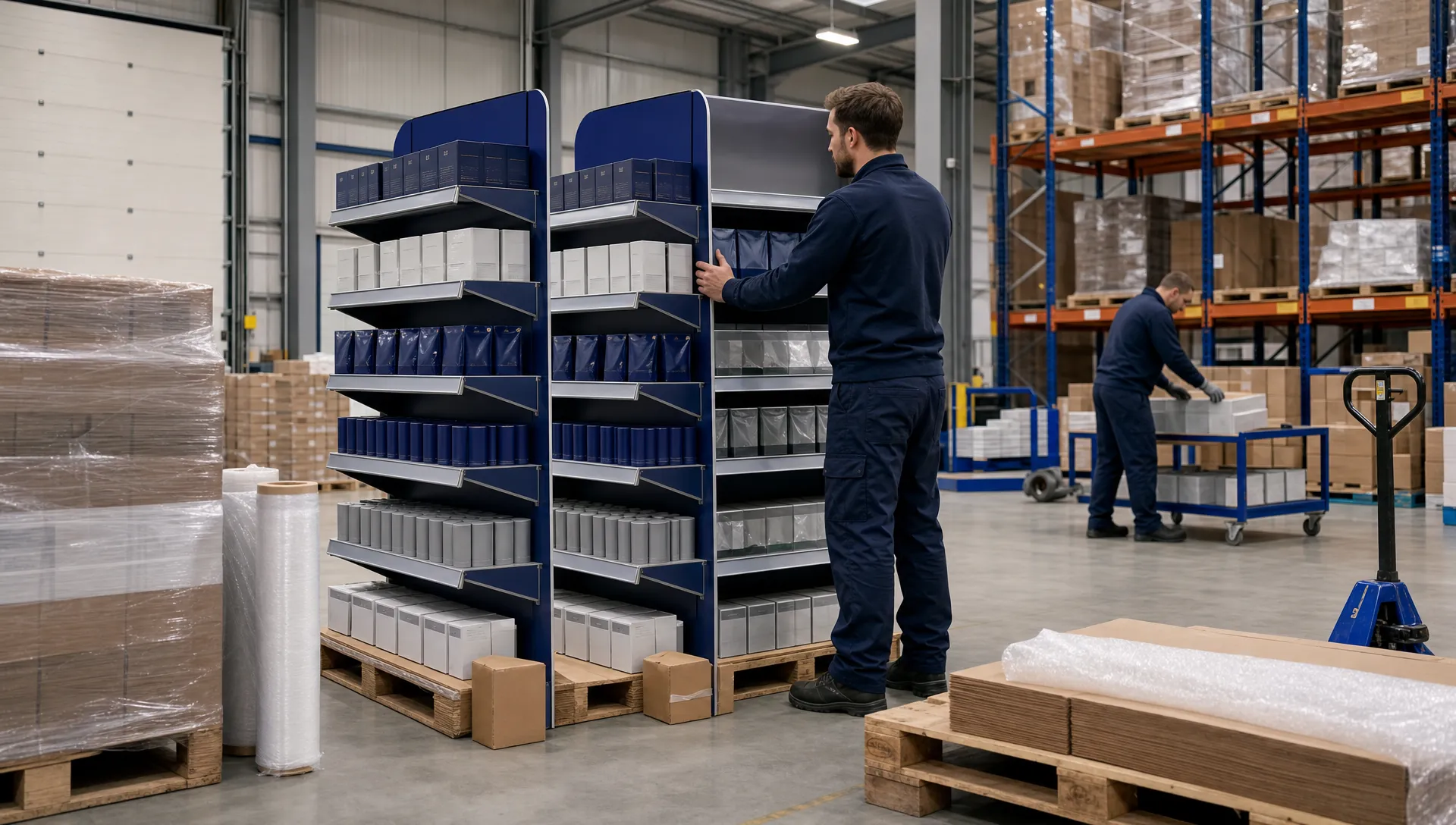
If stock is short, the supplier should not decide independently to send partly filled units or substitute another product. Agree whether affected displays will be held, cancelled or released with a retailer-approved change. Keep surplus stock separate from the quantities allocated to shops.
For damaged units, decide who provides replacements and whether repairs are acceptable. If a campaign slips, confirm the storage implications and cancel or amend transport bookings before vehicles are committed.
FSDU filling and distribution also needs a clear cut-off for address changes. After that point, changes may require relabelling, revised bookings or a different route, so they should trigger approval rather than an informal message.
For an owner-manager moving home alongside a business relocation, planning a house sale before moving belongs on a separate timetable. Keep a deputy responsible for campaign approvals so personal moving arrangements do not leave suppliers or shops without a decision-maker.
Measure delivery quality, not just dispatch volume
A report showing that every display left the warehouse does not tell you whether the campaign reached shops correctly. Agree what evidence you need and who will review it.
Track filling accuracy against the approved product quantities and layout. Record damage reported on arrival, distinguishing between damage to products, display structures and external packaging. Check delivery performance against the agreed receiving date or window, rather than the date the vehicle departed.
For FSDU filling and distribution, proof of delivery confirms a handover, not necessarily successful merchandising. If you need evidence that a unit is unpacked, correctly positioned and stocked on the sales floor, arrange that separately with the retailer or a merchandising team.
Close the campaign with a stock reconciliation: products received, products dispatched, damaged goods and remaining stock. This gives you a usable starting point for repeat promotions and makes unresolved discrepancies easier to investigate.
Frequently asked questions
Can I supply my own displays and products? Yes, this can form the basis of an outsourced packing job. Ask the provider to confirm compatibility, assembly requirements and the condition in which both displays and products must arrive.
How far ahead should I book? There is no single lead time that suits every campaign. Ask for a schedule based on display availability, stock arrival, sample approval, workload and retailer delivery bookings. Leave room to resolve failed checks before dispatch.
Can one supplier fill displays and deliver them to multiple shops? Yes, where that supplier offers both packing and distribution. Confirm coverage, delivery arrangements and whether any transport stages will be subcontracted, with one named contact responsible for resolving issues.
Does FSDU filling and distribution include putting the display on the shop floor? Not automatically. Assembly and pre-filling usually describe preparation before transport. In-store unpacking, positioning and packaging removal must be explicitly included if required.
Arrange your display filling and shop deliveries
Once you know the display format, stock allocation and retailer requirements, you can brief a supplier against a clear scope rather than asking for a vague delivery estimate.
Gus Logistics provides FSDU design, manufacture, pre-fill and dispatch, alongside co-packing, warehousing and transport. Based in Nantwich, Cheshire, the family-run team supports businesses across the UK with no minimum volume requirements.
Explore the logistics services available for your retail display campaign, then share your quantities, destinations and required dates. Call Gus Logistics on 01270 335014 to discuss filling your promotional displays and getting them delivered to shops.
Looking for a Logistics Partner You Can Trust?
From warehousing and order fulfilment to transport and FSDU design - Gus Logistics handles it all from our base in Nantwich, Cheshire. Over 10 years experience, no minimum volumes, no long contracts.
